The past year at The Stove has been one of major transition: moving into the spaces left by our CEO and co-founder, Matt Baker, and navigating new paths in mixed-income generation and commissioned work as part of our strategy for greater financial resilience and cross-sector working.
Alongside some fantastic achievements, great projects (ours and those we support and work alongside), valuable additions to our team, multi-year funding from Creative Scotland, National Lottery, and Esmée Fairbairn support for the What We Do Now network for the next three years, it has also been a year of great challenge: as a team and as individuals as we respond to and deal with the pressures of an increasingly precarious sector within a landscape where community services are literally on their knees.
The risk at times like this is that challenges are met and decisions made that address short-term needs without a deeper, holistic understanding of what is required to achieve long-term goals and ensure positive, sustainable change. A quandary rife across local government, civic and policy spaces at present, but just as pertinent closer to home within our own organisational structures.
In line with the values of The Stove, of collaboration and collective exploration as a problem-solving process, we responded to this change by undertaking a period of organisational review with Senior Management, our Board, and our team to understand what leadership looks like and requires at The Stove. We are inspired by traditions of consensus-based decision-making from cultures and indigenous learning across the world; discussion, collective agreement, and temporary, respected leadership rather than individual power.
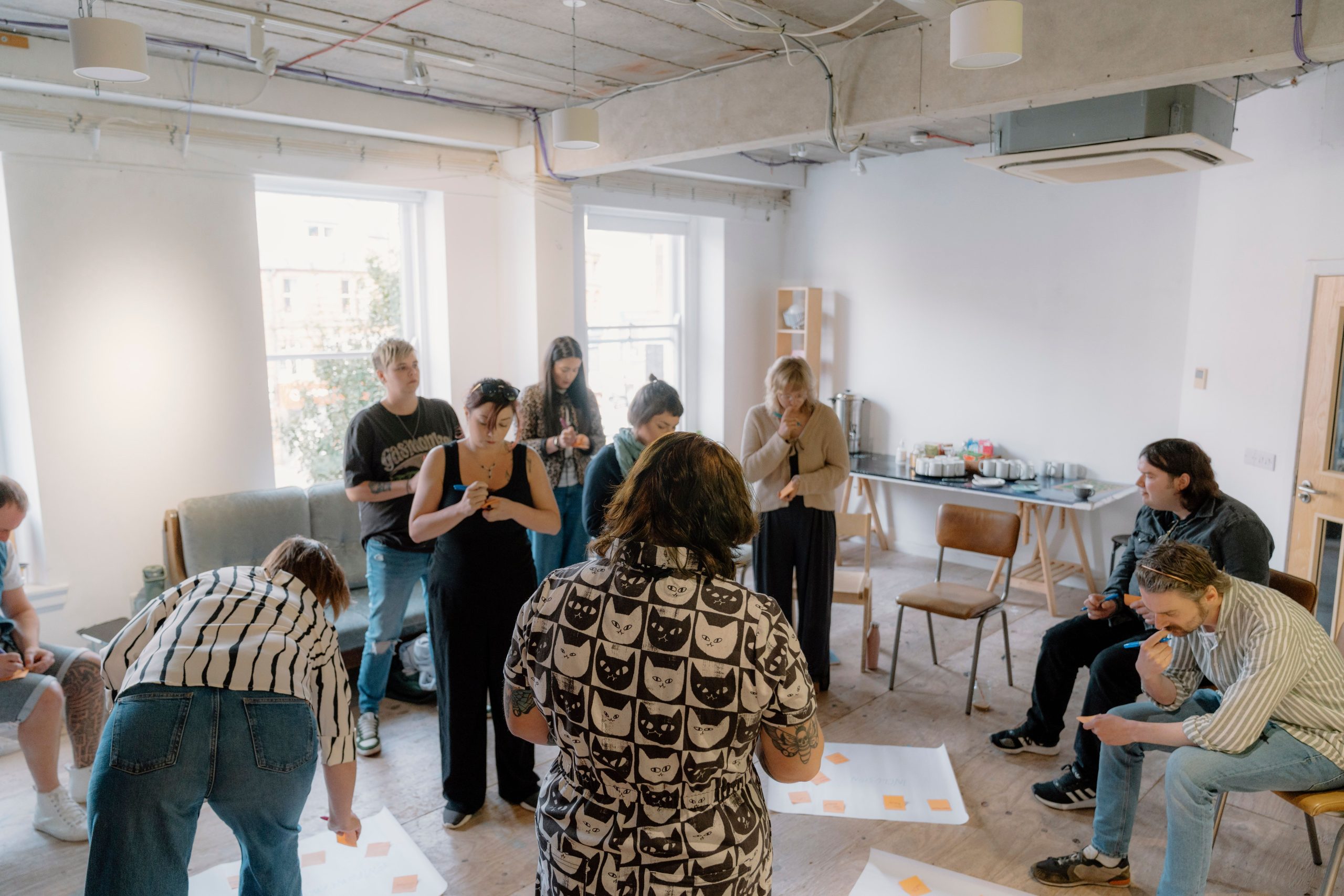
We established a Leadership Group, made up of our four executive Directors, as an interim shape to take this exploration forward, working collectively to steward the organisation’s transition from founder-led, albeit very collaboratively, to…something else. We have been supported and mentored along this journey by the fabulous Robert Palmer, without whom the journey would have been a lot more difficult.
In the new year, we will be making proposals and seeking feedback on what this new Leadership Structure could look like at The Stove, a model that brings together different strengths: financial stewardship, governance, creative vision, and community accountability. We do not imagine this to be hugely different from previous approaches, but hope to make it clearly articulated and structured rather than implicit in the personalities of those in positions of authority.
This shift has not been cosmetic. It has required deep, focused work; long conversations; difficult decisions; and an extraordinary number of meetings (vastly underestimated). It has sometimes been messy, demanding patience, trust, vulnerability and a shared commitment to learning how power, responsibility, and care can be held differently.
The benefits of this approach, which undoubtedly takes time, is that if done with care and support, it builds:
- Organisational wide trust and shared knowledge amongst team members.
- Individual and shared accountability, drive and ownership across our programmes.
- Value, commitment and empowerment across our teams.
What this all adds up to is a process of keeping the beating heart of The Stove true and vital whilst enabling us to move forward into a changing future.
What has guided us throughout is a set of values – collectively agreed initially and reaffirmed through the creation of a Leadership Charter – that aligns tangible practices and tools with our values. We believe organisations like The Stove can be test beds for more democratic ways of working, and this has been at the forefront of our process. Thank you to our funders for trusting in this so far.
Crucially, we are seeking a model that enables us to think beyond survival, that fosters energy and innovation and does not wear those who are part of it thin. We are working to establish new income streams, reducing dependency on grant funding alone, while strengthening The Stove’s role as a platform for a multiplicity of creative voices: artists, practitioners, and communities with lived experience at the centre of work.
This will not be a neat or finished model. It will continue to be emerging, adaptive, and at times uncomfortable. But it is full of possibility.
We are acutely aware of how our internal shifts are taking place against an increasingly fragile external landscape. Arts and community organisations across Scotland and beyond are facing heightened scrutiny, shrinking resources, and growing existential threats. Emerging populist policies continue to question the value of arts, culture, and community development often framing them as expendable.
All of this internal work only matters if it shows up in the world: in projects, in relationships, in places that feel different because of what we’ve done together.
Where the work meets the ground
This year, some things have landed quietly, and some with a little more noise. LIFT D&G winning a SURF Award for their work in Lochside felt like one of those moments where the room briefly stopped, and you remember why you do what you do. Not because awards are the point, they really aren’t, but because it was national recognition of a methodology we’ve believed in for years: long-term trust, artist-led practice, and communities setting the pace and leading the way. LIFT is close to our hearts, as is Midsteeple Quarter, and seeing both recognised felt like proof that this work stacks up.
Elsewhere, the work has been less visible but no less vital. Through Off the Margin, we’ve continued to support refugees and people seeking sanctuary to tell their own stories through print, journalism and creative expression. Hear Here, and our partnership with Fair Scotland and work with Dumfries’ Showmen, we’ve helped to highlight and amplify the importance of intangible cultural heritage, celebrating the Rood Fair as living culture and honouring those who have been, and continue to be a cornerstone of our town’s cultural life.
Regionally, What We Do Now keeps growing into something stronger than any single organisation or individual member. Creative Stranraer now stands as its own charity, rooted locally and taking forward great work. This is the ecosystem approach we talk about so often: not one body holding everything, but many, linked by trust, shared learning and strategic partnership.
Which brings us to now and a view to the future.
As the Scottish Government publish their review of Creative Scotland and continue to look at the different ways Culture in Communities is supported, there is a real opportunity on the table. One that Prof Donna Hall gave a rallying call for at Third Sector D&G’s Community conference: we need a radical change in service delivery, a move away from ‘services’ as administrative towards an approach that makes community organisations and actors vital, and funded, Strategic Partners.
The language of joined-up working, regional intelligence, and strategic partnership is growing, but in practice we need bolder steps towards: power shared, trust in networks, measures of success based on those that are empowered rather than those who have been ‘included’.
So, this is a call, gentle but direct, if you are a funder, policymaker, partner, or peer: create shared spaces, come into the room with us and invite us into yours, not only once you know what you are doing, but while you are challenged and unsure. Let’s test new ways of working together.
We are ready, many others are too, we’ve all been practising for years.