Support Us
Categories
Musings Project Updates

The Show Must Go On

Words by Darryl V Winter

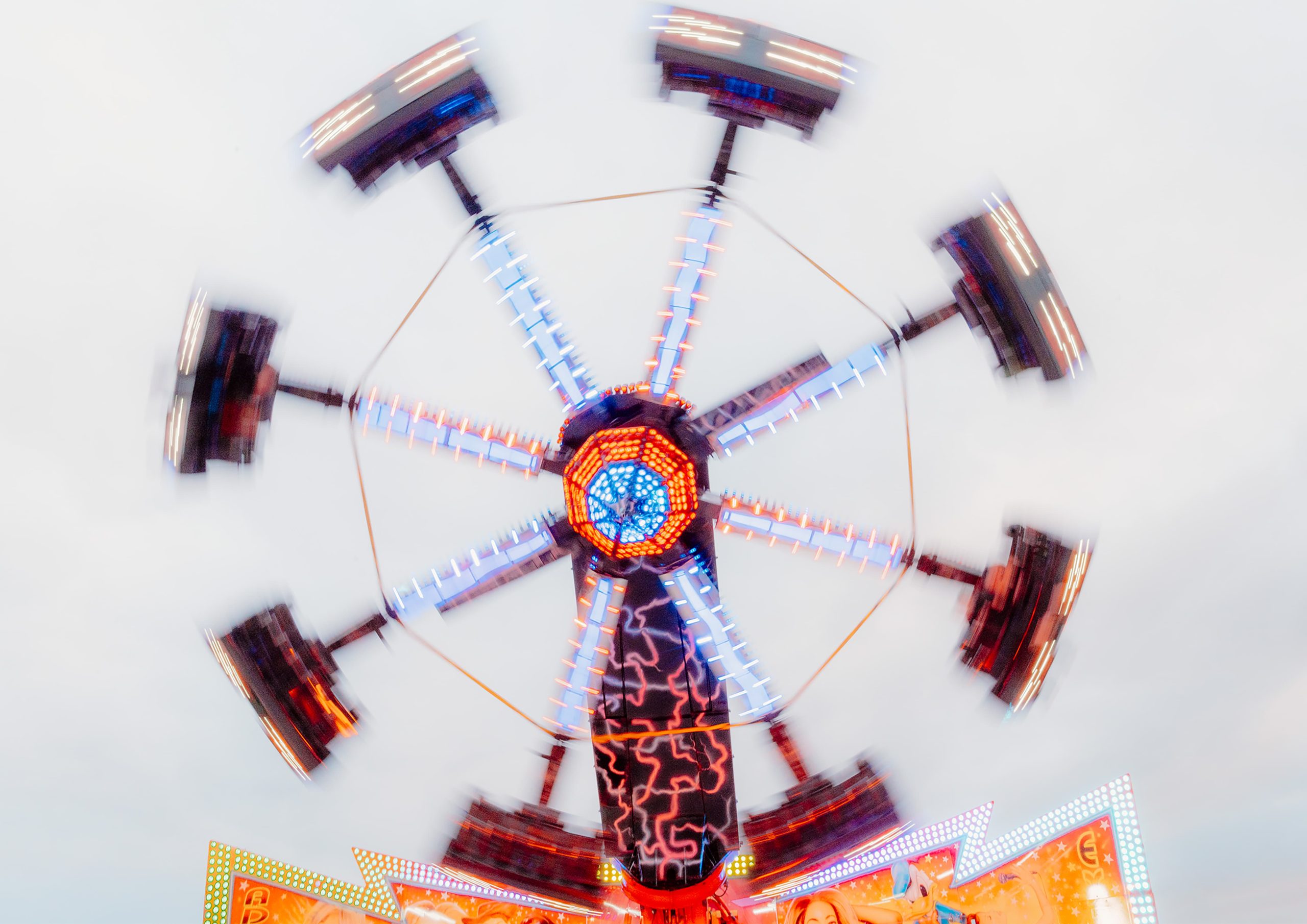
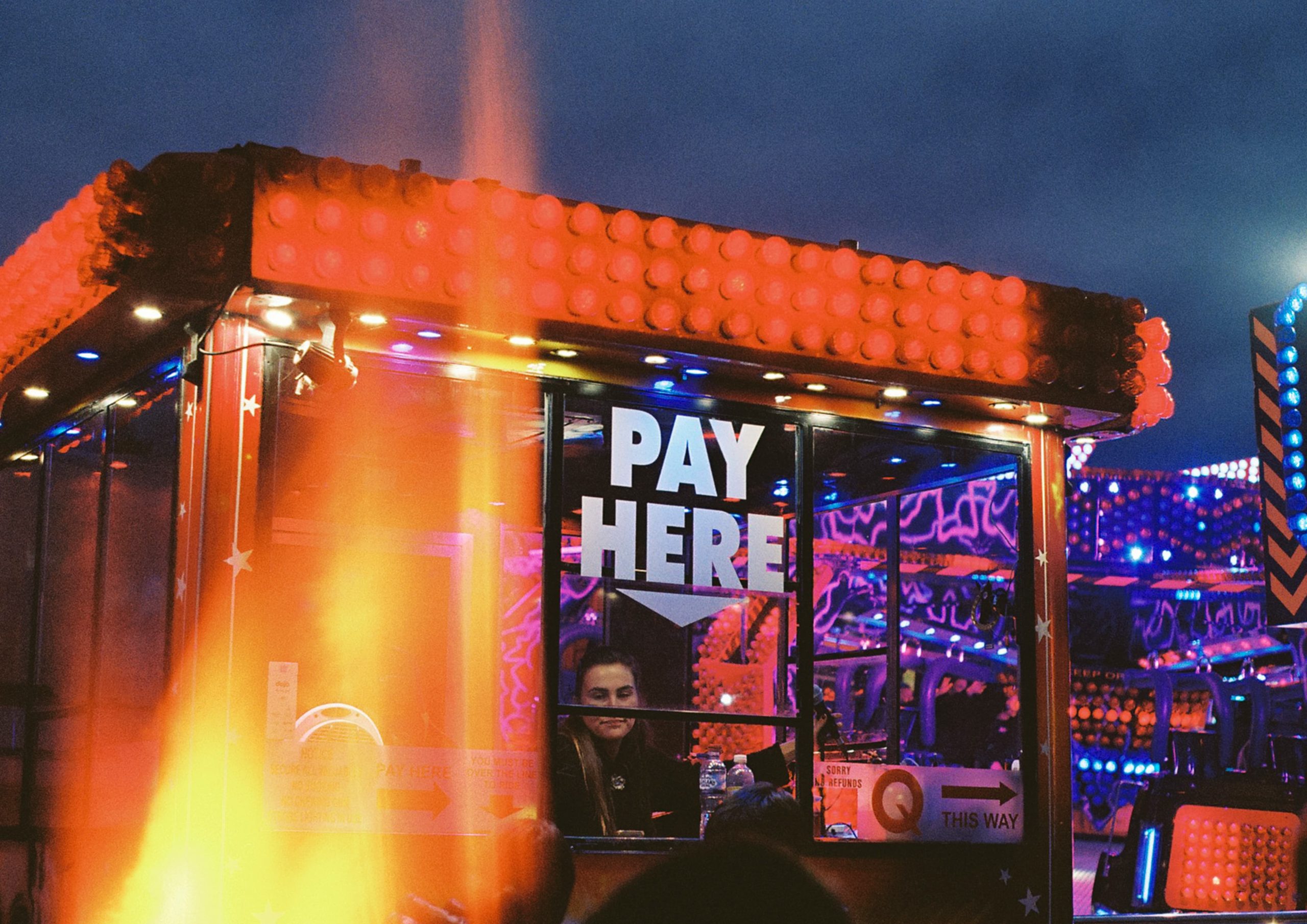
Autumn has rolled in, and along with her came the wagons, trailers and caravans, of the Showpeople. Generations of locals begin tumbling down to the Whitesands, on their way to the Rood Fair. The River Nith rumbles by, absorbing the lights, loud tunes and laughter. For over 400 years, people have been celebrating in Dumfries around this date, once a procession welcomed in by circus elephants, The Showpeople now must face the mammoth uncertainty of their future on the banks of this insatiable river. 

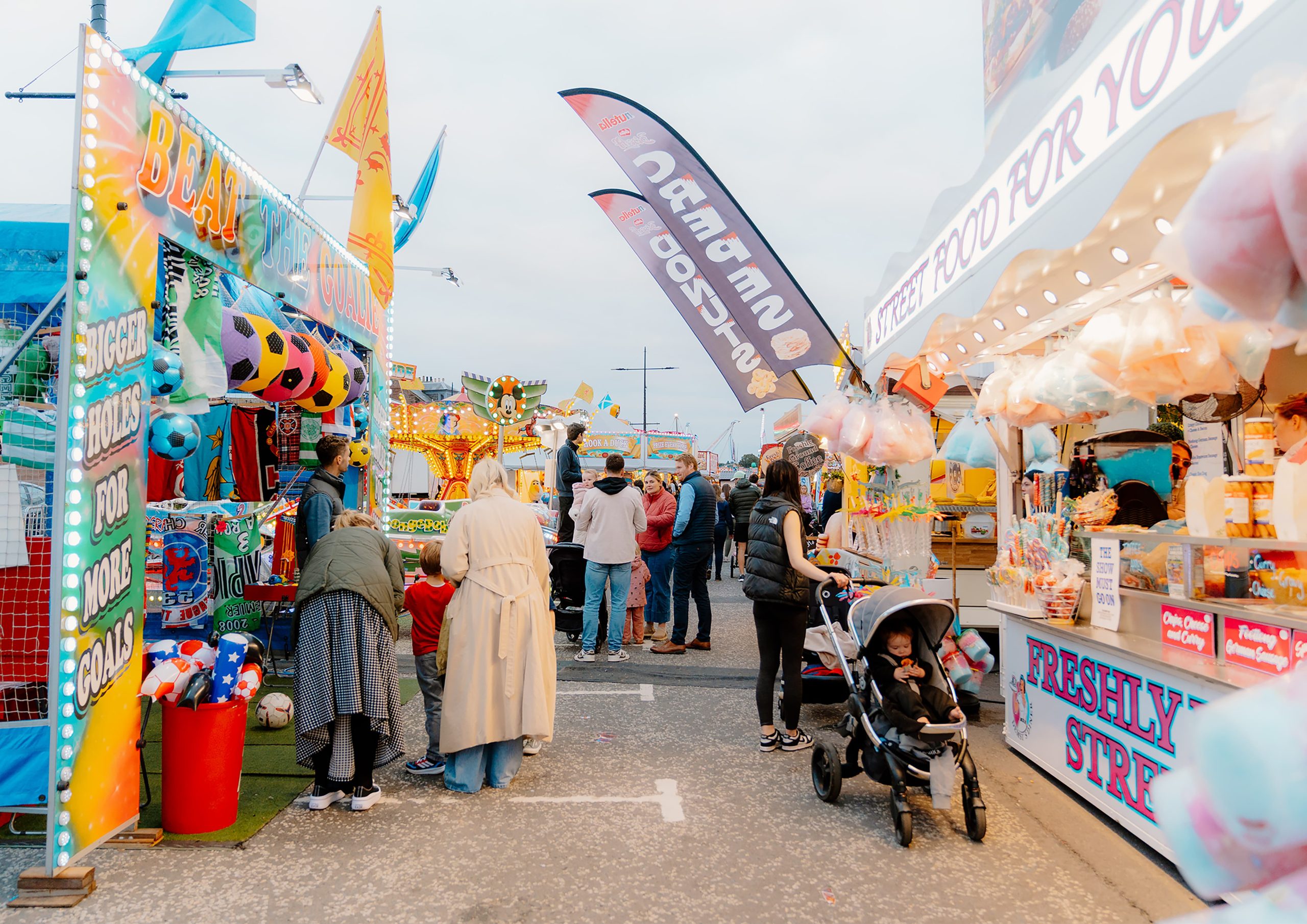
Floods of Doonhamers flow down to chase an ecstatic sense of community, as Grannies bring their Grandweans and teens celebrate a social gathering that has more substance than the digital worlds in which they usually inhabit. Bulbs flash and music blasts as the faces of Dumfries luminate, remembering their first time on the Waltzer, their first prize on Hook-a-Duck, and the September wind in their ears as they look upon This Fair Toon from the apex of the Ferris Wheel.

The Shows afford many a sense of appreciation not often felt in the mundane; a time-capsule, butterflies in the belly, a chance to bring life to a tradition so deeply felt in the memories of the local people. A merging of communities like this is becoming increasingly rare, most notably post-pandemic. While the Showpeople stared the demise of their livelihood in the eye, while the paintwork of their great machines peeled at the seams, a cultural regression was apparent, our biannual chance for collective joy, free of care and full of noise, created an isolating silence. 

The scent of candyfloss and donuts swirl and mingle with diesel fumes as the congregation builds throughout each night. Nostalgic scents erode the financial senses as parents post a day’s wages into a 10p machine and rejoice at the jackpot – a fiver. While the world’s wallets tighten and the evenings draw in, we must afford ourselves a few fleeting hours of fun and celebration. The fair brings people a sense of freedom, a reminder that it is in our nature to laugh, take chances and gamble gleefully, outwith our usual fields and steadings.

Although Halloween is over a month before the Rood Fair, it is a time when magic can be felt in the air. We turn our pockets out as we transform into cackling shapeshifters, flying where broomsticks once fell. Clown’s faces are drenched by watercannons, and the workers warm their hands with a well-stewed cuppa. In the flustering glare, tricks are performed and the jack-of-all-trades master their performative pieces, their lives work, a shadowy vendor, spinner or operator in an obscure scene. 

Soundbites of airhorns blast into the night as riders enter the dance, grinning maniacally at their family and friends, a shared excitement across the ages. The memories rush back as the ageing sample plays through the army of speakers, watching the wizened Showman embody his heritage and purpose. As buttons are pressed, a fleeting thought passes his weathered brow, how much longer can this pilgrimage to Dumfries last, with the rising waters of the Nith ever-encroaching on his family heirloom? 

Many remember their travels with the Showpeople. Being picked up in small towns and travelling with the families, meeting friends, earning a few quid and for some, finding love. A mother and father look to their child as they are swirled around in a teacup, rain dripping from the end of their noses, reliving the memory of whirling round and round on the Coronation Waltzer, once a young worker and a thrill-seeker, now parents, pirouetting once again, years down the line. They, like many others, live a life that embodies the hope that this magnetic event must live on to resonate through the ages.

Where would the folk be if not here? Deep within a crystal ball images appear of mothers and bairns, watching the relentless rain replenish the river, unastonished. Teens and their video games sit in their rooms, apathetic and becoming ever more digitally present, whilst organisations push to have something as inclusive and homely as this spectacle. Insights on the future fade as fate falls in the hands of the people, the beholders, in the dark and awakening to the prospects before them. 

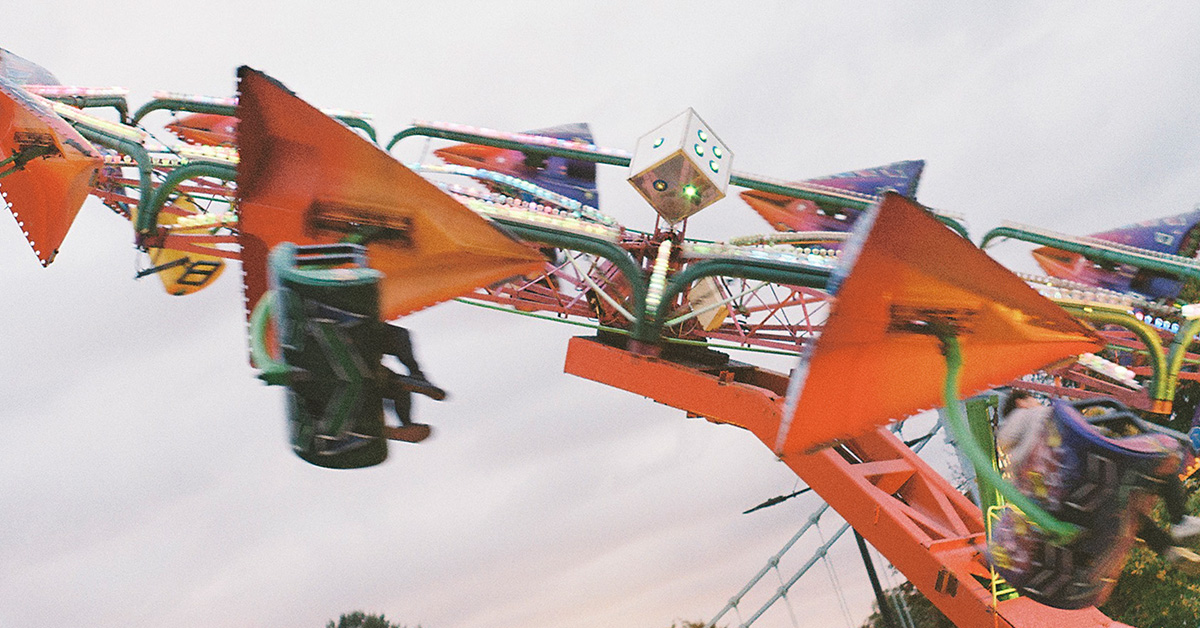
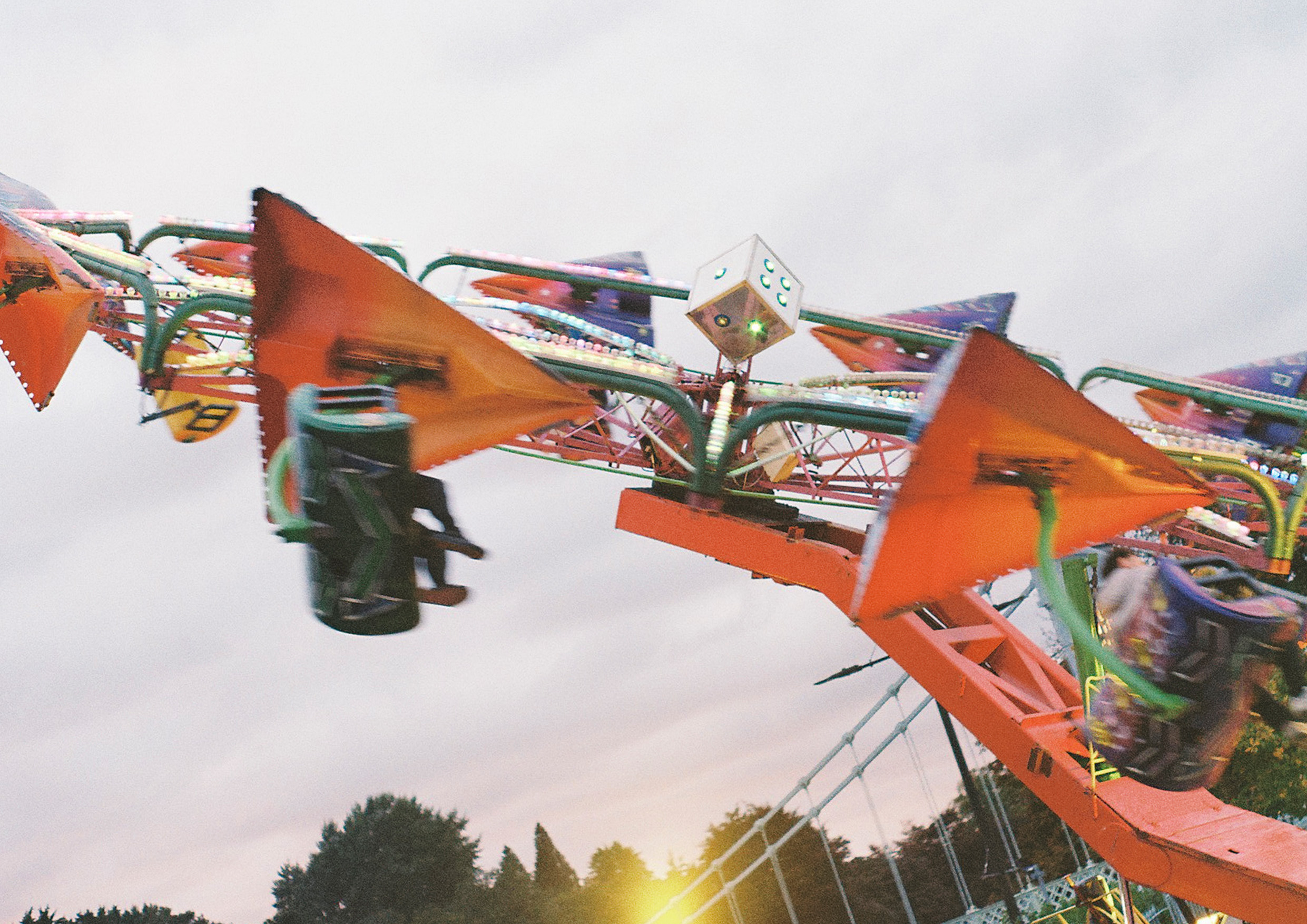
Biddall’s Bridge stands proudly at the lower end of the fair, a gifted landmark from the Biddall’s, a valued family of Showpeople, based in Dumfries throughout WWII. This structure evokes subtler, parallel ponderings of uneasiness and excitement to the folk that cross it. Children bounce along it, with fraught mothers at their side, clinging to the handrails, begging them to “stop jumping!”, as the suspension bridge wobbles before them. A girl catches a glimpse of the children crossing the bridge from atop the KMG Booster, a sky-scraping pendulum ride, and feels the familiar lurch of her stomach as she is plummeted downward, clinging to the restraints. The Showpeople: forever mastering security under the illusion of death-traps.

As the rides are compacted on to trailers and trucks once more, uncertainty fills the air like generator’s smog, but without the candyfloss top note. The sound of airhorns now no more than an echo as drips still drop from the end of noses, while we consider the loss of this clockwork spectacle of vibrancy and collaboration. Fairgoers hope for her return as determinedly as she ever has, moving with the times, but not quite as fast as the fumbling world that surrounds us.

Like the course of the river, The Fair must find a way to proceed in the face of adversity, just as society must continue to recognise and preserve cultural practises which have benefitted communities for centuries. In the minds eye, a vision of The Fair yet to come must be observed and manifested, the invaluable riches of this collaboration cannot embody what she is in danger of becoming: a ghost, a figment, or just another parting thrill.  

Images by Caitlin Wells

Categories
Musings News

A Year of Transition – It’s Time to Be Bold

The past year at The Stove has been one of major transition: moving into the spaces left by our CEO and co-founder, Matt Baker, and navigating new paths in mixed-income generation and commissioned work as part of our strategy for greater financial resilience and cross-sector working.

Alongside some fantastic achievements, great projects (ours and those we support and work alongside), valuable additions to our team, multi-year funding from Creative Scotland, National Lottery, and Esmée Fairbairn support for the What We Do Now network for the next three years, it has also been a year of great challenge: as a team and as individuals as we respond to and deal with the pressures of an increasingly precarious sector within a landscape where community services are literally on their knees.

The risk at times like this is that challenges are met and decisions made that address short-term needs without a deeper, holistic understanding of what is required to achieve long-term goals and ensure positive, sustainable change. A quandary rife across local government, civic and policy spaces at present, but just as pertinent closer to home within our own organisational structures. 

In line with the values of The Stove, of collaboration and collective exploration as a problem-solving process, we responded to this change by undertaking a period of organisational review with Senior Management, our Board, and our team to understand what leadership looks like and requires at The Stove. We are inspired by traditions of consensus-based decision-making from cultures and indigenous learning across the world; discussion, collective agreement, and temporary, respected leadership rather than individual power

We established a Leadership Group, made up of our four executive Directors, as an interim shape to take this exploration forward, working collectively to steward the organisation’s transition from founder-led, albeit very collaboratively, to…something else. We have been supported and mentored along this journey by the fabulous Robert Palmer, without whom the journey would have been a lot more difficult.

In the new year, we will be making proposals and seeking feedback on what this new Leadership Structure could look like at The Stove, a model that brings together different strengths: financial stewardship, governance, creative vision, and community accountability. We do not imagine this to be hugely different from previous approaches, but hope to make it clearly articulated and structured rather than implicit in the personalities of those in positions of authority.

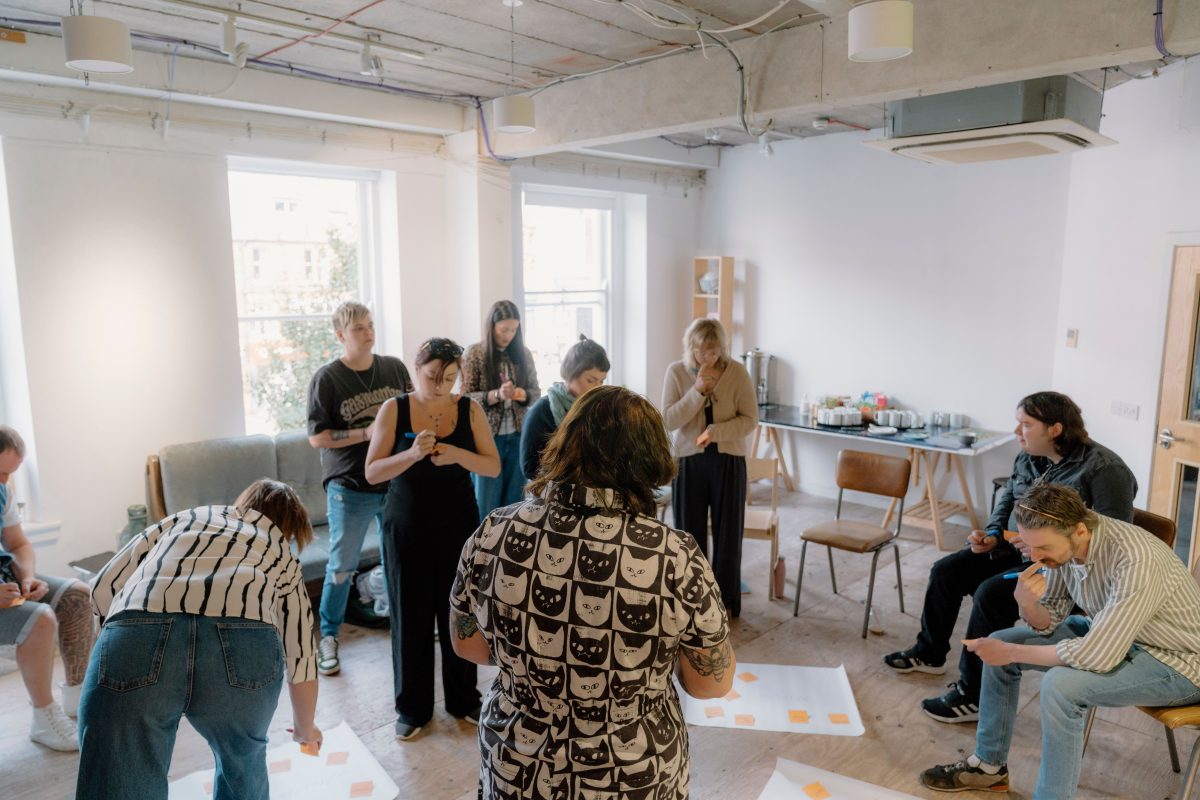
This shift has not been cosmetic. It has required deep, focused work; long conversations; difficult decisions; and an extraordinary number of meetings (vastly underestimated). It has sometimes been messy, demanding patience, trust, vulnerability and a shared commitment to learning how power, responsibility, and care can be held differently.

The benefits of this approach, which undoubtedly takes time, is that if done with care and support, it builds:

  • Organisational wide trust and shared knowledge amongst team members.
  • Individual and shared accountability, drive and ownership across our programmes.
  • Value, commitment and empowerment across our teams.

What this all adds up to is a process of keeping the beating heart of The Stove true and vital whilst enabling us to move forward into a changing future. 

What has guided us throughout is a set of values – collectively agreed initially and reaffirmed through the creation of a Leadership Charter – that aligns tangible practices and tools with our values. We believe organisations like The Stove can be test beds for more democratic ways of working, and this has been at the forefront of our process. Thank you to our funders for trusting in this so far. 

Crucially, we are seeking a model that enables us to think beyond survival, that fosters energy and innovation and does not wear those who are part of it thin. We are working to establish new income streams, reducing dependency on grant funding alone, while strengthening The Stove’s role as a platform for a multiplicity of creative voices: artists, practitioners, and communities with lived experience at the centre of work. 

This will not be a neat or finished model. It will continue to be emerging, adaptive, and at times uncomfortable. But it is full of possibility.

We are acutely aware of how our internal shifts are taking place against an increasingly fragile external landscape. Arts and community organisations across Scotland and beyond are facing heightened scrutiny, shrinking resources, and growing existential threats. Emerging populist policies continue to question the value of arts, culture, and community development often framing them as expendable.

All of this internal work only matters if it shows up in the world: in projects, in relationships, in places that feel different because of what we’ve done together.

Where the work meets the ground

This year, some things have landed quietly, and some with a little more noise. LIFT D&G winning a SURF Award for their work in Lochside felt like one of those moments where the room briefly stopped, and you remember why you do what you do. Not because awards are the point, they really aren’t, but because it was national recognition of a methodology we’ve believed in for years: long-term trust, artist-led practice, and communities setting the pace and leading the way. LIFT is close to our hearts, as is Midsteeple Quarter, and seeing both recognised felt like proof that this work stacks up.

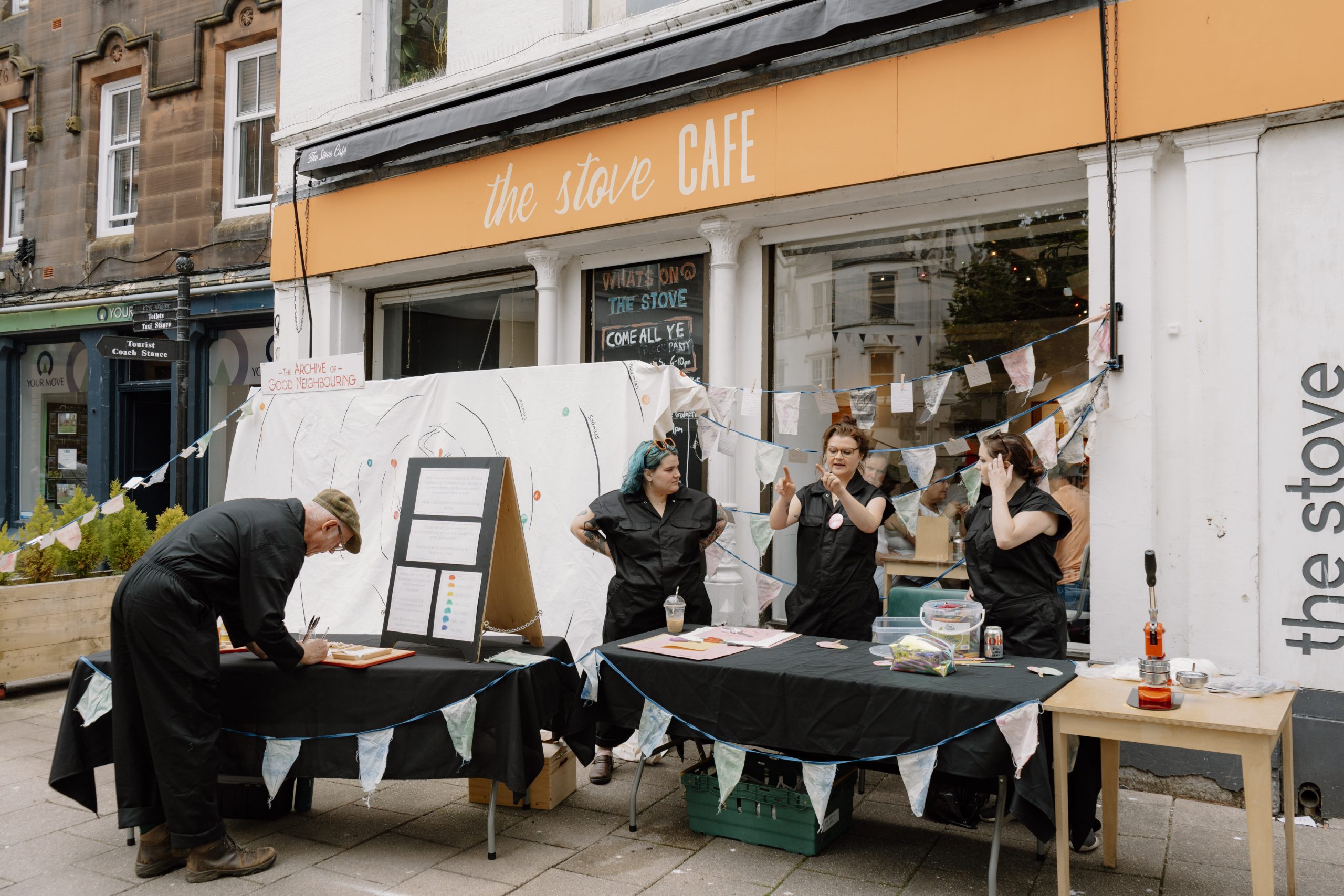
Elsewhere, the work has been less visible but no less vital. Through Off the Margin, we’ve continued to support refugees and people seeking sanctuary to tell their own stories through print, journalism and creative expression. Hear Here, and our partnership with Fair Scotland and work with Dumfries’ Showmen, we’ve helped to highlight and amplify the importance of intangible cultural heritage, celebrating the Rood Fair as living culture and honouring those who have been, and continue to be a cornerstone of our town’s cultural life.

Regionally, What We Do Now keeps growing into something stronger than any single organisation or individual member. Creative Stranraer now stands as its own charity, rooted locally and taking forward great work. This is the ecosystem approach we talk about so often: not one body holding everything, but many, linked by trust, shared learning and strategic partnership. 

Which brings us to now and a view to the future.

As the Scottish Government publish their review of Creative Scotland and continue to look at the different ways Culture in Communities is supported, there is a real opportunity on the table. One that Prof Donna Hall gave a rallying call for at Third Sector D&G’s Community conference: we need a radical change in service delivery, a move away from ‘services’ as administrative towards an approach that makes community organisations and actors vital, and funded, Strategic Partners.

The language of joined-up working, regional intelligence, and strategic partnership is growing, but in practice we need bolder steps towards: power shared, trust in networks, measures of success based on those that are empowered rather than those who have been ‘included’. 

So, this is a call, gentle but direct, if you are a funder, policymaker, partner, or peer: create shared spaces, come into the room with us and invite us into yours, not only once you know what you are doing, but while you are challenged and unsure. Let’s test new ways of working together.

We are ready, many others are too, we’ve all been practising for years.

Categories
Musings News

Reflections from a Year with Creative Spaces: Sonah Chaudhry

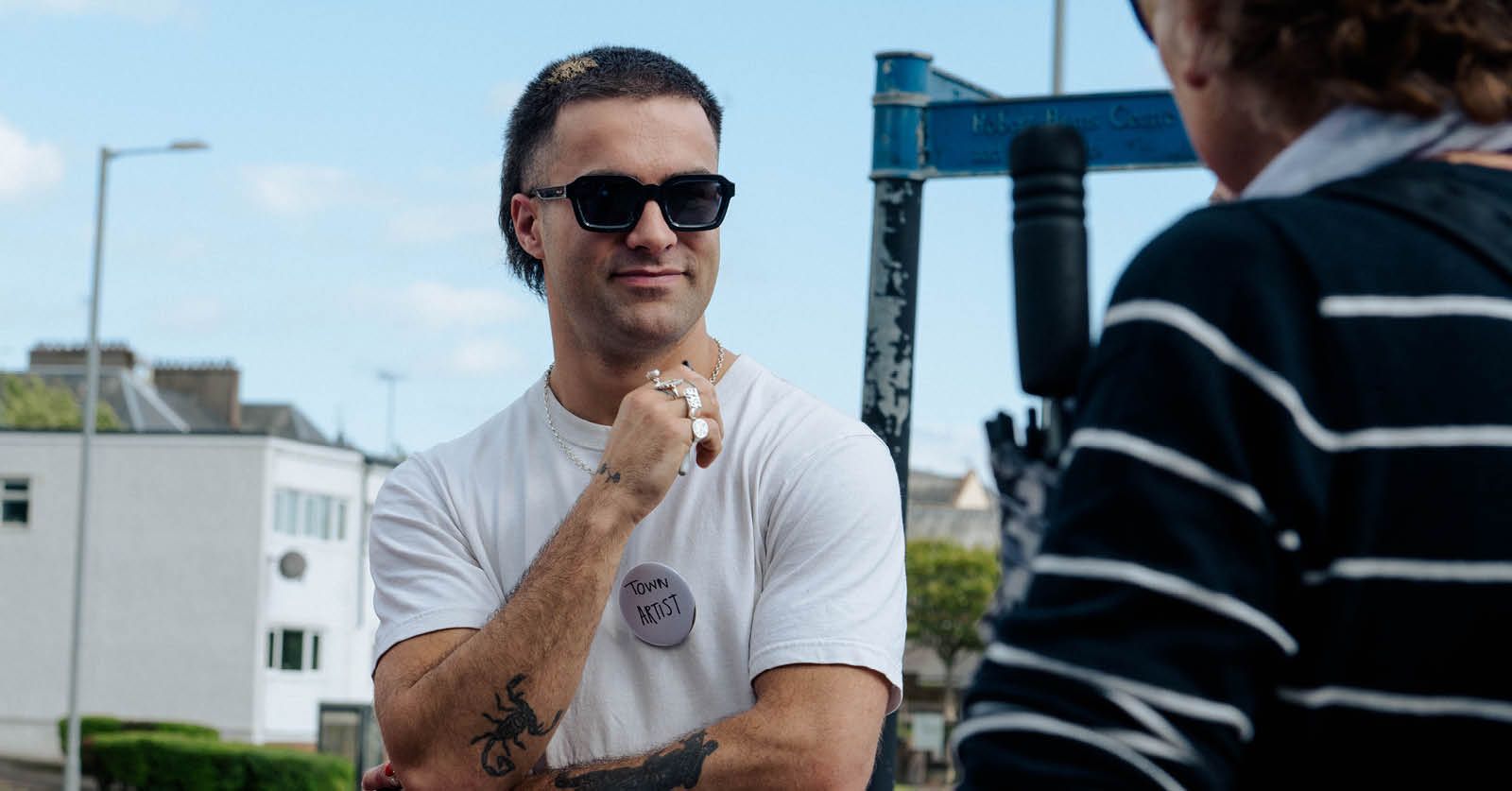
Words by Sonah (Sonny) Chaudhry

Before Creative Spaces, I was doing a lot — working for a bushcraft organisation in Moffat, studying History with the Open University, and trying to get my self-taught jewellery business off the ground. My brand, Sonny Cooper Jewellery, was growing slowly online. I shared my unconventional techniques, my experiments and the mistakes — and people were starting to notice… I think?

But none of it felt connected. It was like I had all the right ingredients but no recipe. The work was there. The drive was there. But it all lived in silos.

Then, in 2023, I learned about Creative Spaces.

Reaching Out

The Creative Spaces team first got in touch via Instagram and invited me to do a takeover. At the time, I didn’t come from a world where being paid to be creative felt like a real option. Creativity was something you did on the side. So when the opportunity landed, I took it seriously. I borrowed a mate’s camera, wrote out a plan, and put together something I hoped would impress.

That takeover led to another unexpected opportunity: speaking at the Creative Spaces showcase. I shared my story — a mix of history, jewellery, identity — and tried my best to stay honest and open about the journey. Truthfully, I can hardly remember what the ‘message’ of my speech was meant to be… other than: keep on keepin’ on with what you care about…something will come along… or whatever?

That turned out to be kind of prophetic (minus the whatever).

By the end of the night, I turned to Mia and asked, “Can I apply to the next cohort?”
She said yes.
I got to work.
Big surprise — I got the job.

Learning in Layers

Creative Spaces started like no other job I’d had: transparent, structured, dynamic. It gave us an induction, introduced us to The Stove’s inner workings, and gently challenged us to think beyond what we already knew. I wasn’t used to working in a team, and I definitely wasn’t used to having this kind of support.

It wasn’t about instant results. The learning was slow, layered, and generous. Over time, we were shown the many faces of The Stove: events, placemaking, public art, networks, production. It was a mosaic — and we were invited to add our own tiles.

For me, it was a return to a kind of curiosity I hadn’t felt since I was younger. During lockdown, I lived in the countryside with my parents. That quiet time gave me space to start exploring jewellery — just messing around, teaching myself. Creative Spaces echoed that energy, but with a difference: this time, the space was intentional, built with care, and designed to help people go forward.

Reframing

One of the biggest shifts for me this year wasn’t discovering that my jewellery tells stories — I’ve always felt that. What changed was how I began to understand and articulate those stories more clearly. Before Creative Spaces, I had all these threads — my jewellery practice, my love of history, my interest in education, my drive to build community — but they lived in separate rooms in my head.

Creative Spaces gave me a way to organise those threads. It helped me see how my passions could work together rather than compete for space. I started to recognise that history itself — the way we engage with it, reinterpret it, pass it on — is a form of storytelling. And storytelling is a creative act.

That realisation became the foundation for my personal project: Makers Unite, a two-day art exchange where people could trade something they made for a piece of my jewellery. It wasn’t about the monetary value — it was about what it means to make something and offer it to someone else, and hear about their story. I received food, crafts, songs, conversations. What mattered was the intention behind each exchange — the act of sharing something meaningful without judgement or transaction.

And that spirit — of shared value, mutual creativity, and openness — is something I now see as central to both my jewellery and my historical work. It’s not about separating the academic from the artistic, or the personal from the political. It’s about finding the space where they all meet — and working from there.

History as Creative Practice

Before this programme, I kept my history degree and my jewellery work in different lanes. I never thought of history as a creative practice — I thought of it as academic, logical, something with rules.

But when I started digging into my own family history — as someone who is mixed-race, who did not always feel like I could talk about this— I realised that telling history is about making sense of silences. It’s about refusing to be shaped by other people’s versions of you and constructing your own narrative instead.

That’s creative work. It’s also personal, political, and powerful. And I’ve learned that my practice — whether I’m making something with my hands or writing an essay — is rooted in the same impulse: to remember and to connect.

The Power of the Collective

One of the most unexpected joys this year was the sense of collective energy. My fellow Spacers — each so different — became part of my world in a way I didn’t expect. We worked together, laughed together, failed together, and made space for each other’s growth. I felt seen in a creative scene I never thought I’d belong in.

It reminded me of how deeply social creativity is — how much it relies on trust, care, and a willingness to be in process, not just product.

Before this, I had spent years trying to carve a path alone. But Creative Spaces showed me that the right kind of structure, held by the right kind of people, can be transformative. It took everything I’d been trying to do solo — and gave it a container, a language and a rhythm.

Places Aren’t Static

For a long time, Dumfries didn’t feel like a place where I belonged. I didn’t see myself in it. I didn’t feel reflected back. But that wasn’t because Dumfries was fixed — it was because I hadn’t yet accessed the version of it that had space for me.

Creative Spaces helped me find that version. The version full of experimentation, kindness, collaboration. The version shaped by people and vision — not just tradition.

Places aren’t static. They become what we put into them. They become what we’re allowed to put into them. Creative Spaces made space for me — and now, I hope to keep making space for others.

To the People Who Made It

To James and Anna — you’re magic. I’ve learned so much from you and it has been a privilege to see you grow.

To Mia — thank you for your trust, care, and guidance. You are wise, caring and passionate beyond you years.

To the wider Stove team — You’re building something beautiful. 

I came into this unsure if I could ever build a future out of the things I loved. Now I know I can — and that I don’t have to do it alone.

Categories
Musings News

Creative Spaces Showcase 2025

Words by Mia Osborne

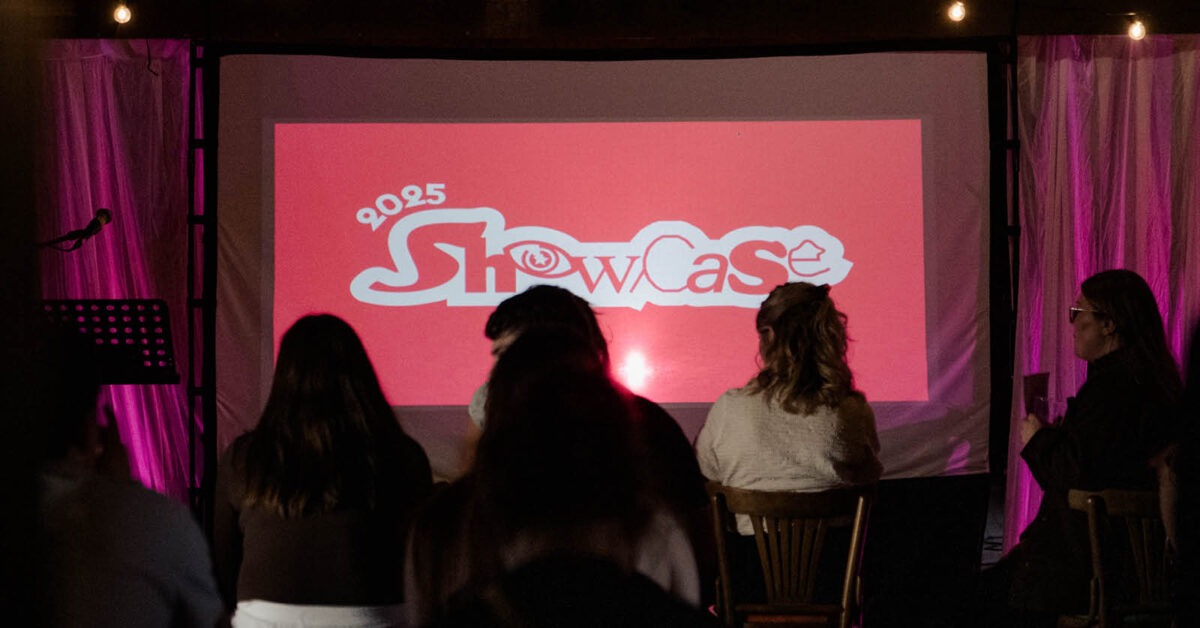
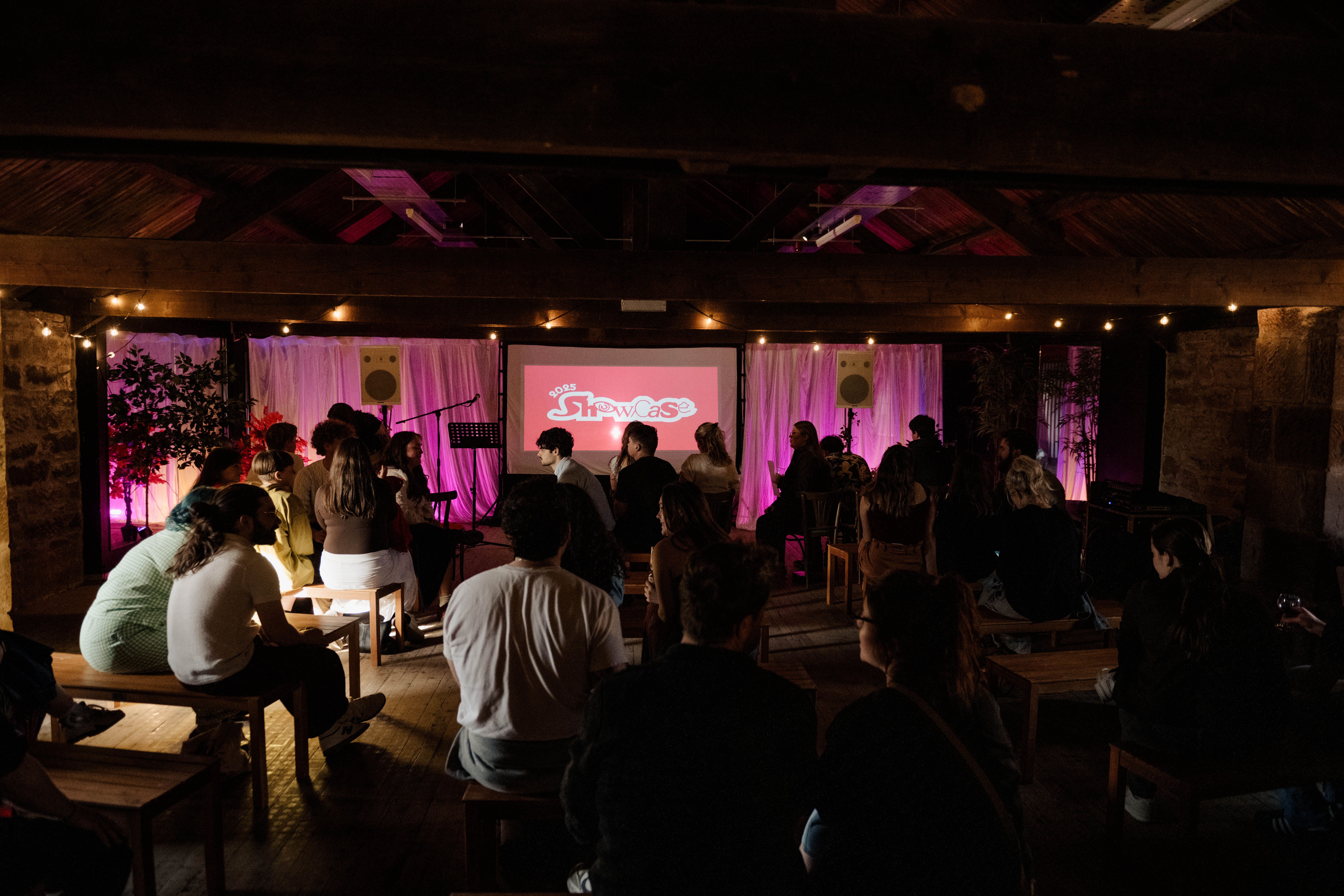
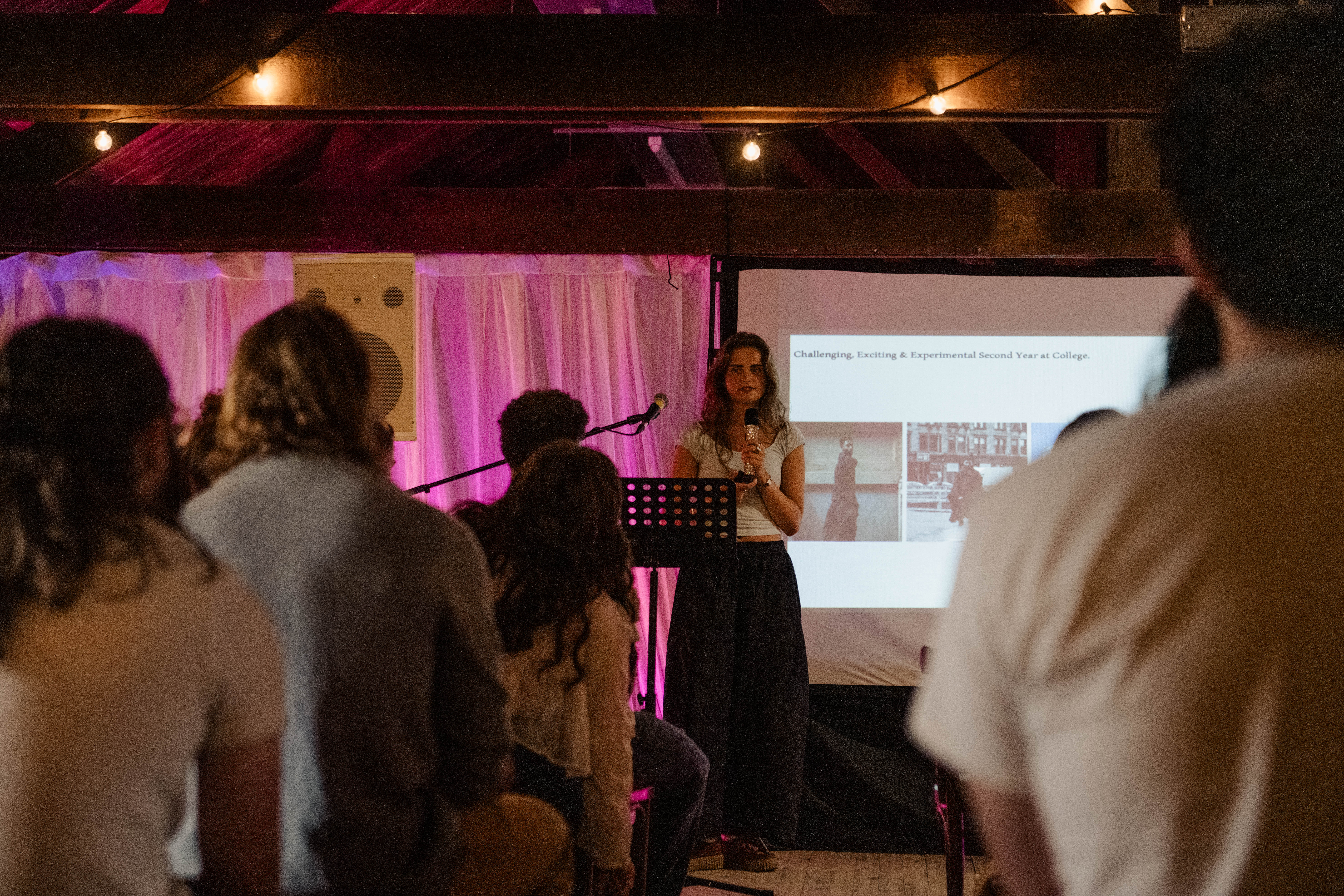
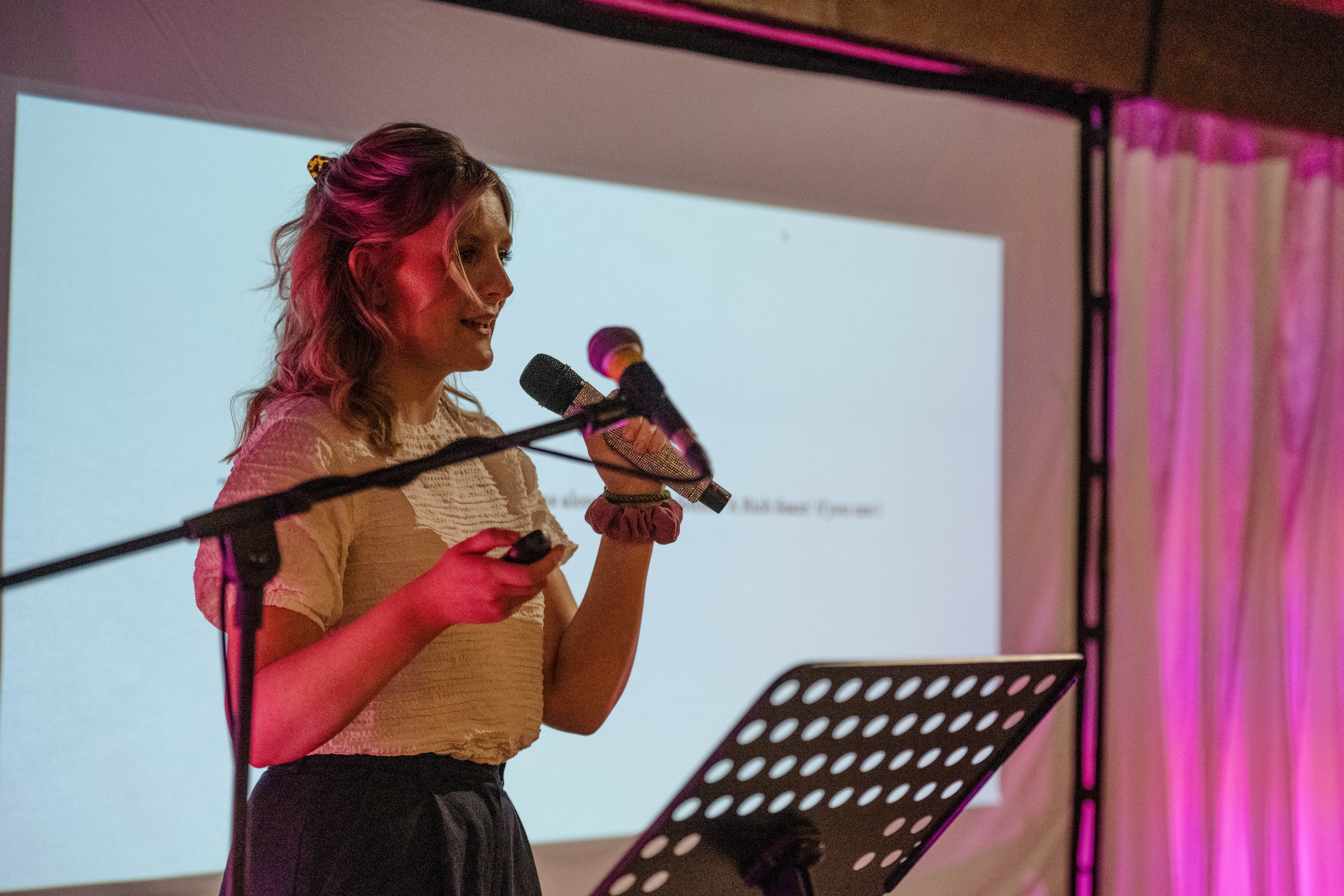
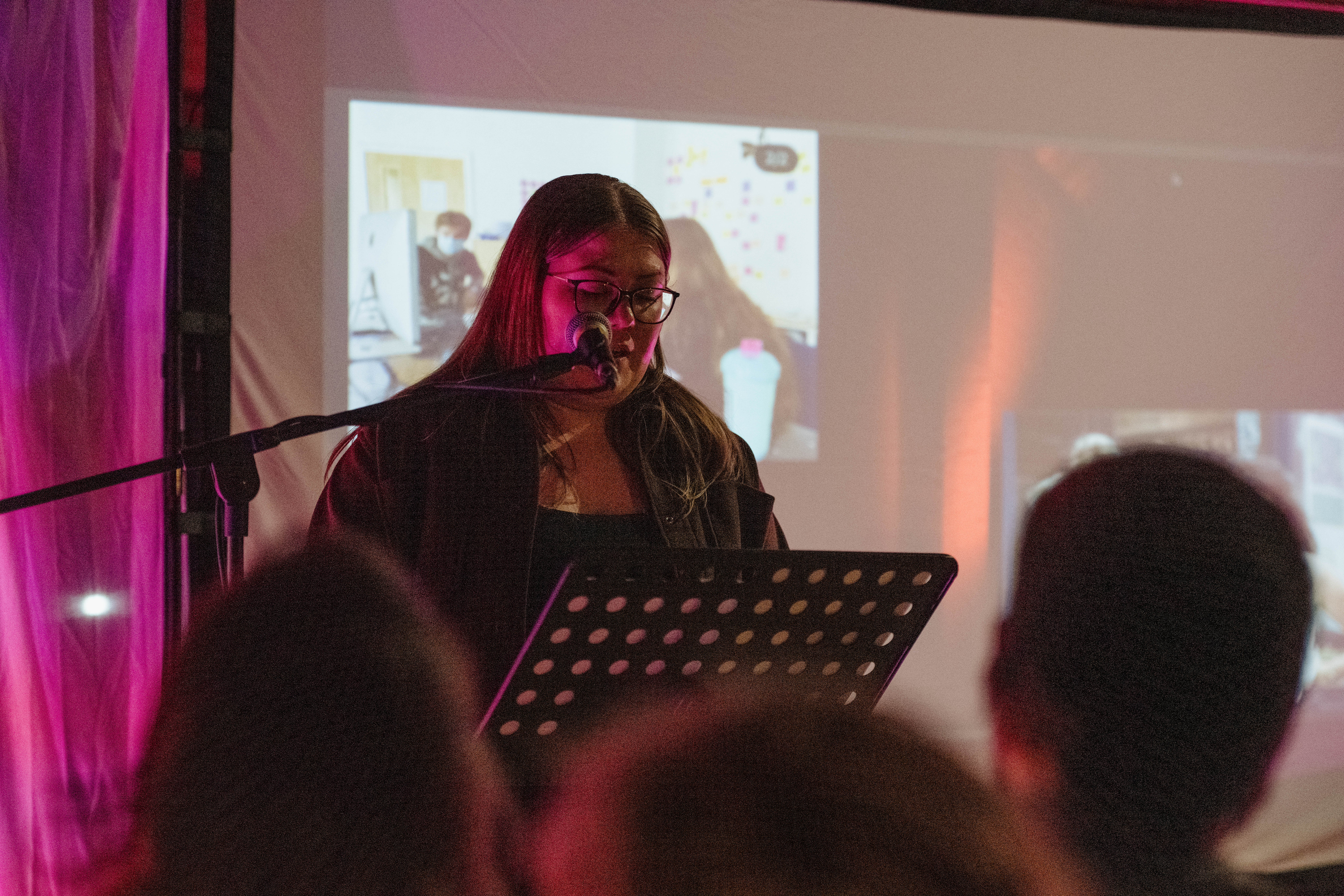
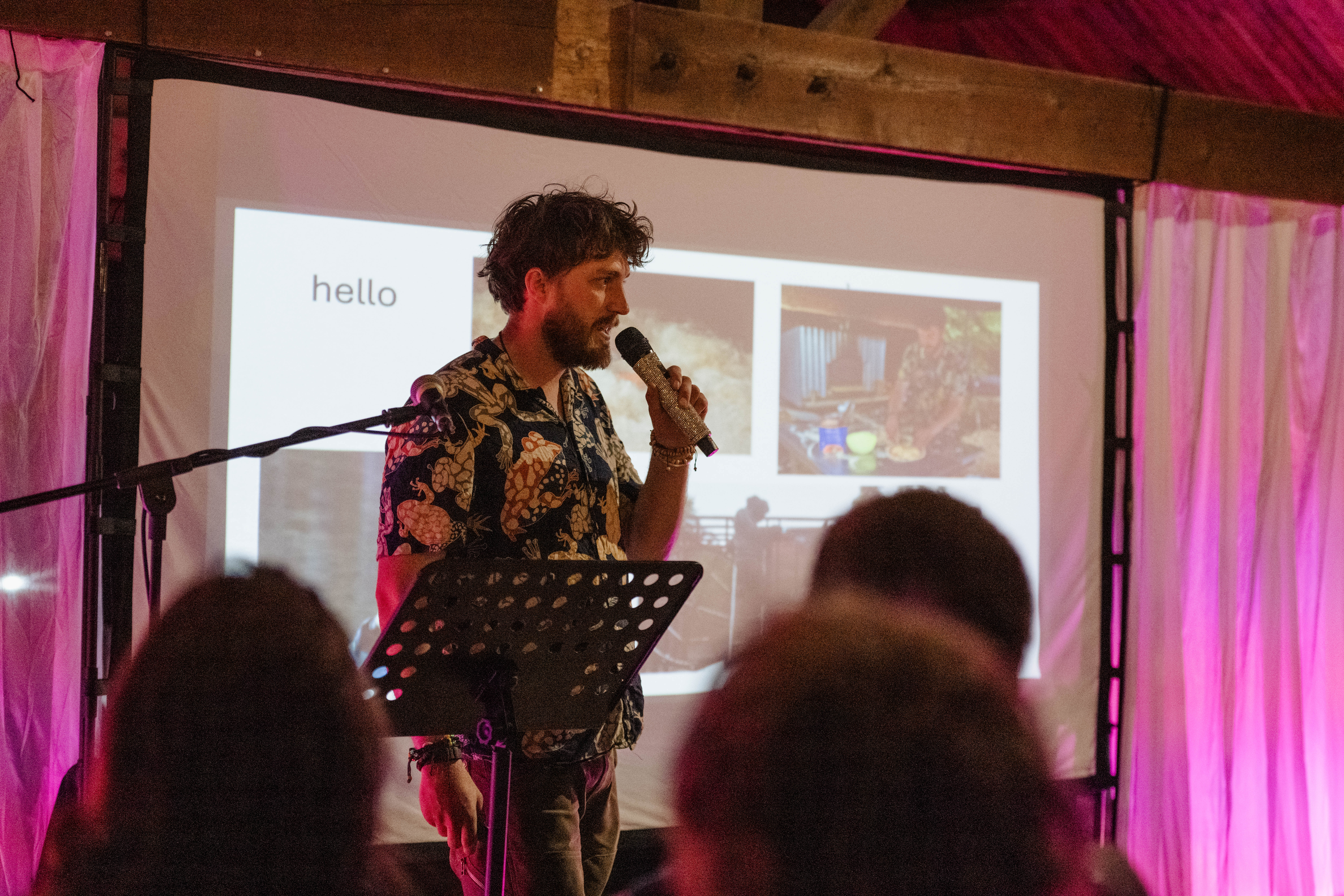
The Creative Spaces Showcase is an opportunity every year for the Creative Spaces team to share the journey of their past 10 months whilst also spotlighting and celebrating the region’s young artists. This is done through an evening of inspiring talks, exhibitions and discussions about young creatives’ impact around the region.

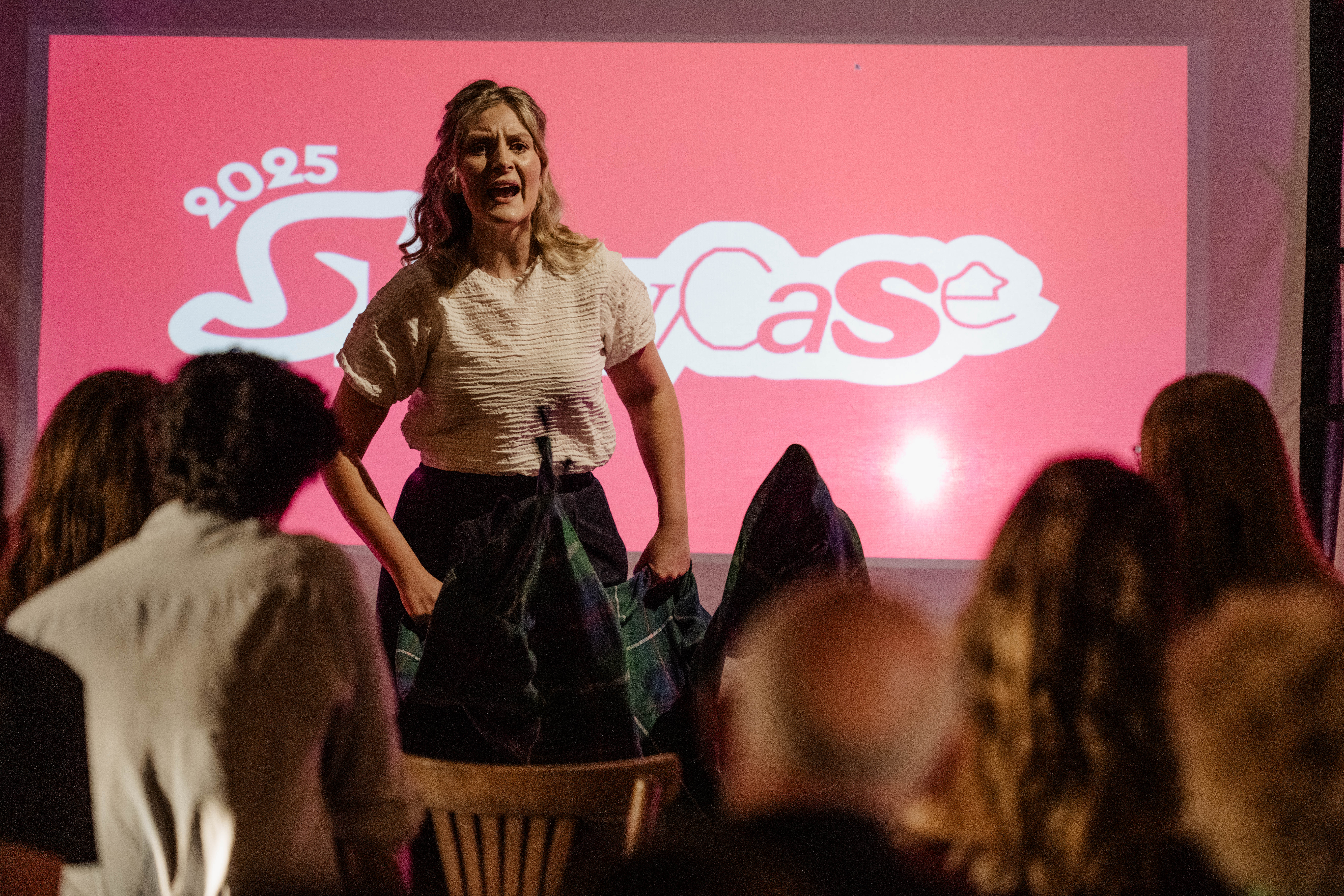
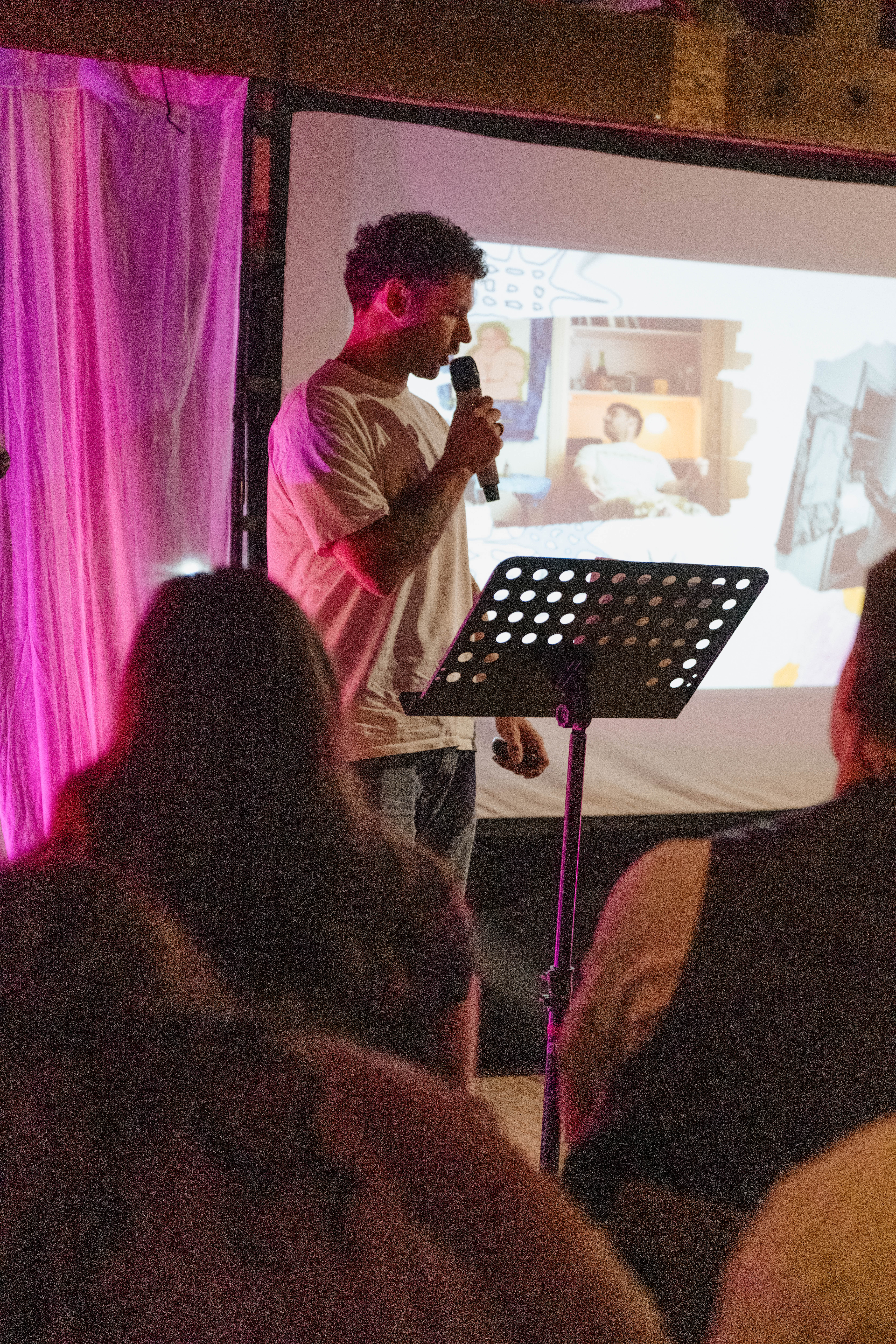
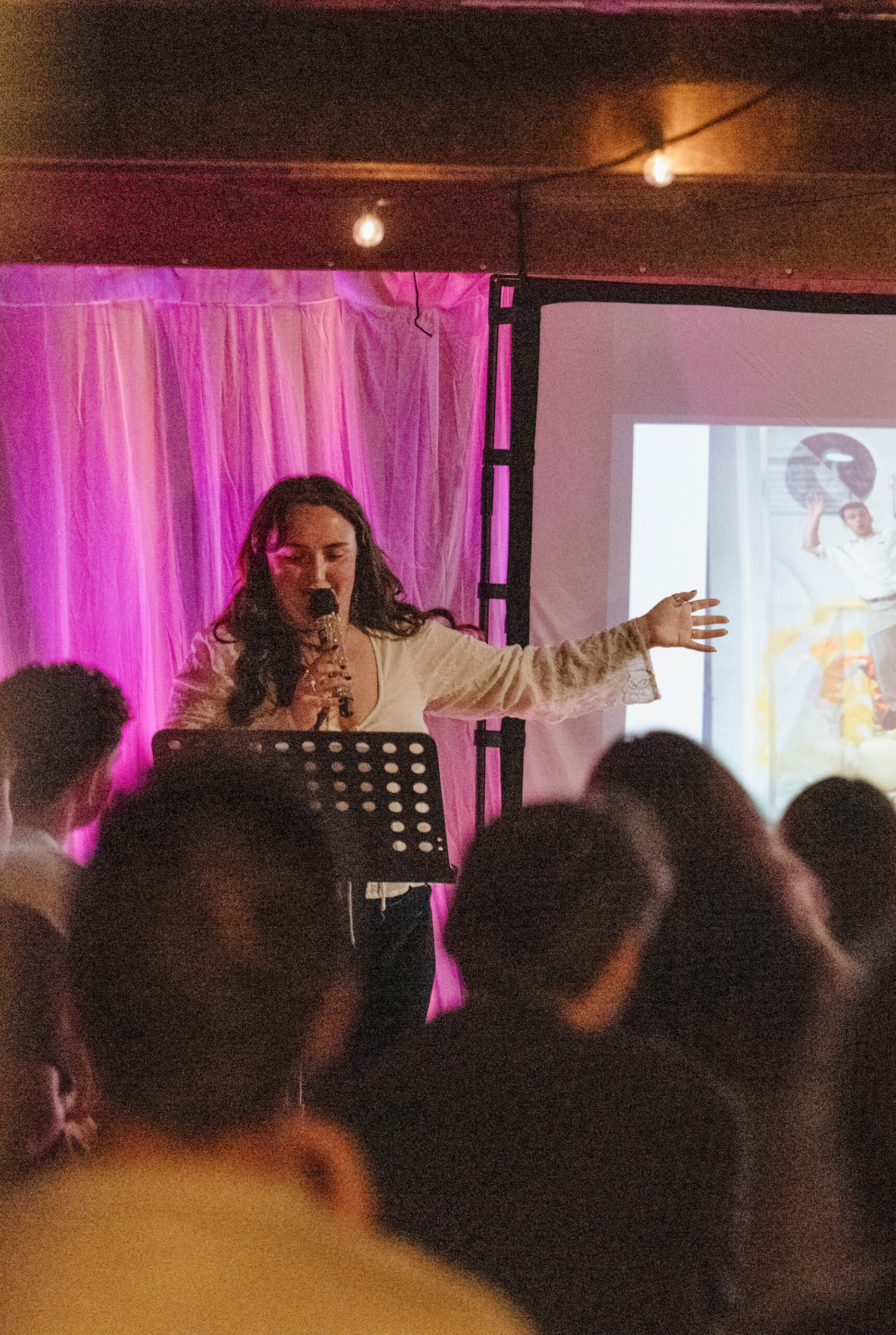
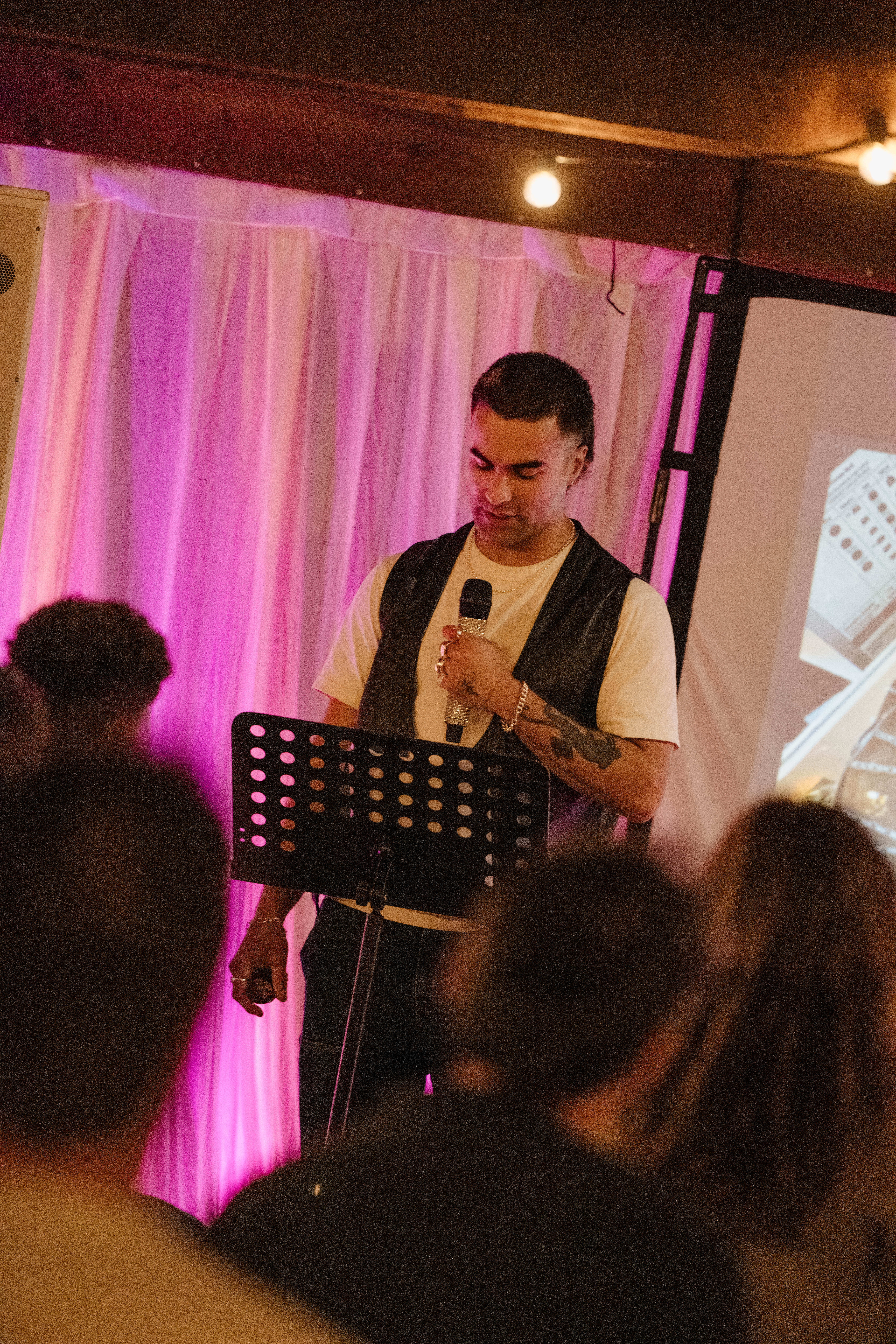
Following on from a day of fringe activity all across Dumfries Town, this year’s main Showcase event took place at the Grainstore, a refurbished multi-use space tucked into the Town Centre. The evening’s audience was made up of both open tickets and allocated invites to organisations, partners and community members from across Dumfries & Galloway and beyond. Guests were welcomed with the hospitality of The Stove Cafe and were offered the chance to network with other creatives and browse the selection of exhibited creative pieces from young artists such as: Lily Ashton, Joseph Cursare, Trinity Coombs, and of course Creative Associates Anna Murray, James Gough and Sonah Chaudhry.

The night kicked off with a quick introduction from myself (Creative Spaces Producer) and then moved into the first half of the evening, the guest speakers:

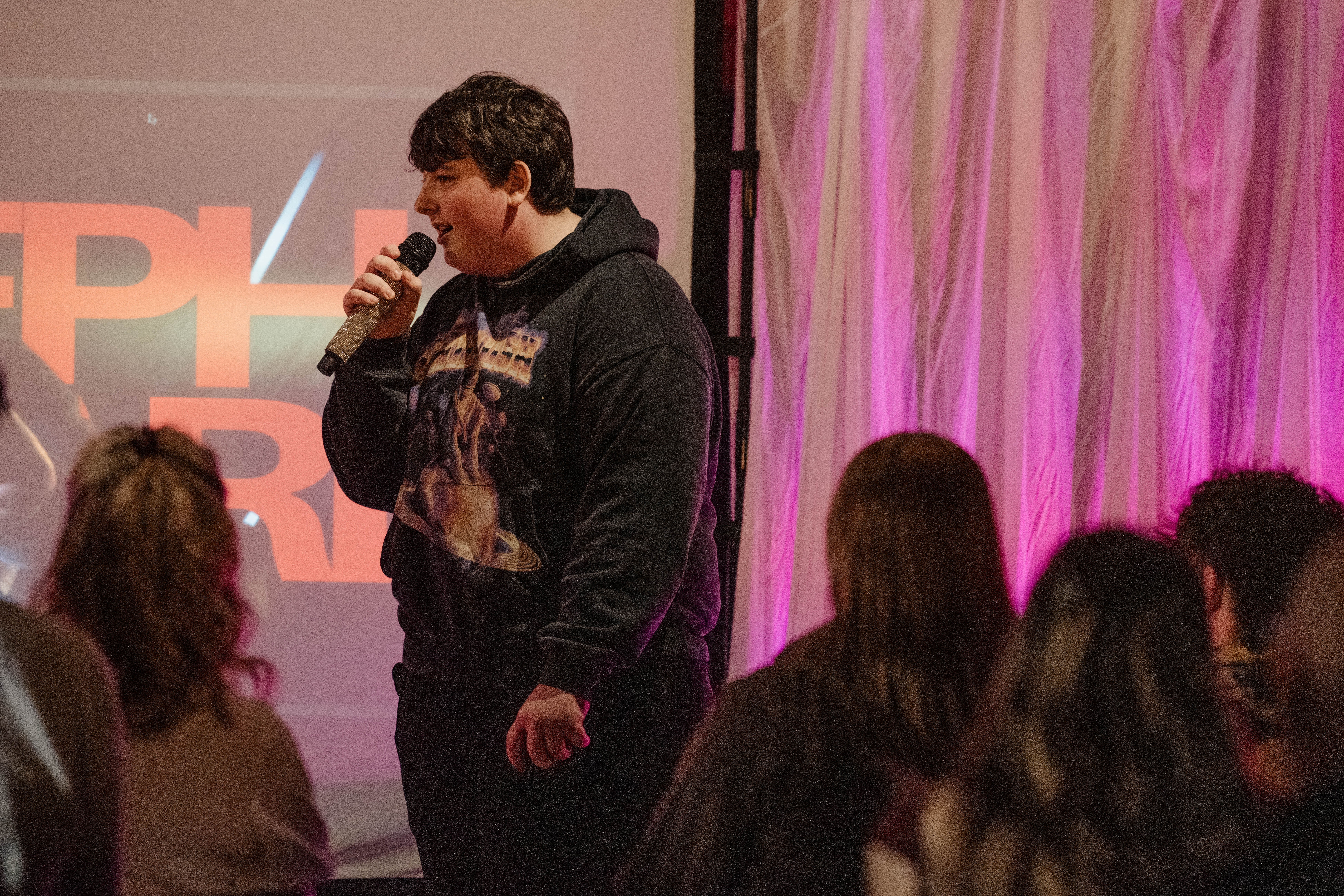
First up, we were dazzled by 16 year-old rapper and performer, Joseph Cursare, who walked us through his journey of making music and finding his feet as an emerging rapper in his local town. Joseph had us in fits of laughter at his presentation, and I felt truly energised by his essence.

Next up, from Gatelawbridge in Upper Nithsdale, we welcomed the refreshing Trinity Coombs, whose mesmerizing documentary photography guided us on a journey along the Nith Valley. Trinity has a great love for the region which really shined in her presentation.

Following Trinity, Lucy Doig took centre stage to tell her story from childhood dress-up to acting school and everything in between. Lucy spoke about her impressive accolades throughout her career and introduced us to “Lament to the Lassies”, a passion project that started as a uni assignment (but more on this to come soon…).

Our penultimate guest joined us from sunny Stranraer, Savannah Crosby is a photographer and creative hub coordinator with Creative Stranraer, who moved us with her inspiring journey of artistic impression and mental health. There was not a dry eye in the house!

Lastly, we welcomed Will Austin, a local business owner, youth facilitator, kayaker, builder, creator and just all-round cool dude to talk us through his eclectic path, and his mission to integrate creative and nature-based learning into the curriculum. Will’s work with fellow young people shows the rich potential of an inspiring idea and heaps of determination.

Every year, we always include a short performance from a young creative as part of our showcasing activity, and this year, we re-introduced our audience to Lucy Doig, to perform her work-in-progress piece, ‘Lament tae the Lassies’; an immersive reframing of the perspective of Burn’s work, focusing on the forgotten women who played a part in Burn’s life. This moving feminist piece was truly mesmerising, and alongside being compelling in content, was also downright impressive in delivery.

This performance concluded the first half of the evening, and we then broke the night up with a short networking break. Before moving on to the second half, we introduced a sharing portion of the evening, inspired by Creative Dundee’s ‘Pass the Mic’. This gave the audience a chance to chat about any events, workshops, activities, ideas or opportunities to collaborate and share with a room full of people in order to plug their things or gain new audience members. We heard from a range of audience members, and this actually ended up being one of my favourite portions of the evening.

I then had the pleasure of introducing the final portion of the evening, the Creative Spaces Associates, James Gough, Sonah Chaudhry and Anna Murray. I knew the team had been building up to this moment for months, and were understandably very excited but nervous to share their journey, especially after the high calibre of guest speakers we hosted in the first half, however I knew they would knock it out of the park. We started with our first Spacer of the evening, James, followed then by Sonah and finally Anna. The three Creative Spaces team were incredible, and they used their platform to share not only their personal journeys to where they were today, but their journey throughout Creative Spaces, weaving together project work with professional development, which only highlighted the progress that they had all made throughout the past 10-months. The team also described in detail the personal projects they worked on throughout the past few months and how these projects impacted their personal and creative practice. You can read James, Anna & Sonah’s reflection pieces on their times at Creative Spaces here.

Every year I end the Showcase event feeling an overwhelming amount of pride in the work that we do, and the scene that we nurture. Every year this has become more and more evident by the people that walk through the door and the feedback they have given. The evening’s Showcase event was, in my opinion, a true reflection of the remarkable creative talent that we hold in Dumfries and Galloway, and the endless possibilities of our young people.

In a fitting end to this reflection of the evening’s event, it feels fitting to reiterate the thanks to the team behind it, for without these people, it would not be possible. Thank you to Sonah, Anna and James for the past 10-months, and all of your hard work, to the guest speakers Joseph, Trinity, Lucy, Savannah and Will for your inspiring presentations, to the Holywood Trust for continuing to support the project year after year, to Martin and the rest of the team at the Stove for all of your support over the past year, to DJ McDowall for your invaluable mentoring, to Wren, James, Anna, DMC and Martin for facilitating some amazing workshops throughout the day, to the production team, Sal & Meg for all your hard work executing the event, to Pam from the Stove Cafe for the bar & snacks, to Kirstin McEwan for photographing the event and to Tom and Louisa at Home Restaurant for letting us use their gorgeous space to host the Showcase event and of course thank you to all of you who came out on the night to support your creative scene.

Categories
Musings

Creative Scotland Independent Review Submission 

The Creative Scotland Independent Review marked a moment of national reflection — a chance not only to strengthen how we support culture across the country, but to reimagine Creative Scotland’s role as a partner in building a fairer, healthier, and more resilient society. At The Stove, we hope our submission offers a meaningful contribution to this vital conversation and helps shape a cultural infrastructure that works with and for all of Scotland’s people and places.

Below is The Stove’s full submission to the Creative Scotland Independent Review.


We welcome the opportunity to contribute to the independent review of Creative Scotland. We strongly support the principle of increased investment in culture and want to emphasise that any recommendations for improvement suggested here must not be used to justify divestment from Creative Scotland or reductions in grant budgets. Instead, we see this review as an opportunity for honest reflection on how Creative Scotland can evolve in its remit to support Arts and Culture in Scotland and be a vital part of a national commitment to culture as a foundation of a healthy society. 

Given the tremendous remit of this review, we have chosen to focus on a single, actionable recommendation to develop Creative Scotland’s role within this wider context: that Creative Scotland adopt a more place-based approach to supporting culture across the country. This aligns closely with the ambitions of Scotland’s National Performance Framework, A Culture Strategy for Scotland1, the Place Principle, the Culture in Communities report published by the CEEAC Committee in 20232 and the national approach tested through Scotland’s award-winning Culture Collective programme.

Access and The Limits of a Market-Led Model

There are stark inequalities in access to cultural opportunity across Scotland. Geography, economic disadvantage, rural isolation and systemic underrepresentation all contribute to a funding system that is more advantageous to those with privilege, proximity, and established networks. In rural areas like Dumfries and Galloway this is even more visible making it harder to participate in or make a career possible in the arts. People face structural barriers from; travel, provision and learning opportunities, and lack of support and infrastructure. The reliance on a centralised, project by project model that does not take a strategic and place-specific approach to these challenges will only deepen these inequalities.

Creative Scotland’s current model also reinforces a competitive, market-led system. This limits the strategic potential of public investment in culture and inhibits the long-term thinking that could deepen the impact of what is currently invested and help broker further investment from other sources for wider social impact. 

We would like to see Creative Scotland work with Scottish Government to take a Community Wealth Building approach to investing in culture and move away from Culture as an ‘industry’ in conventional economic terms as part of Scotland’s transition to a Wellbeing Economy.

Regional Visibility and Presence

A key challenge identified through our experience is the limited regional visibility and direct presence of Creative Scotland in regional and localised strategies. For many individuals and communities, Creative Scotland can feel distant, abstract, and difficult to break into. A lack of regional infrastructure both in terms of physical presence and tailored support exacerbates barriers to more joined up and equitable engagement in funding processes.

Creative Scotland could increase its relevance and impact by establishing stronger, more regular connections within regions. This might include regional relationship managers with embedded roles in localities, dedicated contact points for advice and collaboration, and an active presence in key regional forums. A shift like this would help Creative Scotland better understand the nuances of local cultural ecosystems and enable more responsive and context-aware decision-making.

Building a more visible and accessible Creative Scotland presence would also signal a cultural shift from being primarily a funding body to becoming a collaborative partner in regional development and cultural strategy.

A Place-Based Approach

A place-based approach would mean working with and supporting collaboration between locally rooted organisations and networks that play a coordinating and developmental role within their communities. These organisations are best placed to understand need, build trust, and support capacity building, especially among those underrepresented in traditional funding systems.

At The Stove, our work through the What We Do Now network (WWDN) has shown how a local hubs model can work together to support creative development of ideas, build the capacity to deliver projects, bring in additional investment, and build long-term visions for culture in towns across Dumfries and Galloway. Examples of the impact of this approach can be seen through LIFT D&G in Lochside, who with our support secured Creative Scotland funding to continue to bring high quality arts intervention to their community, a significantly underserved community in terms of cultural provision. Similarly, Creative Stranraer, a grassroots hub supported by The Stove is emerging as a centre for creative activity, skills development and community-led regeneration in a part of Scotland often overlooked in national cultural policy. These initiatives show how targeted investment in local cultural infrastructure can empower communities, nurture talent and deliver long-term social and economic value.

In The Stove’s Creative Placemaking Approach (2024)3 we set out a vision for the role and significance of culture in supporting healthier, fairer and more sustainable communities across Scotland. This is an approach we have tested through What We Do Now in towns across our region, placing creativity at the heart of wider goals around wellbeing, skills, enterprise, climate justice and local democracy. Scotland is at a turning point, with policy ambitions increasingly emphasising locally led change and place-based strategies.

We would like to see Creative Scotland take a leading role in developing their remit to align with a whole place approach to culture across Scotland.

Participative Culture

An important consideration in this review is the distinction between supporting professional cultural practice and facilitating broader community participation in culture. These are fundamentally different types of activity, each requiring its own approach to funding, development and evaluation. The latter is about ensuring that all have access to the positive impact participative culture has on individual and collective wellbeing in communities.

Sector support for the distinction of participative culture and how it is supported was highlighted in a recent event The Stove hosted at the Scottish Parliament (Nov 2024), Creative Placemaking: Culture in Communities, co-hosted with MSP’s Colin Smyth and Emma Harper and attended by over 70 representatives working with culture in communities.

We would like to see Creative Scotland play a more strategic role in clarifying these distinctions. This would require work with Scottish Government and other national funding bodies (Screen Scotland, Historic Environment Scotland, Foundation Scotland, Inspiring Scotland) to separate and align strategies around how culture is funded and developedas two distinct priorities with their own measurements of success and a clear understanding of the remits of each within that. This shift would be an acknowledgement of the vastly different needs of participative and community-led culture and its significance as the generative foundation for our Cultural Sector more broadly.

A More Equitable Future for Culture in Scotland

Culture in Scotland needs to be supported in a way that is fair, inclusive and reflective of the places people live. That requires a rebalancing of support, not a replacement of Creative Scotland’s current work, but an evolution of its approach. 

We would like to see the following priorities for Scottish Government and Creative Scotland to work on together:

  1. Regional Strategies: work with local authorities and regionally significant organisations to develop funding and support aims for each local authority area. Allocate a proportion of funding specifically for regional delivery and help to develop outcomes that are region wide to measure against this investment. This would enable locally accountable decision-making and ensure resources reach underserved areas.
  2. Support for Local Hubs: Recognise organisations with a proven track record of community-led practice and resource them not just as delivery bodies but as convenors, hosts and capacity-builders for local creative sectors that are not supported.
  3. Develop Peer Networks and Learning Structures: Foster regional networks that allow creative practitioners to connect, share learning, and build resilience across geographies. 
  4. Enhance Evaluation and Evidence: Take a leadership role in evidencing the deep and lasting impact of culture on community wellbeing, inclusion, and economic resilience. Develop a shared framework with funded organisations that reflects local as well as national priorities.
  5. Clarify Creative Scotland’s Role within a Wider Ecosystem: Explore the limits of Creative Scotland’s remit and seek greater strategic alignment with government departments, local authorities and national cultural infrastructure to better support community-based work.

We offer this submission as a constructive contribution to the conversation and in the spirit of generosity and collaboration. We believe that by working together, we can build a cultural infrastructure that truly supports all of Scotland’s communities.


  1. Scottish Government (2020) A Culture Strategy for Scotland. [online] Available at: https://www.gov.scot/publications/culture-strategy-scotland/ [Accessed 22 Jul. 2025] ↩︎
  2. Scottish Parliament. Constitution, Europe, External Affairs and Culture Committee. (2023). Annual report of the Constitution, Europe, External Affairs and Culture Committee 2022–23. [online] Available at: https://digitalpublications.parliament.scot/Committees/Report/CEEAC/2023/9/14/4c816e37-a817-4de7-b22e-4b4c924d81fd [Accessed 22 Jul. 2025] ↩︎
  3. The Stove Network. (2024). A Creative Placemaking Approach. What We Do Now. [online] Available at: https://whatwedonow.scot/resource/a-creative-placemaking-approach/ [Accessed 22 Jul. 2025]. ↩︎
Categories
Musings News

GO SEE in Dundee!


Dundee – A City of Creativity & Connection

An early start had us arriving in Dundee bright-eyed and ready for a day of exploration. We kicked things off with a visit to Creative Dundee, meeting their team at Dundee Contemporary Arts (DCA). Over coffee and conversation, we swapped stories—sharing what’s been happening in Dumfries and soaking up insights on Creative Dundee’s work. From their Hapworks initiative to the Amps network, it was clear we were kindred spirits, connected by a passion for creative community-building. We also got the lowdown on Pass the Mic and their legendary PechaKucha nights.

Feeling warmly welcomed, we set off on a guided tour of Dundee’s buzzing creative scene. First stop: Generator Projects, Dundee’s longest-running artist-led space. It was alive with energy, a constant hum of artistic activity, and the very definition of community-driven creativity.

Next up was Double Door Studios, where we were greeted by the brilliant Islay Spalding, jeweller and founder of the space. Our chat with Islay delved into the balancing act of being a creative—where passion meets practicality, and how to carve out sustainable careers in the arts.

Lunch at The Bach

Refuelled and ready, we made our way to The Keiller Centre, a fascinating shopping centre with certain community-led units in the heart of the city. We got a glimpse into its future plans and were delighted by Volk Gallery, an independent arts venue housed in a repurposed nappy vending machine.

Then, it was over to Hapworks_00, a pilot creative co-working and event space led by Eilish at creative Dundee. Hearing about the successes of the project was inspiring, but it also opened up conversations around the challenges of securing and sustaining creative spaces—something we all felt deeply connected to. Our day wrapped up with a breezy walk to the waterfront to check out the ‘Sharing Not Hoarding’ riso print exhibition, a fitting end to a day filled with ideas, inspiration, and the joy of shared creative energy.

We left Dundee feeling invigorated, having seen a whole new side to the city—one pulsing with collaboration, innovation, and a real sense of community.

Day 2: Glasgow – A Quick Stop with Big Impact

Before heading home, we made a detour to Glasgow, kicking things off with a visit to the Kelvingrove Gallery to explore their Empire Exhibition. This powerful exhibition critically examined the legacy of empire and colonialism—a moment for us to pause, reflect, and consider the impact of history on the institutions that surround us today. As an unexpected bonus, we caught the Kelvingrove organ recital, a mesmerising performance that had us all slowing down to take it in.

Lunch

Post-lunch, we made our way to Glasgow Women’s Library, a truly special space dedicated to celebrating and preserving women’s histories. As the only Accredited Museum of its kind in the UK, it offers a rich archive, a lending library, and a packed programme of events. The calm, welcoming atmosphere left a lasting impression, and we all departed feeling a deep sense of belonging and gratitude for spaces like this.

Wrapping Up: A GO SEE to Remember

Dundee GO SEE was an absolute cracker. Not only did we expand our knowledge of the creative sector, but we also grew closer as a team—something we reflected on (enthusiastically) during the car ride home.

A massive shoutout to Mia, our creative producer, for pulling together such a brilliant trip. This journey left us feeling inspired, connected, and fuelled by a renewed love for the creative community. Until the next GO SEE!

Written by Sonah Chaudhry