Support Us
Categories
Musings News Project Updates

Stranraer ‘Harbourland’

An update on the next phase of Stranraer’s waterfront development project by Maya Rose Edwards.

The Stove and Creative Stranraer have been commissioned by Dumfries and Galloway Council to use creative placemaking techniques to involve the local communities of Stranraer in the rethinking of the town’s waterfront spaces as part of a major regeneration effort following the ending of the ferry service to Belfast in 2011.

In November 2023 we commissioned artist Maya Rose Edwards as artist-in-residence for the waterfront – Maya’s brief was to use their creative practice to reach out to diverse communities in the town and seek their thoughts and ideas about the kind of waterfront they’d like to see for the town. This initial phase of the project was very successful – ending in a public festival day called Raising the Sails. We were delighted that DG Council have integrated a creative placemaking approach into the continuation of the One Waterfront project and we were able to bring Maya back to the town for a second stage of work. This is their first blog on returning to Stranraer. 

Watch the Raising the Sails film by CT Productions HERE.

In the initial Harbour project we engaged with nearly 900 local individuals and 27 community groups to get people’s thoughts about the kind of waterfront they would like to see for the town. I am now homing in on one aspect of the proposals – a new area of ‘reclaimed’ land between the slipway and the East Pier which will be formed using the material dredged from Loch Ryan to make the harbour area deep enough for larger boats to use the marina. 
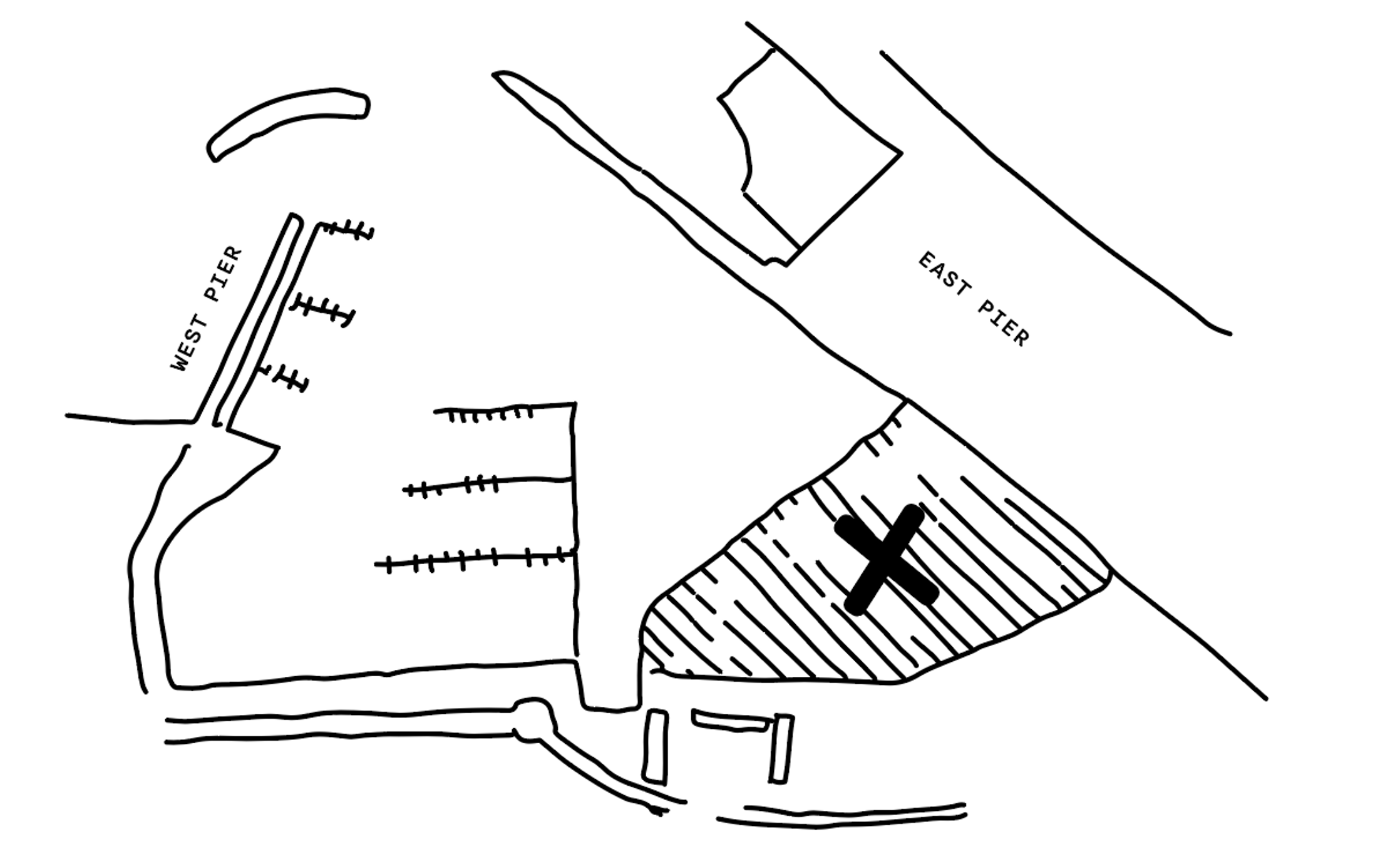
Location of ‘Harbourland’ marked with X 
Site specific research/concept realisation  

My hope is that Harbourland will be a new piece of Scottish coastline built from the ground up using community ideas and creative inspirations taken from the locality. I have commenced the initial research process thinking about the nature of the land itself – the dredged Loch Ryan sediment. Sediment is an essential component of natural cycles and ecosystems it  it acts as a constantly changing barrier between the ocean and coastal communities. I’ve been considering ways in which that ‘barrier’ can instead increase our access to the coast and our connection to the water itself. Turning the tide towards a future where the communities in Stranraer are more connected to their coastal culture and its ecosystems.  

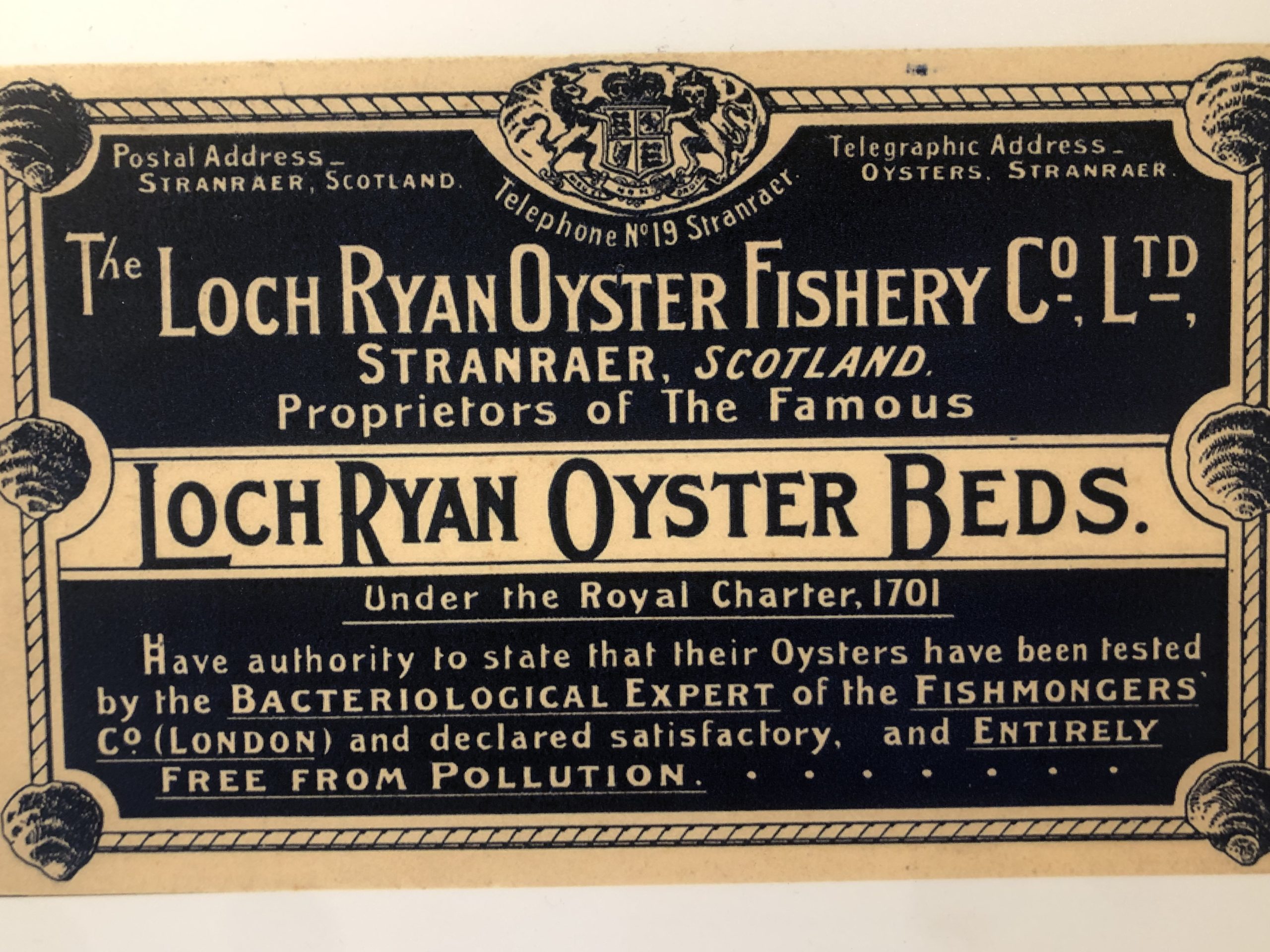
I’ve also been thinking about oysters. The Loch Ryan oyster beds are a rare and unique feature of this coastline, and something of great pride for the communities of Stranraer. Oysters themselves are natural dredgers, with each individual oyster filtering over 50 gallons of water per day. Once an oyster attaches to a bed, it grows and forms around the surface it attaches to. It’s like starting a rubber band ball, the oyster needs an initial surface to attach to, but once they start growing, they can transform an artificial reef into a natural one. The question I am asking myself is – how can we act like the oyster to build an infrastructure that benefits both the toon and the coastal biodiversity? What are the types of ‘surfaces’ that communities in Stranraer can attach to and make their own? How can harbours and sea walls become landmarks of heritage value for communities of the future?  
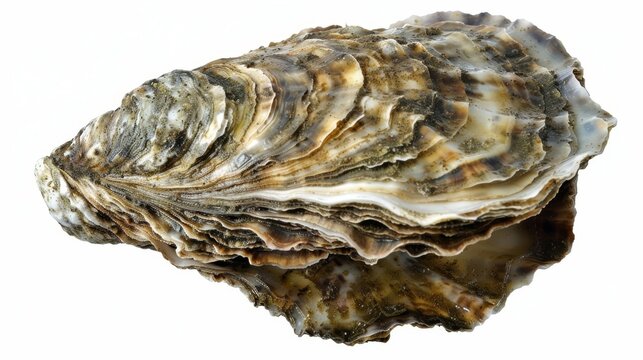
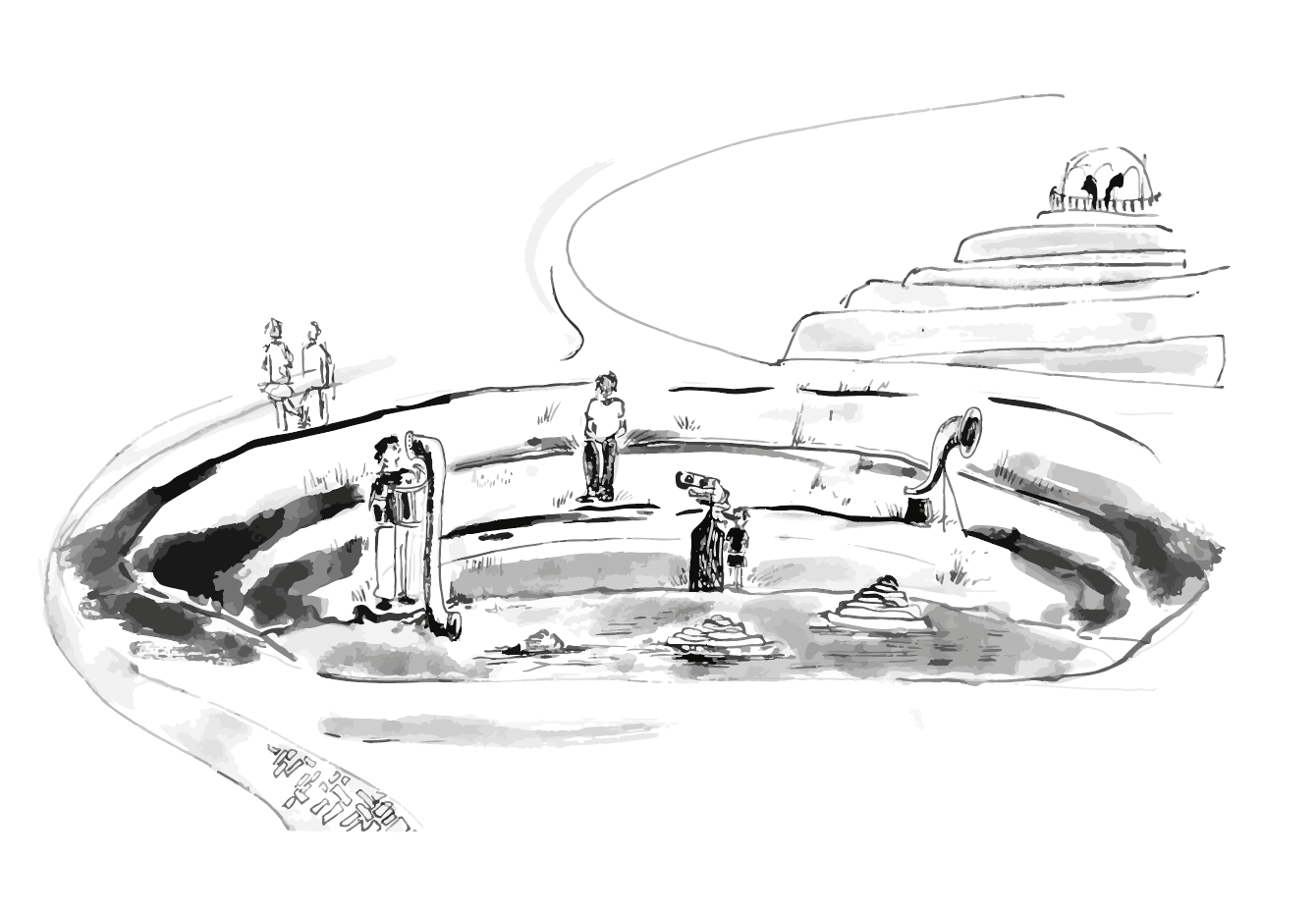
With this site-specific research underway, I’ve began to combine the visual languages of the geologic coastal sediment and the organic processes of the oyster bed to develop sketches of landforms, tributaries and coastlines for the Harbourland proposal.  
Co-design and collaboration  

With initial sketches starting to take shape, I then began to meet with local folk, organisations and marine researchers who were key partners within Phase 1 of the Harbour project for their input. We have all sat down around a large acetate map and plotted might be needed within this new piece of Stranraer. Some of the feedback included practical requirements for community events, lighting, recycling and growing facilities, etc, all of which have been drawn up and incorporated within the wider design.  

As a part of the co-design process, I am putting together a programme of creative engagement activities and events to further inform the proposal for Harbourland and provoke the imaginations of those who have not yet been reached by the project. The commencement of this programme is now underway, with the first interactive installation due to take place at this year’s Oyster Festival.  

Harbourland polling station  

Oyster shells were historically used as the first ever ‘ballot cards’ during the early days of democracy in Ancient Greece. Communities would cast their shells to announce/denounce happenings within their towns and villages. At this year’s Oyster Festival, the talented guys at the Rhins Mens Shed and I have created the ‘Harbourland polling station’ to bring this tradition back to modern-day Stranraer.  

During the Festival, the shells of millions of oysters consumed over the weekend are collected for re-distribution back into the Loch. These shells then form the basis for new growth and the continuation of the native beds. This year before their redistribution, the empty shells will be collected to form a part of an interactive public consultation for ‘Harbourland.’ This 3-metre polling station will hold large clear box sections, within which people will cast their shells in vote for specific features they’d like to see on the land – much like your little blue tokens at Tesco! This data will be recorded to further inform the design proposal and initiate important conversations about what matters to people most. From interactive play structures to a sheltered place to sit and bide a while – this will be the first and most public opportunity to engage in the co-design process.  

Siltcrete trials  

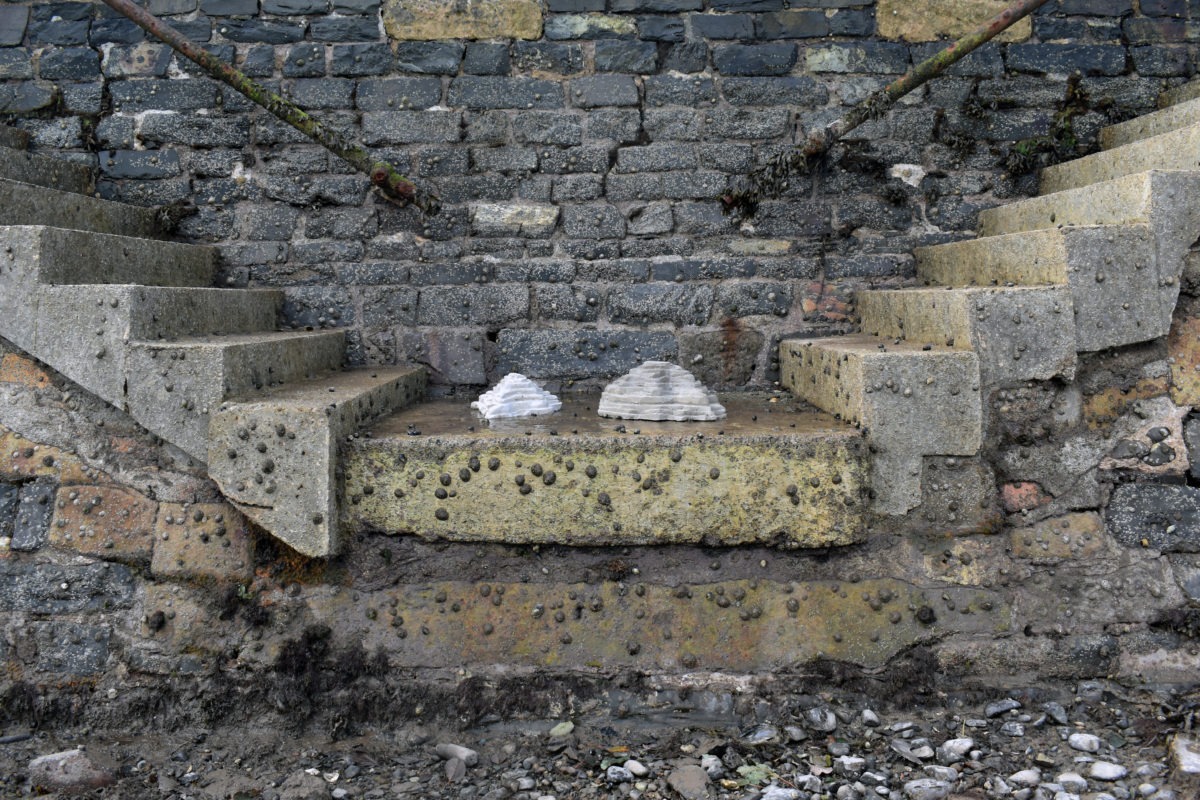
I will also be undertaking several material trials. I have been working with the form of the Oyster shell as a sculptural reference point, exaggerating its topographical layers to create tiered island structures. These forms also reference harbour staircases, where ecological growth can be tracked through tidal fluctuations.   

I have been experimenting with use of the Loch Ryan seabed aggregate (a mixture of Grey Wacke, shale and Red Sandstone) for use within sustainable building materials, leading me to create ‘Siltcrete’. I have been researching the many ways in which architects, sculptors and engineers have been developing organic material composites towards a sustainable future. Due to the rich mineral content of the dredged seabed, the incorporation of this material into the foundations of Harbourland should greatly improve the biodiversity we’re hoping to achieve.  
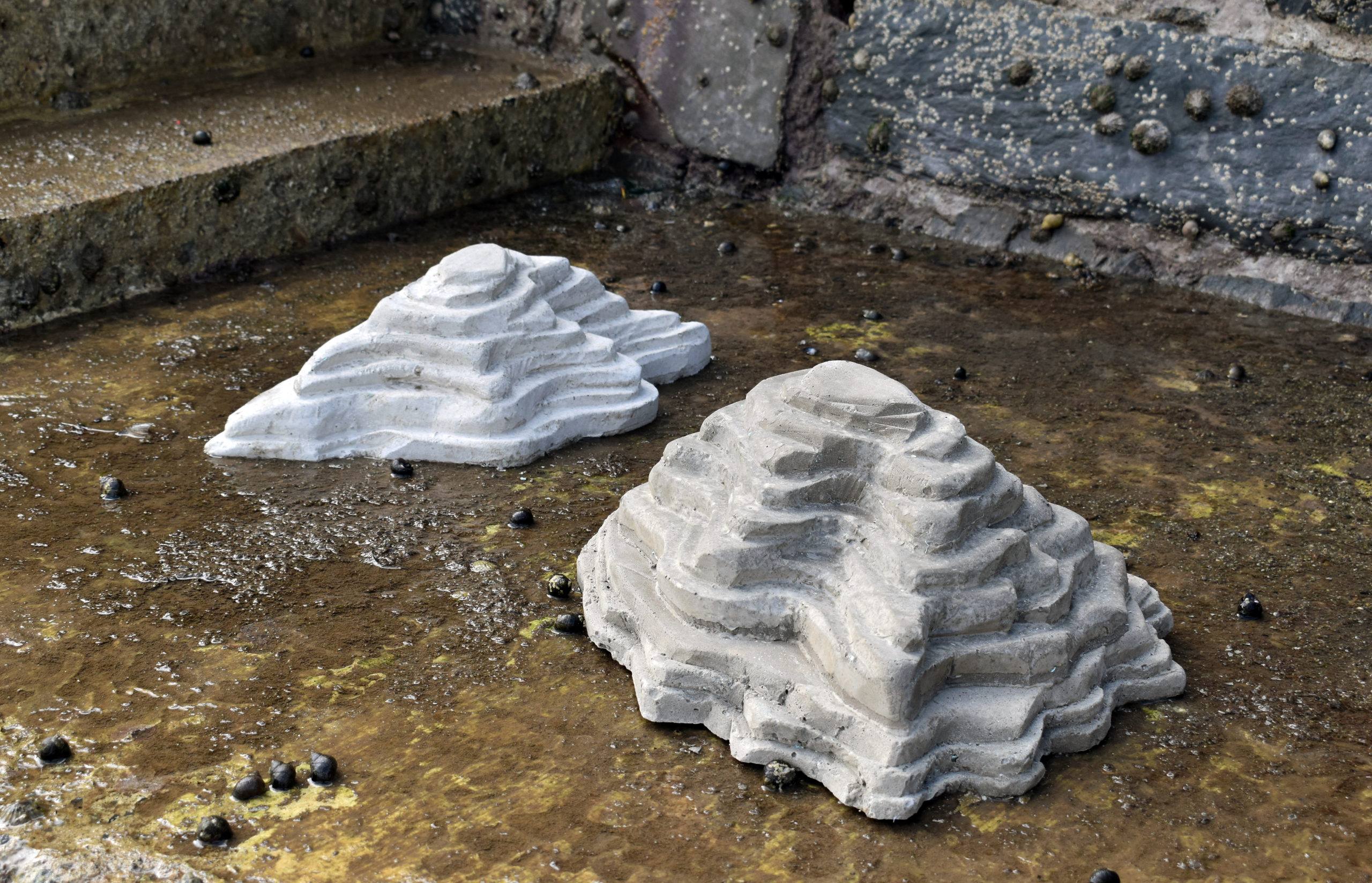
From hand carved sculptures cast in silicone to form a mould, I have been creating ‘Siltcrete Harbours’ from a mixture of cement, local beach sand and coastal aggregate. I have formed a relationship with marine biologists at the Solway Firth Partnership who have offered to formulate a report at the end of the installation period to track the ecological growth in the harbour, on the siltcrete and within this topographical form. This should form a key piece of research within the wider proposal for Harbourland.  
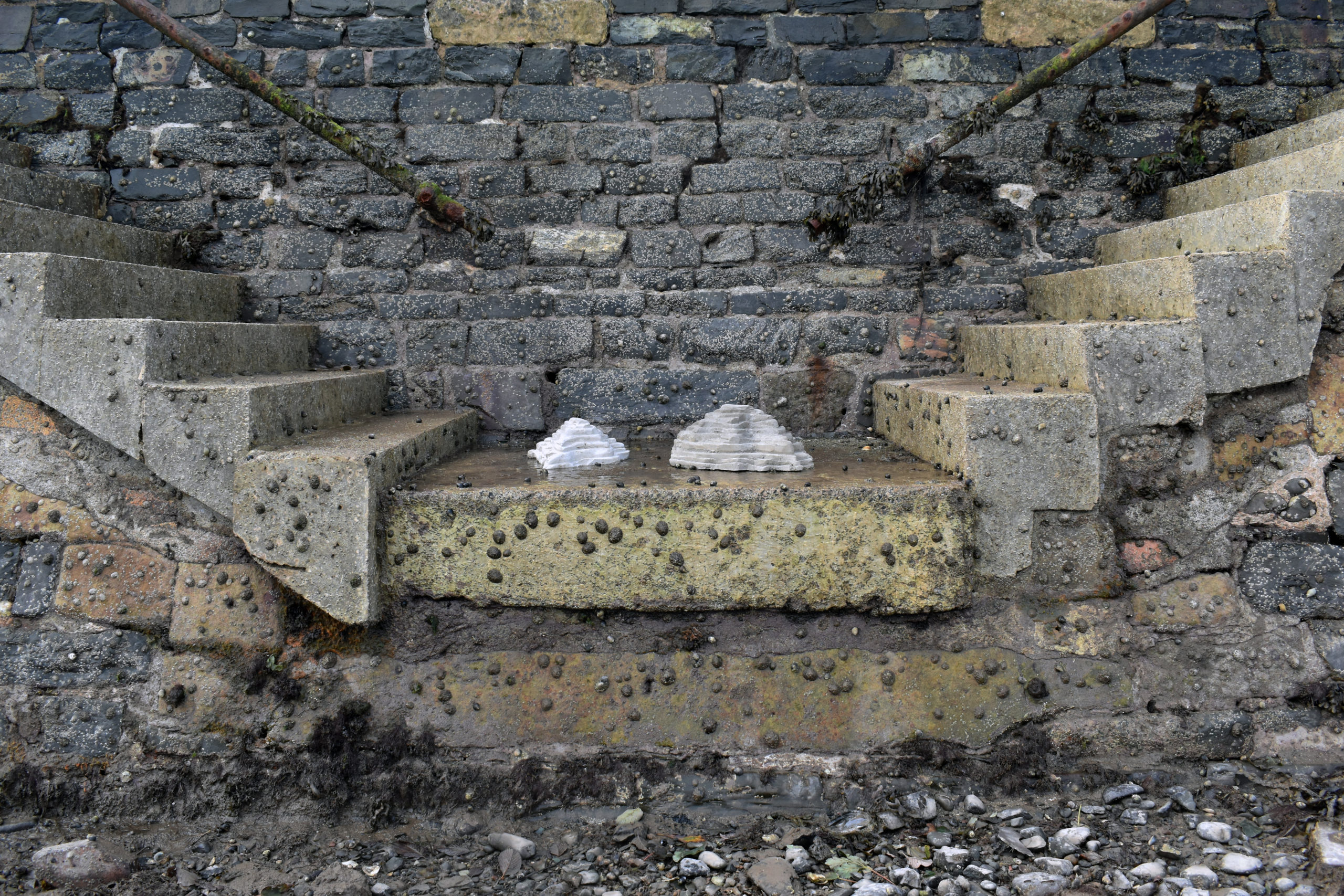
Siltcrete experiments installed on the harbour steps 
Until next time 

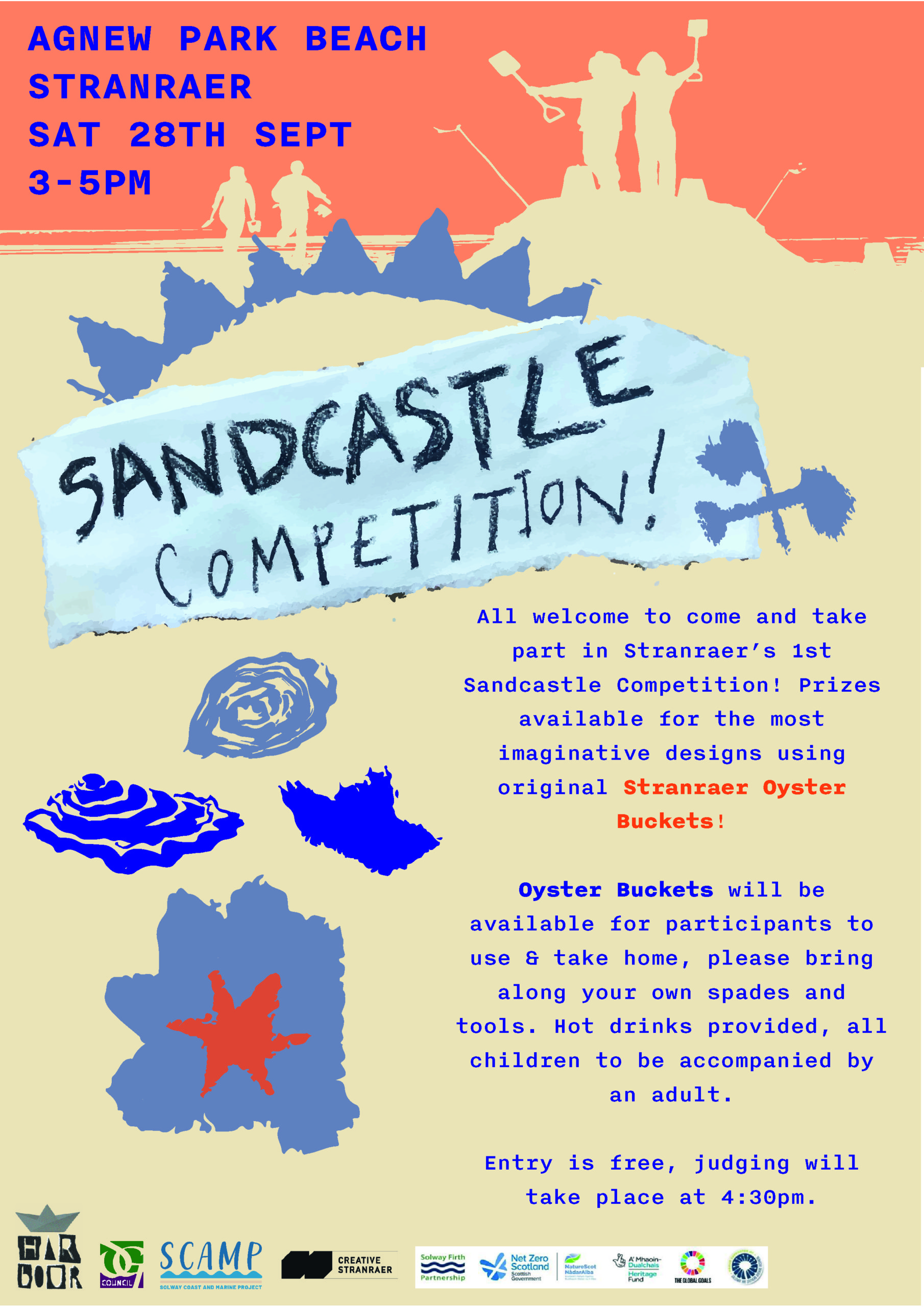
Over the next few months as we move into Autumn, residents of Stranraer should expect more opportunities to engage in the Harbourland proposal programme, beginning with a sandcastle competition on Agnew Park beach on Saturday 28th September. All participants will receive a free ‘Stranraer Oyster Bucket’ inspired by the topographical sculptural trials. Over the course of the afternoon,  we will fill the coastline with a community oyster bed of inspired organic structures! Prizes will be available, see poster below for further details.  
If you want to find out more about the Harbourland proposal programme or the context of the project, please contact Maya on [email protected]  
Categories
News Project Updates

Raise The Sails – Stranraer’s Waterfront

The Stove and Creative Stranraer have been commissioned by Dumfries and Galloway Council to use creative placemaking techniques to involve the local communities of Stranraer in the rethinking of the town’s waterfront spaces as part of a major regeneration effort following the ending of the ferry service to Belfast in 2011.

In November 2023 we commissioned artist Maya Rose Edwards as artist-in-residence for the waterfront – Maya’s brief was to use their creative practice to reach out to diverse communities in the town and seek their thoughts and ideas about the kind of waterfront they’d like to see for the town. This initial phase of the project was very successful – ending in a public festival day called Raising the Sails.

Watch a film of the festival below, created by CT Productions.

Categories
News

Nithraid – Celebrating Dumfries’ Historic Connection to Salt.

Salt, that stuff we pop on our chips, might not seem so important in today’s digital age, where your domestic fridge can tell you when its contents are soon needing replenished, but back in the past, salt was one of the world’s most precious commodities.

Centuries ago, Dumfries and its coastline were a vital part of the global salt industry, and as such we pay homage each year to this by hosting the town’s annual river festival.

But, what has this got to do with Nithraid?

Well, lots! 

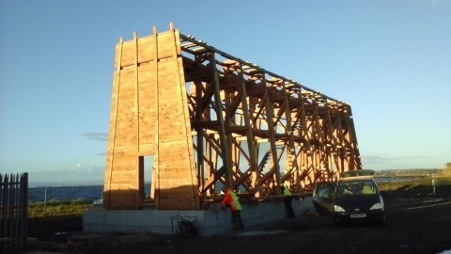
Mark Zygadlo and Alex Rigg, with a little help from a few others, built this tower. That’s us in the first picture above. According to Blackthorn Salt, we are currently the only Salt Graduation Tower builders in Europe, and this is the only one to have been built, probably in our lifetime. 

Alex and Mark have worked together on many projects from timber framing to performance art. Mark was involved in Nithraid’s inception and Alex, as well as taking part in many of them, is leading the Rite of the Salty Coo at Nithraid 2024.

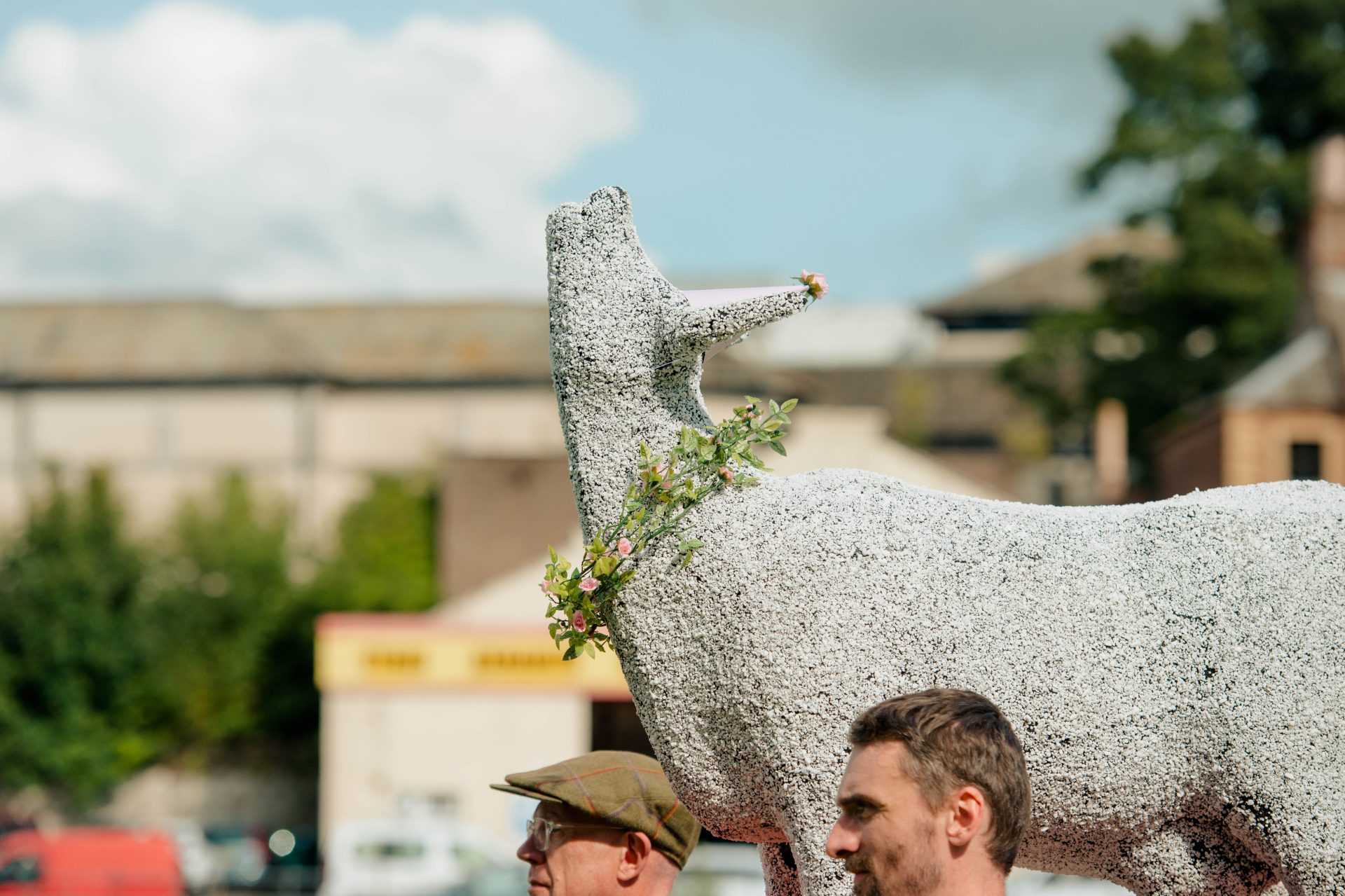
Salt and the Salty Coo. Salt is a central element of Nithraid. Salt is a potent symbol in many traditions; bread and salt are offered in welcome in eastern European homes. Salt is a preservative and represents lasting friendship and, if spilt, is bad luck. We toss a pinch over our left shoulder, into the devil’s eye, to reverse the bad luck! Salt has been made in southern Scotland for centuries, exported from the Solway along with livestock, meat and wool. Hence the origin of the Salty Coo. 

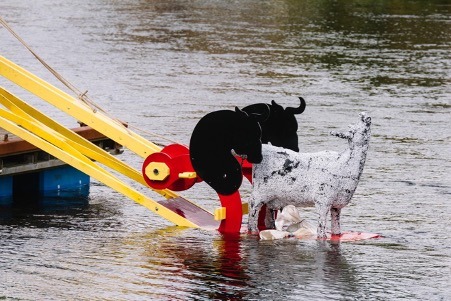
When all the boats have arrived, she gets put in the river and floats downstream with the tide.

Here she is getting her feet wet!

Imports? Exports?

Dumfries, until the early 19th century was a very busy seaport. The Port of Dumfries; Carsethorn, Glencaple, Kingholm and Dock Park, was one of the main trading harbours of Scotland. For instance, it was Scotland’s biggest tobacco port before the American Revolutionary War of 1789. But the Nith, being tidal and shallow in its upper reaches, and ships ever increasing in size, meant the tobacco trade moved to Glasgow which, like Dumfries, had to train and scour its river to admit bigger ships.

What is the Rite of the Salty Coo?

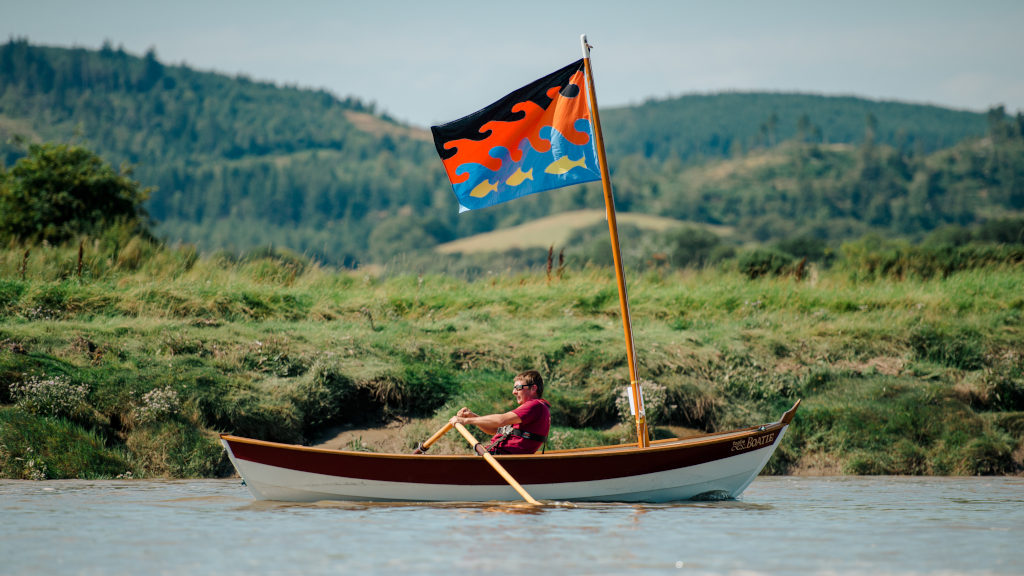
Every year, as part of Nithraid, we cover the Coo with salt and bring her to the river to watch as the boats come up with the tide, echoing the historic trade in the Port of Dumfries. This year they will bring flags which will be taken to the Suspension Bridge and flown from Flag poles.

These flags have been made in communities all over Scotland, expressing their hopes and fears for the environment.

The Tide?

The tides in the Solway are huge, at Nithraid this year the difference between high water and low water will be over thirty feet! On a big tide like this seawater rushes up the Nith in a bore, a wave, which can reach right into the middle of town. It will pass Glencaple at about 2.15pm and get to Dumfries if there hasn’t been too much rain, by about 3.00pm.

Tides are an enormous global dynamic system. As the earth turns in relation to the moon and the sun, unimaginable volumes of water are drawn up by their magnetic fields and surge towards or away from the edges of our land areas creating the phenomenon of rising and falling tides. 

The rising tide rushing into the Nith reverses its direction of flow for a couple of hours, during which time Nithraid boats will be helped into town on a wave of salt water. The sea reaches as far in-land as the caul, five miles up river from Glencaple and the Nithraid’s course.

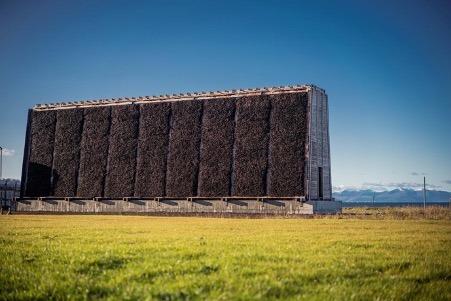
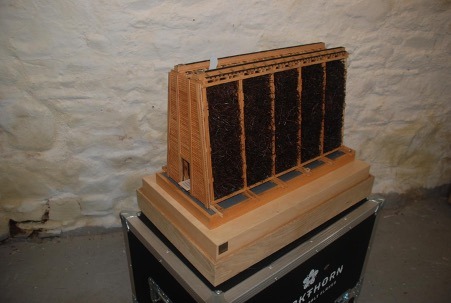
Salt is produced from seawater in the machine pictured above, called a Salt Graduation Tower. Seawater is pumped to the top and trickles down through the blackthorn twigs which pack the framework. Water evaporates in the process and the salinity of the seawater being circulated increases until, just at the right moment, it is pumped off to crystallise in heated tanks.

This is an ancient method of making salt, it requires very little more than seawater and wind.

Written by Mark Zygadlo.

Supported by;

Nithraid River Festival recognises and explores our town’s long relationship with the river and its importance to the people and communities it connects, both past, present, and future.

Categories
News Opportunities

‘The Rite of The Salty Coo’ Call-out

This call-out is now closed.

Ahead of Nithraid 2024, our friends at Oceanallover are looking for people to get involved with ‘The Right of the Salty Coo’. Full information below.

On Saturday the 24th of August Oceanallover and Dumfries Slow Fashion will be taking the Salty Coo for a walk through town and across the river to meet the Nithraid as it arrives at The Green.

There will be four stages on the way where we will celebrate the Salty Coo with music and dance and take photographs for Pulp Magazine.  

Oceanallover is looking for people to get involved:  

  • Making costume for ‘The Rite of the Salty Coo’ working with Alex Rigg from Oceanallover. 
  • Making your own up-cycled clothing with expert help, the wearing it for a Slow Fashion photo-shoot.
  • Dressing up in Oceanallover costumes to walk the Salty Coo to the river.
  • Come along with us and the Coo just to be there, travelling from Mid-Steeple and over Devorgilla.
  • We need a herd of children to come and make wee Coos in the morning of the 24th and then join the drove to the river.

We need:

  • 4 costume-making trainees aged between 16 and 25
  • 10 Models/movers to work with Dumfries Slow Fashion and  Oceanallover. 
  • 20+ people to look fabulous and have their pictures taken in the street for the October edition of Pulp Magazine.

Contact:

Oceanallover; Auchenstroan House; Moniaive; Dumfries; DG3 4JD

Phone – 01848 200 357 

E-mail – [email protected]
Categories
News Opportunities

New Role: Communications & Marketing Manager

This position is now closed.

The Stove is looking for someone to bring a campaign and story-led communications/marketing approach to the multi-disciplinary team which incubates and crafts the work of the organisation.

Communication is critical to the creative placemaking practice of The Stove, the person we are seeking will lead The Stove Communications Team and drive innovation in external and internal comms to a wide range of participants, stakeholders and audiences.

We are open to the widest diversity of people and approaches – what is critical for us is that you have the potential to be part of the unique blend of personalities and talents at The Stove.

ABOUT THE STOVE

The Stove is a creatively-led organisation with a national and international reputation as a leader in community-embedded arts practice based in Southwest Scotland. We were the first artist-led community development trust in the UK and deliver high-quality activity uniquely integrated with an activist approach which supports local people to shape the places they live and work.

We work across our home region of Dumfries and Galloway as one of the UK’s leading exponents of Creative Placemaking – using creativity as a tool to support community-led change.

Our work has a particular focus on people experiencing disadvantage/inequality, and young people, and engages with the widest possible range of people on issues relevant to their lives in ways that can make a lasting difference.

The Stove is based on the High Street in Dumfries, where we operate a Community Venue, delivering a programme of activities/projects from large-scale community events/festivals to regular groups/workshops. In 2022-23 we delivered 264 unique public events with a combined audience of 8344 and 5703 people actively participating in events/ workshops.

ABOUT THE ROLE

Money and Conditions

The Communications and Marketing Manager is a full-time role at a salary ranging from £28,000 – £32,000 PA depending on experience, talent and potential.

The role is based in Dumfries and will involve travel across the region, nationally and internationally. A commitment to localised economies is at the forefront of our practice and as such it is a condition of this role to be based within Dumfries and Galloway to undertake it.

Key Duties & Responsibilities

  • Implementation of Marketing/PR and Communications Strategy & Brand Management of The Stove. This includes a number of key Stove initiatives which function as sub-brands e.g. What We Do Now, Creative Stranraer, Creative Spaces and Wild Goose Festival.
  • Campaign design and planning to support the development of creative projects and organisational aims/objectives
  • Oversight of all Stove online assets
  • Oversee delivery of marketing & PR projects (Digital: email, website, social media, partnership channels)
  • Create and curate compelling content, including posts, articles, videos, and graphics support Stove projects and initiatives
  • Contributing to planning and delivery of community engagement (inc Stove membership) processes for projects and organisational aims/objectives
  • Managing Stove recruitment processes
  • Line management of Marketing Officer and Web & Data Manager

For more information and for further details of this role, download the full application pack below:

Application Process

We want you to communicate yourself and your approach to us in the way that is best for you. There are no rules to the application process beyond the following, we need to:

  • Have your final submission by the 26th August and send to [email protected]
  • Get an understanding of your experience, skills and potential
  • Hear about your interest in role and how you would approach it
  • Receive nothing from you that is bigger than 10MB
  • Interview dates will be 12 & 13th September, by applying for this role you are declaring yourself available for these dates.

We are open to communication from you in whatever form is comfortable and natural to you. If you have any questions about this, or anything else please do not hesitate to get in touch.

It’s important that our people reflect and represent the diversity of the communities and audiences we serve. We welcome and value difference, so when we say we’re for everyone, we want everyone to be welcome in our teams too. Wherever you’re from, and whatever your background, we want to hear from you.

Access Requirements

If you have any access requirements at any stage of the selection process please contact Lindsey Smith ([email protected]  01387 252435)
Categories
News Project Updates

Exploring Community & Creativity in Callan

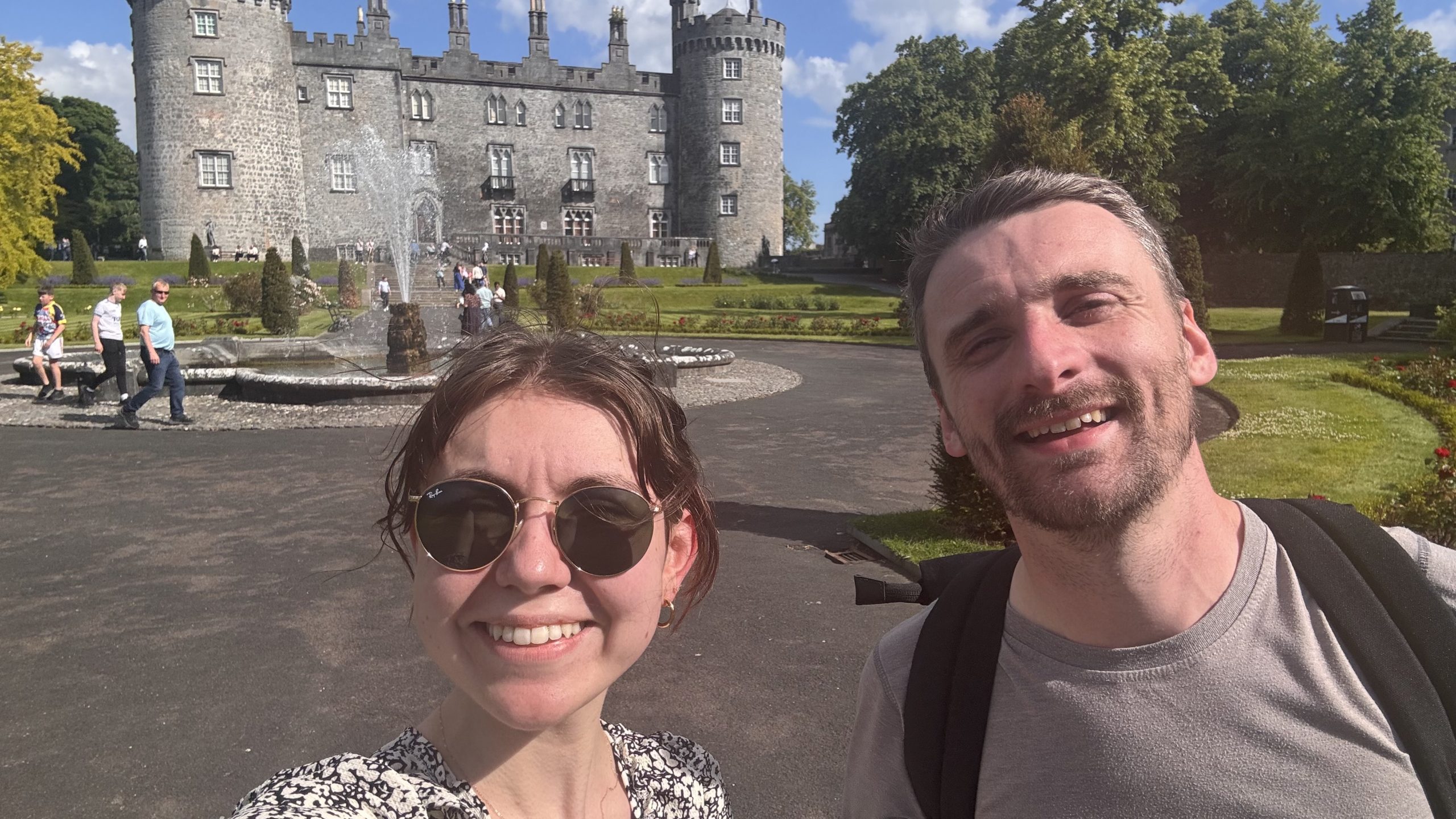
At the end of June our Artistic Director Martin O’Neill and our Marketing Officer Erin Aitchison travelled over to Callan in Ireland to visit Workhouse Union. This trip is part of a year-long learning exchange between Workhouse Union and The Stove to share organisational practices, knowledge, and experience with creative placemaking. Read Erin’s account of the trip below.

In June, I ventured overseas with our Artistic Director Martin to Callan in Ireland to visit Workhouse Union. Workhouse Union is a community co-design and creative placemaking organisation that supports the development of inclusive, meaningful, positive places and communities.

When I was asked if I wanted to be part of the exchange, I was ecstatic. This trip provided an excellent opportunity to use and share all I have learned about Creative Placemaking since joining the Stove, as well as learn first-hand from Martin throughout the week.

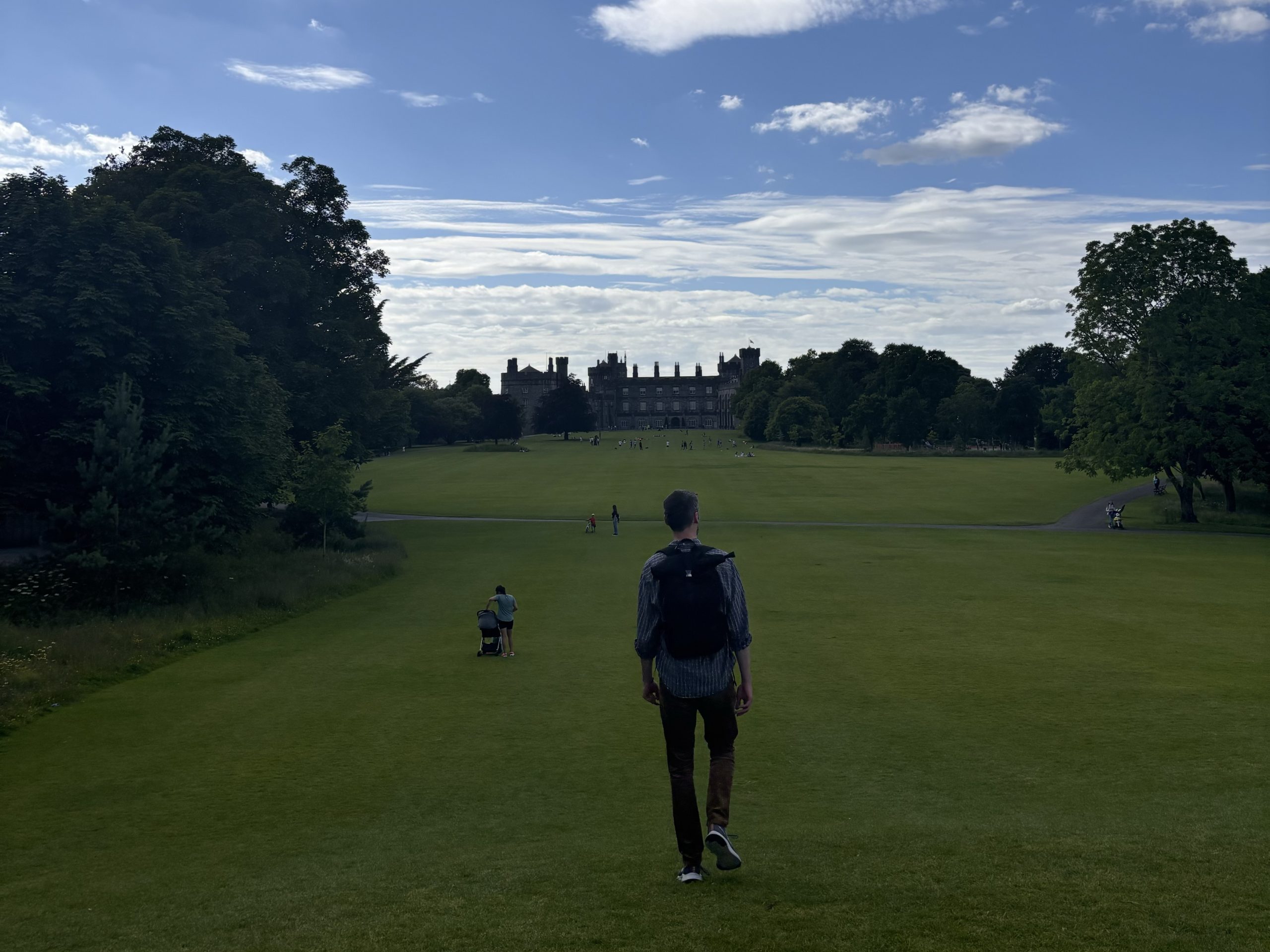
We arrived in Callan, a rather small town 11 miles South of Kilkenny, in the evening on Monday the 17th of June. We had flown over to Dublin from Glasgow and enjoyed a quiet coach journey from the airport straight to Callan – a feat in public transport that Scotland could take some notes from!

We were greeted by Workhouse Union’s Creative Director, Rosie Lynch, who walked us up the High Street, picking out interesting snippets of Callan’s history as we wandered to our accommodation. During our trip, we stayed with Rosie’s lovely mum Heather and we are very thankful for her hospitality and kindness throughout our visit.

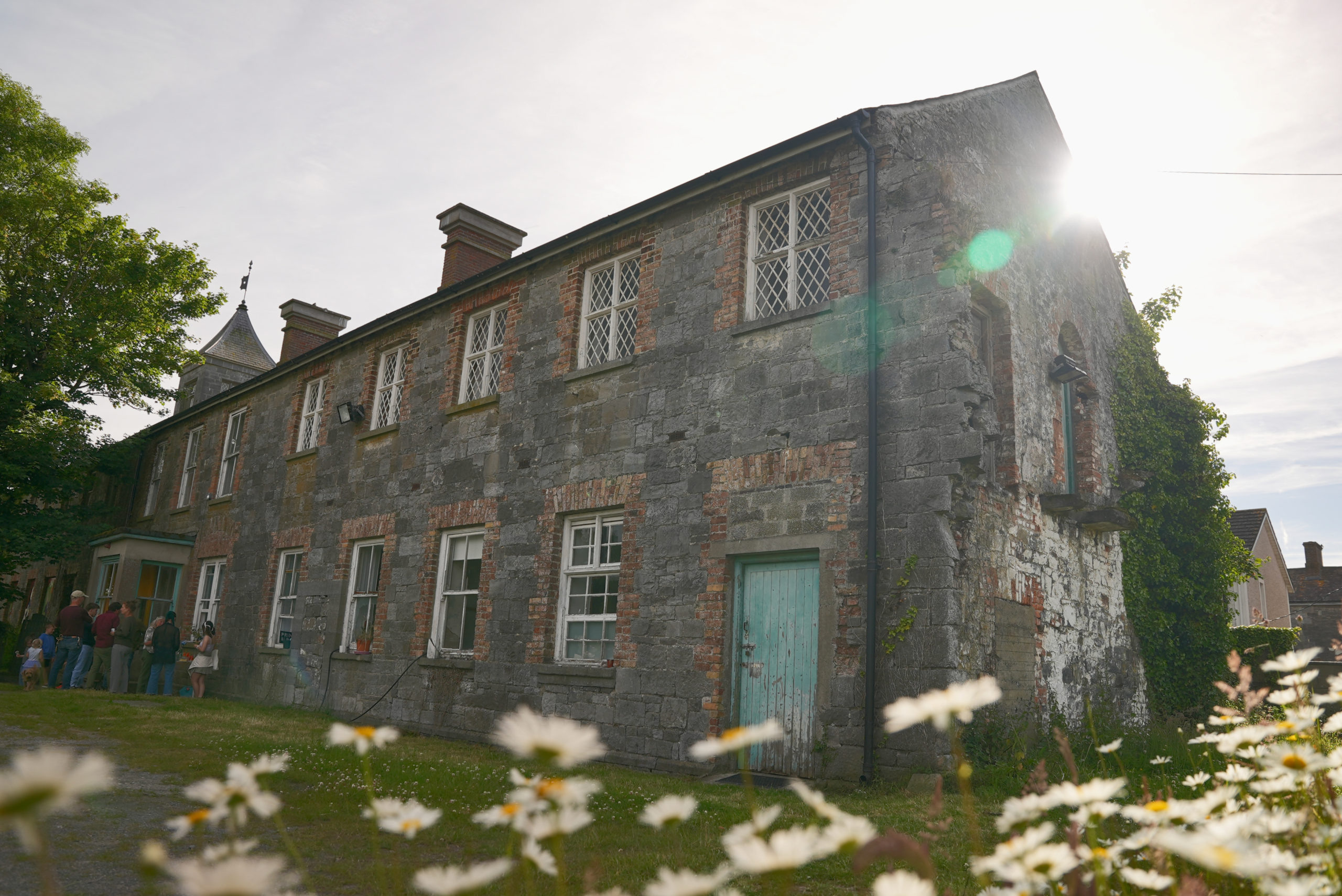
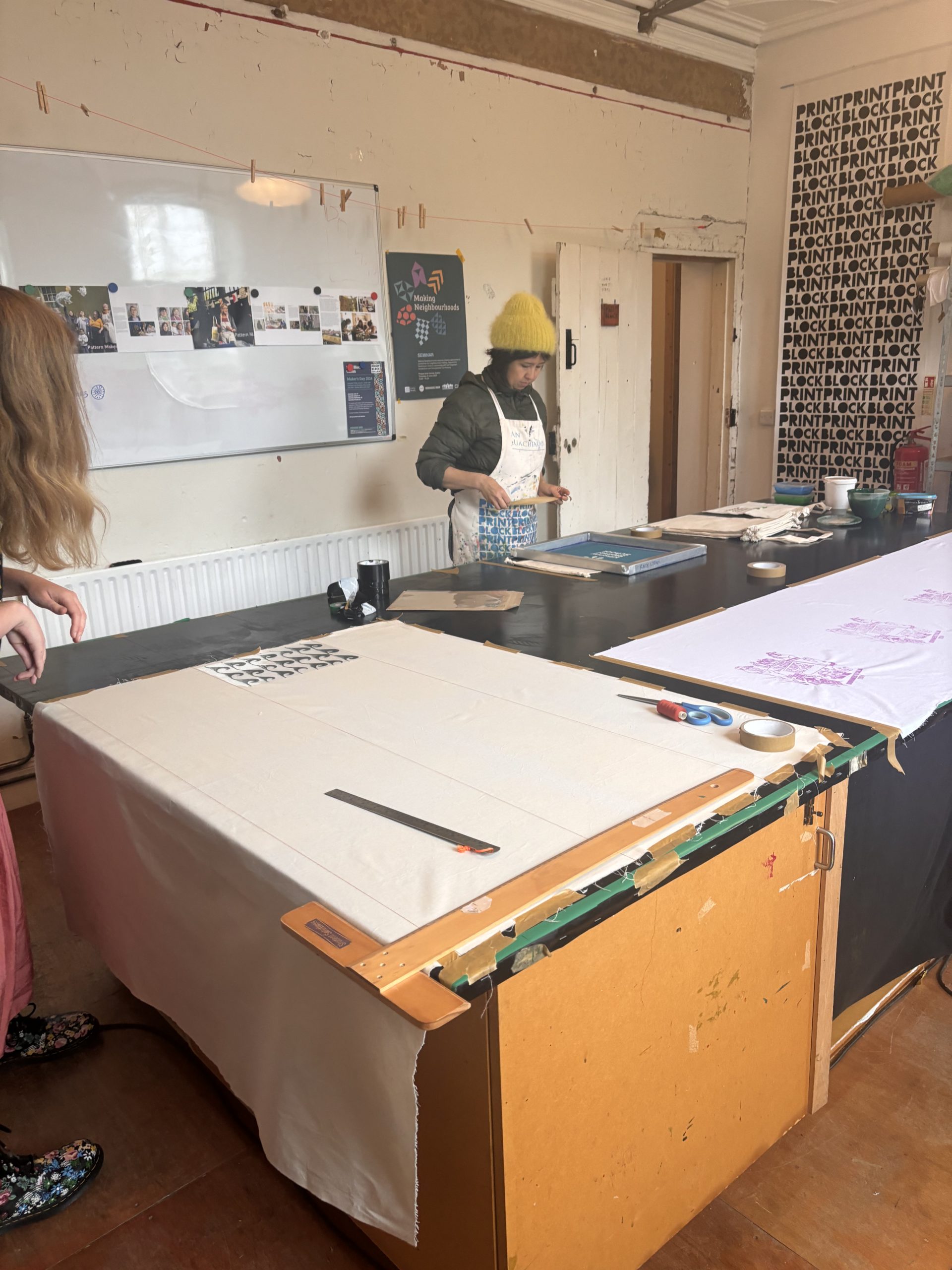
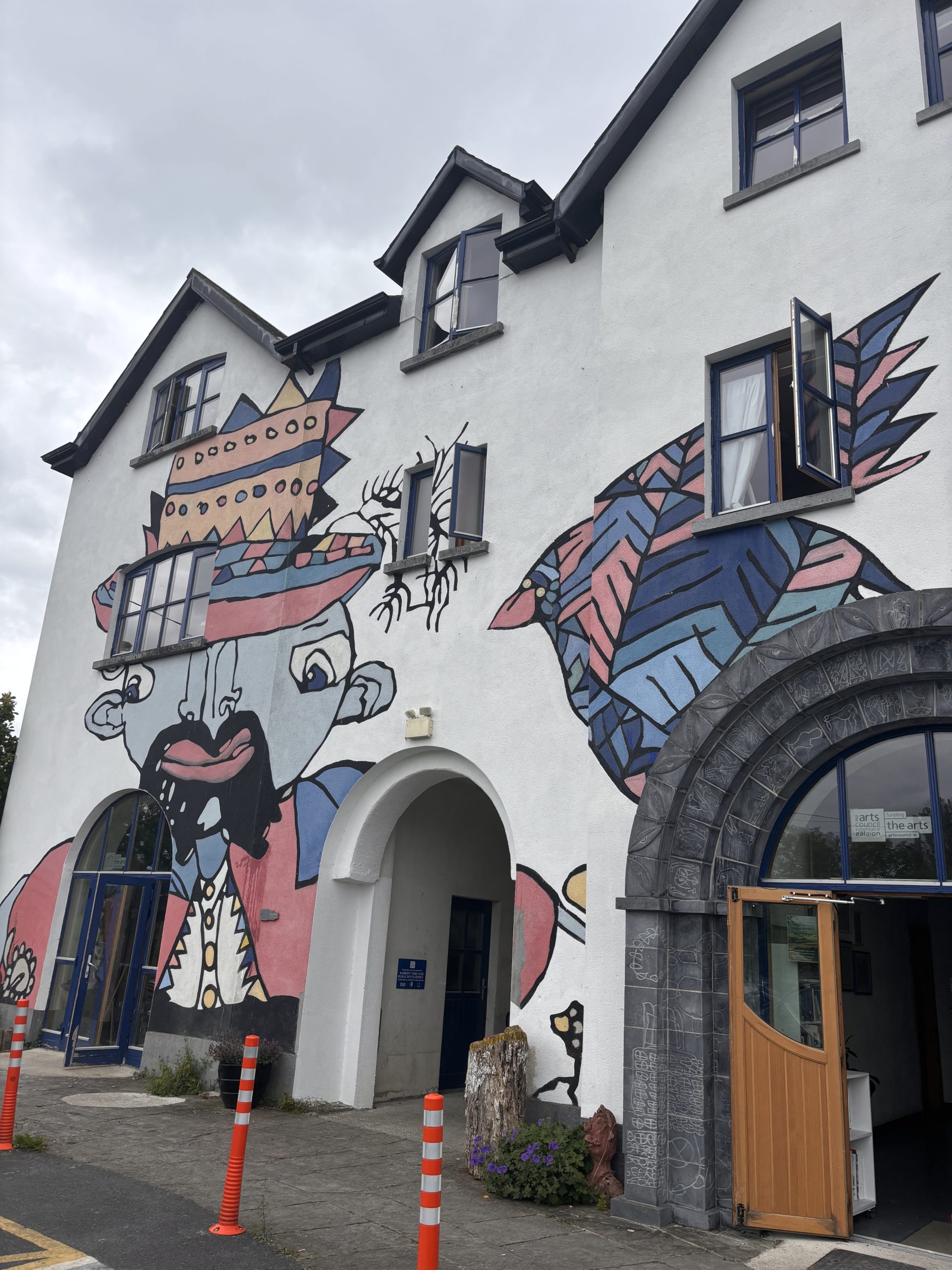
After a good night’s sleep and some breakfast, the real fun started. Tuesday was a day of exploration as we were given a tour of Workhouse Union. The team is situated in a wing of Callan Workhouse, a gorgeous listed building, that is also used as studio space for artist Ciaran Murphy, alongside a garden that was managed by Camphill Callan. WHU has an office, library and research room, and a screen printing studio ‘Print Block Callan’ – that we were able to see in action later in the week.

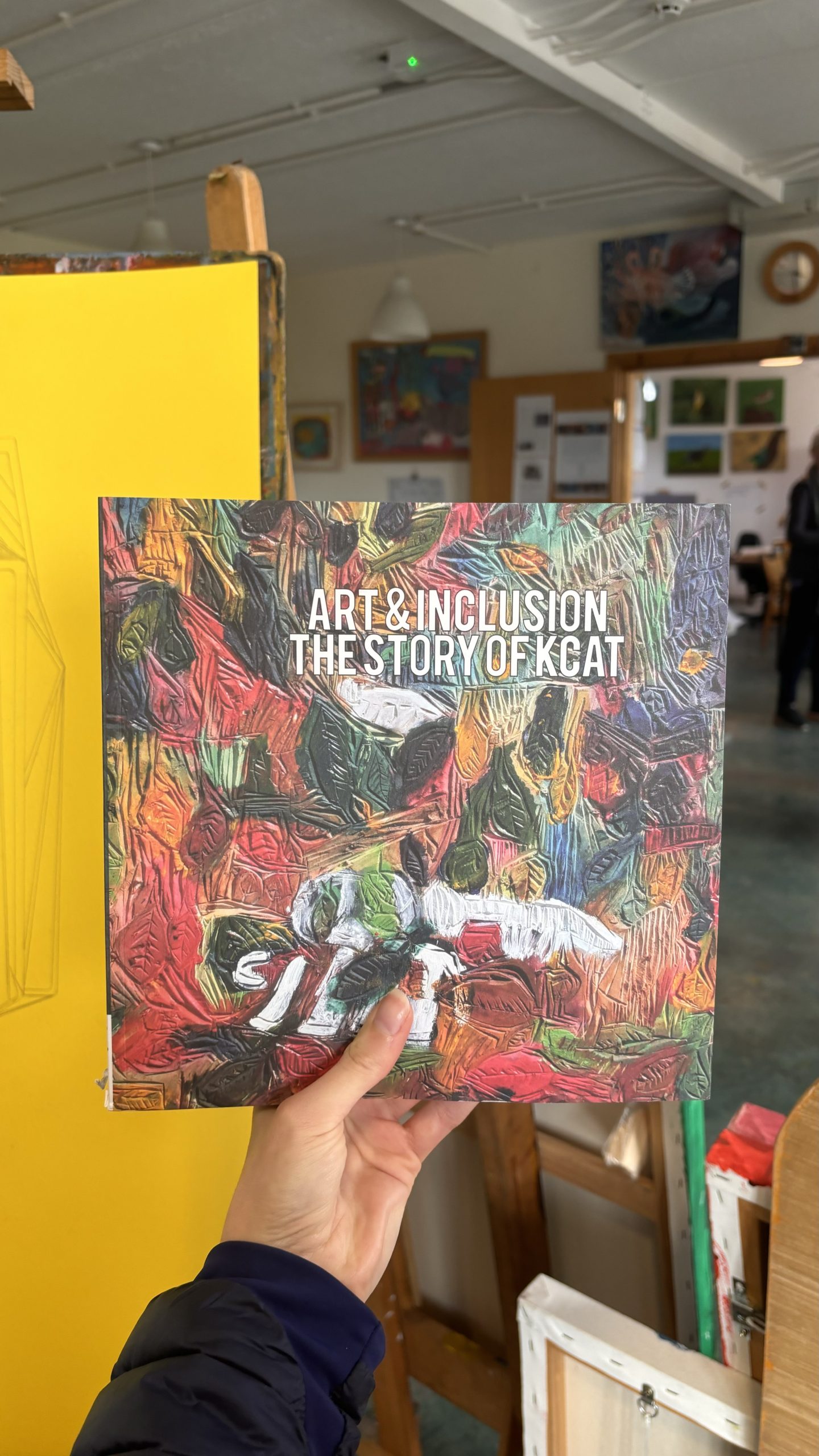
We met team members Noortje Van Deursen, (Creative Producer & Co-Design Facilitator), and Alice Bowler (Community Co-Design Facilitator) as we chatted about our roles and how we each operate in our respective organisations. The explorative theme of the day continued in the afternoon when we were given a tour of Callan and told more about the network of art organisations and collectives that operate in the town. We visited KCAT Arts Centre; a multi-disciplinary centre that fosters creative ambition and professional development for those working in the arts. We toured the artists’ workshop spaces, meeting some of the artists in residence on the way, and watched the construction of a new exhibition that was opening that Friday by Jason Turner.

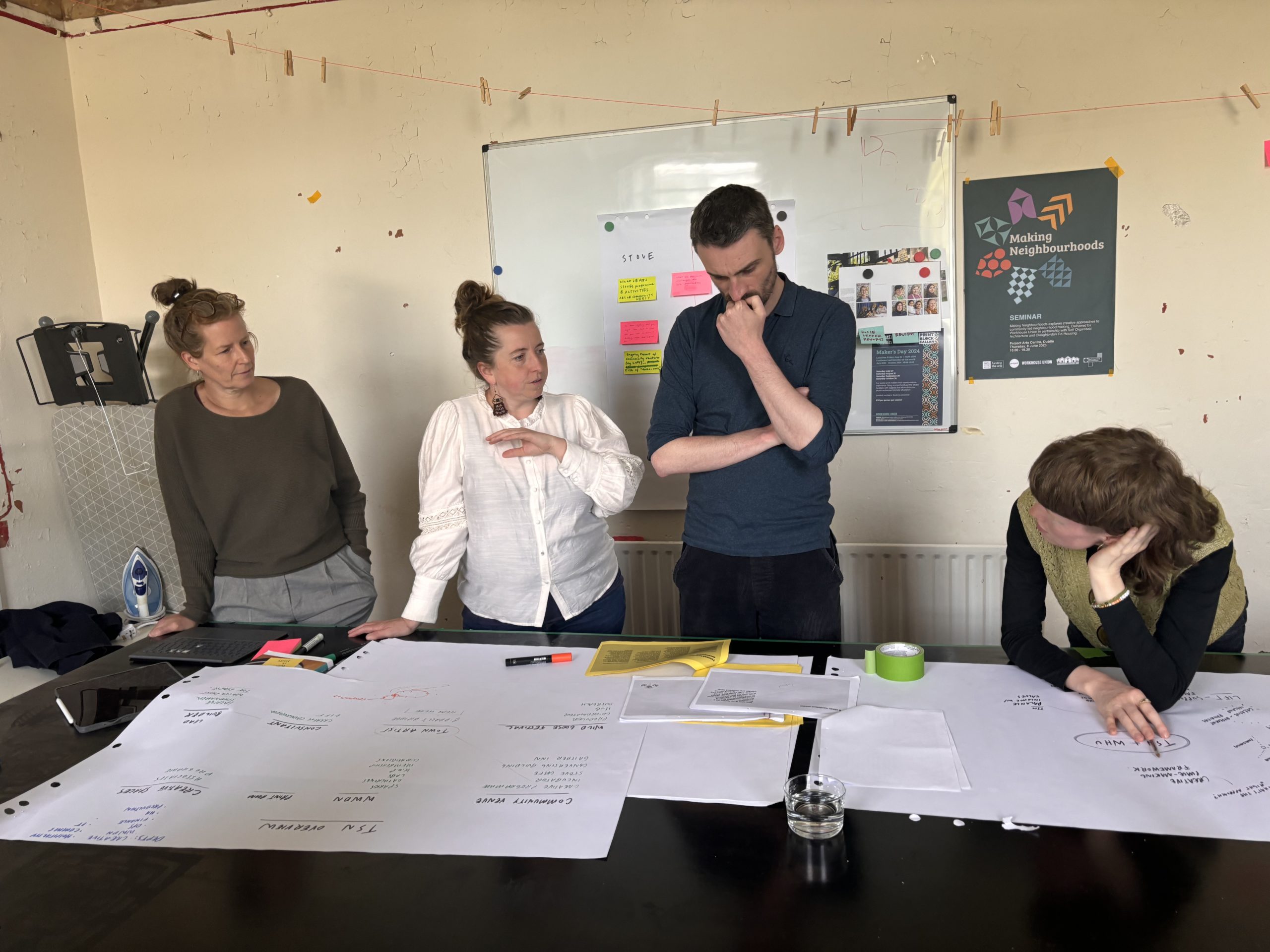
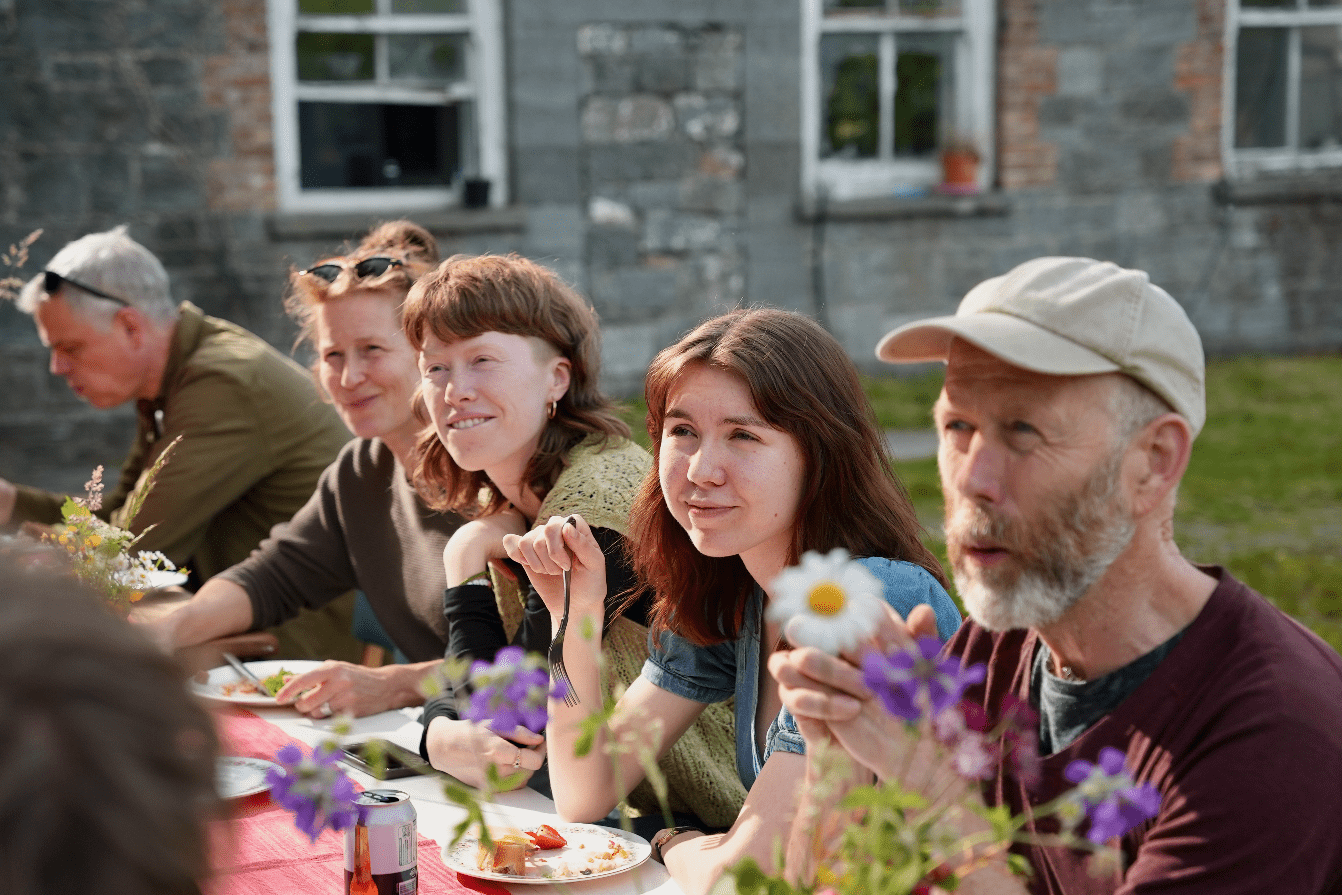
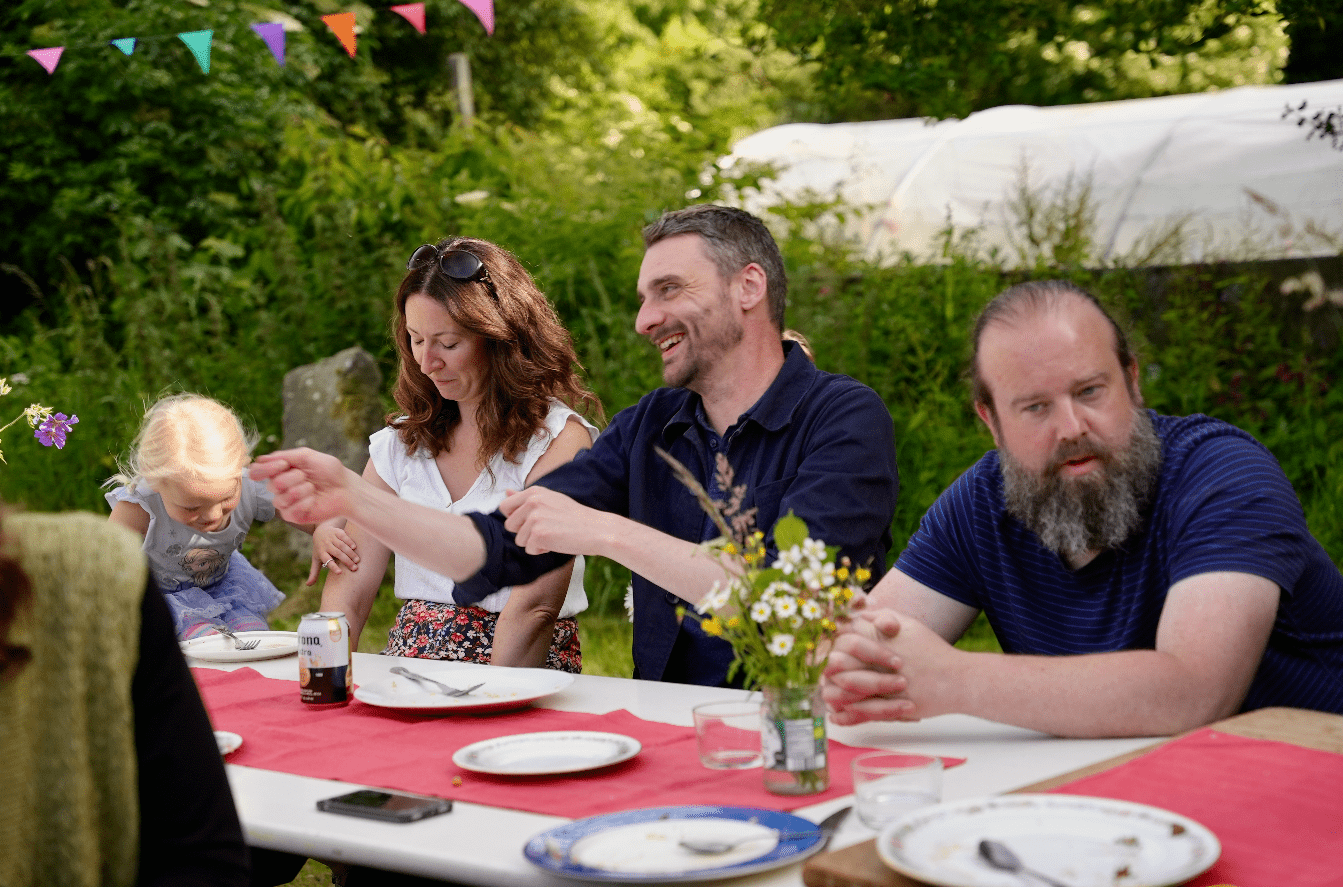
On Wednesday, we had a day of shared learning with the WHU team and answering questions that ranged from how we action administrative procedures, to embedded Creative Placemaking in Scotland and Ireland. We were joined by Mark Girling, WHU’s Administrator, who joined us at the Stove earlier this year as part of the exchange. Afterwards, we stopped for lunch stop at the gorgeous Fennelly’s coffee house before getting stuck back in to sharing processes and experiences with the team. My highlight of the trip was on the Wednesday evening, when WHU hosted a Midsummer pot luck supper. At the supper we were introduced to the wider creative community in Callan; from artists to photographers, to theatre makers. It was a wonderful evening of sharing creative experience and feeling the embedded sense of community Callan has.

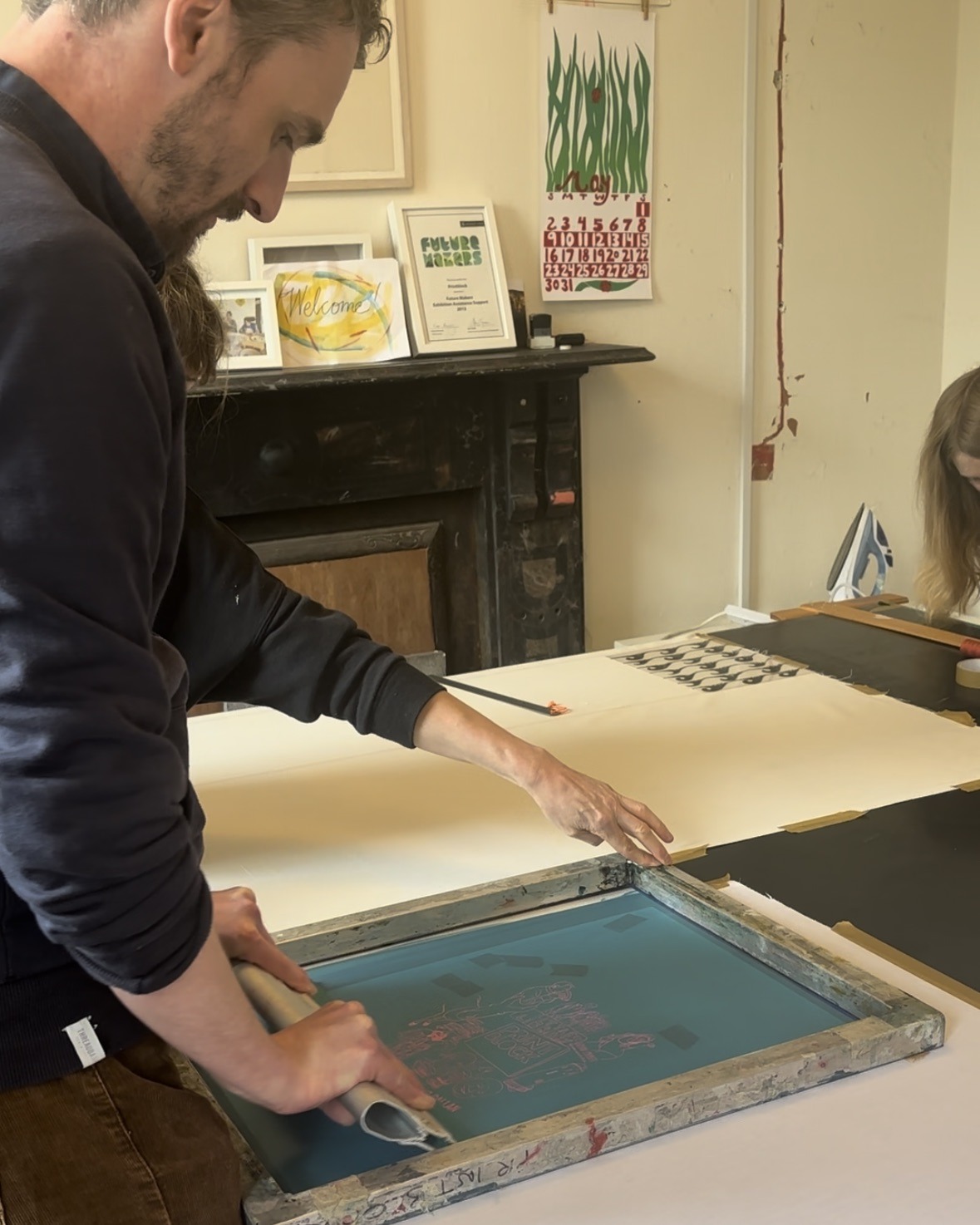
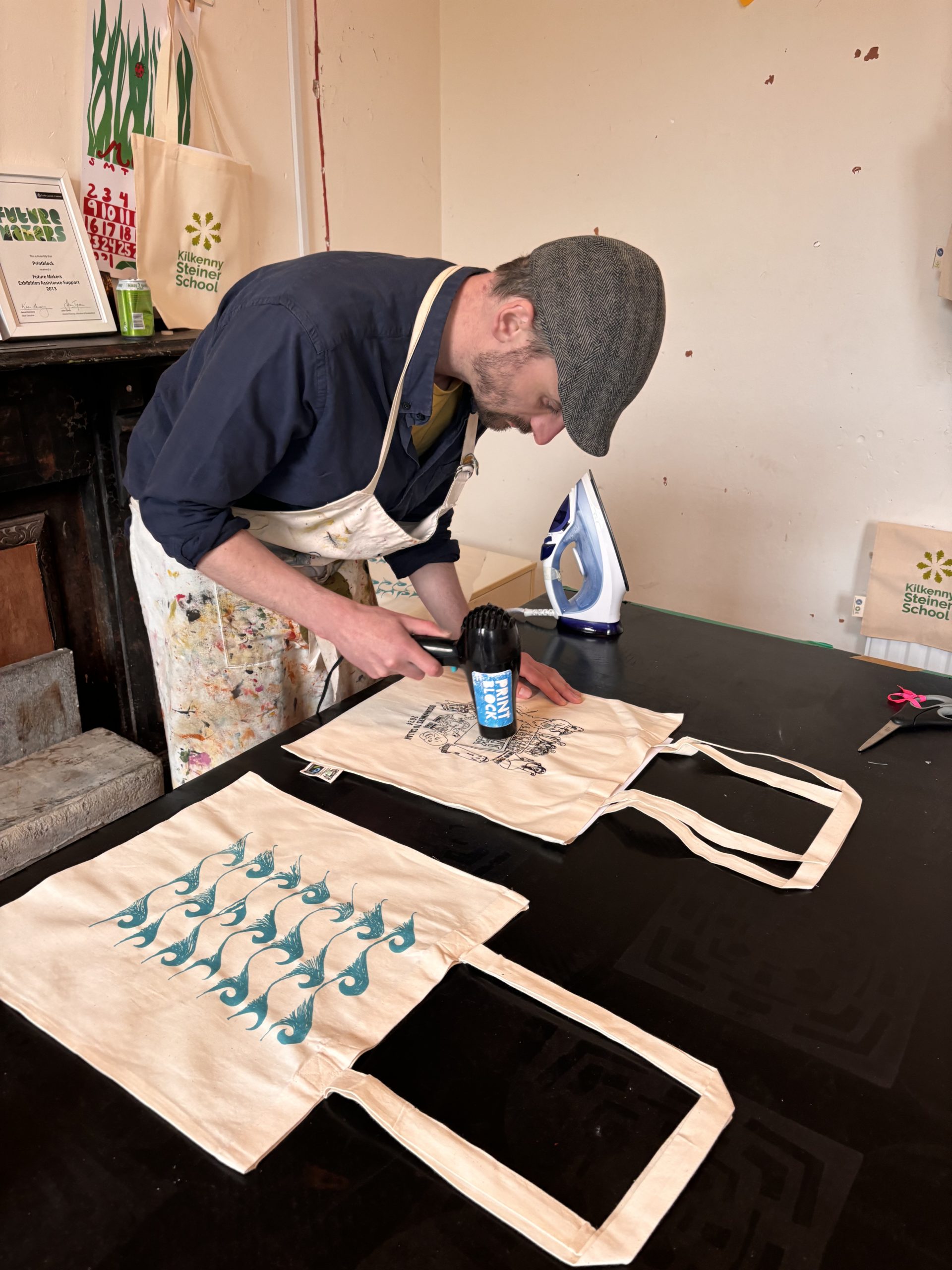
On our last full day of the exchange, we took part in Printblock’s ‘Maker’s day’. ‘Maker’s Day’ is for experienced textile printers to bring a project and use the studio facilities with support and advice from studio technician Michelle McMahon.

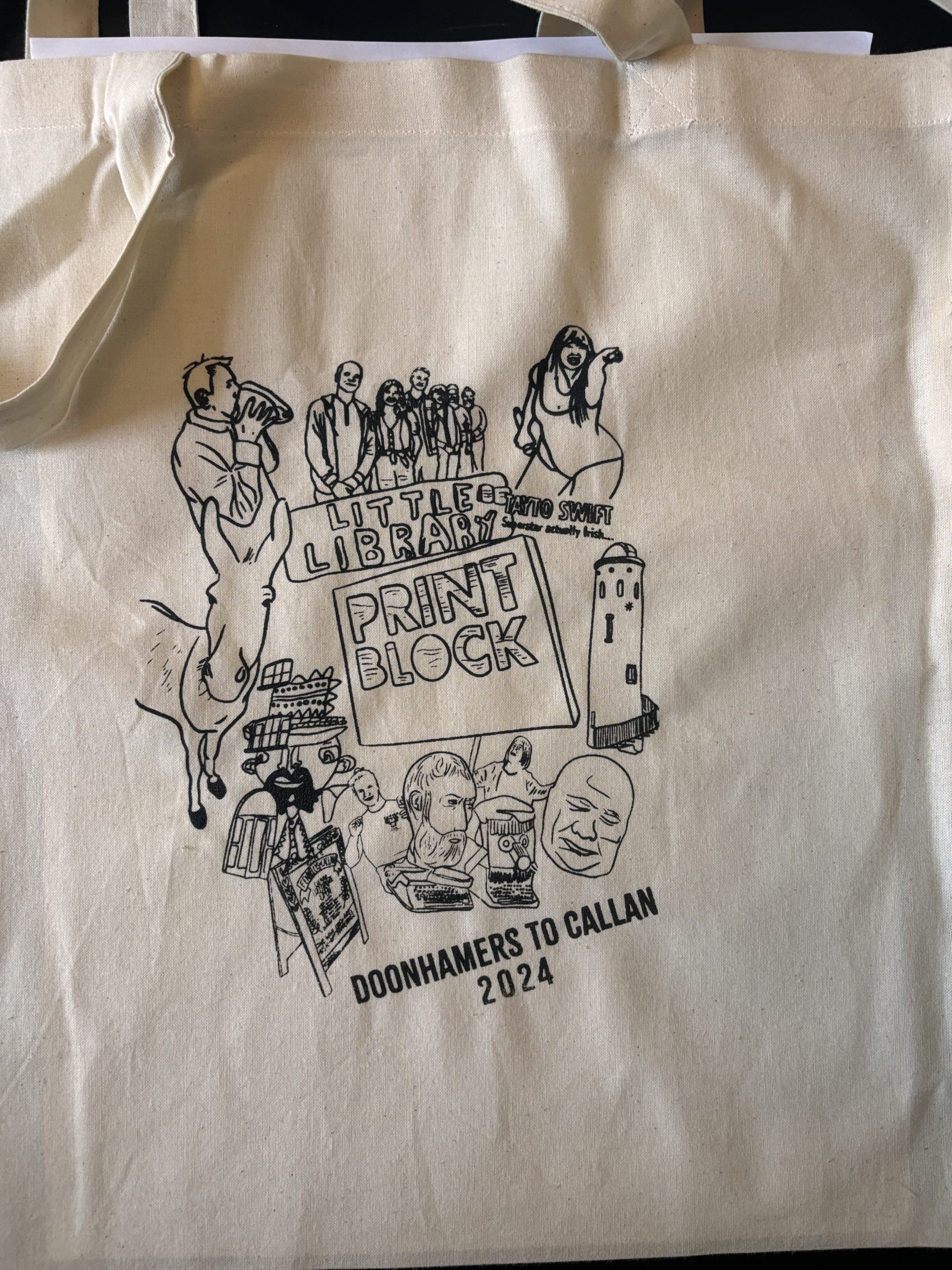
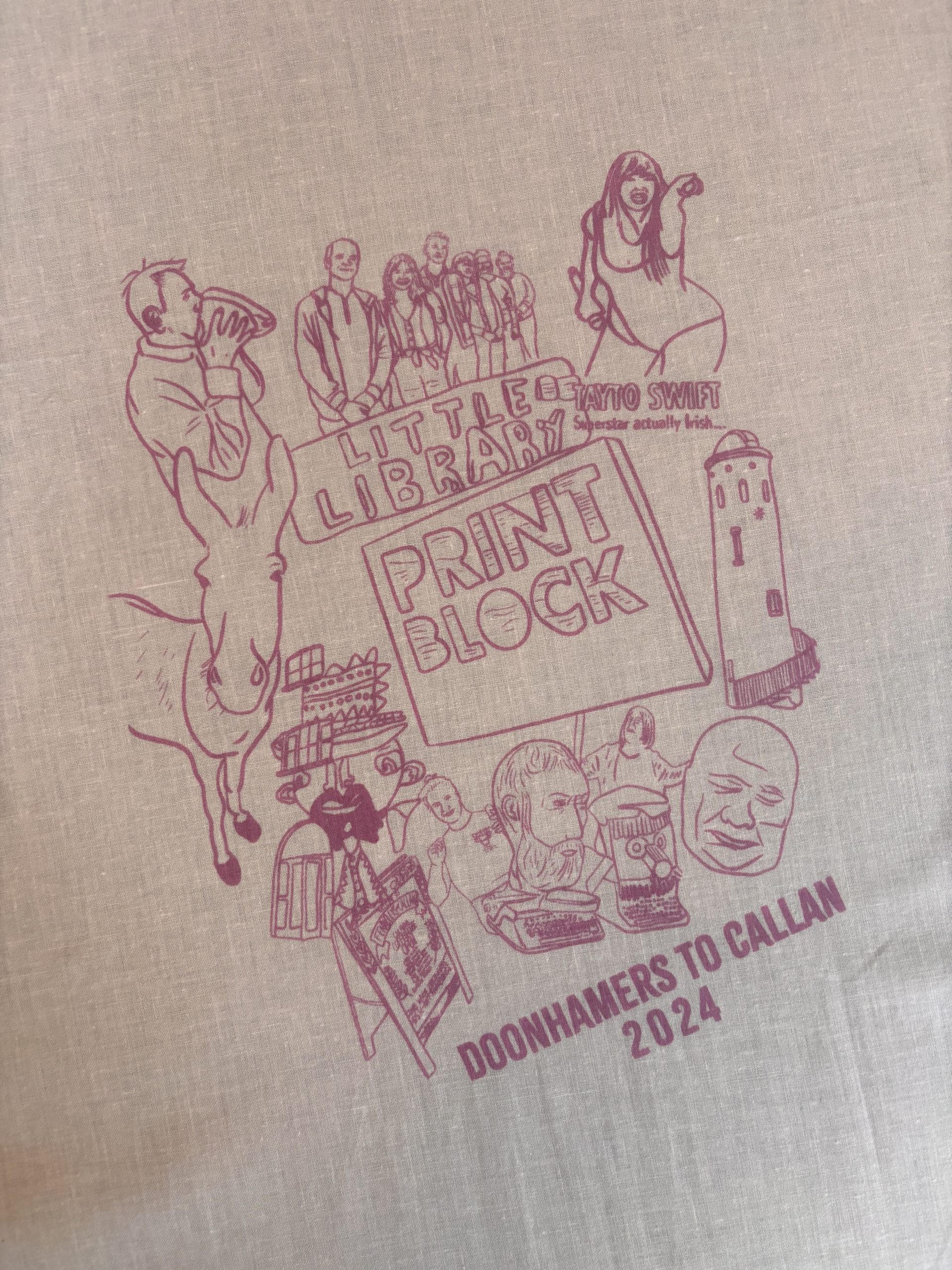
Although Martin has experience with screen printing, this was my first time trying it out. The design that we went with was a graphic made up of various images that I had captured over our trip. Martin had sketched elements from them and compiled them all into one graphic.

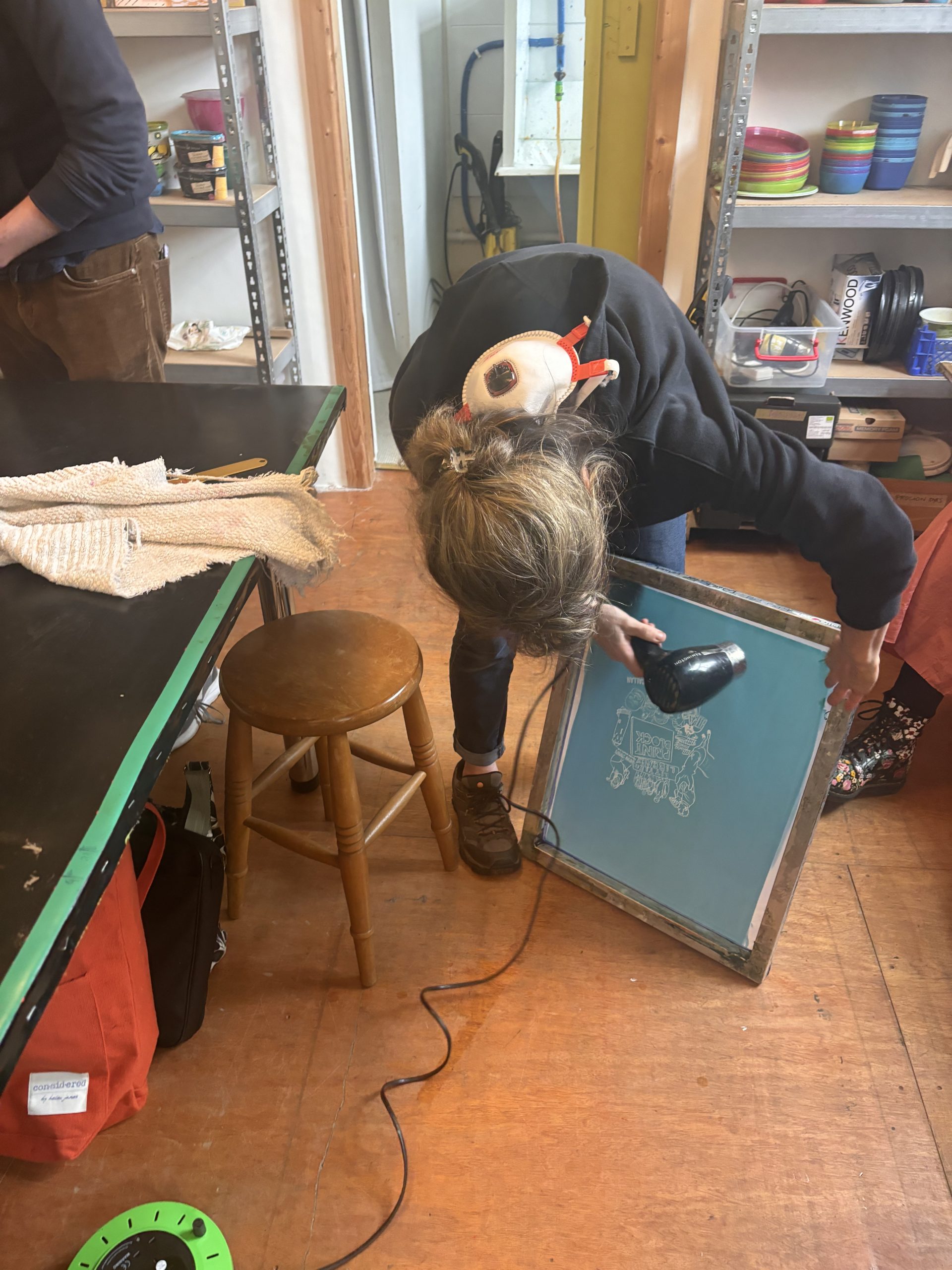
We printed our design onto fabric first – learning the intricate mechanics of screen-printing from Michelle before graduating onto tote bags. Whilst printing and chatting with the other attendees, you again got a sense of the engaged community Workhouse Union has created in their corner of Callan and beyond.

To summarise my experience of the learning exchange, it is clear that Callan is a place where creativity flourishes thanks to the community spirit that appears to permeate everything that is happening there. I could see so many examples of creative placemaking, and community-led engagement that I have learned from and taken back to our team in Dumfries. I’m looking forward to seeing the relationship between our organisations grow and adapt over the next year and beyond.

Written by Erin Aitchison