Support Us
Categories
Musings News

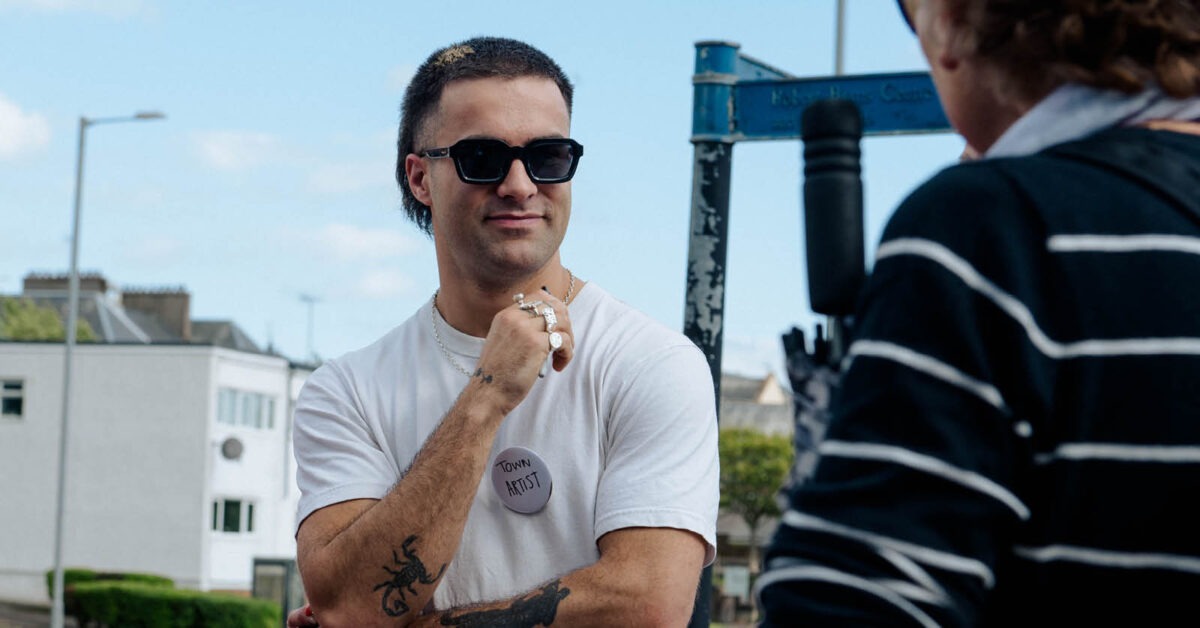
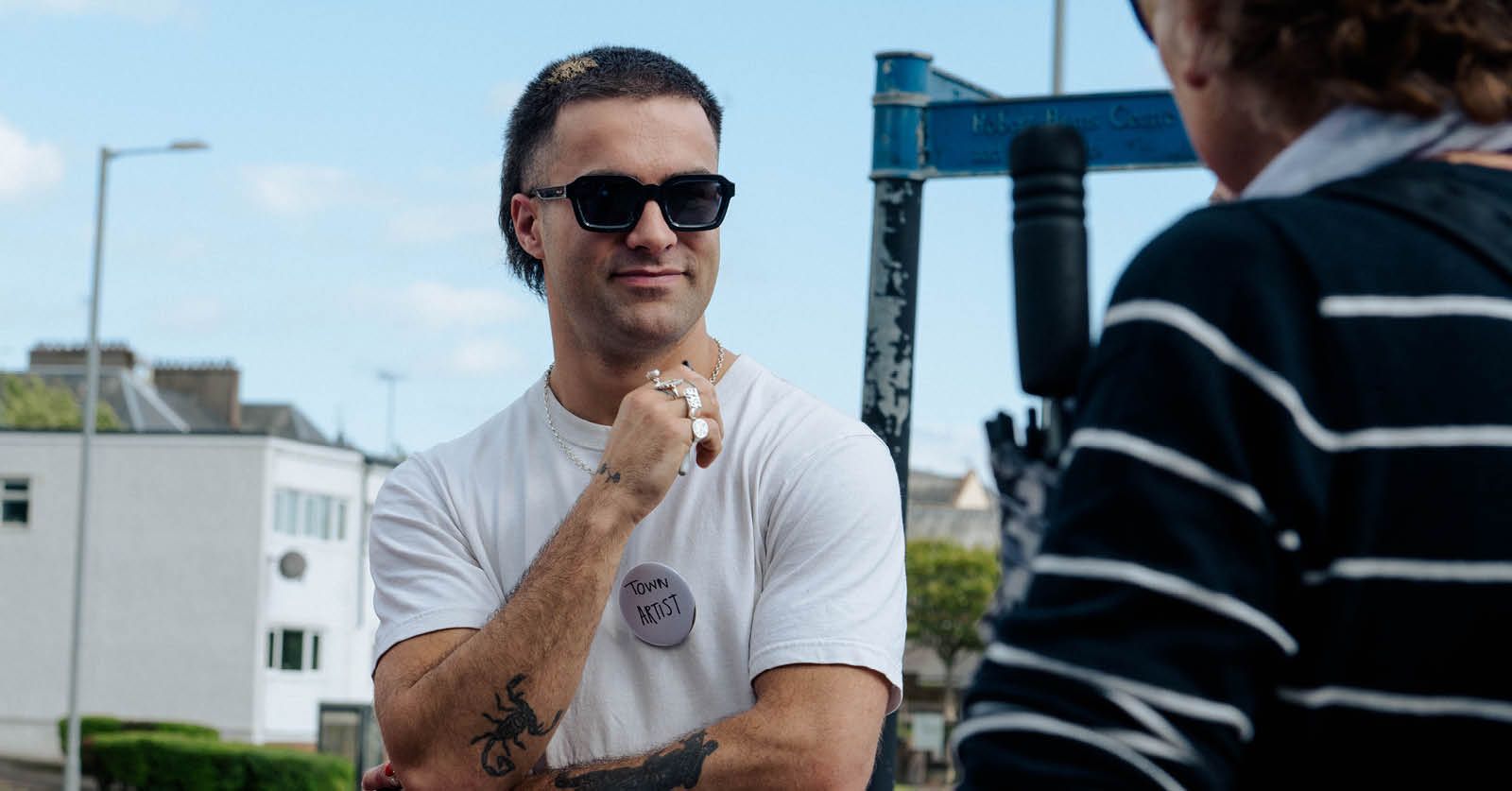
Reflections from a Year with Creative Spaces: Sonah Chaudhry

Words by Sonah (Sonny) Chaudhry

Before Creative Spaces, I was doing a lot — working for a bushcraft organisation in Moffat, studying History with the Open University, and trying to get my self-taught jewellery business off the ground. My brand, Sonny Cooper Jewellery, was growing slowly online. I shared my unconventional techniques, my experiments and the mistakes — and people were starting to notice… I think?

But none of it felt connected. It was like I had all the right ingredients but no recipe. The work was there. The drive was there. But it all lived in silos.

Then, in 2023, I learned about Creative Spaces.

Reaching Out

The Creative Spaces team first got in touch via Instagram and invited me to do a takeover. At the time, I didn’t come from a world where being paid to be creative felt like a real option. Creativity was something you did on the side. So when the opportunity landed, I took it seriously. I borrowed a mate’s camera, wrote out a plan, and put together something I hoped would impress.

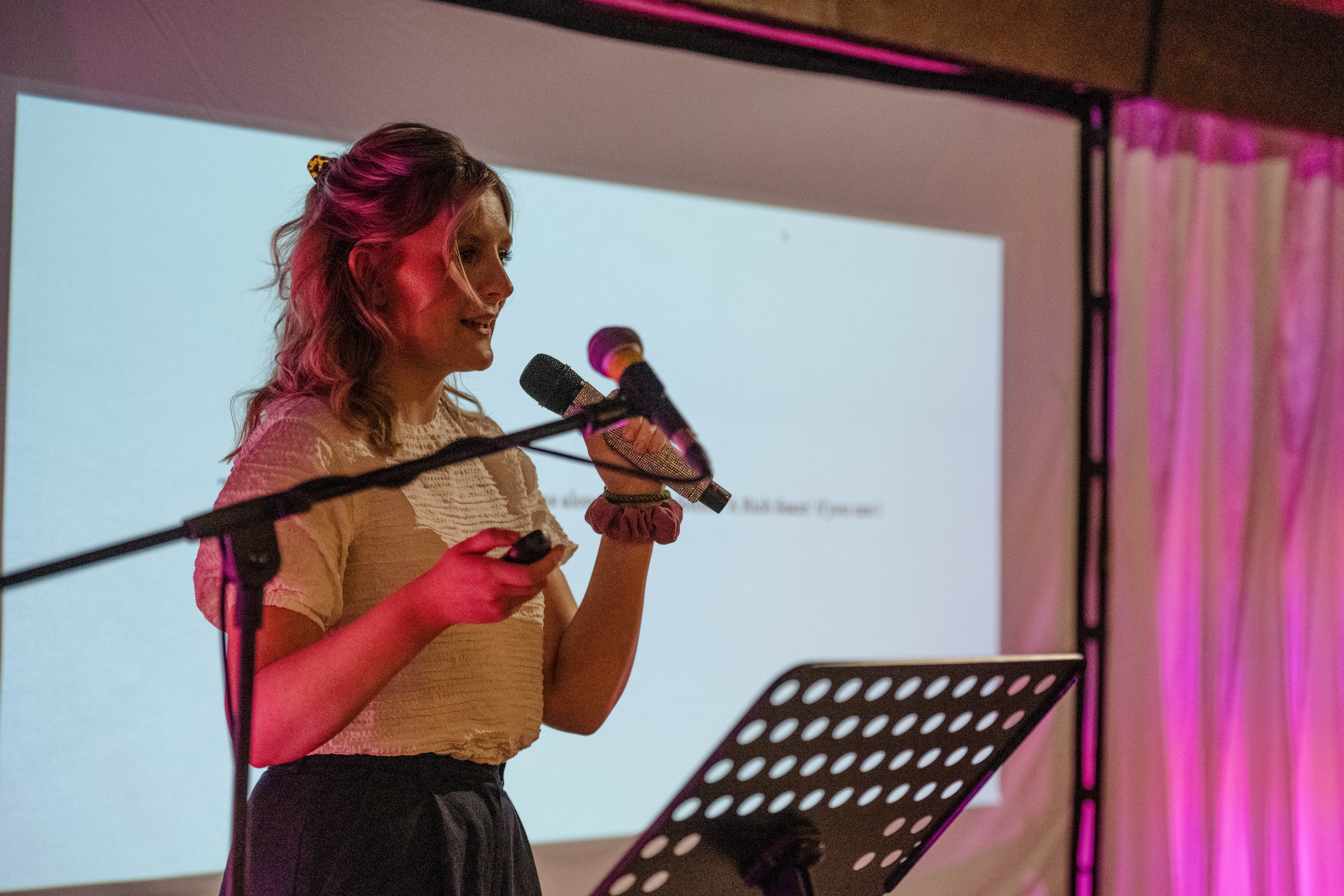
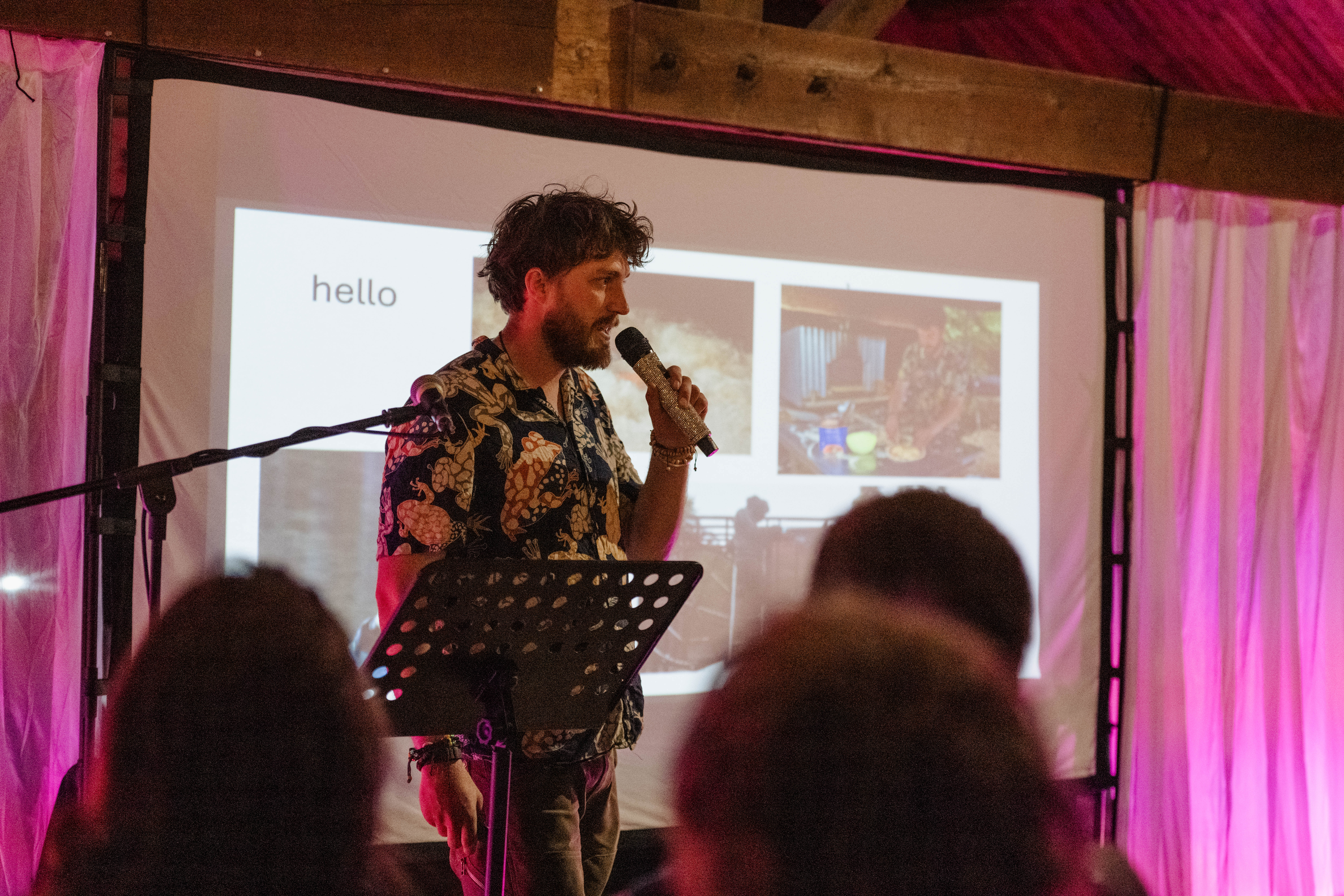
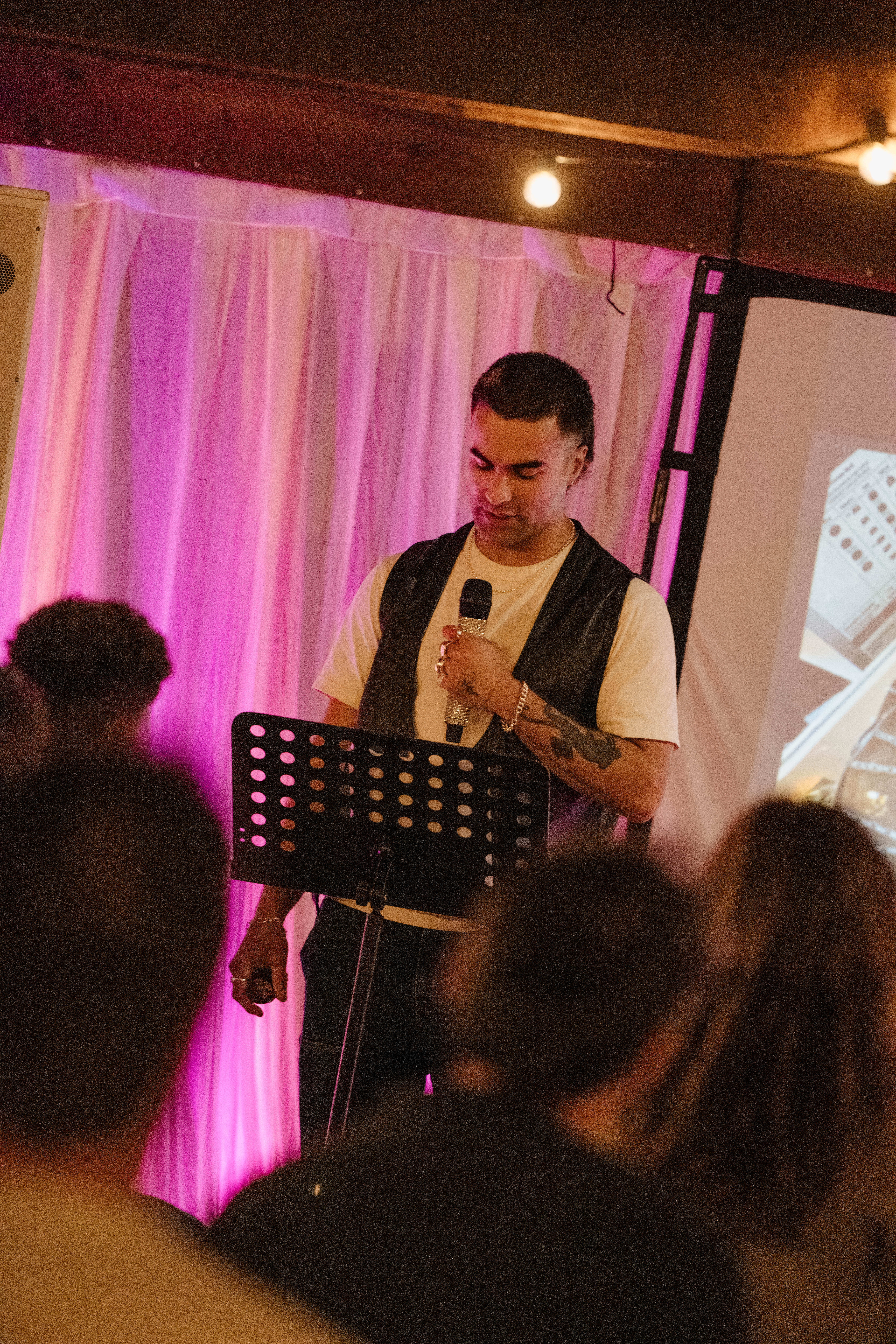
That takeover led to another unexpected opportunity: speaking at the Creative Spaces showcase. I shared my story — a mix of history, jewellery, identity — and tried my best to stay honest and open about the journey. Truthfully, I can hardly remember what the ‘message’ of my speech was meant to be… other than: keep on keepin’ on with what you care about…something will come along… or whatever?

That turned out to be kind of prophetic (minus the whatever).

By the end of the night, I turned to Mia and asked, “Can I apply to the next cohort?”
She said yes.
I got to work.
Big surprise — I got the job.

Learning in Layers

Creative Spaces started like no other job I’d had: transparent, structured, dynamic. It gave us an induction, introduced us to The Stove’s inner workings, and gently challenged us to think beyond what we already knew. I wasn’t used to working in a team, and I definitely wasn’t used to having this kind of support.

It wasn’t about instant results. The learning was slow, layered, and generous. Over time, we were shown the many faces of The Stove: events, placemaking, public art, networks, production. It was a mosaic — and we were invited to add our own tiles.

For me, it was a return to a kind of curiosity I hadn’t felt since I was younger. During lockdown, I lived in the countryside with my parents. That quiet time gave me space to start exploring jewellery — just messing around, teaching myself. Creative Spaces echoed that energy, but with a difference: this time, the space was intentional, built with care, and designed to help people go forward.

Reframing

One of the biggest shifts for me this year wasn’t discovering that my jewellery tells stories — I’ve always felt that. What changed was how I began to understand and articulate those stories more clearly. Before Creative Spaces, I had all these threads — my jewellery practice, my love of history, my interest in education, my drive to build community — but they lived in separate rooms in my head.

Creative Spaces gave me a way to organise those threads. It helped me see how my passions could work together rather than compete for space. I started to recognise that history itself — the way we engage with it, reinterpret it, pass it on — is a form of storytelling. And storytelling is a creative act.

That realisation became the foundation for my personal project: Makers Unite, a two-day art exchange where people could trade something they made for a piece of my jewellery. It wasn’t about the monetary value — it was about what it means to make something and offer it to someone else, and hear about their story. I received food, crafts, songs, conversations. What mattered was the intention behind each exchange — the act of sharing something meaningful without judgement or transaction.

And that spirit — of shared value, mutual creativity, and openness — is something I now see as central to both my jewellery and my historical work. It’s not about separating the academic from the artistic, or the personal from the political. It’s about finding the space where they all meet — and working from there.

History as Creative Practice

Before this programme, I kept my history degree and my jewellery work in different lanes. I never thought of history as a creative practice — I thought of it as academic, logical, something with rules.

But when I started digging into my own family history — as someone who is mixed-race, who did not always feel like I could talk about this— I realised that telling history is about making sense of silences. It’s about refusing to be shaped by other people’s versions of you and constructing your own narrative instead.

That’s creative work. It’s also personal, political, and powerful. And I’ve learned that my practice — whether I’m making something with my hands or writing an essay — is rooted in the same impulse: to remember and to connect.

The Power of the Collective

One of the most unexpected joys this year was the sense of collective energy. My fellow Spacers — each so different — became part of my world in a way I didn’t expect. We worked together, laughed together, failed together, and made space for each other’s growth. I felt seen in a creative scene I never thought I’d belong in.

It reminded me of how deeply social creativity is — how much it relies on trust, care, and a willingness to be in process, not just product.

Before this, I had spent years trying to carve a path alone. But Creative Spaces showed me that the right kind of structure, held by the right kind of people, can be transformative. It took everything I’d been trying to do solo — and gave it a container, a language and a rhythm.

Places Aren’t Static

For a long time, Dumfries didn’t feel like a place where I belonged. I didn’t see myself in it. I didn’t feel reflected back. But that wasn’t because Dumfries was fixed — it was because I hadn’t yet accessed the version of it that had space for me.

Creative Spaces helped me find that version. The version full of experimentation, kindness, collaboration. The version shaped by people and vision — not just tradition.

Places aren’t static. They become what we put into them. They become what we’re allowed to put into them. Creative Spaces made space for me — and now, I hope to keep making space for others.

To the People Who Made It

To James and Anna — you’re magic. I’ve learned so much from you and it has been a privilege to see you grow.

To Mia — thank you for your trust, care, and guidance. You are wise, caring and passionate beyond you years.

To the wider Stove team — You’re building something beautiful. 

I came into this unsure if I could ever build a future out of the things I loved. Now I know I can — and that I don’t have to do it alone.
Categories
Musings News

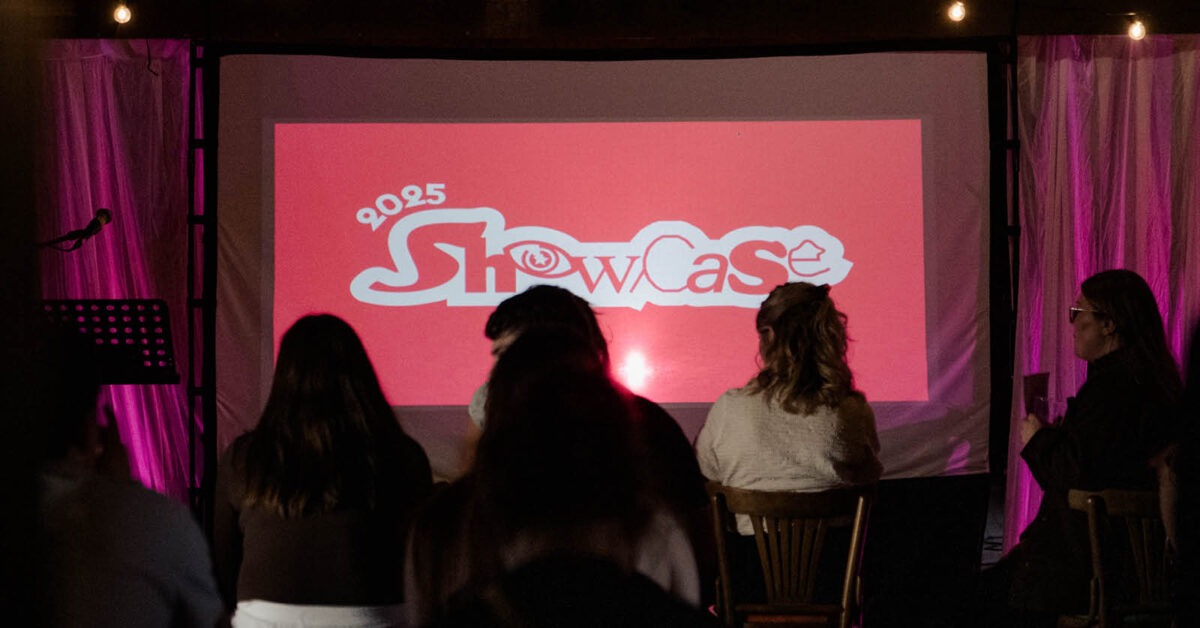
Creative Spaces Showcase 2025

Words by Mia Osborne

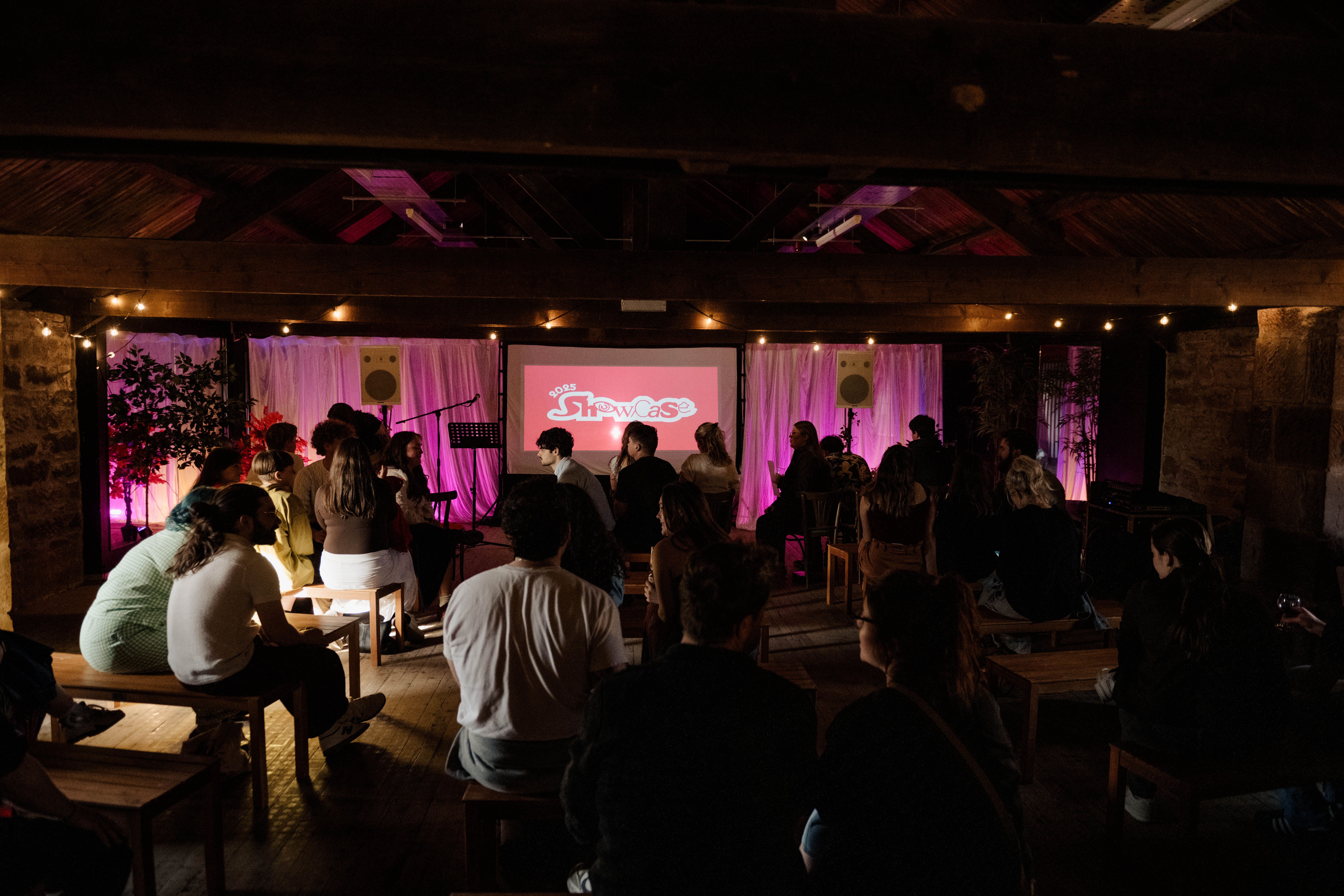
The Creative Spaces Showcase is an opportunity every year for the Creative Spaces team to share the journey of their past 10 months whilst also spotlighting and celebrating the region’s young artists. This is done through an evening of inspiring talks, exhibitions and discussions about young creatives’ impact around the region.

Following on from a day of fringe activity all across Dumfries Town, this year’s main Showcase event took place at the Grainstore, a refurbished multi-use space tucked into the Town Centre. The evening’s audience was made up of both open tickets and allocated invites to organisations, partners and community members from across Dumfries & Galloway and beyond. Guests were welcomed with the hospitality of The Stove Cafe and were offered the chance to network with other creatives and browse the selection of exhibited creative pieces from young artists such as: Lily Ashton, Joseph Cursare, Trinity Coombs, and of course Creative Associates Anna Murray, James Gough and Sonah Chaudhry.

The night kicked off with a quick introduction from myself (Creative Spaces Producer) and then moved into the first half of the evening, the guest speakers:

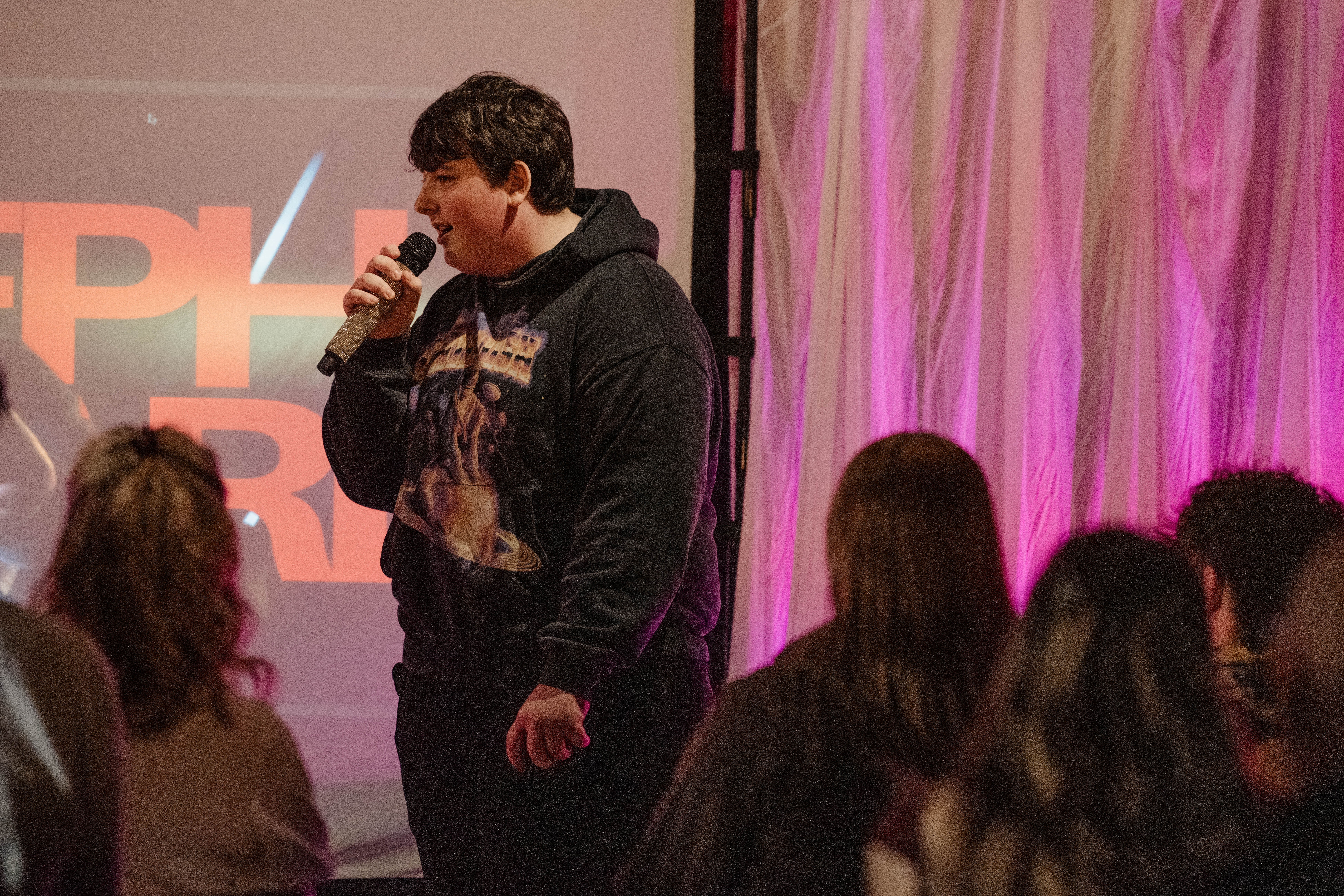
First up, we were dazzled by 16 year-old rapper and performer, Joseph Cursare, who walked us through his journey of making music and finding his feet as an emerging rapper in his local town. Joseph had us in fits of laughter at his presentation, and I felt truly energised by his essence.

Next up, from Gatelawbridge in Upper Nithsdale, we welcomed the refreshing Trinity Coombs, whose mesmerizing documentary photography guided us on a journey along the Nith Valley. Trinity has a great love for the region which really shined in her presentation.

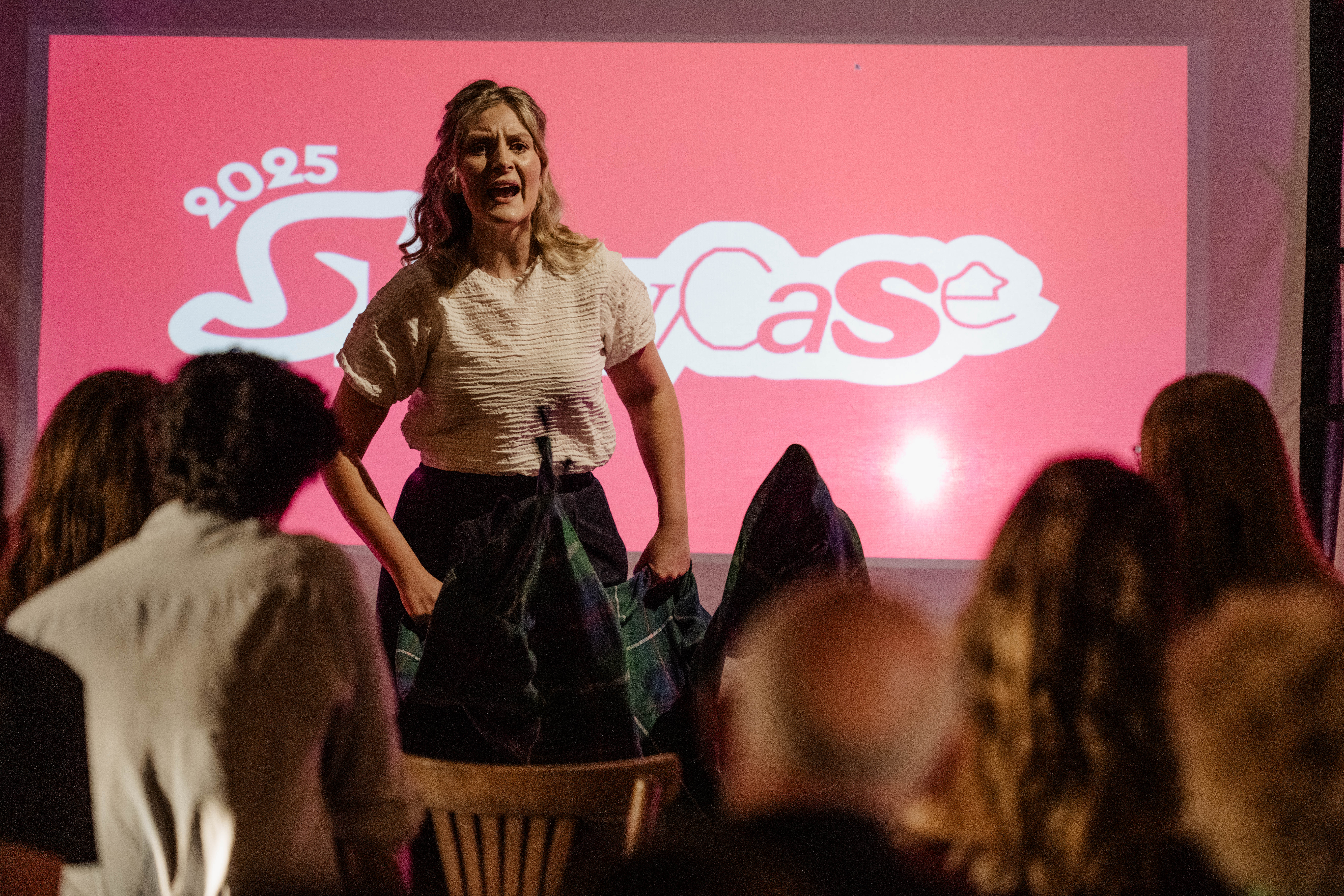
Following Trinity, Lucy Doig took centre stage to tell her story from childhood dress-up to acting school and everything in between. Lucy spoke about her impressive accolades throughout her career and introduced us to “Lament to the Lassies”, a passion project that started as a uni assignment (but more on this to come soon…).

Our penultimate guest joined us from sunny Stranraer, Savannah Crosby is a photographer and creative hub coordinator with Creative Stranraer, who moved us with her inspiring journey of artistic impression and mental health. There was not a dry eye in the house!

Lastly, we welcomed Will Austin, a local business owner, youth facilitator, kayaker, builder, creator and just all-round cool dude to talk us through his eclectic path, and his mission to integrate creative and nature-based learning into the curriculum. Will’s work with fellow young people shows the rich potential of an inspiring idea and heaps of determination.

Every year, we always include a short performance from a young creative as part of our showcasing activity, and this year, we re-introduced our audience to Lucy Doig, to perform her work-in-progress piece, ‘Lament tae the Lassies’; an immersive reframing of the perspective of Burn’s work, focusing on the forgotten women who played a part in Burn’s life. This moving feminist piece was truly mesmerising, and alongside being compelling in content, was also downright impressive in delivery.

This performance concluded the first half of the evening, and we then broke the night up with a short networking break. Before moving on to the second half, we introduced a sharing portion of the evening, inspired by Creative Dundee’s ‘Pass the Mic’. This gave the audience a chance to chat about any events, workshops, activities, ideas or opportunities to collaborate and share with a room full of people in order to plug their things or gain new audience members. We heard from a range of audience members, and this actually ended up being one of my favourite portions of the evening.

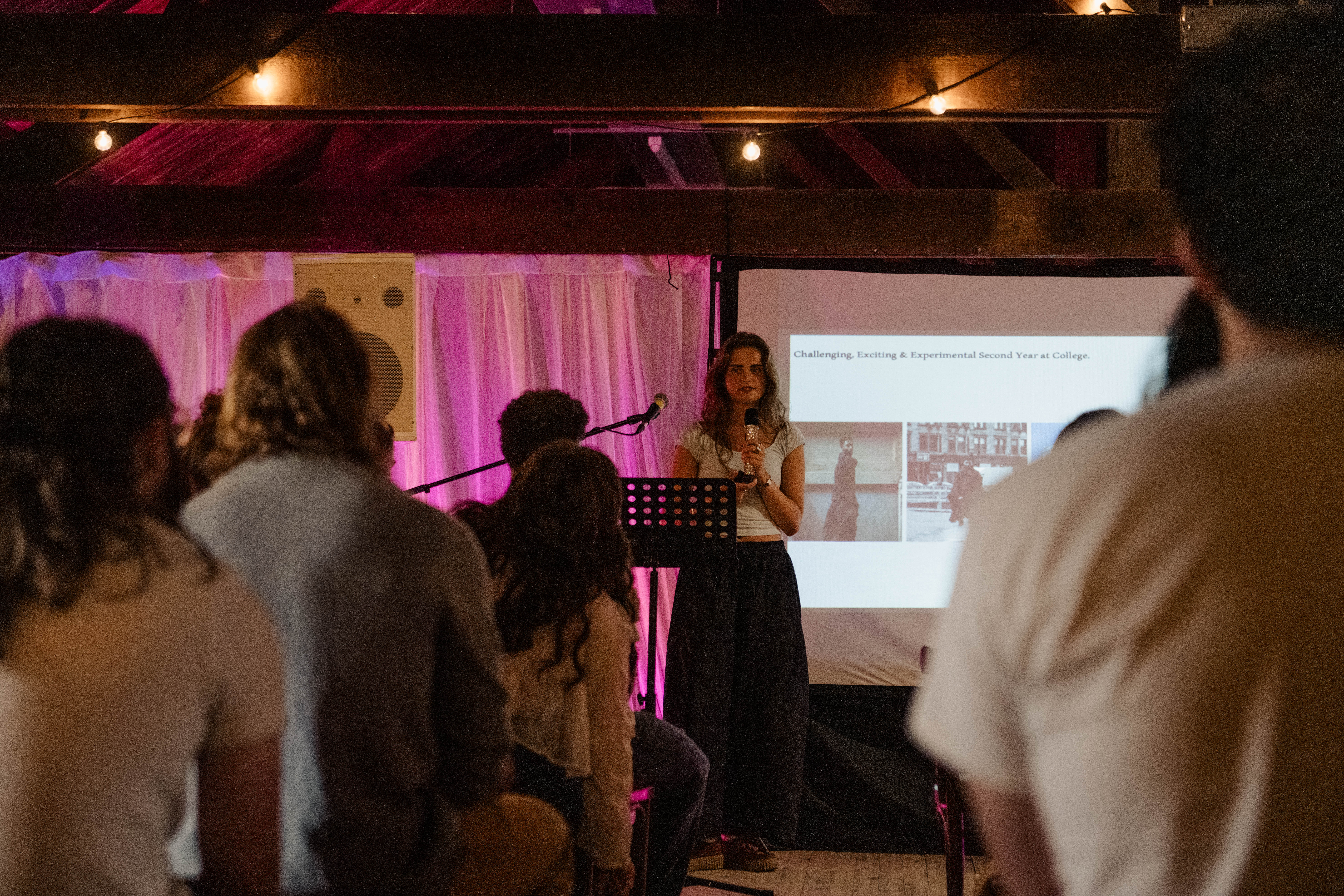
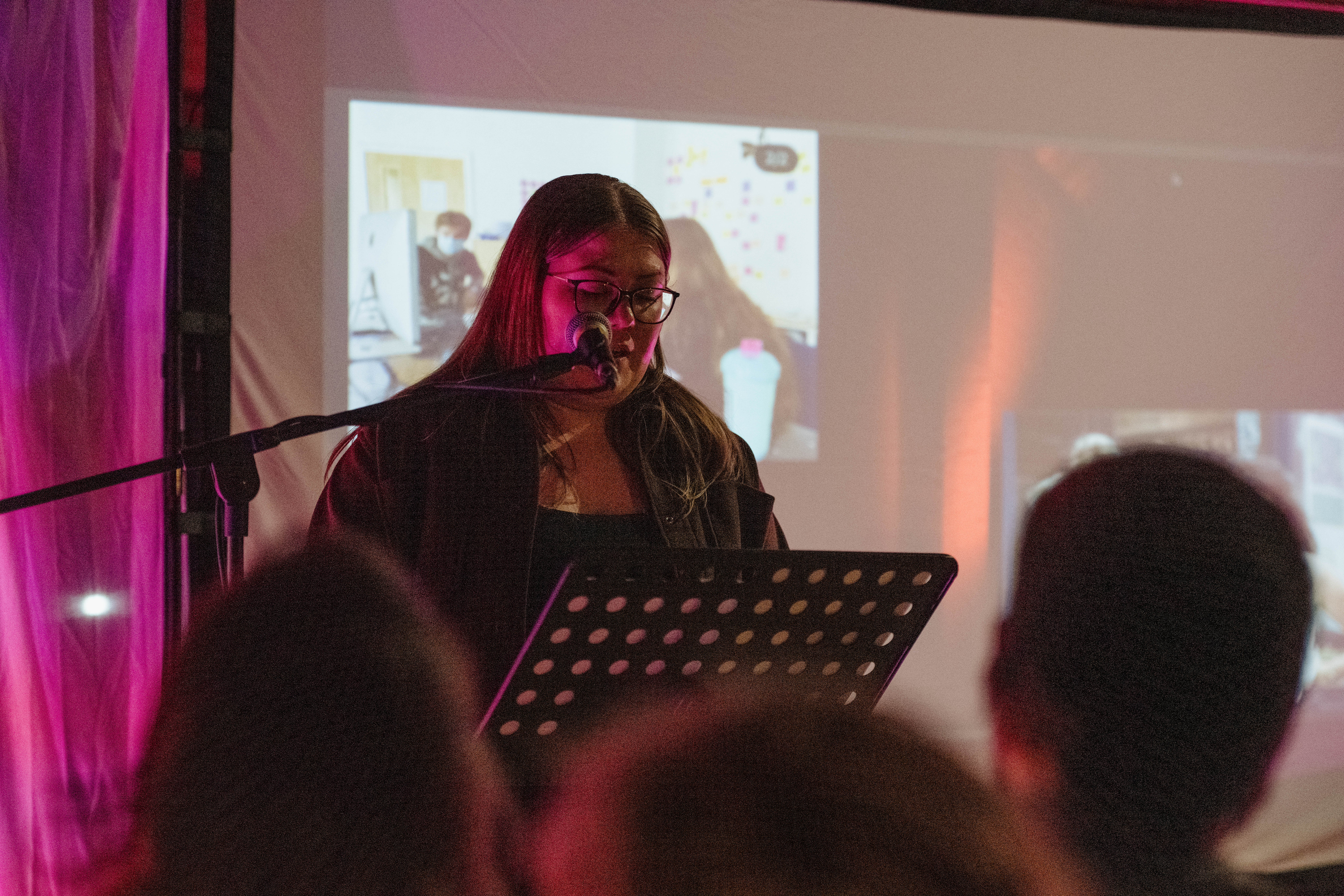
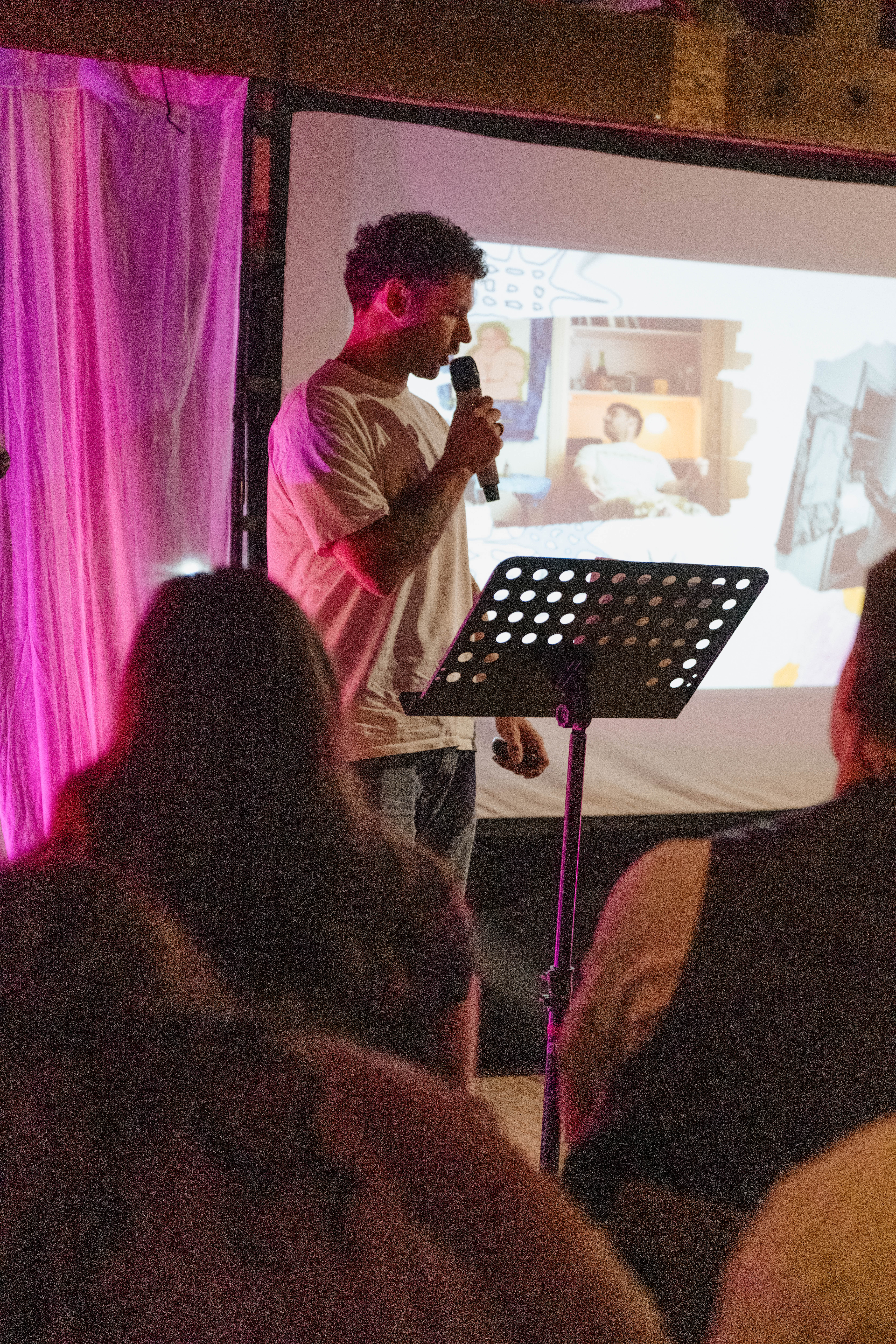
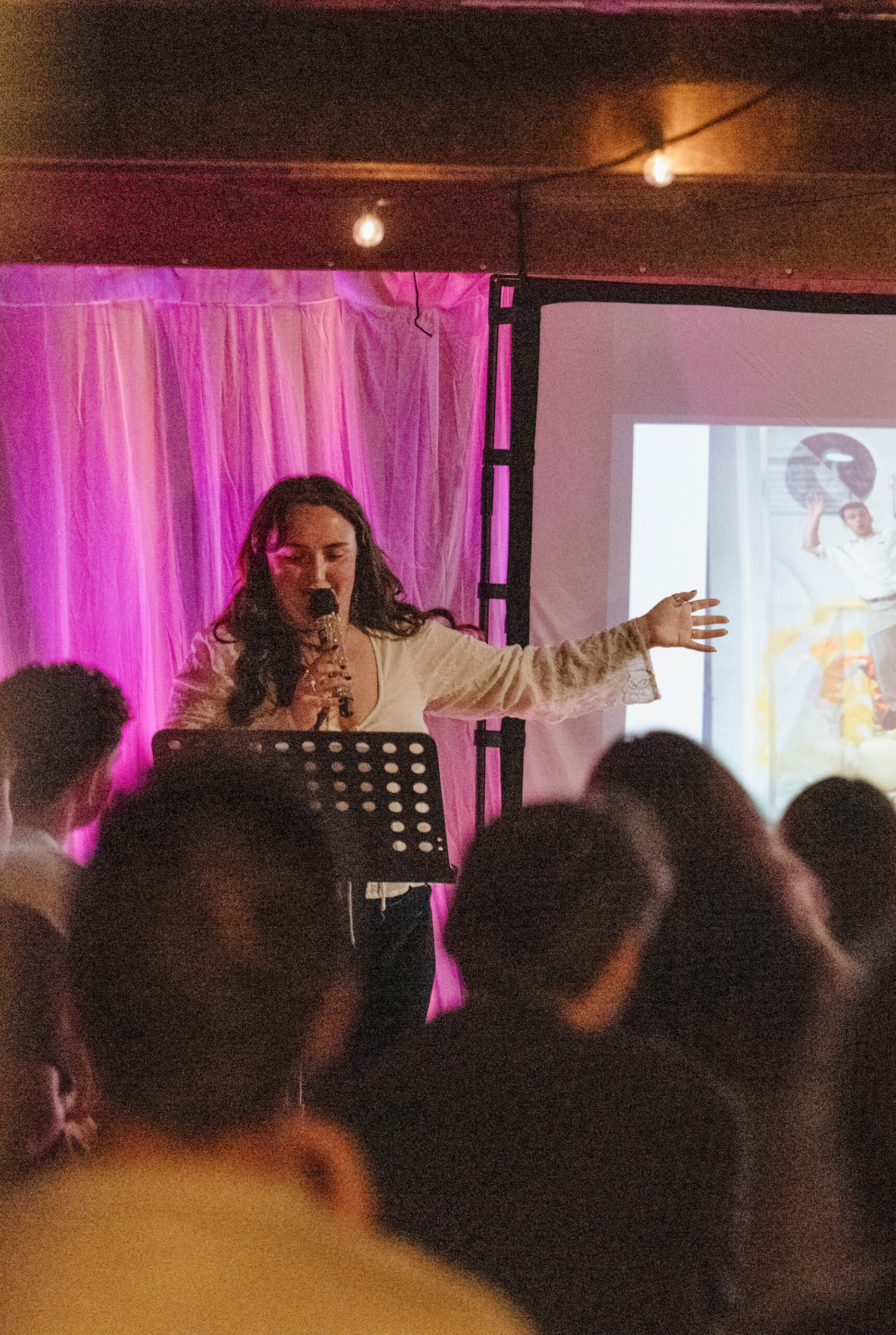
I then had the pleasure of introducing the final portion of the evening, the Creative Spaces Associates, James Gough, Sonah Chaudhry and Anna Murray. I knew the team had been building up to this moment for months, and were understandably very excited but nervous to share their journey, especially after the high calibre of guest speakers we hosted in the first half, however I knew they would knock it out of the park. We started with our first Spacer of the evening, James, followed then by Sonah and finally Anna. The three Creative Spaces team were incredible, and they used their platform to share not only their personal journeys to where they were today, but their journey throughout Creative Spaces, weaving together project work with professional development, which only highlighted the progress that they had all made throughout the past 10-months. The team also described in detail the personal projects they worked on throughout the past few months and how these projects impacted their personal and creative practice. You can read James, Anna & Sonah’s reflection pieces on their times at Creative Spaces here.

Every year I end the Showcase event feeling an overwhelming amount of pride in the work that we do, and the scene that we nurture. Every year this has become more and more evident by the people that walk through the door and the feedback they have given. The evening’s Showcase event was, in my opinion, a true reflection of the remarkable creative talent that we hold in Dumfries and Galloway, and the endless possibilities of our young people.

In a fitting end to this reflection of the evening’s event, it feels fitting to reiterate the thanks to the team behind it, for without these people, it would not be possible. Thank you to Sonah, Anna and James for the past 10-months, and all of your hard work, to the guest speakers Joseph, Trinity, Lucy, Savannah and Will for your inspiring presentations, to the Holywood Trust for continuing to support the project year after year, to Martin and the rest of the team at the Stove for all of your support over the past year, to DJ McDowall for your invaluable mentoring, to Wren, James, Anna, DMC and Martin for facilitating some amazing workshops throughout the day, to the production team, Sal & Meg for all your hard work executing the event, to Pam from the Stove Cafe for the bar & snacks, to Kirstin McEwan for photographing the event and to Tom and Louisa at Home Restaurant for letting us use their gorgeous space to host the Showcase event and of course thank you to all of you who came out on the night to support your creative scene.

Categories
News

At the Threshold: A Reflection from Matt Baker


After 14 years of collaboratively shaping The Stove as it is today, Matt Baker shares a personal reflection on the journey, impact, and future of the organisation he helped to found. From an experimental idea sparked in a Dumfries bar to a nationally recognised model for community-led cultural change, The Stove has grown into something more powerful and alive. Ahead of his departure from his role as CEO, Matt took the time to offer insight into what’s been built, what’s still to come, and why, now more than ever, we need spaces like The Stove to imagine and shape a different kind of future.


Words by Matt Baker

I’ve been a full-time public artist since 1995. For fifteen of those thirty years, I worked in the classic way – on projects that were time-limited by the budget available. The pattern was always the same: creative activity would generate momentum in a community, then, when the project ended, most of that momentum would fade away. I would reflect on how community art projects always started as an add-on to something else — whether that was a building project or a public event. I was never involved in something (with a budget!) that originated from a creative process in and of itself. I wondered how it might be possible to build a project that became part of the ongoing story of a place — something that felt as natural a part of a community as, say, a school or a recycling centre — and that could be self-sustaining by continuing to be useful to the place. The Stove is an experiment that set out to test that idea.

The spark for The Stove was the opportunity to use an empty three-storey building in the centre of Dumfries. In early 2011, a group of creatives met in a bar in town to imagine how using this building creatively could play a role in turning around the fortunes of the High Street, which was haemorrhaging businesses and shops. Five of us started a thing called The Stove (the name deliberately ‘un-arty’ — an attempt not to put off too many ‘ordinary’ folk). Our vision was to use creative activity to prompt a conversation within our community about the town’s future. We hoped to be seen as an example of positive action — to inspire others to join in and/or start things themselves. The building would become a ‘people’s HQ’ for making things happen — literally a door to chap on if you had an idea or wanted to find out what was going on.

From starting a community river festival to crowdsourcing a new town charter and holding bonfires in the town square — everything we did was designed to bring people together, build new alliances, and exchange ideas. In those early days, everything was done hand-to-mouth, with an entrepreneurial approach to fundraising — adapting how we talked about our work to suit different funding objectives. We quickly learned that each successful community project created its own momentum, which we were able to maintain through local partnership working and more fundraising. This led to more opportunities for freelance creatives and, before we knew it, The Stove was at the centre of a creative scene in the town. The vibrancy of this scene led to more projects and more momentum. It was a virtuous circle — something we started to call ‘creative placemaking’.

Over the 14 years of The Stove, we have achieved amazing things, which I am so proud to have been part of. We have grown beyond Dumfries to become a key part of the toolkit for working towards an equitable future for everyone in our region:

  • We’ve led a campaign to ‘buy back our High Street’ and set up a Community Benefit Society through which our local community now owns five High Street buildings. Our town has attracted more than £10M inward investment to redevelop them.
  • We helped over 100 local creative freelance businesses survive the Covid pandemic.
  • We employ 20+ people locally and have started four social enterprises which employ another 16.
  • In 2023–24, we awarded 178 contracts to local freelancers worth a total of £187,000 — 31% of which went to people under 25.
  • We’ve set up and now manage a Creative Placemaking Network for Dumfries and Galloway, made up of community anchor organisations and creative freelancers.
  • We’ve worked with our local authority to integrate creative placemaking into the way Dumfries and Galloway Council develops capital regeneration projects for our region.
  • We’ve played a leading role in embedding creativity in community-led regeneration projects in Stranraer and NW Dumfries.

At the outset, we identified that our region was being held back by a reluctance to collaborate, risk-averse working and an inability to acknowledge emotions in the way we worked together. We set out to champion the opposite values. As newcomers to the local scene, we saw our impacts at the margins very clearly at first. But, as time has gone on, we’ve become increasingly embedded in the ‘inside’ of how our region works.

This means we are genuinely changing the way things are done — and will be done in the future — but this is often harder to see on the ground, as The Stove increasingly works behind the scenes to allow new local structures to grow independently, rather than being the noisy gang shouting ‘follow us!’

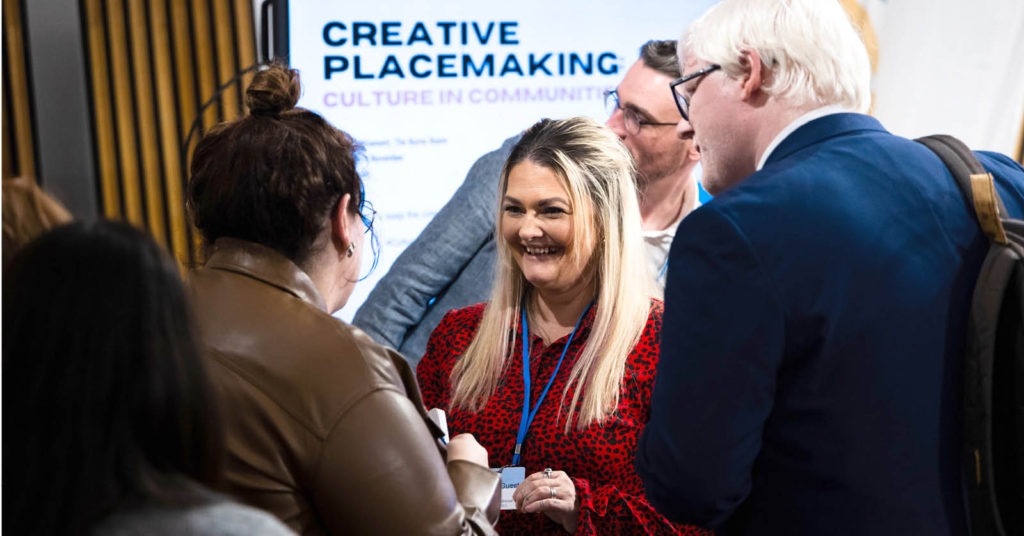
Angela Gilmour, Lift D&G | The Stove at Scottish Parliament | Culture in Communities

The whole thing has genuinely been an enormous experiment. We’ve followed the maxim of the Artists Placement Group in the 1970s: ‘the context is half the work’, which means we’ve never seen The Stove as a thing in itself, but always as part of the momentum, the society, the economy of our local place. I don’t think The Stove is a model that can be repeated verbatim elsewhere — though in an attempt to bring together some general principles, we co-published An Approach to Creative Placemaking, with South of Scotland Enterprise.

In terms of running an organisation (something I never intended to do!), I’ve come to think of The Stove as another community — one of many we work with. I’ve tried to enable a culture of listening and support for the personal journeys of individuals as the momentum that continues to shape The Stove’s ecosystem. Being a conduit and a balancing presence within the organism, rather than ‘steering’ anything, has perhaps been the most profound learning for me. The number and quality of opportunities that people have found through the actions of The Stove — in a place as unlikely as southwest Scotland — is something I continue to marvel at.

Now, as I come to this threshold moment, I conclude that the original experiment has proven it is possible to build a cultural project that becomes part of the ongoing story of a place. The remaining question is: can it be self-sustaining? We’re a long way down that road, but, for me personally, the final piece is to step away and let the glorious organism that is The Stove evolve in ever more exciting ways without me.

It’s a special moment in many ways — one characterised by questions. The Stove has grown from ‘plucky outsider’ to ‘part of the furniture’. Have we joined the establishment? Was that the point all along if we wanted to effect real change?We’ve seen how it’s possible to leap from the hyper-local into the national conversation, and The Stove has had some success in ‘building the road ahead of ourselves’ — influencing national policy toward more place-based support for culture in community settings. But what will that actually mean for the future — locally, regionally, and nationally? Does The Stove remain one entity, or, as it grows, should it split into different branches of the same overall organism?

Matt Baker & Martin O’Neill | The Show Must Go On Sign Install | 2025

What I do know is that the people who have helped grow The Stove are ready to take it on new adventures and tackle these questions and many more. Over the years, we’ve grown into an incredibly tight team with complementary specialisms, united by dedication to The Stove’s values and ongoing evolution. I will miss being part of this team deeply. As a visual artist, I’ve mostly worked alone in my career and often envied other artforms like music or performance, which are made collaboratively. Being part of Team Stove has been one of the greatest joys of my life. I’ve made lifelong friendships and ongoing creative relationships. As the team takes on the reins of The Stove, I’ll be cheering them on. I hope you will too — or even get stuck in alongside them.One definition of insanity is doing the same thing repeatedly and expecting different results. As a place, as a community, as a country, and as a world, we need different. The Stove is part of the promise of different. And we need it now more than ever.

Categories
News

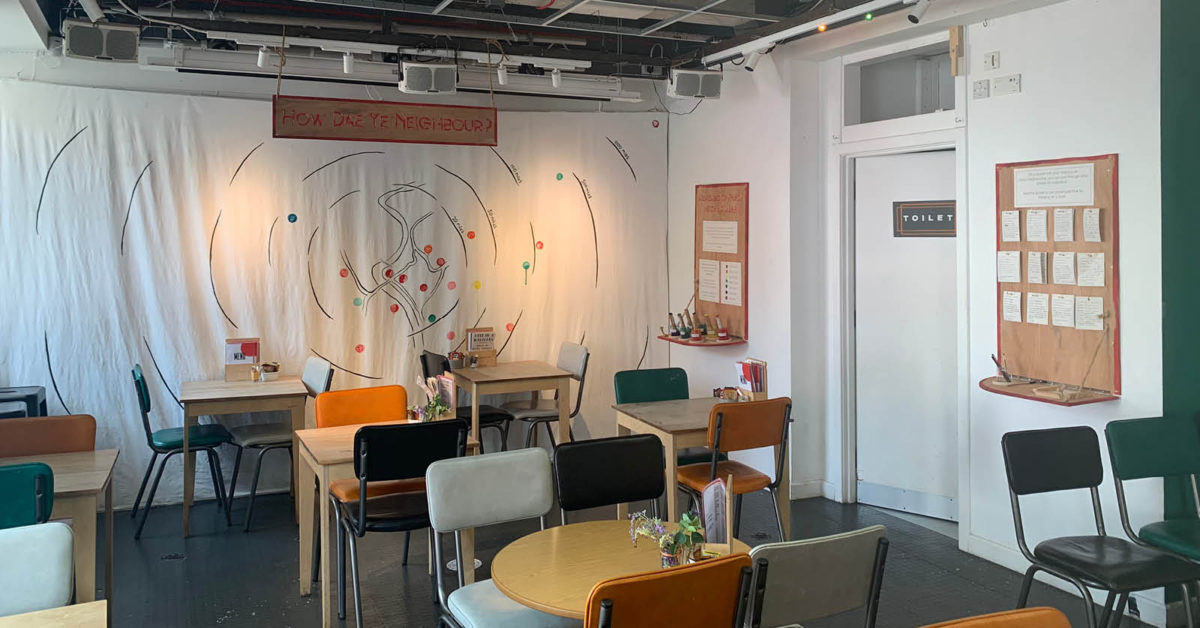
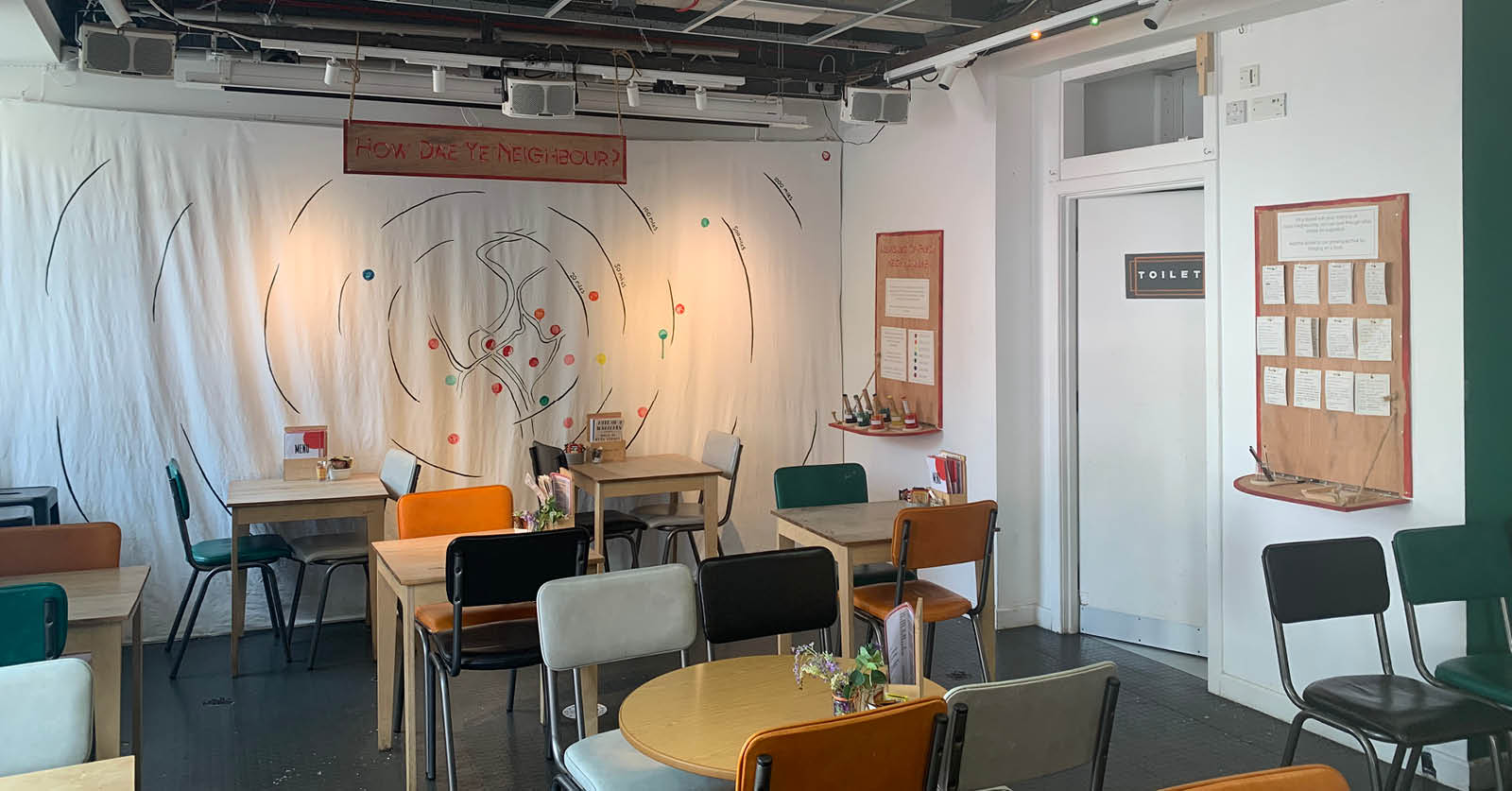
How Dae Ye Neighbour?


A question from The Stove’s Artist/Maker-in-Residence, Kirsty Harris, as part of this month’s Conversing Buildings. An open invitation to consider How Do You Neighbour? in the lead-up to Guid Nychburris 2025. Kirsty reflects on the concept and intention of the installation.

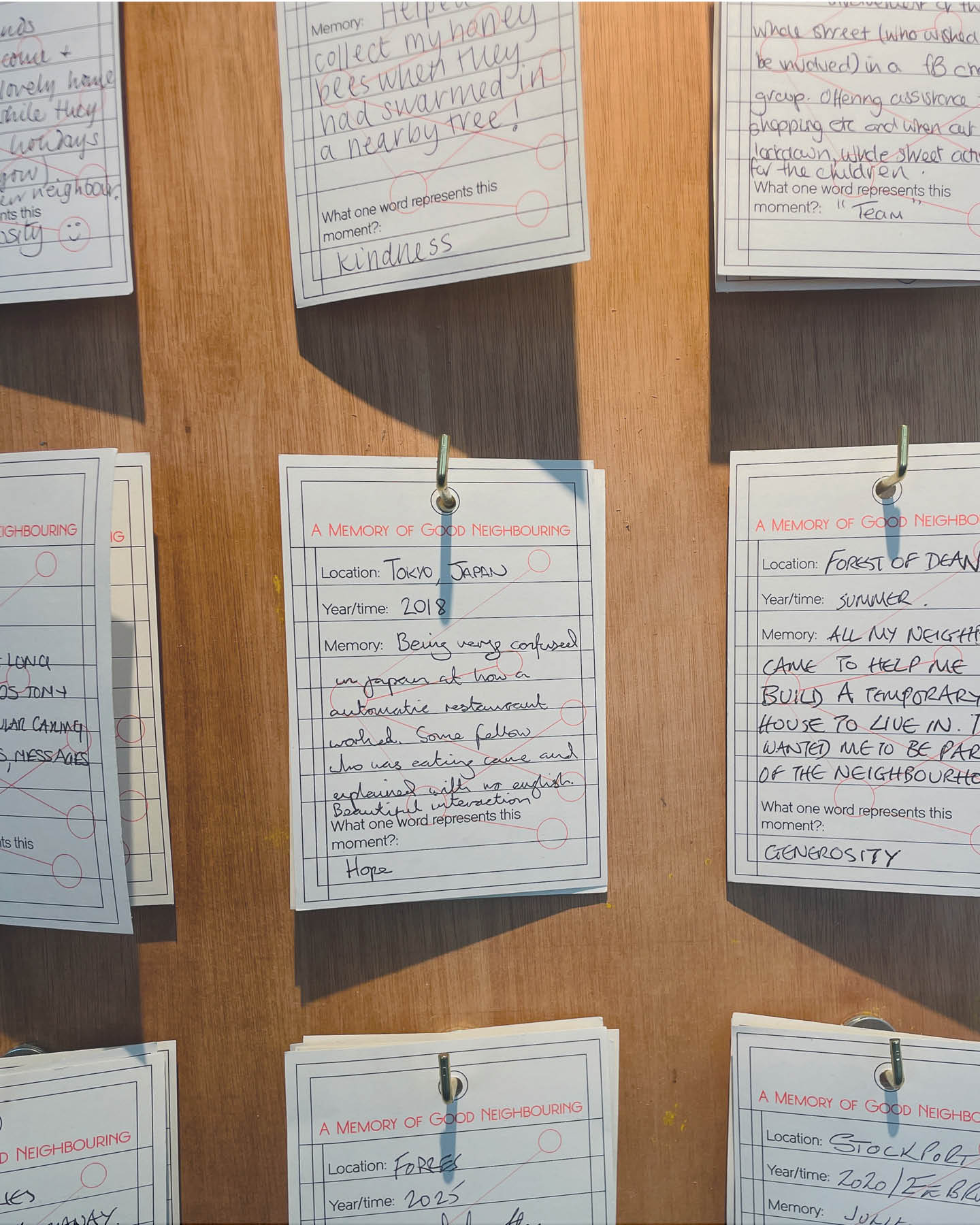
“How Dae Ye Neighbour?’ seeks to gather stories and shine a light on moments of “good neighbouring” from across our community—past and present. I’m curious about when and where these moments have taken place. Were there times when being a good neighbour felt easier? Are there places where it happens more often? And what values lie at the heart of these acts?

By reflecting on our memories of neighbourliness, we might uncover something about ourselves—and perhaps spark inspiration for the future. Curiosity feels like a good starting point: recognising the good that already exists and building from there. The contributions so far have captured kindness, generosity, and care within our closest networks.”

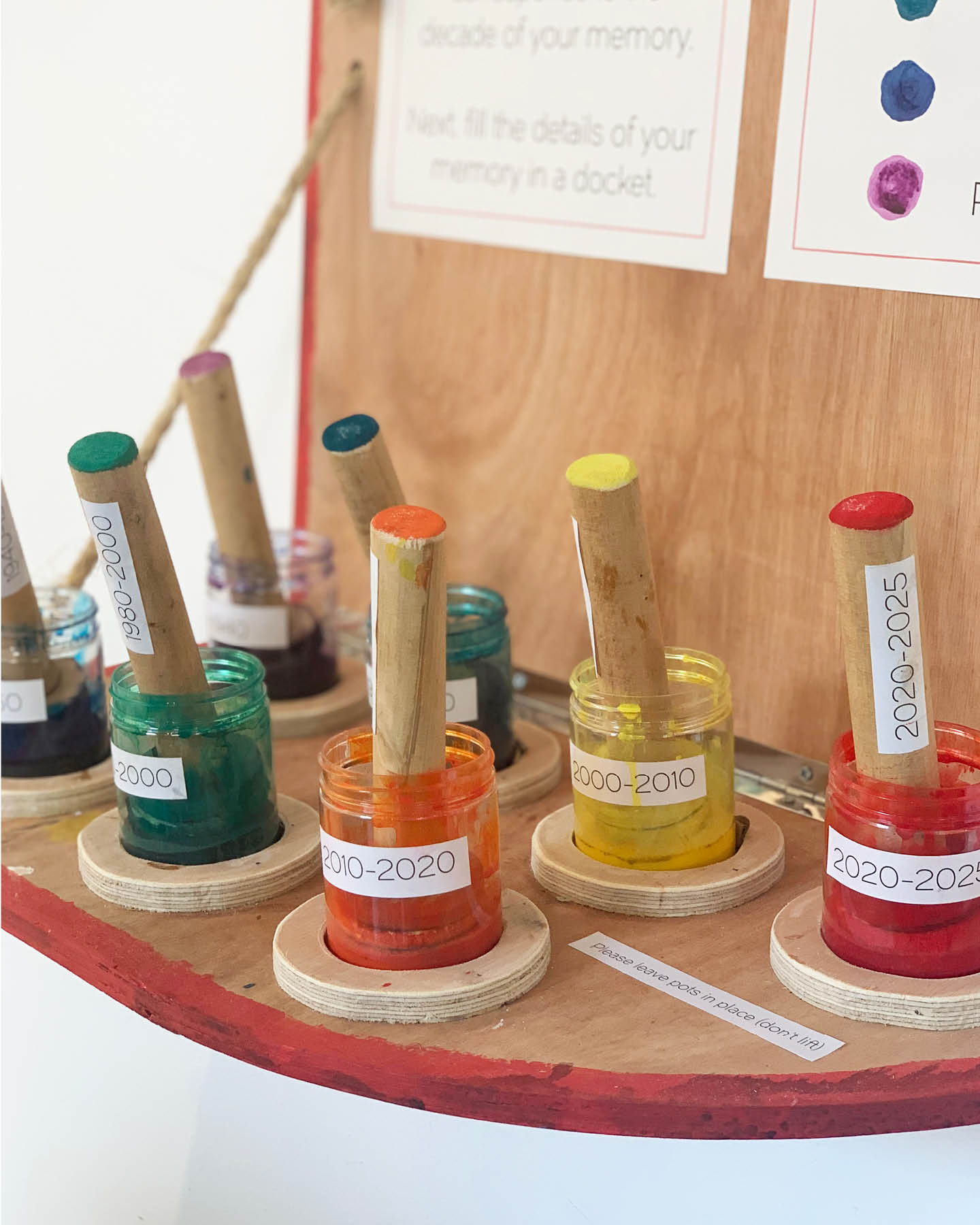
Join us at Guid Nychburris or visit The Stove Cafe – read the stories in our growing archive, add your own, mark its place on the map.

Words by Kirsty Harris

Categories
News

The Next Steps in The Stove’s Leadership Transition

Since February, when we announced that Matt Baker will step down as CEO at the end of June, The Stove has been engaged in a carefully considered transition process working with Matt, Stove team and the Board. This has been a period of deep reflection and strategic thinking across the organisation, laying a strong foundation for the future of leadership at The Stove.

We recognise that moving on from founder-led leadership is a pivotal moment for any organisation. Rather than rushing this transition, we are embracing a deliberate and thoughtful approach that honours our values whilst also maintaining day to day operations.

With guidance from international arts consultant Bob Palmer, this process has allowed us to reflect on what leadership means for us today. It has helped us focus on how to best deliver our current three-year business plan while ensuring the long-term relevance and impact of The Stove—all aligned with our core values of creativity, collaboration, and transparency. Crucially, it has also acknowledged that founder succession is a major milestone—one that requires care, time, and collective input.

Over the past 12 weeks, we have completed a comprehensive review of our immediate operational needs and, by temporarily sharing leadership responsibilities across a dedicated board working group and the senior leadership team, we can hold the space for a more in-depth handover period to fully assess our long-term leadership requirements.


With immediate effect, shared leadership responsibilities will be held by:

Creative Strategy
Martin O’Neill, Artistic Director
Contact Martin: [email protected]

Operations & Projects
Graham Rooney, Operations Director
Contact Graham: [email protected]

Finance & People Services
Lindsey Smith, Finance Director
Contact Lindsey: [email protected]

Governance & Board Matters
Lynsey Smith, Chair of the Board of Trustees
Contact Lynsey: [email protected]

Partnerships, Networks & Policy
Katharine Wheeler, Development Director
Contact Katharine: [email protected]


As we move through this important phase, we do so with positivity, openness, and in collaboration with all those involved. We welcome your thoughts and insights as we shape the next chapter for The Stove.

If you have any questions, reflections, or would simply like to connect during this transition period, please don’t hesitate to reach out via [email protected]. While responses may take a little longer than usual, we are committed to open dialogue and will do our best to reply promptly.

Categories
News

‘This Machine Destroys Tyrants’: Dumfries, Print, and the Future of Community-Led Journalism

Rhiannon Davies of Greater Media

By Martin Joseph O’Neill

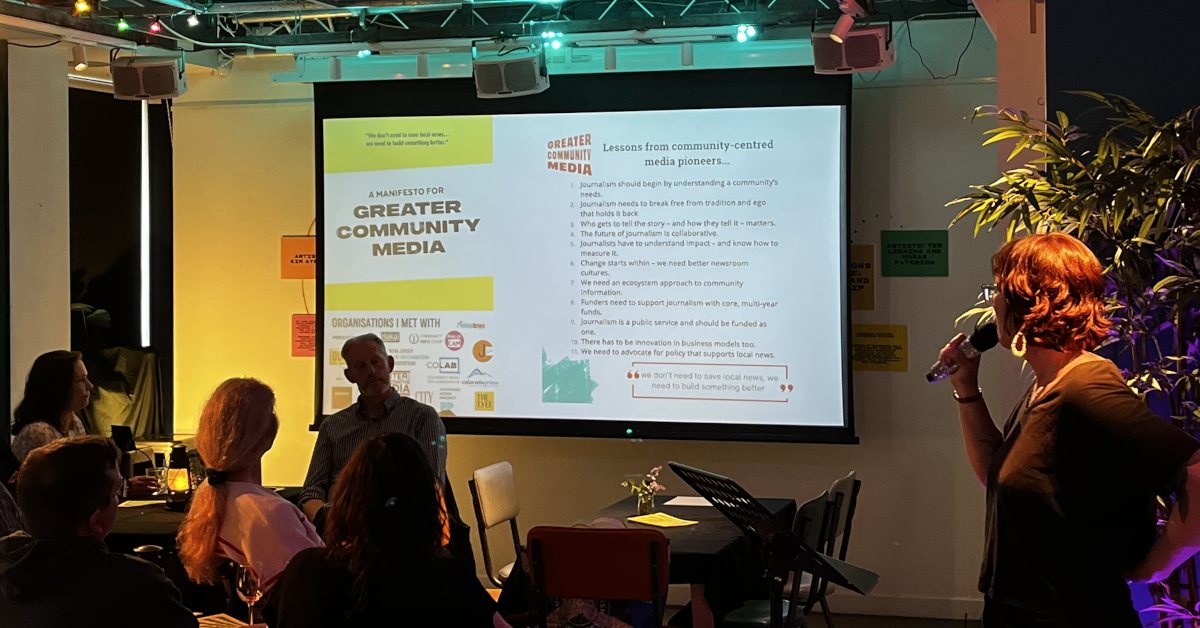
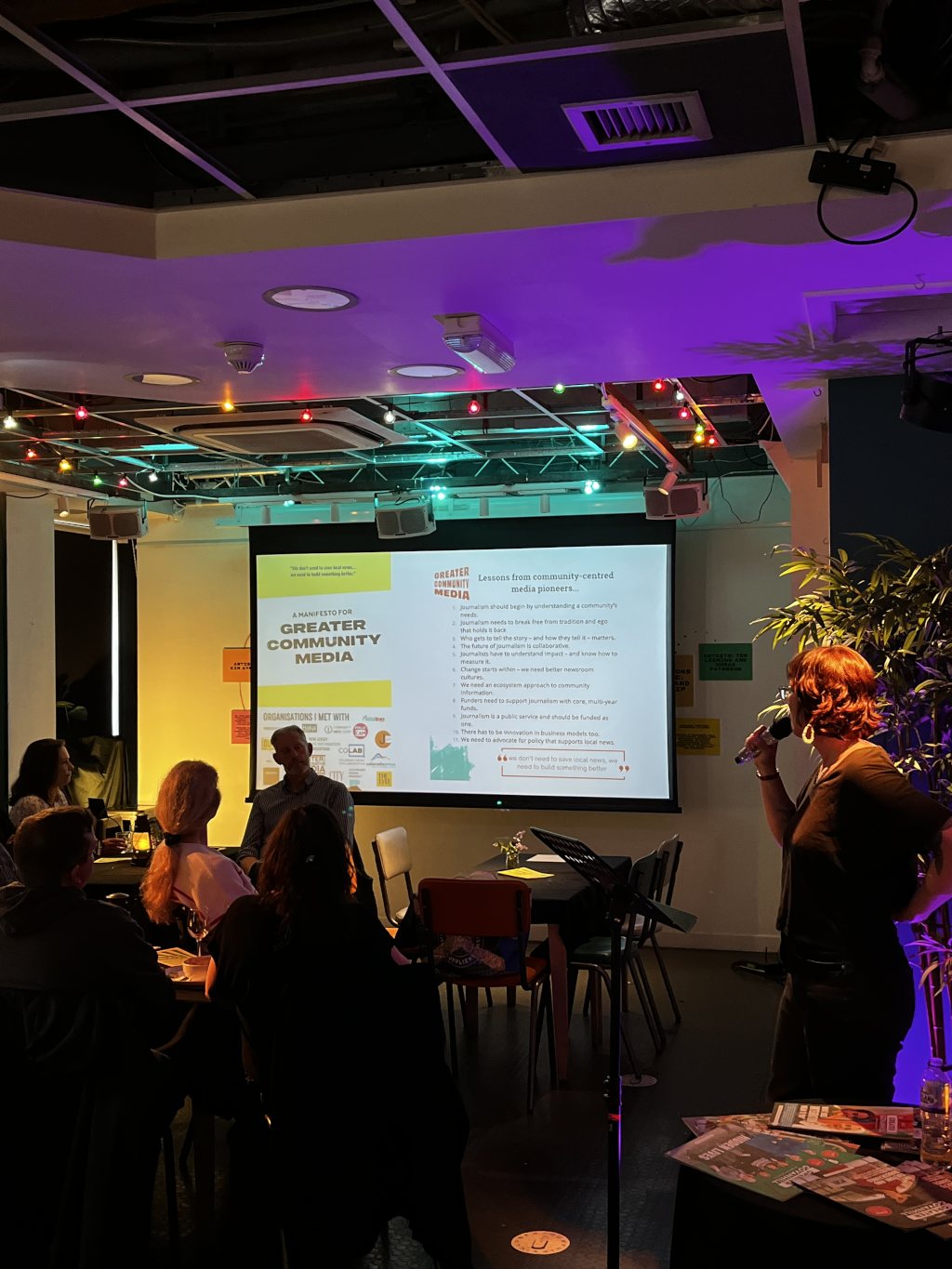
A few weeks ago, we hosted an event at the Stove called The Gaither Inn – a kind of open invitation to sit with an idea: What would it take to build a community-led publication in Dumfries?

We were joined by two brilliant guest speakers – Rhiannon Davies, founder of Greater Govanhill, and Judith Hewitt, curator and local historian – who helped us explore both the roots and future of grassroots media in Dumfries and beyond.

The evening was packed. Ideas were flying. It felt as though something was beginning – or perhaps picking up from where we had left off.

The Future

Let’s be honest: the future feels rather grim lately. Climate breakdown, inequality and a world run by billionaires can leave us feeling as if we are drifting further from control. But perhaps the future is not so distant. Maybe it is not even all that abstract – it may simply be the outcome of what we build (or do not build) now.

I like to think of it like this:

Imagine rowing out to sea. You are facing the land – your history, your memories – as you move away from it. The shore becomes blurrier, but you still carry what it has given you. You cannot see what lies ahead, yet your boat is strong. You have packed water and supplies, and you have learned how to read the sky. The future is unknown, but it is not unreachable. The direction you take depends on how well you have prepared and whether you are paying attention.

What Does This Have to Do with Print?

Quite a lot, actually. Dumfries has a history of shaping its own story and using words, print and collective knowledge as a means to connect, challenge and organise. And it is not always a history that people are aware of.

Here are a few things I did not know until recently – and perhaps you did not either (thank you, Judith):

Dumfries: Print Town

  • 1715: The Dumfries Mercury became the first newspaper published in Scotland outside the central belt.
  • 1750: Dumfries is recognised as one of just 15 official “Print Towns” in Scotland – on the leading edge of print culture.
  • 1830s: Dumfries print workers formed the Typographical Union – one of the country’s earliest trade unions. Their work was not just about ink and type – it was about connection, fairness and voice.
  • 1838: A local procession rolled through town with a flower-covered printing press on the back of a cart. On it, a banner read: “This machine kills tyrants.”

There were libraries, reading rooms, the Mechanics’ Institute at Nith Place and a culture of people sharing papers, passing them hand-to-hand, and reading them aloud in workshops and kitchens.

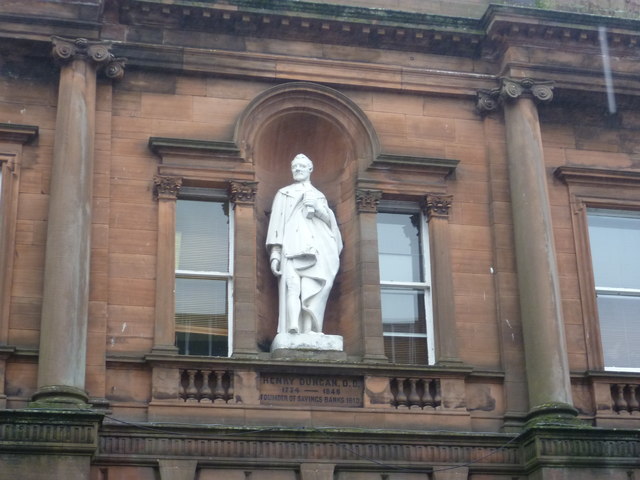
Henry Duncan, founder of The Dumfries & Galloway Courier in 1809, is remembered for creating one of the earliest examples of service journalism – a newspaper made not to stir scandal or sell ads, but to serve its people. He even has a statue in the town.

Henry Duncan Statue, Church Crescent | Image Credit: Kim Traynor 

The point is—Dumfries knew how to talk to itself: how to debate, record, reflect, and imagine.

And I think we still can.

So We Asked: What Could a Dumfries Publication Look Like?

After hearing from Rhiannon and Judith, we invited the room to break into editorial teams and design what a new community-led publication for Dumfries might be.

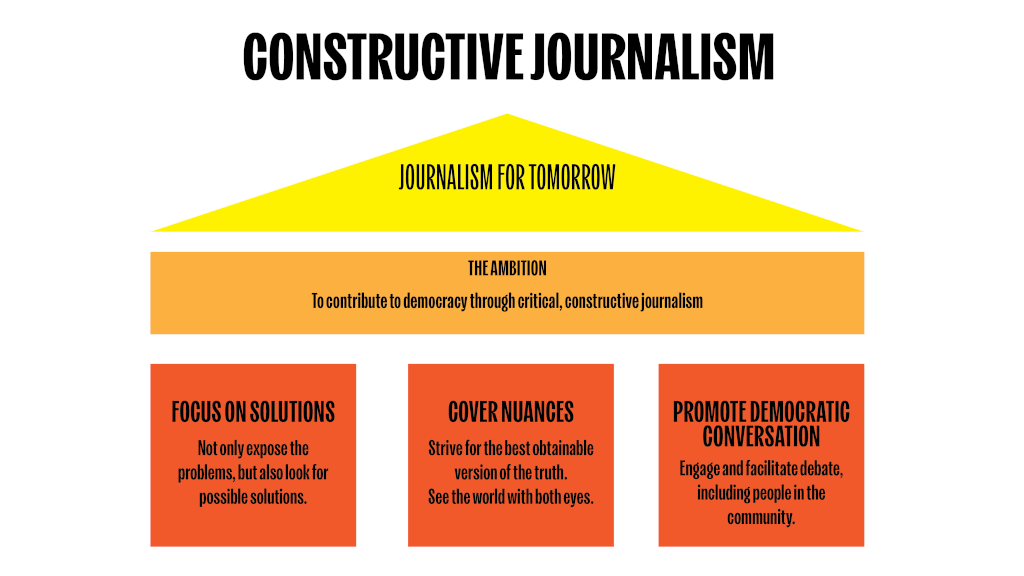
Constructive Journalism:
A form of reporting that focuses on context, solutions, and potential progress — not just problems. It aims to inform while also empowering and engaging the public.

A Diagram explaining ‘Constructive Journalism’
A Diagram Explaining ‘Constructive Journalism’ in More Detail.


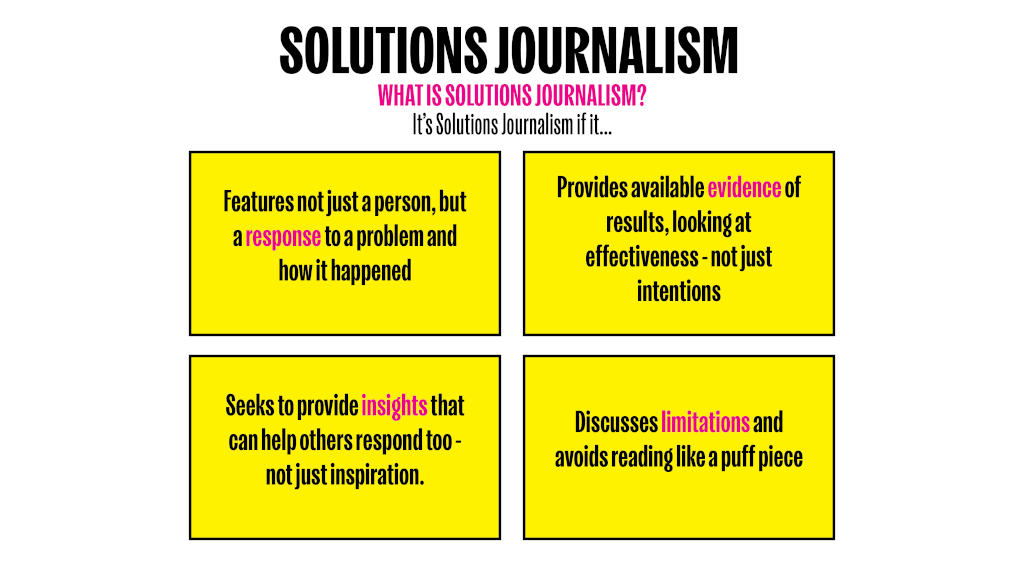
Solutions-Based Journalism:
Journalism that investigates and reports on how people are responding to social problems — focusing on what’s working, how, and why, without ignoring challenges.

A Diagram explaining ‘Solutions Journalism’.
A Diagram explaining ‘Solutions Journalism’ in More Detail.

Here’s what they came up with:

Shared Values

  • Rooted in place: The river, the ridge, the land – not just a backdrop, but part of the story.
  • Many Dumfrieses: Georgetown, Lochside, Maxwelltown, the town centre, the places on the edge. Dumfries isn’t one identity – it’s a gathering of them.
  • Welcoming, but with gaps: People in Dumfries are kind, but not everyone receives the same welcome – especially asylum seekers, young people and older folk. How do we create something where everyone sees themselves?
  • Tell the good stuff too: Instead of always reacting to vandalism or decline, why not report on what’s working? Who’s doing good work? What’s bringing people together?

One popular idea was to organise the publication into three parts:

Past

  • Invite people to share stories and snapshots of Dumfries life.
  • Run intergenerational interviews – young people asking older people real questions, for example:
    • “What was your first job?”
    • “Have you ever vandalised anything?”
  • Let memory guide us – not to dwell, but to ground.

Present

  • Address local issues: housing, racism, flooding, and public space.
  • Ask: What’s being done? What’s needed? What’s worth celebrating?
  • Include event listings and practical information.

Future

  • Create a “dream dump” where people can send in their literal or imaginative dreams for the town.
  • Invite people of all ages to describe what Dumfries could be.
  • Include deeper dives into issues, comparisons with other places, or real‑world examples of people trying something new.
Other Ideas
  • Community Newsroom: A drop‑in space where people can come and share what they believe should be discussed.
  • Platforming underheard voices: Create space and support for those who often feel excluded from civic life – asylum seekers, people without stable housing, and young parents.
  • Youth‑led Journalism: Flip the script. Support young people to report on what matters to them and how they see the town.
  • Supporting groups to tell their own story: Enable local charities, community campaigns, and neighbourhood projects to speak in their own voice.
So What’s the Point of All This?

This isn’t just about ‘making a magazine’. It’s about offering people a way to see themselves in the story of Dumfries – and to see each other. It’s about moving beyond the idea that only certain people “get to” speak or be heard. It’s about creating something that reflects real lives and provides a space for people to imagine what comes next – together.

What’s Next?

This summer, we’re getting ready to launch something new at The Stove – a space in the town centre where print, design, stories and civic imagination can come together. We don’t know exactly what it will look like yet, but we’re hoping it can be part news desk, part ideas lab and part open studio. We’re also hoping it will be one way for us to start talking – and listening – differently as a town.

If you’re curious, have an idea or simply want to be part of the conversation, come and find us. We’ll be here.