Each autumn, tens of thousands of wild geese arrive in Dumfries & Galloway after their long migration, some travelling over 2,700km to reach the region. This mass gathering of geese, including barnacle, greylag, brent and Greenland white-fronted geese, flock to Dumfries & Galloway each year, making our region one of the best places in the UK to see such a variety of geese.
As part of the 2021 Wild Goose Festival, we want to celebrate the beauty and wonder of our visiting geese, as well as the vast photographic talent found in our region. This competition is open to professional and amateur photographers from or based in Dumfries and Galloway.
To enter the competition, please send us:
Your chosen photograph (any nature/environmental themed photo taken in Dumfries and Galloway);
Your name;
Your email (so we can get back to you);
Your age;
Where the photo was taken;
And one or two sentences about your image.
Please enter the competition using this Google Form, where you will be asked for the above information: Link to enter here.
The deadline to enter is midnight on 11th October 2021. The top 10 finalists’ photographs will be displayed at the Wild Goose Festival Closing Gala on the 23rd October 2021, where a winner will be announced.
With the creative industries growing at four times the rate of the UK average1, it is perhaps a surprise that the age-old tropes of art school haven’t yet disappeared. For many students, the decision of whether or not to go to art school is a nuanced debate – one which undoubtedly isn’t given enough airtime at schools or colleges across the country.
The concept of ‘art school’ and what actually goes on there is still seen as pretty mysterious and aloof (all art students will know the struggle of trying to explain how your degree requires significant work, time and skill just like any other degree). And as the stereotypes build and build it is easy to forget how reliant we all are on the arts and what your individual future in the arts could look like… like can you make money or are we all doomed to the ‘struggling artist’ trope forever?
But even once we are over the hurdles debating the mere importance of the arts industries and the potential for growth within an arts related job, there is still a question as to whether art school is the way to go about achieving these ambitions. Do you a need a fashion degree to be a designer? Or a degree in painting to be a painter? And what does a degree in fine art actually mean?
The impact of the arts is constantly minimised (anyone still remember Fatima the ballerina ‘whO’s NExT JOb cOulD BE iN CyBer’?)2. What is often overlooked is the transferable skills which you accumulate as you hone your craft within your degree.
Hopefully, you will get to become a magnificent painter following a degree in painting and printmaking. But also, you’ll learn creative problem solving, verbal and visual communication methods, responding to briefs and deadlines, emotional resilience, collaborative working… the list is endless!
With art school in particular, it is arguably not the end result of the degree which makes the choice ‘worth it’ – but the art school method of thinking it can instil in you, the acquiring of potential contacts, the widening network of opportunities and access to facilities that is developed during an art student’s academic career.
The chance to be immersed with like-minded people and having the time and space to fully concentrate on learning your craft (or even finding your craft) is one of the many great allures of art school. The permission to experiment, and the safety to fail, while working on projects for the sake of projects (and, for the most part, not commission or money) is an opportunity that’s not frequently available outside of an art school setting. But that doesn’t mean it’s the only way to go!
One of the many beauties of the arts is that there’s not one path for everyone. We all find ourselves clambering around, finding our way, losing our way, or deciding to set up camp halfway down the path for a while because we just like the view.
Ultimately… to art school or not to art school? You decide. But hearing about other people’s creative pathways and understanding the paths available will always be a good starting point.
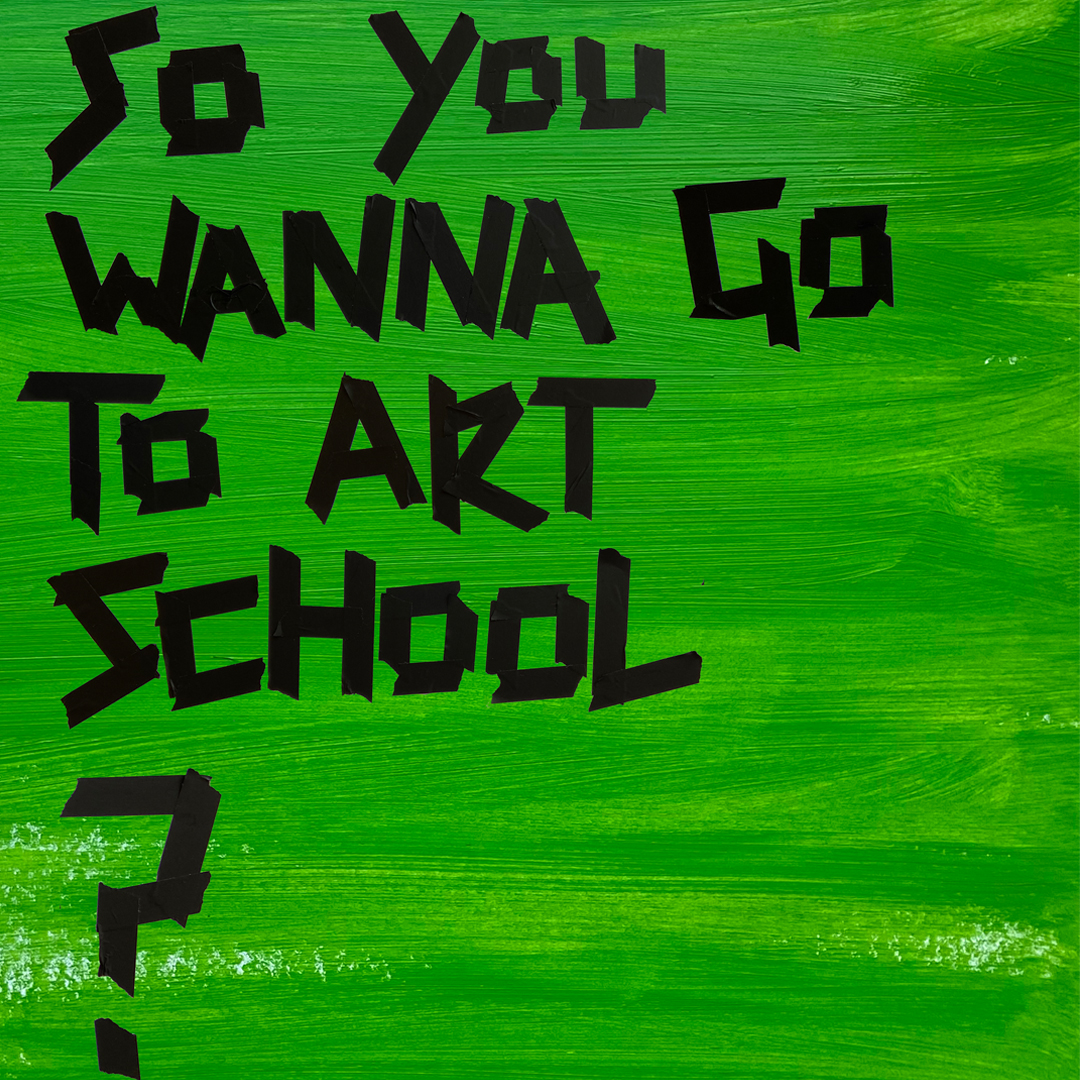
Join in and continue this discussion at our first event of the ‘So You Wanna Go to Art School?’ programme! Book a place at our panel discussion happening on Thursday 2nd September 7-9pm at The Stove, Dumfries or tune into the livestream via our YouTube channel:
By Jenna Macrory, Creative Producer of Creative Spaces
The stereotype of the tortured artist is ingrained in Western culture. With this trope remaining so pervasive for such a length of time the archetype of the tortured artist has adapted with society over time. With the societal perception of mental illness changing, how has the relationship between creativity and suffering progressed over time?
Historically, mental illness and creativity have always been closely associated. In ancient Greece, madness was perceived as a state of other-worldliness. Madness to the Greeks could be interpreted in two ways: divine or demonic.* Demonic madness was seen as bad and therefore perceived in a negative light similar to how mental health is often stigmatised today.
Conversely, divine madness is a spiritual pursuit that permits an individual to act out with conventional societal standards. For the ancient Greeks, creativity was derived from this subversion of social norms. In other words, creativity comes from madness, albeit a specific type of madness but for numerous centuries creativity and madness have remained intertwined.
Few things have remained as prominent through human history as the trope of the tortured artist. Spanning centuries and infecting every single medium of art, prominent creatives appear to use suffering to their advantage.
Author Sylvia Plath channelled her depression into her only novel The Bell Jar; Louis Wain’s paintings of anthropomorphic cats transformed into psychedelic subjects upon his descent into schizophrenia; Kurt Cobain publicly professed his battles with mental health through many of his songs. The list of creatives battling with mental illness goes on but this alludes to a link between creativity and mental health particularly considering that this trope has remained over centuries.
As such a culturally pervasive topic, recent decades have seen the rise of studies investigating mental health in creatives. Despite the empirical evidence of a link between creativity and mental disorders, several studies have exhibited little to no link between the two.
Creative professions proved no more likely to suffer from psychiatric disorders according to a study involving 1.2 million Swedish citizens.** Contrarily studies that do exhibit higher rates of mental disorders show only a marginal difference.*** With the link between creativity and mental illness seeming arbitrary, why has the archetype of the tortured artist remained?
Although creativity itself does not correlate with mental wellbeing, many artists find themselves in conditions that allow psychiatric disorders to manifest. A passion to create leads many artists into situations that can be mentally straining such as low-paying career paths, job instability, or substance abuse.
This sentiment is reinforced by figures suggesting that as many as 60 percent of workers in creative industries spoke of having suicidal thoughts. Although the sole act of being creative does not denote an individual to madness, the environment and social networks we are part of contribute to our psychological wellbeing.
While the tortured artist trope was conceived from the concept of a suffering introspective soul, recent years have seen the narrative of this trope shift. The tortured artist is no longer tormented by an inward pain, the suffering of an artist is now amplified by an economic climate that makes living as an artist increasingly difficult.
Despite this shift, the stereotype of the tortured artist will remain although as we continue to witness the gradual destigmatisation of mental health we can address the issues at the core of this trope. As a result, we can begin to move away from this romanticised image of the tortured artist toward a healthier stereotype.
As humanity progresses how will the tortured artist stereotype change? How will changes to the wider society impact on this persona? Will the art economy, already struggling in a post pandemic world plunge more creatives into mental instability?
If you have any thoughts on these and you are under 30 you can join Creative Spaces for our conversation around the tortured artist persona at 7pm, 8th July. For more information and to book a space please click the link below: The Tortured Artist Stereotype: An Open Conversation
* John Matthews, Creativity and Mental Illness: Exploring the ‘Tortured Artist’, https://www.vacounseling.com/tortured-artist/. ** Simon Kyaga, Mikael Landen, Marcus Boman, Christina M Hultman, Niklas Langstrom, Paul Lichtenstein, Mental illness, suicide and creativity: 40-year prospective total population study, https://pubmed.ncbi.nlm.nih.gov/23063328/. *** Stephen A. Stansfeld, Jenny Head, Farhat Rasul, Occupation and mental health: Secondary analyses of the ONS Psychiatric Morbidity Survey of Great Britain, https://www.hse.gov.uk/research/rrpdf/rr168.pdf.
Welcome back Dumfries. This month we’re ready to open our doors once again with a month-long programme of inspiring events from conversations to workshops, creative activities and talks alongside the long-awaited return of our monthly film night Reel To Real, as well as the unmissable Brave New Words. We want to be extra safe as we navigate our way back into the world of live events so the way of doing things is a little bit different. First of all, you’ll need a ticket. You can see the full list of events here, so if you’d like to attend, you’ll need to book your place. And we’re not out of the woods yet so we’ll have some extra safety measures in place when you arrive, to protect everyone in our community.
This month it’s all about testing new activity. We want to see how we can have a blended approach to our live events. So whether that’s a mix of live streaming to walks outdoors, we want to play with new ways of coming back together, that’s both safe and creative. Who knows, some of it might stick. So why not join us as we retrace our steps back to the world of live events…
Dumfries Fountain Project
The Dumfries Fountain Project goes live this month with the first of our workshops with writer JoAnne McKay, and a conversation evening exploring the history and heritage of the fountain!
Creative Spaces
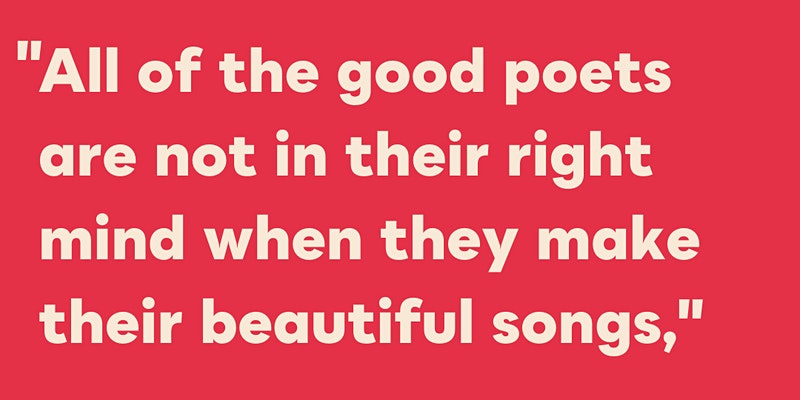
Creative Spaces welcomes you back to our blended model of bi-monthly workshops we shall be exploring the link between mental wellbeing and creativity through the concept of the Tortured Artist.
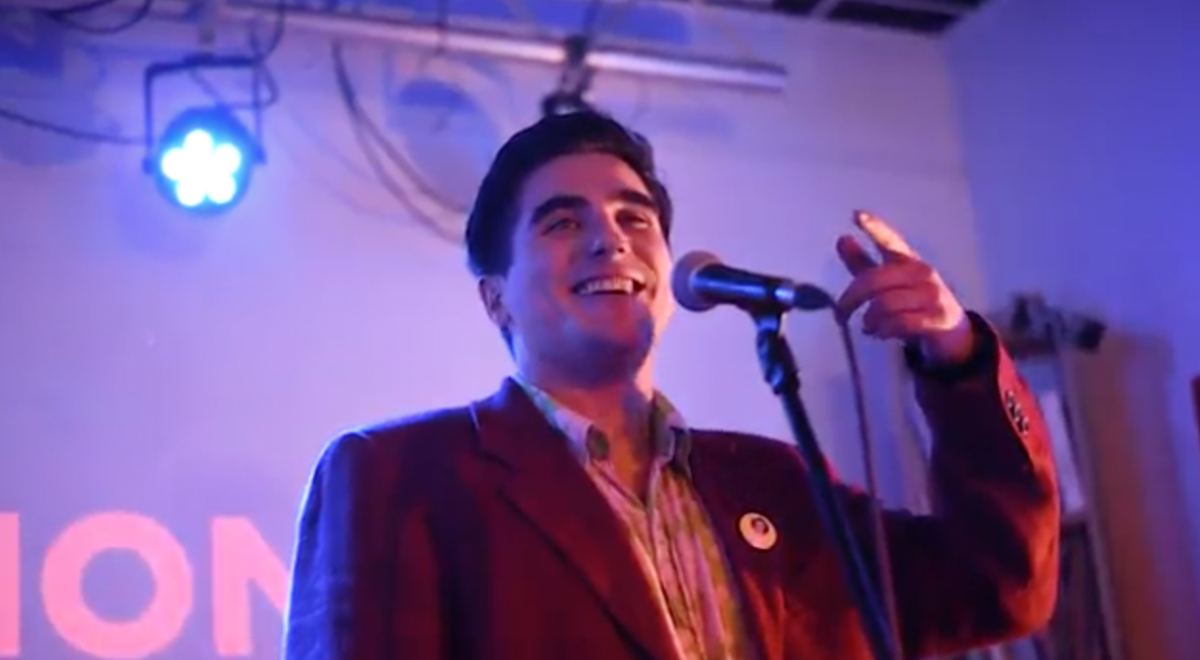
Brave New Words
You heard us right, it’s back! We’re going live on the last Friday of the month, in The Stove Cafe and The Stove Network’s Youtube channel.
Reel to Real Cinema
This month we are discussing film and food in The Stove Cafe with filmmaker Zev Robinson, and his short film The Glasgow Diet
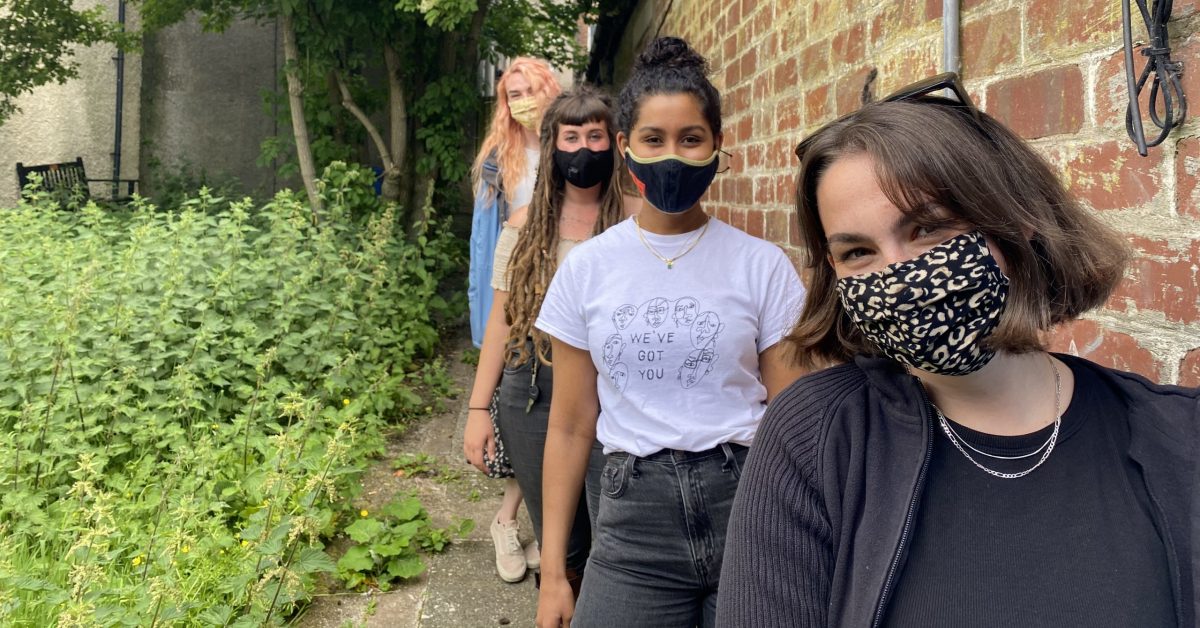
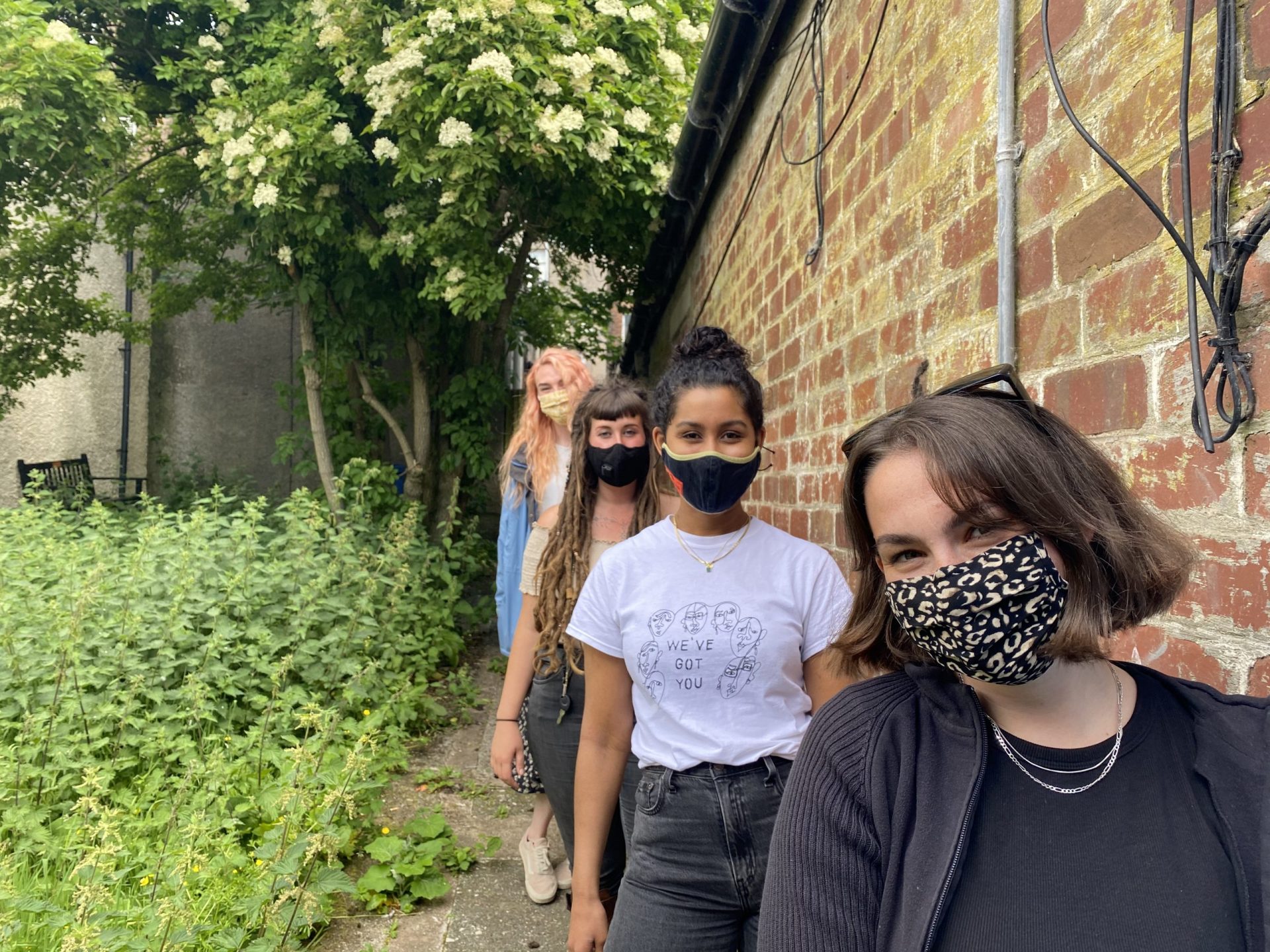
From the back: Jenna Macrory (Creative Spaces Producer), Leanne Bradwick (Associate Artist), Jodie Barnacle-Best (Associate Artist) and Rachel Shnapp (Associate Artist).
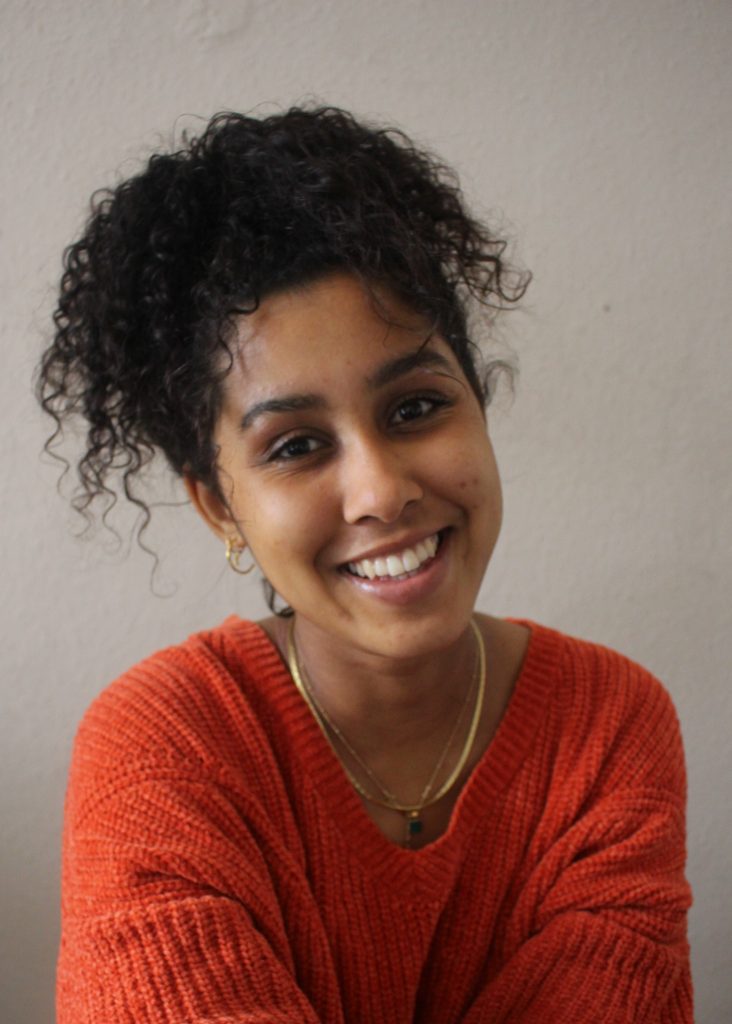
From blueprint100’s consultation and development period, came Creative Spaces – providing opportunities for emerging artists under 30 to have the support and funding to explore and enhance their creative practice, while building professional confidence and developing a network of peers.
After promoting these opportunities and fine combing an extremely talented pool of applicants, we’ve now curated our own trio of Associate Artists, who introduce themselves below…
Meet the Team
Jodie Barnacle-Best
I’m Jodie…
While I’m wrapping up my Masters right now, I’m about to start honing in on my main practice in fashion knitwear (though, more generally speaking, I’m really excited by experimenting with colour and material!).
Most of all, I’m eager to start steering my practice more towards community-making/workshopping and interactive fashion making: demystifying the fashion space and encouraging connections between the clothing and the wearer.
Leanne Bradwick
I’m Leanne…
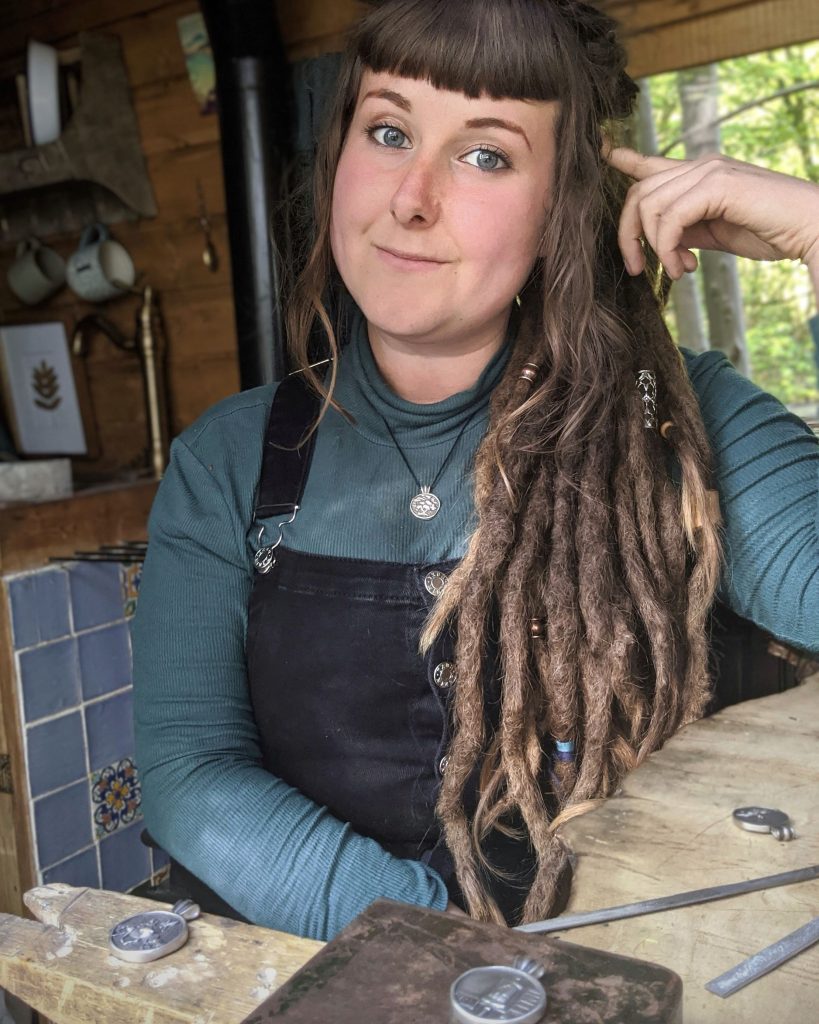
I am a travelling jewellery artist who makes narrative jewellery in my self-converted van that I live in and call home. I studied jewellery and silversmithing at Uni between 2014 and 2017, before going on to work within the industries in Birmingham’s jewellery quarter.
I’ve now moved to Dumfries and Galloway to begin my own practice of narrating folklore stories through silver coin pendants, which I’ll be selling alongside little books to keep the tales alive!
Rachel Shnapp
I’m Rachel…
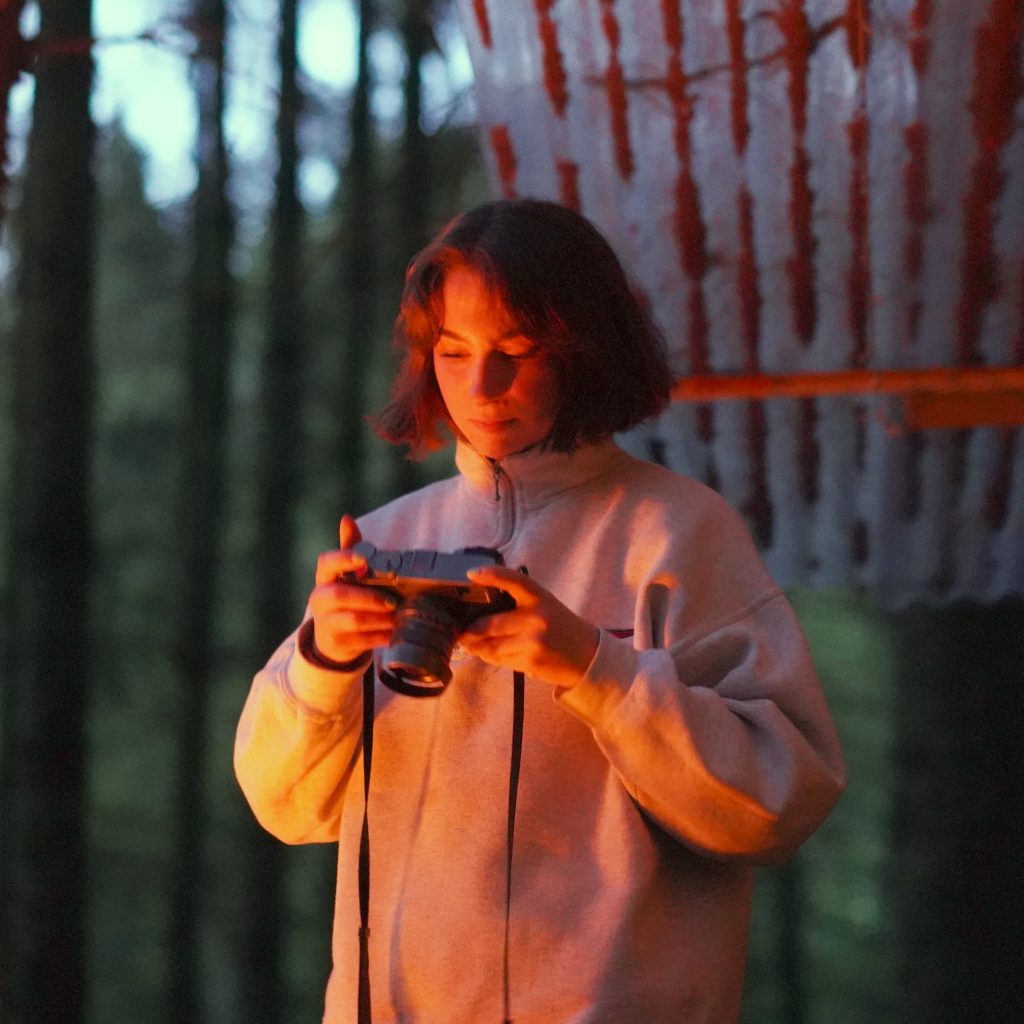
I’m an early-career filmmaker and artist creating works across a variety of genres. In my practice, I aim to get as close as possible to subversive or hidden narratives – creating socially engaged, stylised films that tell lesser-known stories.
I am really looking forward to contributing to The Stove, and I’m excited for what lies in store.
Thanks Jodie, Leanne and Rachel, we’re thrilled to have you join the Creative Spaces team.
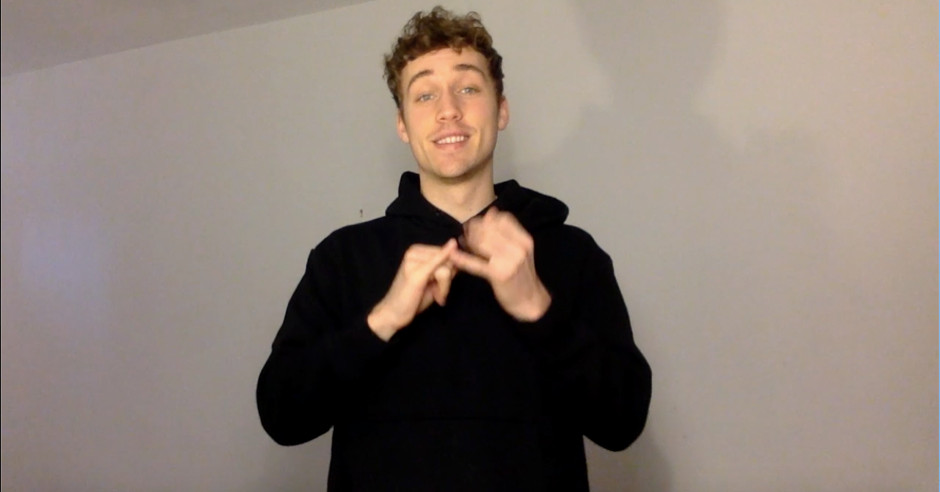
Over the past few months Winston has been working with the Stove team, and particularly the Creative Spaces and Soap Box projects to help us explore how to make our programming more accessible for the D/deaf community. We’ve learned a lot and really enjoyed having Winston as part of the team, and are looking forward to the conversations going forward!
“It was a really interesting start to my time with the Stove Network. I was proposing a project consisting of a Deaf Hub/Festival within the Kirkcudbright Arts and Crafts Festival. Due to complications with COVID-19, this had to be delayed and put on the back burner. While speaking with Katharine Wheeler about this project idea, she mentioned the Stove’s need to be more accessible, aware and inclusive of people with disabilities. Because of my lived-in experience of the deaf community, current studies of British Sign Language and passion for inclusivity, we felt as though I would be able to fulfil the organisation’s need to be more inclusive.
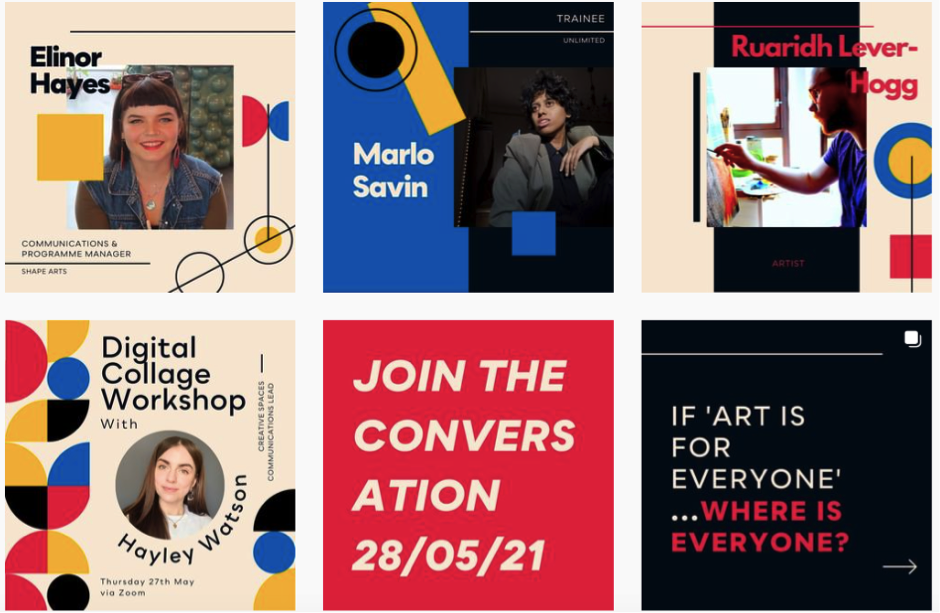
Over my short time working (remotely) for the Stove Network, I have really enjoyed being the voice for people that need it and invoking necessary change. To do this I have created British Sign Language interpretations of the website, contributed to meetings, been involved in a successful panel on Inclusive Communication and held an ‘Accessibility in the Arts’ conversation on the 28th of May. Both the panel and the conversation had a diverse mix of organisation representatives and disabled people allowing for important discussions to be had about access in the arts industry. In the panel discussion, I was a part of the team answering questions about my own experiences, however with the conversation I was a host asking questions and prompting responses from the speakers. I really enjoyed playing both roles as speaker as well as host and look forward to hosting/being involved in future conversations and discussions about important issues!
Screenshot from some of the content that went out on the Creative Spaces social media accounts in relation to the Accessibility in the Arts conversation
It has been really interesting to see a somewhat closed off industry learning to be more inclusive and accepting of different types of people. Through this, I have begun to wonder the significant changes that could be made to the world if all businesses, organisations, and corporations understood their lack of awareness and inclusivity and took large strides to change this. By doing this, some groups may no longer feel as though it is society that disables them because they are given the vital support they need.
My mind is brimming with new ideas and projects, so I am excited to see what the future holds working with an exciting and constantly developing organisation that has all the right intentions. Conversations discussing important issues, content aimed at different audiences with different needs, project development support and so much more – the future looks bright!”
We use cookies to improve your experience on our website, analyse traffic, and personalise content. By using our site, you consent to the use of cookies. Please read our privacy policy for more information.
Cookie Preferences
Manage your cookie preferences below:
Essential cookies enable basic functions and are necessary for the proper function of the website.
Name
Description
Duration
Cookie Preferences
This cookie is used to store the user's cookie consent preferences.
30 days
Statistics cookies collect information anonymously. This information helps us understand how visitors use our website.
Google Analytics is a powerful tool that tracks and analyzes website traffic for informed marketing decisions.
Contains information related to marketing campaigns of the user. These are shared with Google AdWords / Google Ads when the Google Ads and Google Analytics accounts are linked together.
90 days
__utmx
Used to determine whether a user is included in an A / B or Multivariate test.
18 months
_gali
Used by Google Analytics to determine which links on a page are being clicked
30 seconds
_ga_
ID used to identify users
2 years
__utma
Used to distinguish users.
Persistent
__utmb
Used to determine new sessions/visits.
30 minutes
__utmc
Used to determine if the user is in a new session/visit.
Session
__utmt
Used to throttle request rate.
10 minutes
__utmv
Used to store visitor-level custom variable data.
2 years
__utmz
Stores the traffic source or campaign that explains how the user reached your site.
6 months
_ga
Used to distinguish users.
2 years
_gat
Used to throttle request rate.
1 minute
_gid
Used to distinguish users.
24 hours
Clarity is a web analytics service that tracks and reports website traffic.