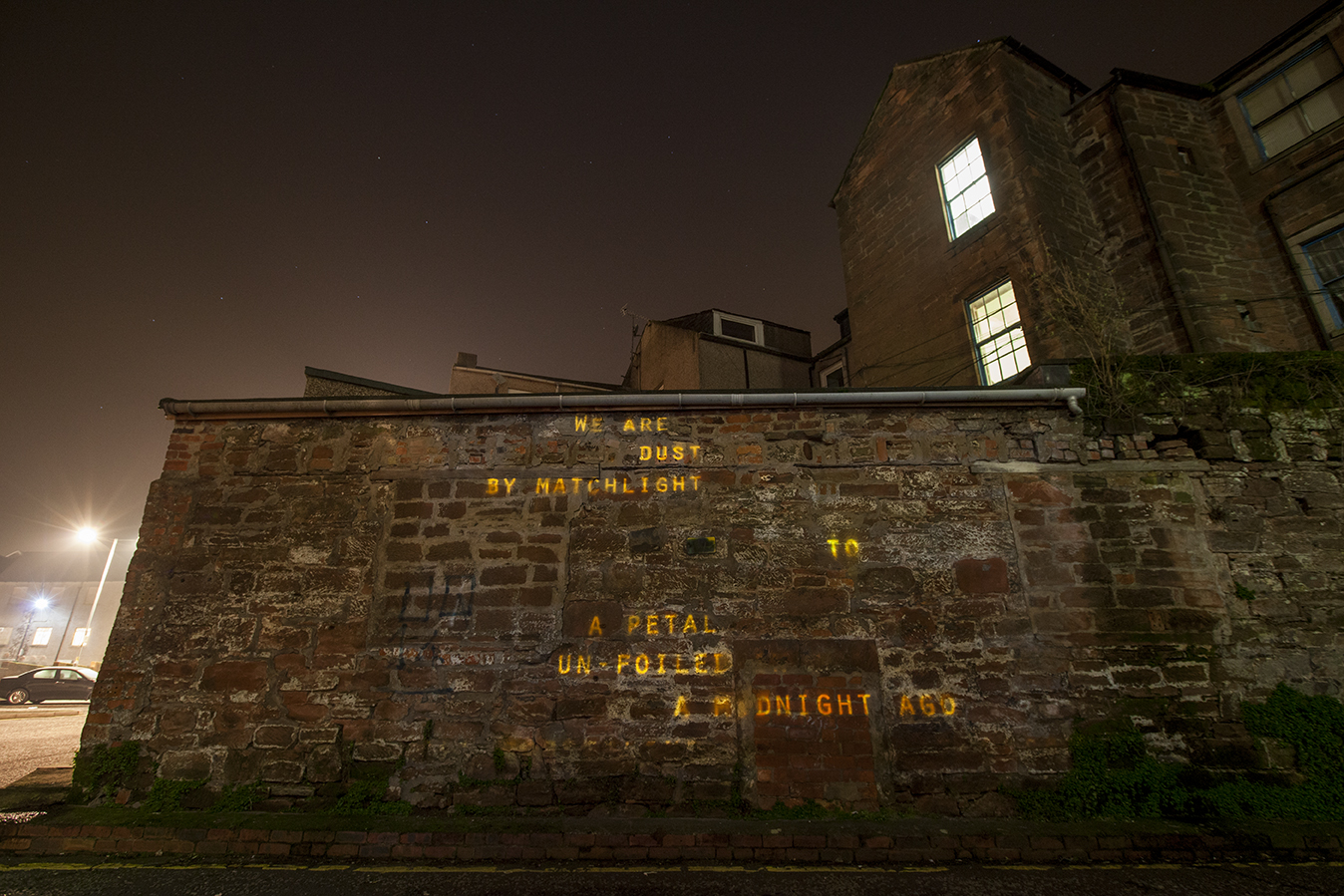
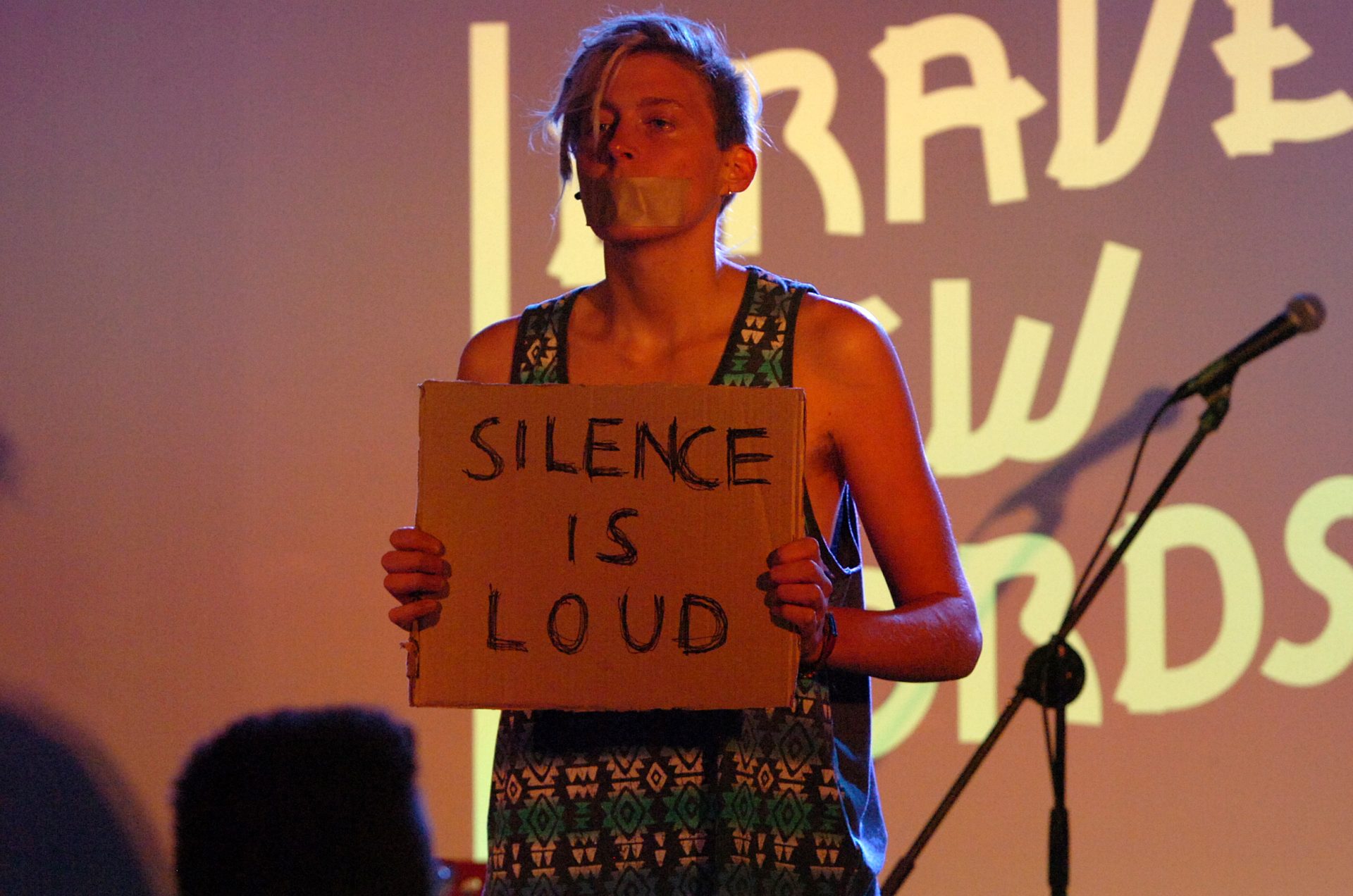
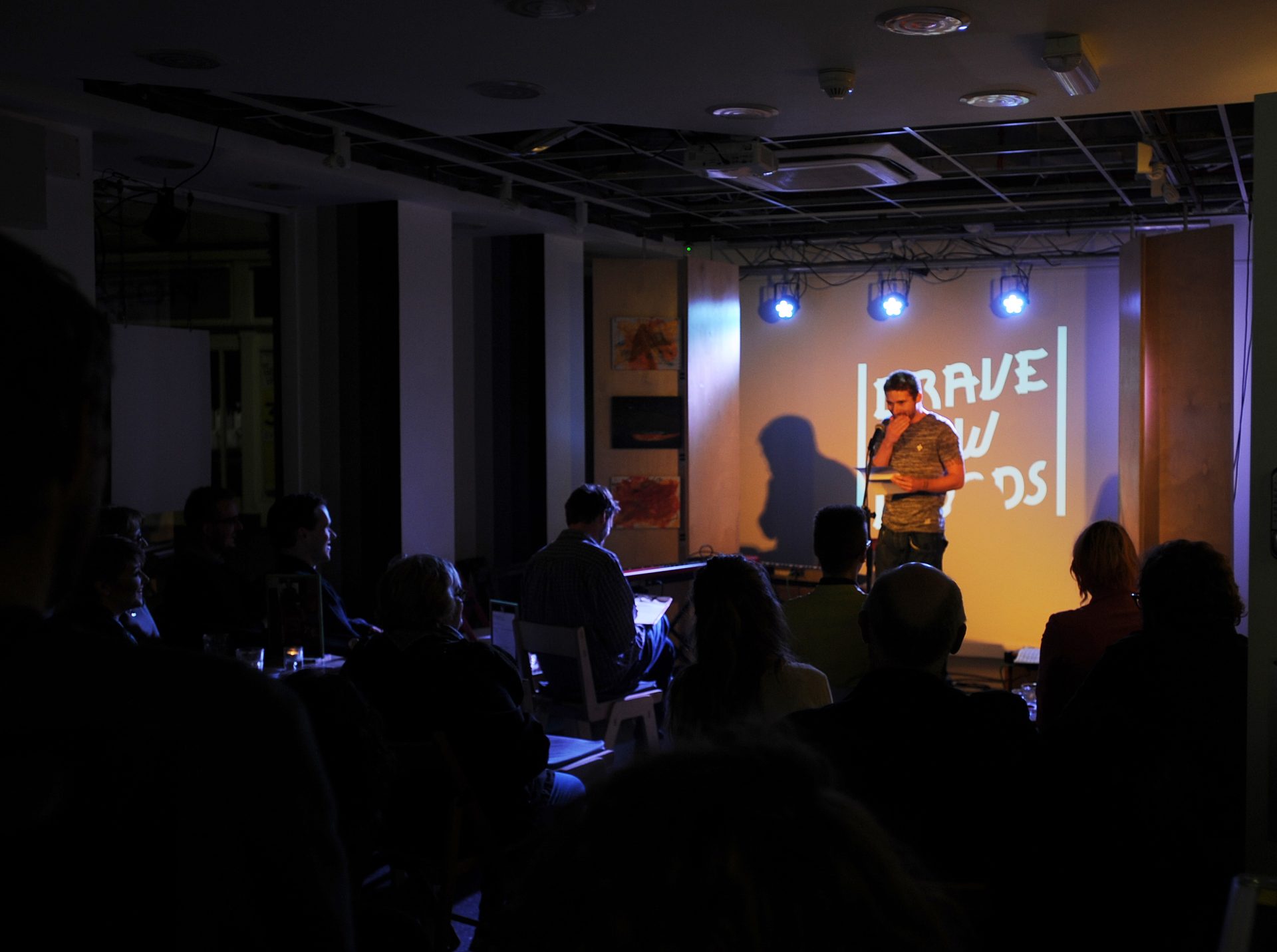
Midnight Streetlight Smalltown Rain is a project between artists Martin Joseph O’Neill, Colin Tennant and composer and musician Stuart Macpherson. First conceived as a short poem MSMR has since moved onto include a series of artworks and interventions throughout the High Street and side streets of Dumfries town.
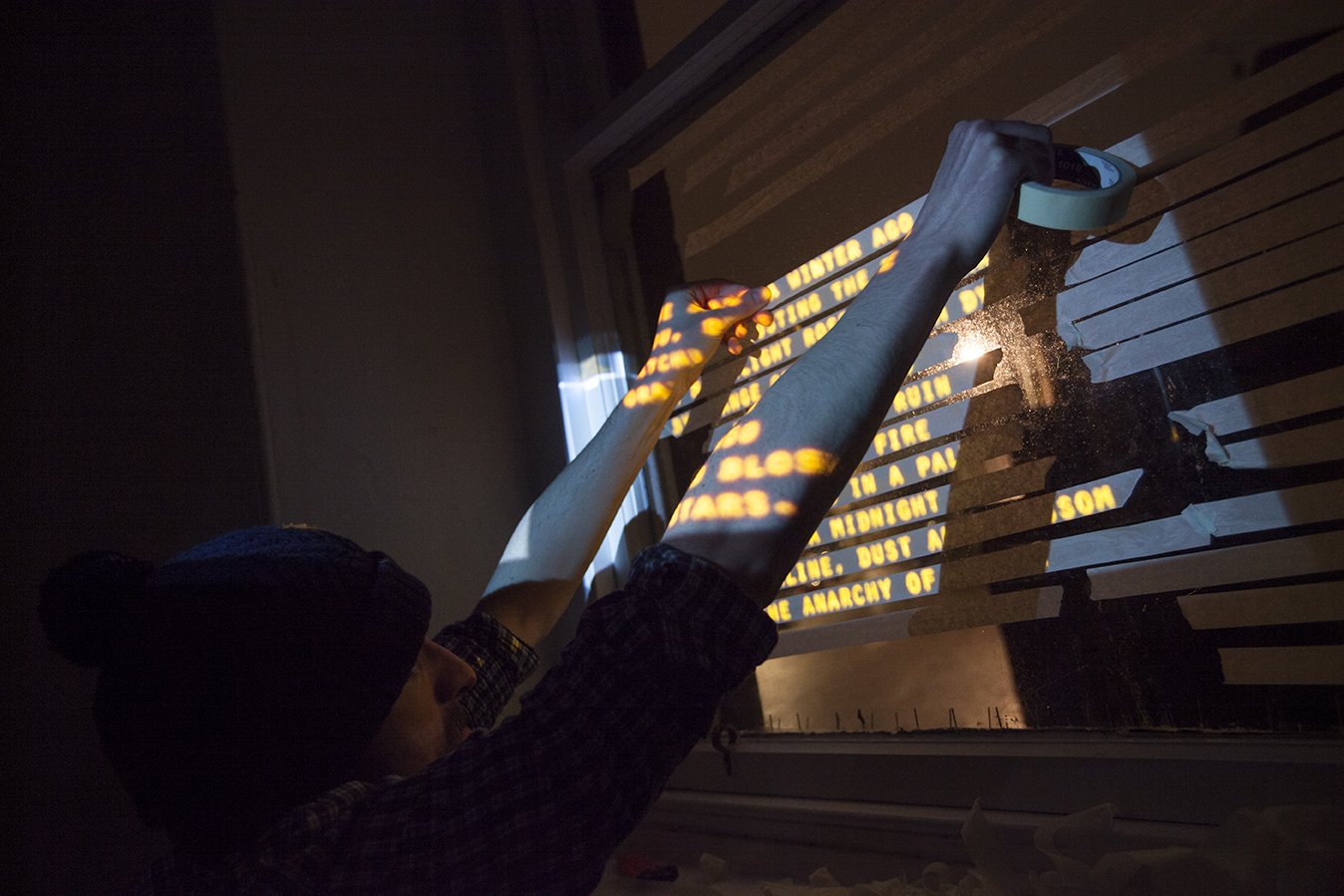
Come Dawn, a 12 hour writing project from 7PM to 7AM took place at the Bakers Oven in November. A performance installation, the writer sat typing whilst in real time, the words were projected onto the windows of the empty unit in front of a live audience.
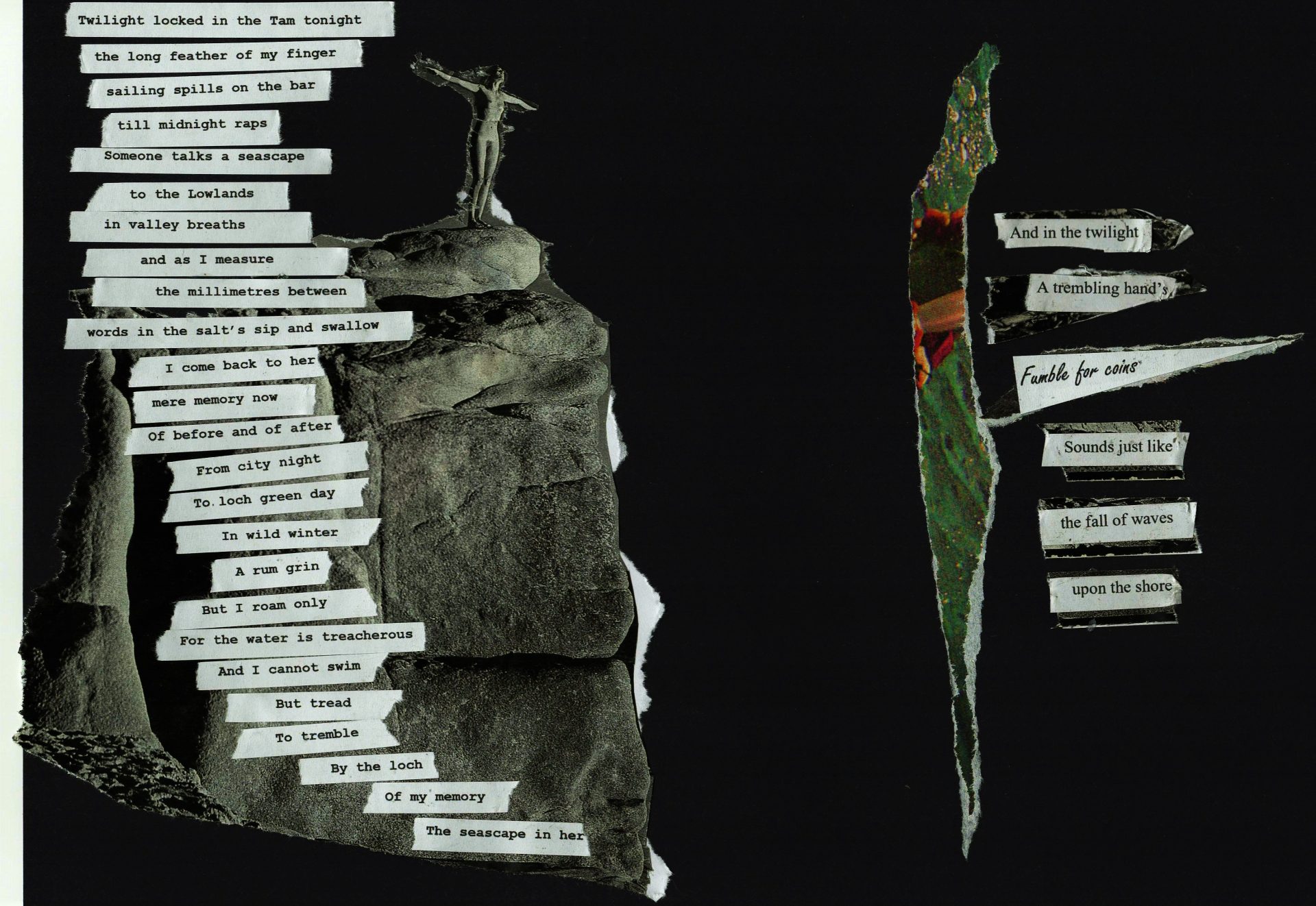
Working from a manuscript of 60 pages the collective were commissioned by the D-LUX Festival of Light to produce an artwork showcasing one of the poems to be projected behind the Stove. The artwork deployed Burroughs’ cut-up method of writing in a live performance lasting four hours, four nights a week, where a single poem was transformed continuously by adding and subtracting the words, manually blocking the light of the projector through a window using paper and tape.
The regional project is inspired by the narratives of the small town at night and is to continue throughout the year in installations, performances and interactive artworks throughout the town.
Midnight Streetlight Smalltown Rain was a Stove Members project, supported by DG Unlimited and the Dumfries and Galloway Council.
Over the last 8 months The Stove has been part of a major community-led project within Dumfries to take positive action to create a new, beating heart in centre of the town. This initiative has gone through a series of working titles including: ‘#MakingDumfries’ and ‘Living on the High Street’ (search these terms in our website and social media and the detailed story will emerge) – but for now Midsteeple Quarter is the title that most of the diverse partnership involved in the project will recognise.
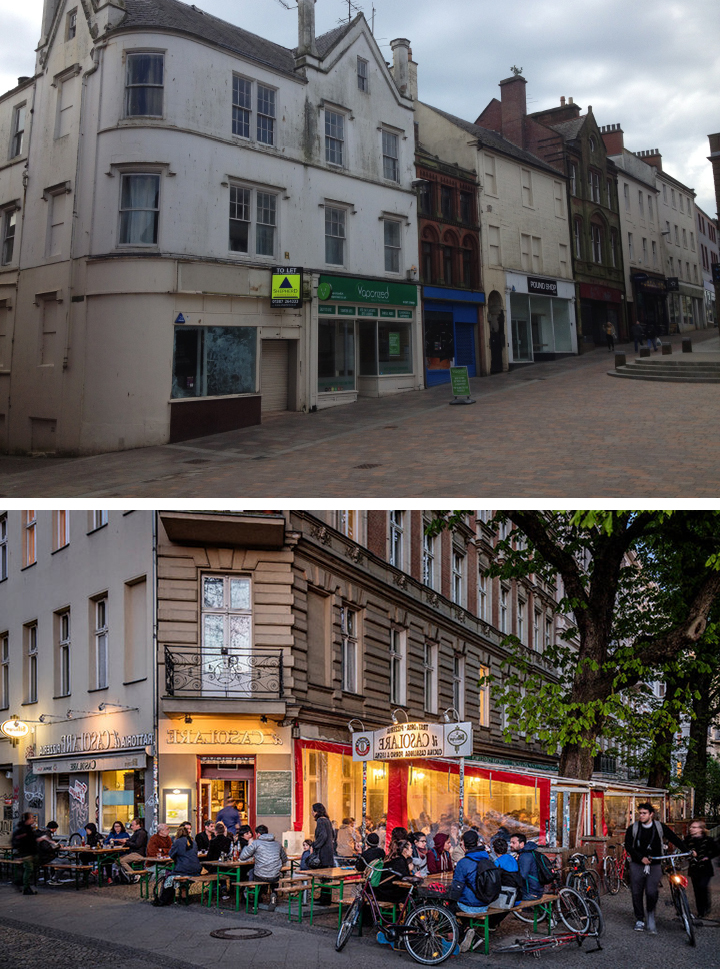
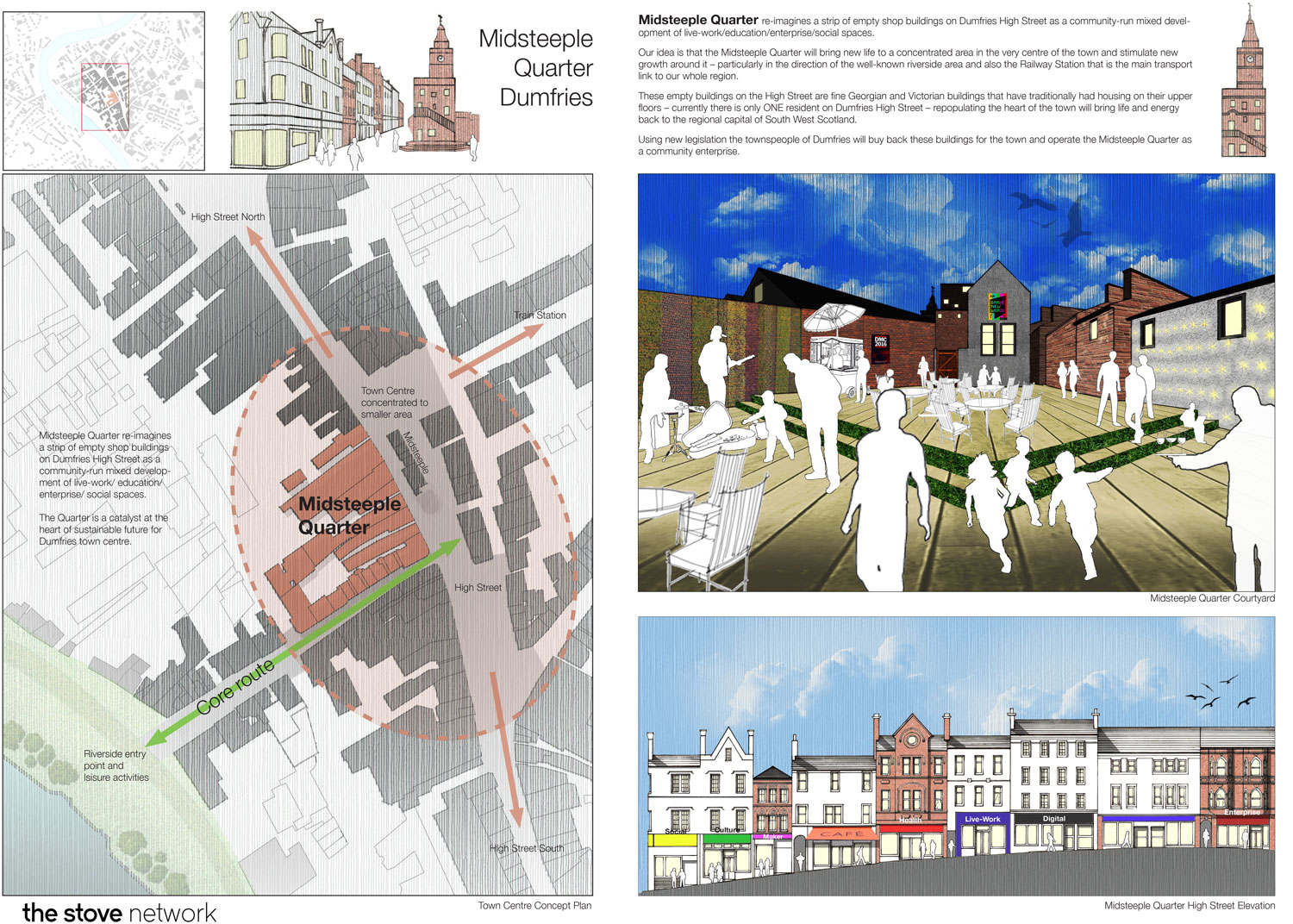
Midsteeple Quarter re-imagines a strip of empty shop buildings on Dumfries High Street as a community-run mixed development of live-work/ education/ enterprise/ social spaces.
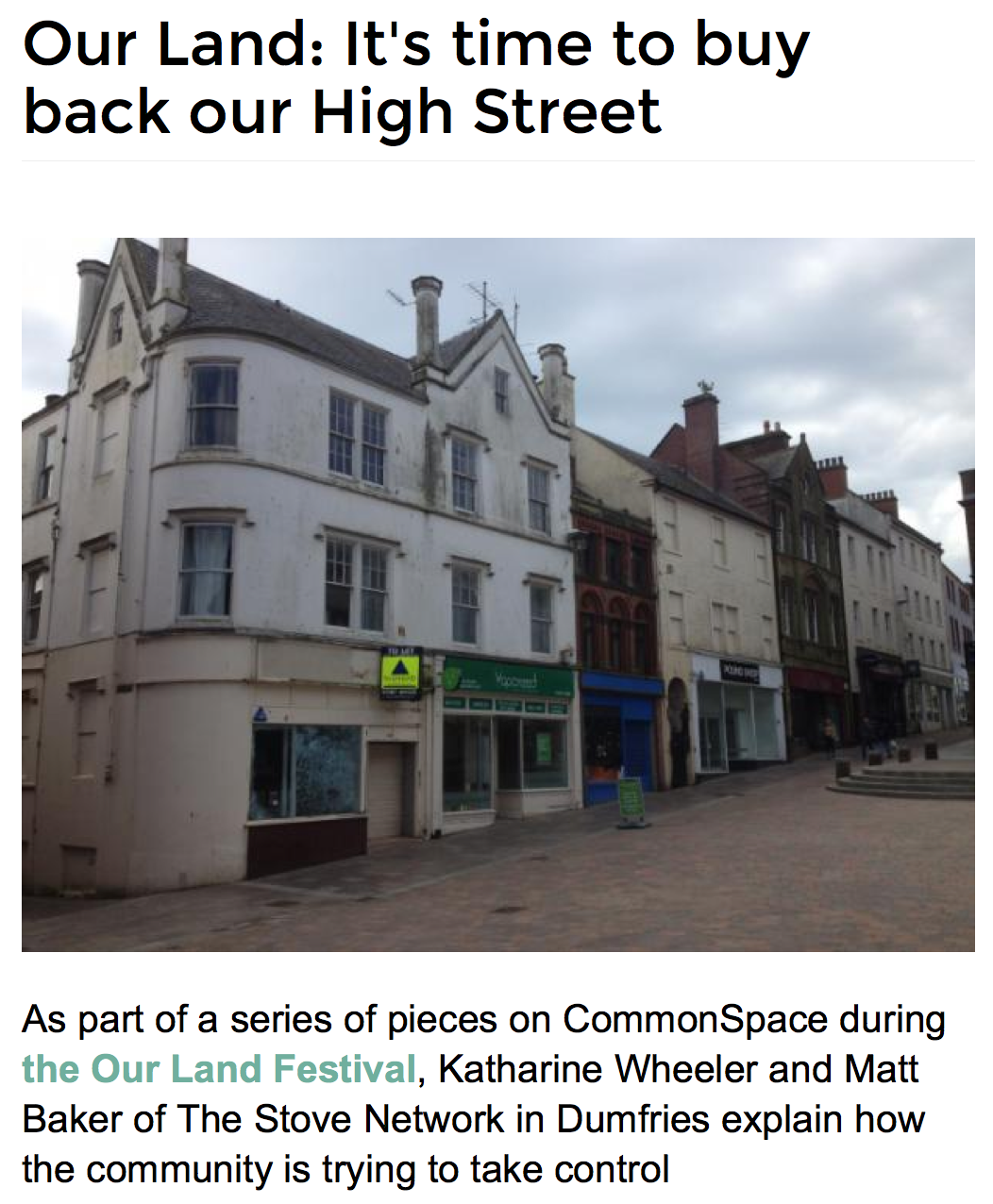
Empty properties on Dumfries High Street (above) re-imagined as a vibrant mixed development
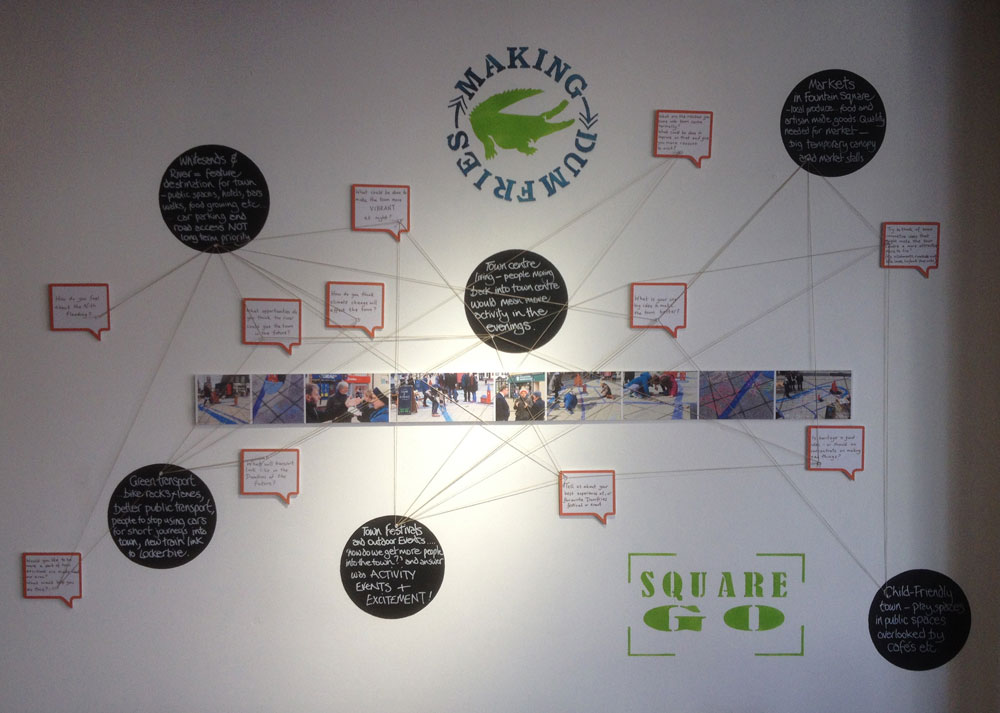
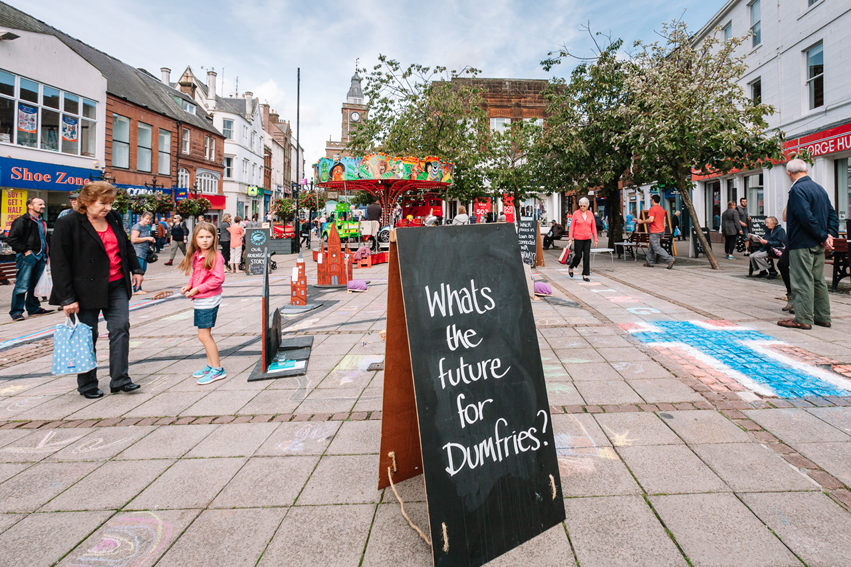
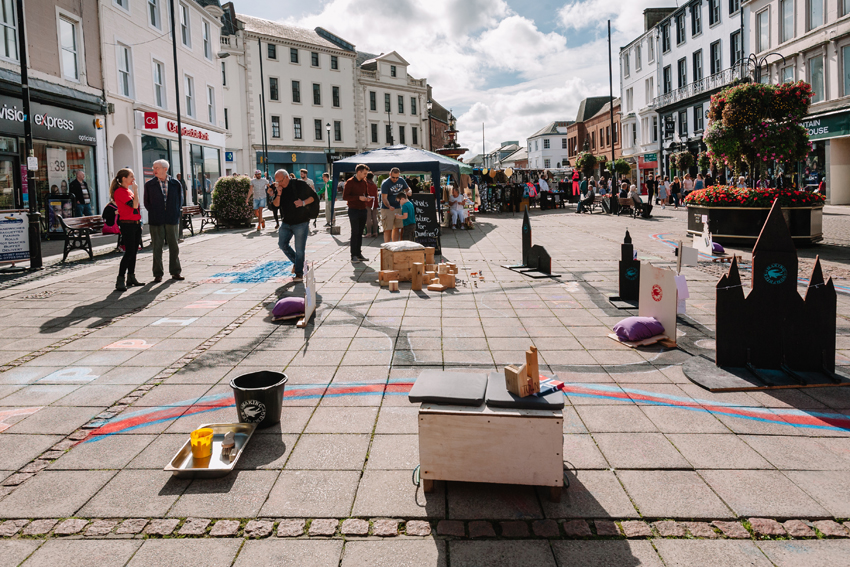
The project began with the #SquareGo events in March 2016 which saw The Stove taking over Fountain Square in Dumfries to ask local people how they would like to see the Town Centre re-invent itself for a new era when market towns like Dumfries will not be dominated by retail.
People marked their ideas in chalk directly onto the paving of Fountain Square
The main themes identified at #SquareGo were displayed in The Stove Cafe for 2 months for further discussion and additions
Repopulating the town centre was one of the strongest themes identified by the #SquareGo project
In the same week as #SquareGo John Wallace’s documentary ‘A House on the High Street’ was premiered at The Stove.
The film inspired local resident John Dowson to convene a meeting of stakeholders in the town centre to see if a practical action plan could be agreed to take forward the ‘re-populating’ idea. NB ‘slum’ clearances in the 1960’s emptied the centre of Dumfries with people re-locating to the housing estates at the edges of the town – now less than 1000 people of a total town population of 40,000 live in the town centre and John and his wife are effectively the last remaining residents of the High Street itself.
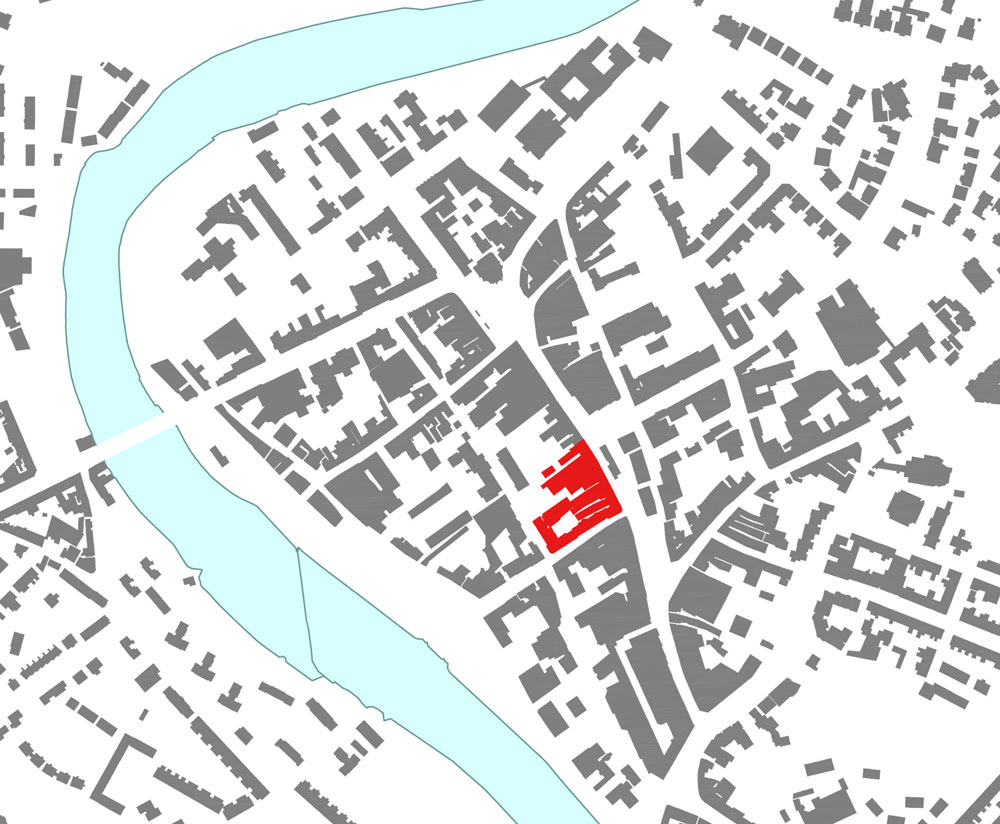
The initial meeting identified the run of empty buildings on the High Street starting from Bank Street and running up past the Midsteeple as the location for a core ‘block’ that could establish a new pattern of inhabitation and uses for the High Street and start the re-population of the centre.
Midsteeple Quarter marked in red
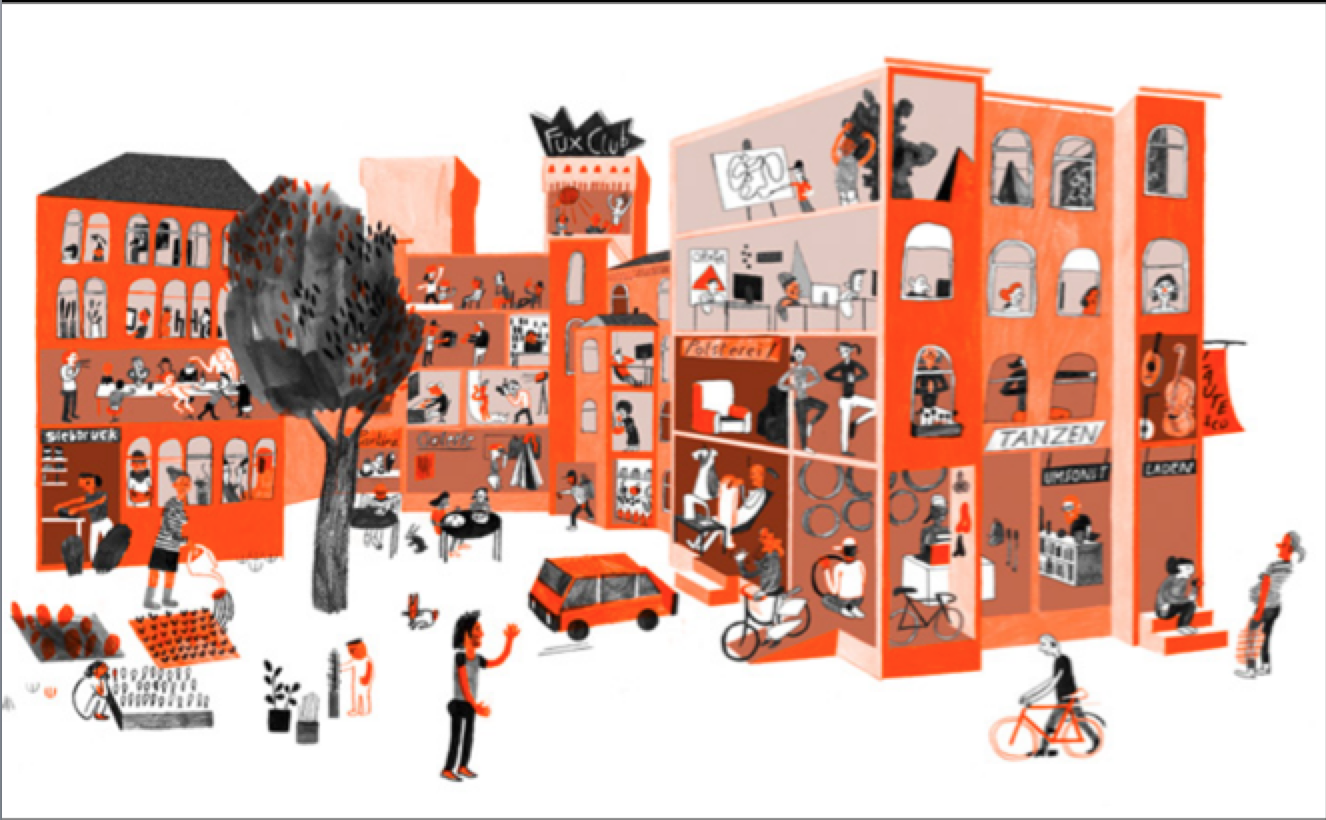
Artists impression of a mixed live-work development (indicative only)
A core aspect of the project is for local people to literally take back ownership of their town centre. Currently most of the buildings are owned by Pension Funds and other corporate ‘absentee landlords’ – these owners have no stake in the town beyond the relative value of the assets on their balance sheet. New legislation is being passed by the Scottish Government that will grant powers to community groups to take ownership of underused assets in their area – the Dumfries initiative was written up on the Common Space web platform as part of the Common Weal’s ‘Our Land’ festival in August 2016
Around this time The Stove Network established itself as the Community Development Trust for the town centre of Dumfries and was accepted as a full member of Development Trust Association of Scotland – see here for the definition of a Development Trust. The Stove then became the gathering point and lead organisation for a diverse community partnership that supported the idea of the Midsteeple Quarter and were playing a positive part in making the project a reality:
The Stove Network, Loreburn Community Council, Third Sector Dumfries and Galloway, University of the West of Scotland, Crichton Institute, Dumfries and Galloway Chamber of Commerce, MakLab, Dumfries and Galloway Council, D+G College, Loreburn Housing Assc, NHS, South Scotland MSPs, Dumfries and Galloway MP, Prominent local individuals and professionals
The vision for the project was further developed through a Visioning Session attended by 28 people representing the stakeholders listed above.
Stakeholders Gathering 6th October 2016 at The Stove
The Stove Network then circulated and action plan for group which had the priorities of:
Interacting with the Local Plan being developed by Dumfries and Galloway Council for Dumfries – to build in special conditions for the Midsteeple Quarter, enabling mixed development to be supported by statutory processes
Holding an national Architectural ‘ideas competition’ for Midsteeple Quarter to shape an identity for the project that local people and other stakeholders could get behind
Formation of a Community Benefit Company for the project that would be able to offer Community Shares to local people to fund the purchase and development of under-used properties in Midsteeple Quarter
Taking ownership of the ‘Bakers Oven’ building (from Dumfries and Galloway Council) in the Midsteeple Quarter and developing this in partnership with University of West of Scotland as an enterprise and education hub with residential accommodation above
The Stove Network has created drawings to define the idea of the Midsteeple Quarter – these have been shortlisted in the Futuretown Scotland competition run by Scotlands Towns Partnership. The drawing were done by Dion Corbett an recent graduate of Strathclyde University who has returned home to Dumfries to build her career here and is working at The Stove.
On 15th and 16th November, the Midsteeple Quarter project will be occupying the Bakers Oven building for local people to see progress and talk about their ideas and ways to be involved in making this vital project for the town come to fruition. Details about this ‘Chapter One’ event are – here
For more info about the project, and/or you’d like to get involved, please contact Matt Baker at matt<at>thestove.org
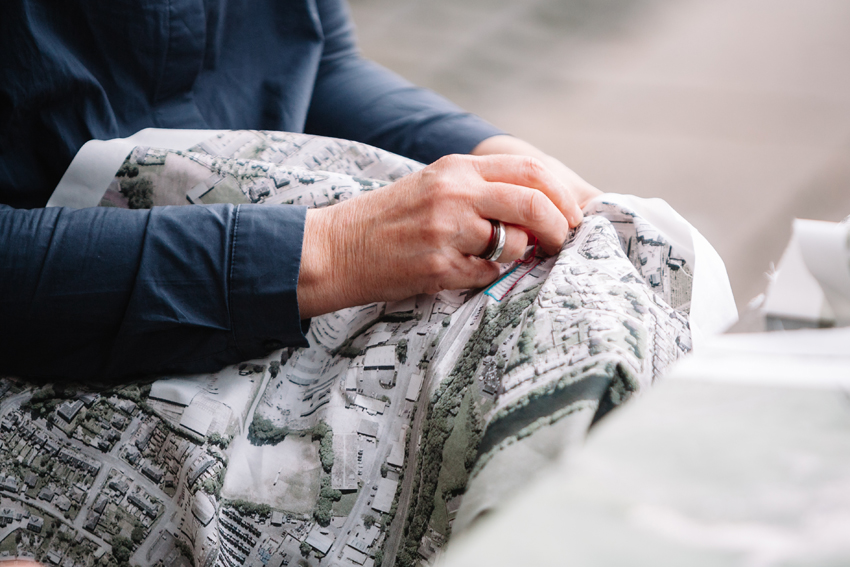
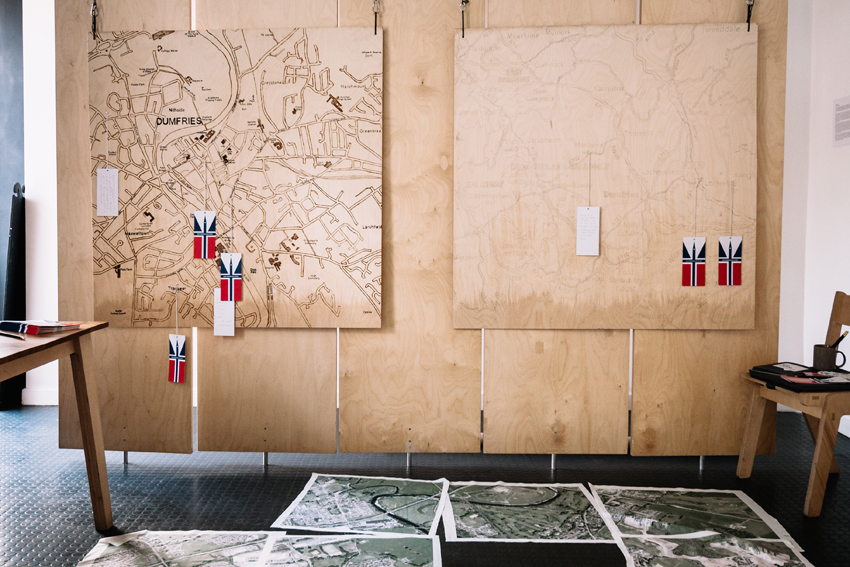
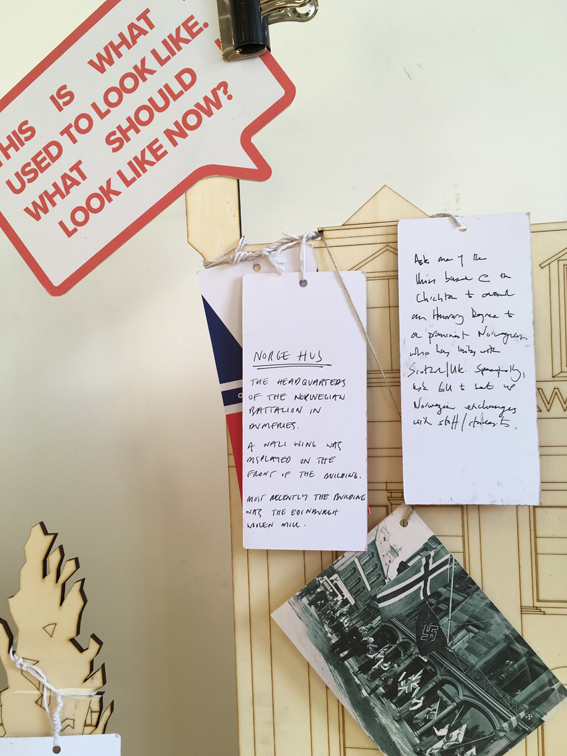
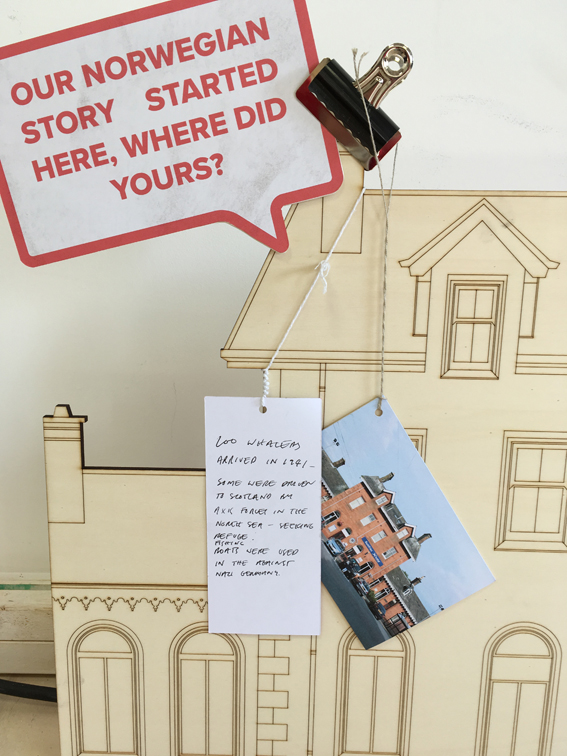
September brought Our Norwegian Trail to life with the most recent Mapping Event.We scribbled, played, discussed and stitched Our Story into creation on a beautiful sunny day despite half of our team being struck down by one of those Autumn bugs.
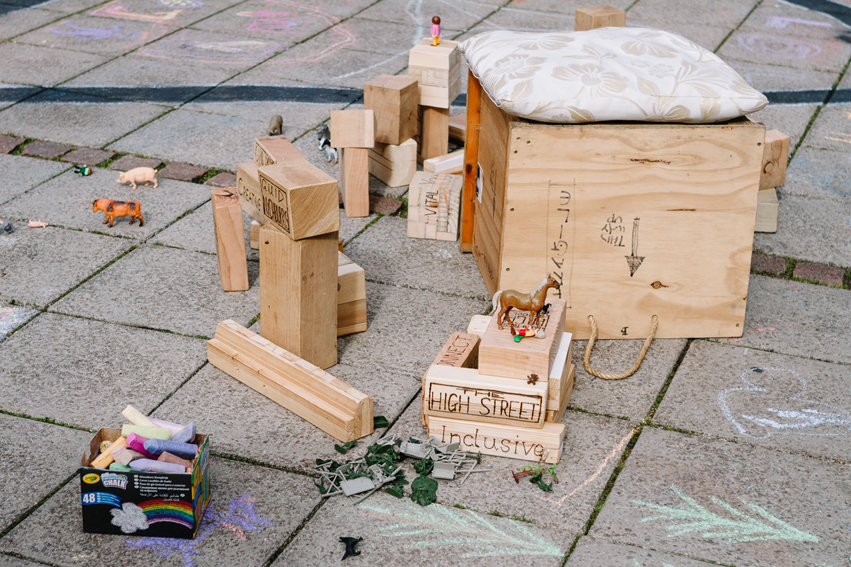
Large chalk drawings are always fun!We had lots of young helpers join in our antics outside on the pavement as well as a few inquisitive chats and walks down memory lane.
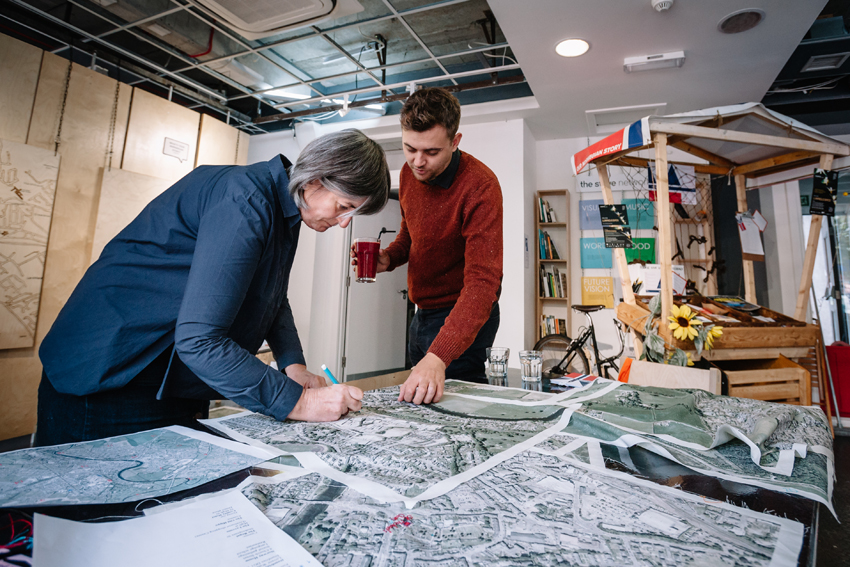
Artist Deirdre Nelson joined us over the two days with large printed squares of Dumfries.Embroidery silks at the ready she helped passers by stitch significant places in Dumfries’ Norwegian history as well as other personnel significance onto our maps.We are looking forward to welcoming her back to continue – and maybe tidy up slightly some of our own attempts – for the next ONS event STORY on the 10th, 11th and 12th of November, come join us!
If you have a place or a memory that relates to Dumfries’ Norwegian Story please do get in touch, we are keen to make this story truly Dumfries’.
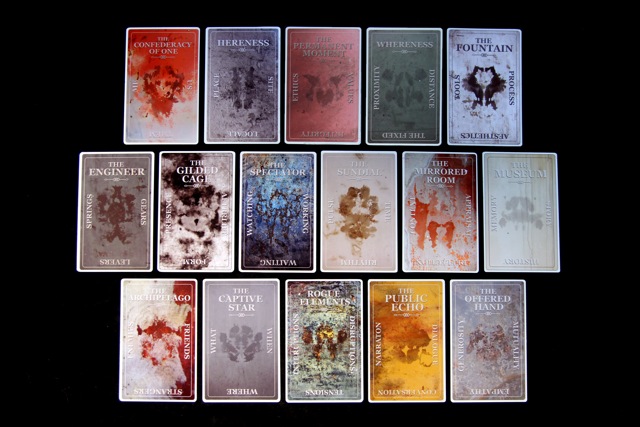
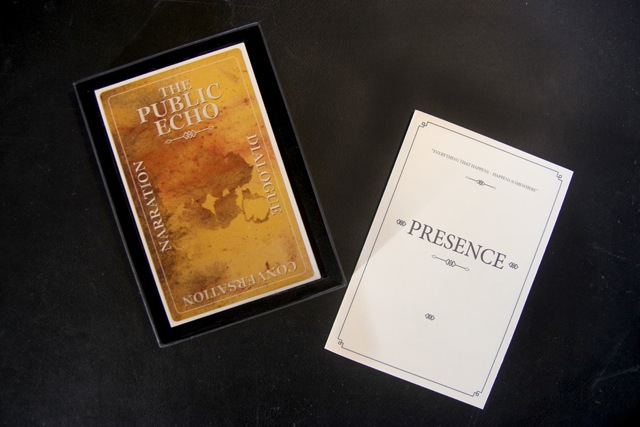
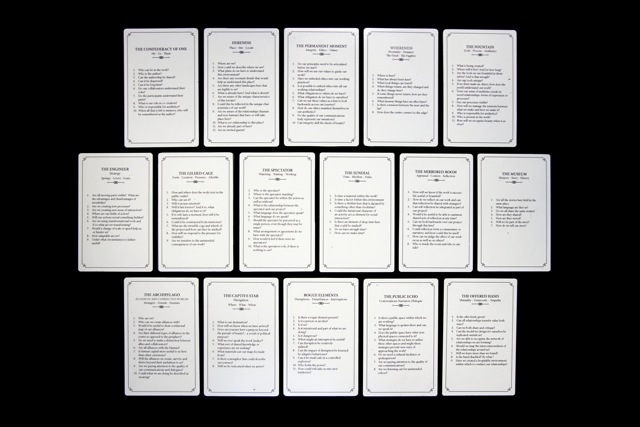
We are coming to the end of working on the Art_Inbetween commission and it’s been a fascinating process. The outcome is a work called PRESENCE which is a set of cards to be used as ‘A divining tool for journeys through the restless territories and blurred boundaries of art in the social or public realm’ the cards are a creative tool to explore and reveal aspects of a project or practice and to provoke discussion and exploration.
Background
PRESENCE is a research led response to some of the questions that arose during the Art_Inbetween Summit held at The Stove Network earlier in 2016. The summit attempted to describe the distinctiveness of an evolving ‘rural’ contemporary arts practice with an emphasis on social/participatory/public art across the UK and our starting point was to try and understand this distinctiveness. What are the differences between rural arts practice and projects in urban settings with similar intentions or processes?
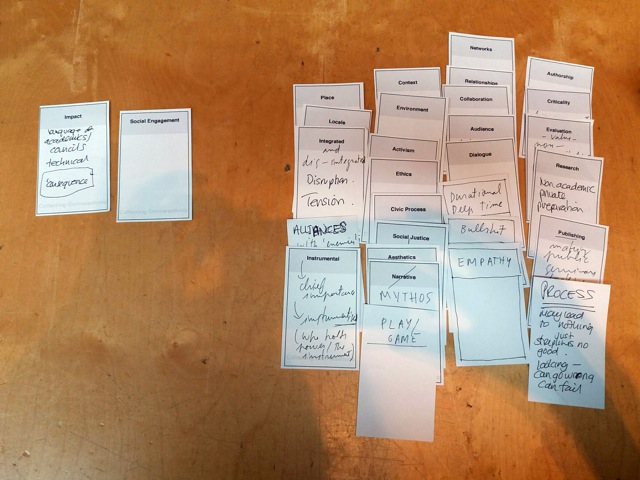
During the research phase, we worked with a number of artists, curators and producers using a word card process to explore core features of practice and context. These conversations were interesting and delved into territories that were slippery and shifting, we felt this area had more to offer to a wider audience. We began to work with the idea that practice was perhaps more important and distinctive than location and so the work began on developing PRESENCE; a method to explore and open up projects and practice that could become a companion on creative journeys, a navigational aid that could help understand and articulate the aims, methods and values of a project or practice. There are 16 CARDS, each exploring a core element of practice. Each card has a number of questions on the reverse. We suggest picking one or more card at regular intervals through a live project (or project development) and letting the questions lead into conversation and discussion.
The Cards
We see the cards as a ‘divining tool’ in the process of making creative work. They cannot be used to navigate the straightest, fastest route through a project or process but provide different positions to view the route from. They are not instructions or a model to build a project around and have no opinions about the best way to conduct a project – each project (and artist) is unique. Their role is to prompt, disrupt habits, to revisit assumptions and reassess progress and to re-excite artists and collaborators about their work and provide a tool for exploring projects and practice.
We have tried to create a process that will result in a series of overlapping views from different positions (The points of interest in situated or social practice are not stationary and two dimensional, but three dimensional and moving, sometimes through time as well as space) This compound eye allows us to examine the same issues from different positions and so learn different things from each viewpoint.
Open Source Future
PRESENCE is an open source project: all questions, concepts and card designs can be challenged, refuted or replaced. Our version is a starting point from which new sets can be constructed specifically tailored to a project or practice. A website is in the process of being set up that will include all design tools and templates to allow people to easily make new sets and upload their designs for others to use.
Huge thanks to everybody who contributed to the summit and to those who have helped with the development of PRESENCE.
If you are interested in getting a set of the PRESENCE cards – please contact [email protected]
Brave New Words once again returned to The Stove, on Friday 30th September, for a special night celebrating the first anniversary of this monthly platform for new writing, spoken and sung. The night consisted of an extraordinary mix of performance by local poets and songwriters, featuring film, music and a specially commissioned performance from local artists Michael Sullivan and Lee McQueen.
To celebrate their first birthday, Brave New Words teamed up with blueprint100 to create a special zine for the night. Blueprint100 held various workshops throughout the month of September, in which previous participants of the open mic night submitted their original poetry and artwork to be part of the zine. The zine is currently available in The Stove Café for a small donation, with all proceeds going towards The Sindigo Foundation.
Brave New Words zine.
Martin O’Neill, who runs Brave New Words, commented, “The past year has been incredible, we’ve seen people grow more confident with each month, heard some of the most inspiring poetry and played host to dynamic people, workshops and ideas. We were really pleased with the amount of people that came along to be a part of Brave New Words, and we would like to thank all the participants for contributing, as well as anyone who picked up a zine and donated money.”
The open mic night is part of our mission to bring vibrancy to evenings in the Town Centre. Through various performances, the event aims to challenge stigmas and stereotypes, whilst offering support to those willing to make a positive and impactful change in their home town and beyond. Over the past year, Brave New Words has held workshops with community groups, the general public and schools, in which they aim to celebrate diversity, and understand creative writing. They have also had the opportunity to host some of Scotland’s biggest names in the spoken word scene, voyaged to festivals, created multi-disciplinary installations and uncovered some incredible talent right here in the heart of Dumfries.
Jamie Court performing at Brave New Words
Brave New Words will return to The Stove on the 28th of this month for a special Halloween Spectacular open mic night.
To take part and for more information on events, please email [email protected].
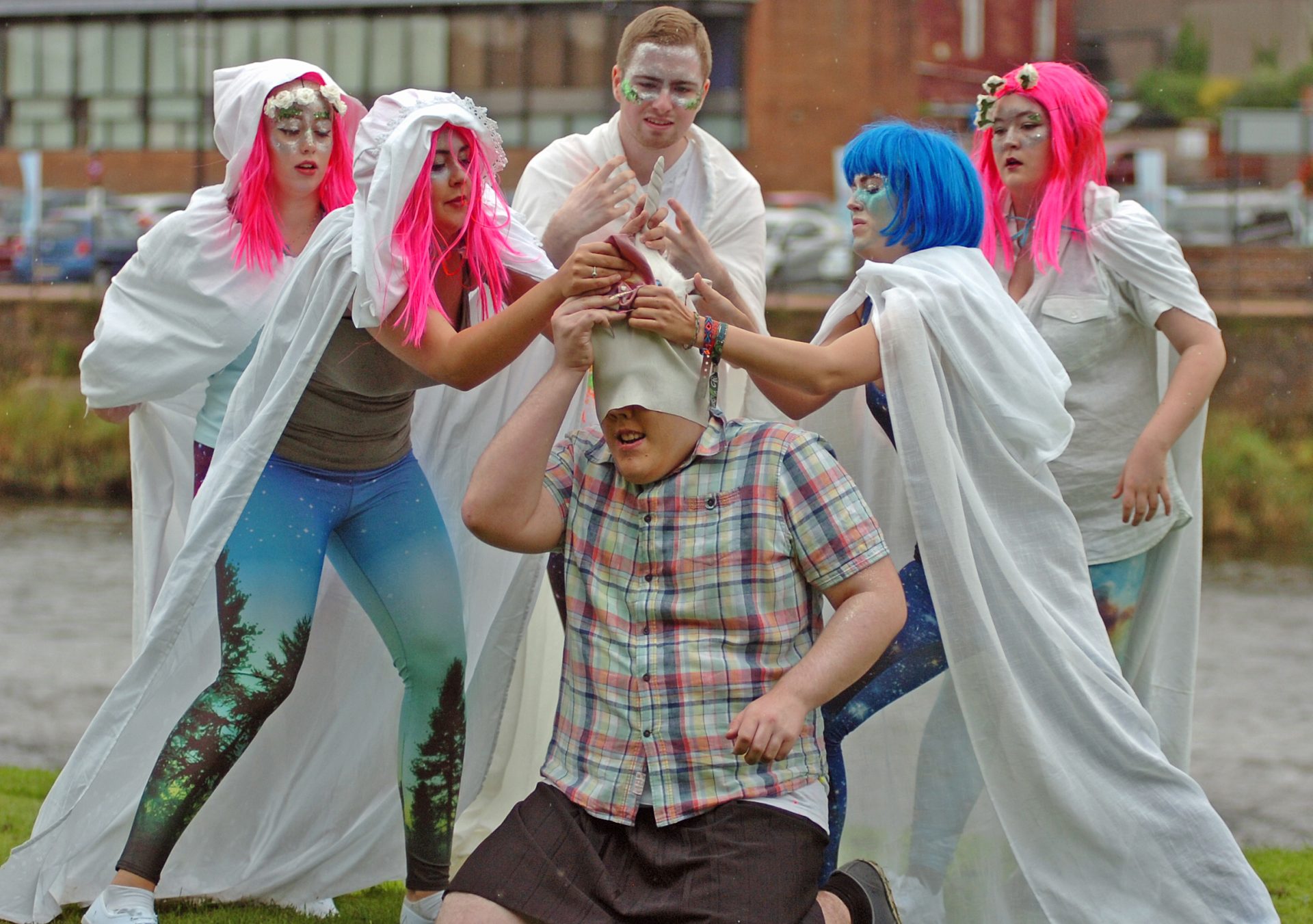
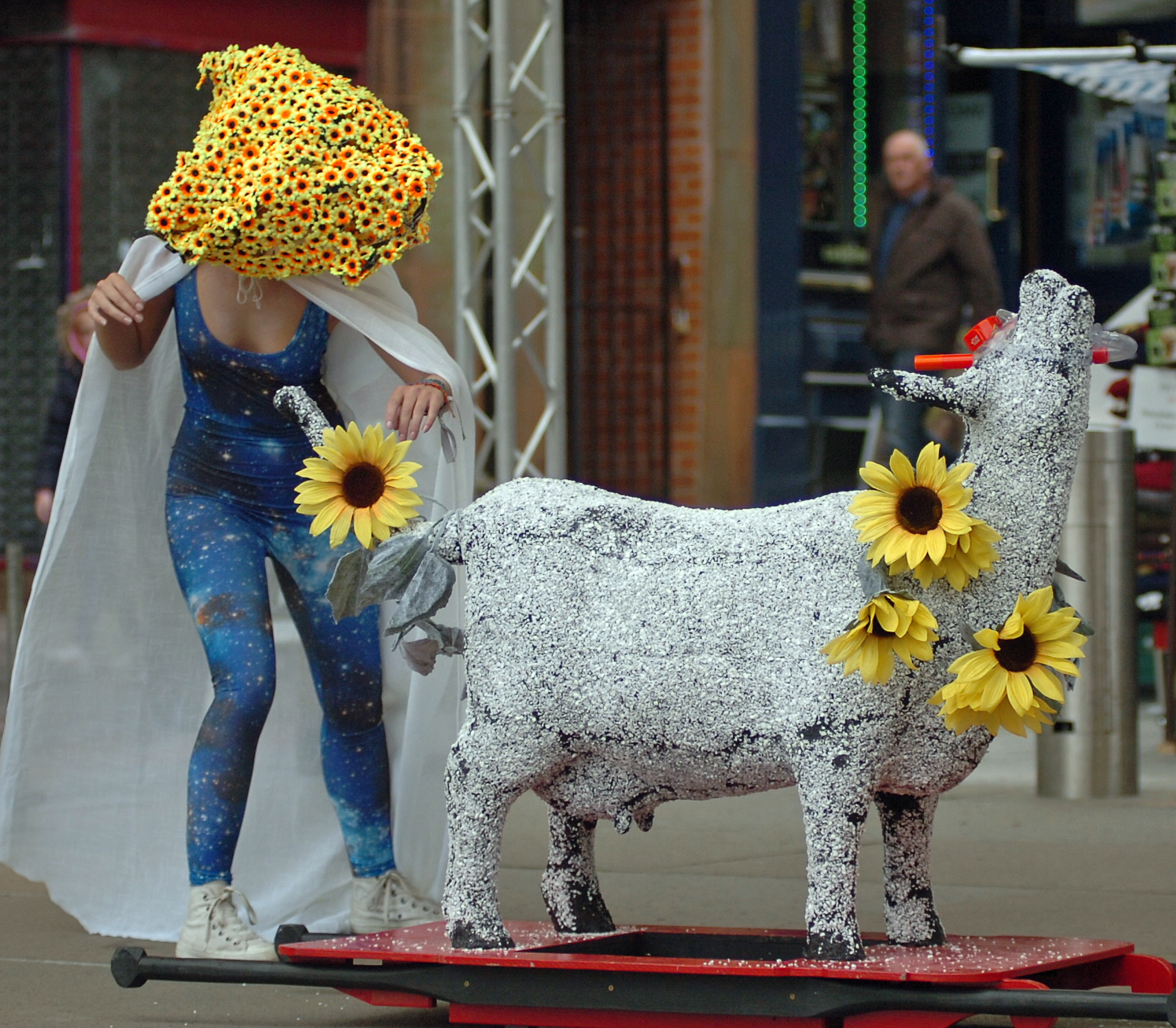
As part of Nithraid 2016, The Stove commissioned emerging performance artists Dillon Colthart and Jordan Chisholm to lead the procession of the Salty Coo, a now annual event starting in the town centre and finishing in the river with the Nithraid’s mascot and icon, the Salty Coo raised to a great height overseeing the sailing race’s conclusion.
‘It began with a blog post, advertising various commission opportunities for young artists in and around Dumfries & Galloway. It seemed fitting that Jordan and I would apply for both in hopes of our creative flare being challenged and displayed by the time Nithraid came around in September. We were excited, nervous and determined to bring something theatrically unique, as well as highly political, to the streets of Dumfries.
Upon receiving Nithraid’s ‘Salty Coo Procession’ commission from the Stove Network in early July, we became overwhelmed with joy and immediately began to brainstorm ideas creatively over various different types of coffee within local coffee shops throughout Dumfries with some paper, a pen and a desire to spread awareness through theatre and performance.
We came up with an idea to base our performance on the theme of ‘acceptance’ through queer performance whilst maintaining the meaning of the Salty Coo, which was to give something back to the river. Creatively, we challenged ourselves to incorporate movements with a strong message and create something which was both visual and aurally stimulating.
Grasping the attention of an audience in Dumfries, a place which has so much potential in terms of heightening awareness of LGBT, queer performance (such as drag) and acceptance was challenging yet liberating. We thought of ways we could get performers involved from more than just a theatrical background and made our goal inclusiveness though performance.
The process was overall smooth. We worked together well, got to learn more about one another than we already knew, based our teamwork on compromise and began to find a balance between our personal relationship and working relationship. It was interesting, as we have so many of the same views on various issues, yet positively challenged each other constantly to bring out our best creatively.
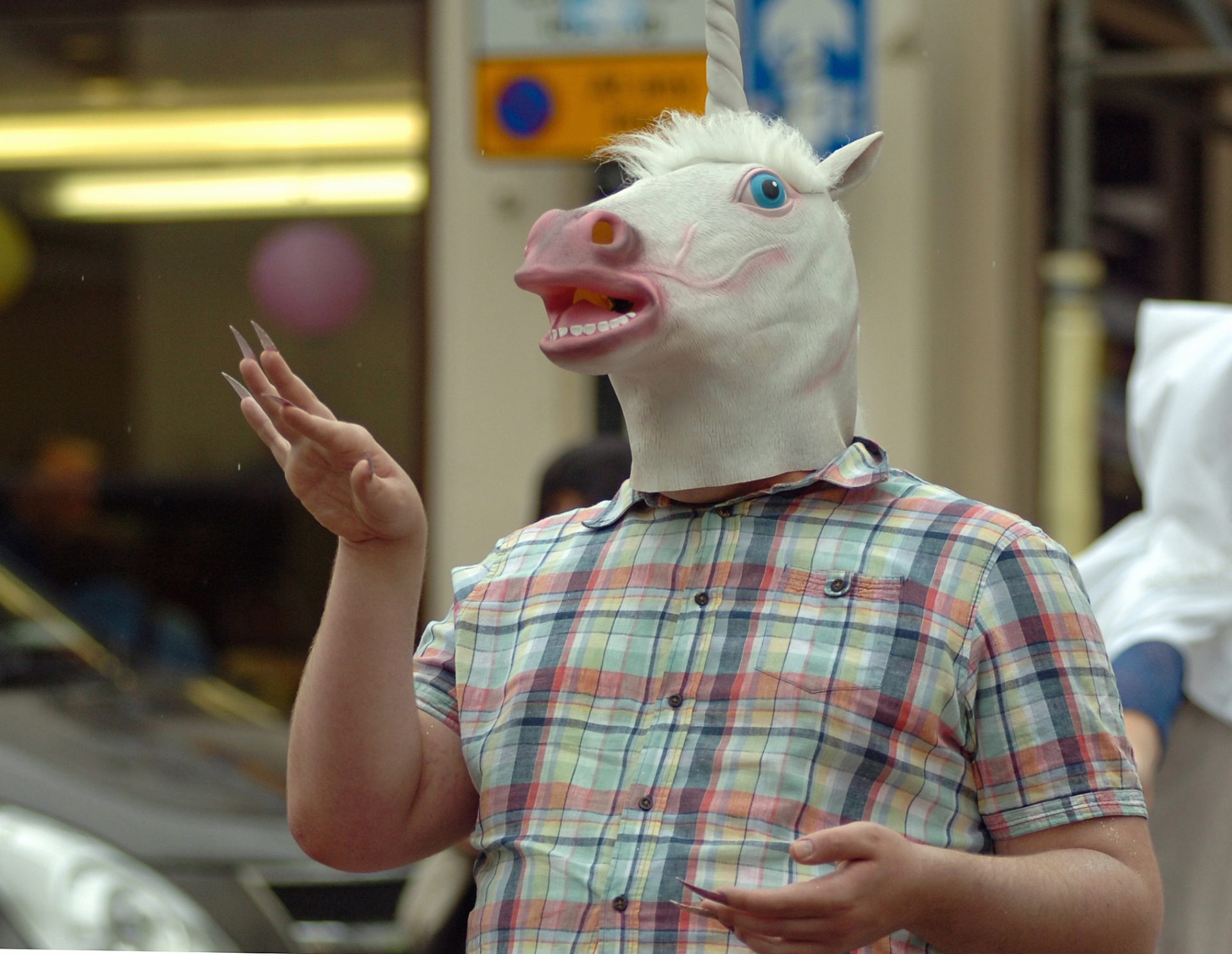
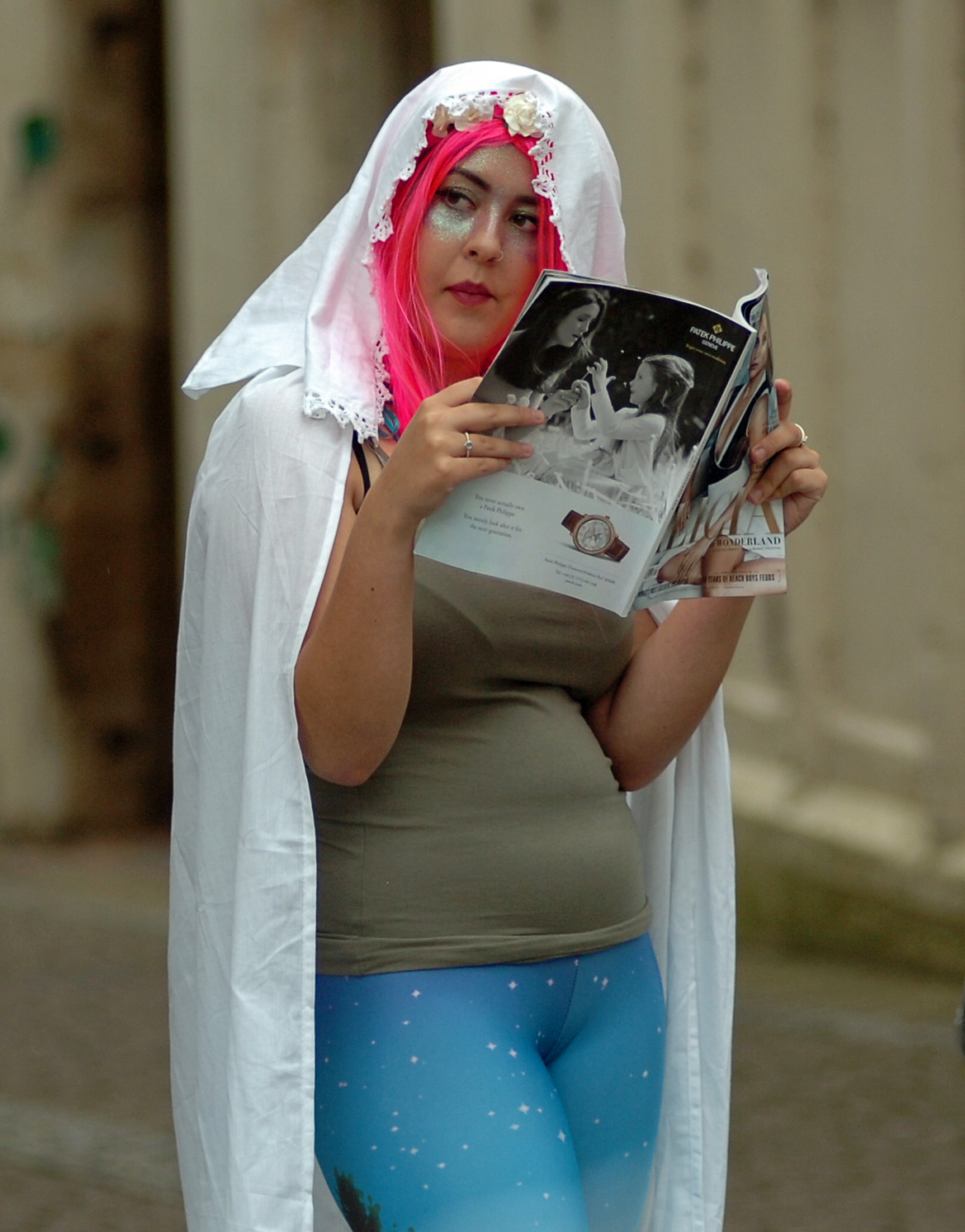
When the performance eventually came around, after weeks and weeks of preparation, we were ready to present the Salty Coo in all it’s glory – with rainbow coloured costumes, a kilt wearing – all tartan – unicorn, comic costumes, flower heads, white capes and colour bombs within the river to conclude. Our connection with the river has never been so strong, and the Coo never looked so good.
This opportunity is something which was indeed challenging in terms of managing our own time and being given a complete creative freedom, as we wanted to do our Salty Coo justice, as well as making the team at Nirthraid proud. This was an excellent commission for anyone looking to further their practise in the arts, whatever you may specialise in. From our preview performance – confined within plastic bags and smothered in paint – to the ‘Salty Coo’ installation and multi coloured procession, our procession came full circle, and we couldn’t be more proud of what we achieved.’
We use cookies to improve your experience on our website, analyse traffic, and personalise content. By using our site, you consent to the use of cookies. Please read our privacy policy for more information.
Cookie Preferences
Manage your cookie preferences below:
Essential cookies enable basic functions and are necessary for the proper function of the website.
Name
Description
Duration
Cookie Preferences
This cookie is used to store the user's cookie consent preferences.
30 days
Statistics cookies collect information anonymously. This information helps us understand how visitors use our website.
Google Analytics is a powerful tool that tracks and analyzes website traffic for informed marketing decisions.
Contains information related to marketing campaigns of the user. These are shared with Google AdWords / Google Ads when the Google Ads and Google Analytics accounts are linked together.
90 days
__utmx
Used to determine whether a user is included in an A / B or Multivariate test.
18 months
_gali
Used by Google Analytics to determine which links on a page are being clicked
30 seconds
_ga_
ID used to identify users
2 years
__utma
Used to distinguish users.
Persistent
__utmb
Used to determine new sessions/visits.
30 minutes
__utmc
Used to determine if the user is in a new session/visit.
Session
__utmt
Used to throttle request rate.
10 minutes
__utmv
Used to store visitor-level custom variable data.
2 years
__utmz
Stores the traffic source or campaign that explains how the user reached your site.
6 months
_ga
Used to distinguish users.
2 years
_gat
Used to throttle request rate.
1 minute
_gid
Used to distinguish users.
24 hours
Clarity is a web analytics service that tracks and reports website traffic.