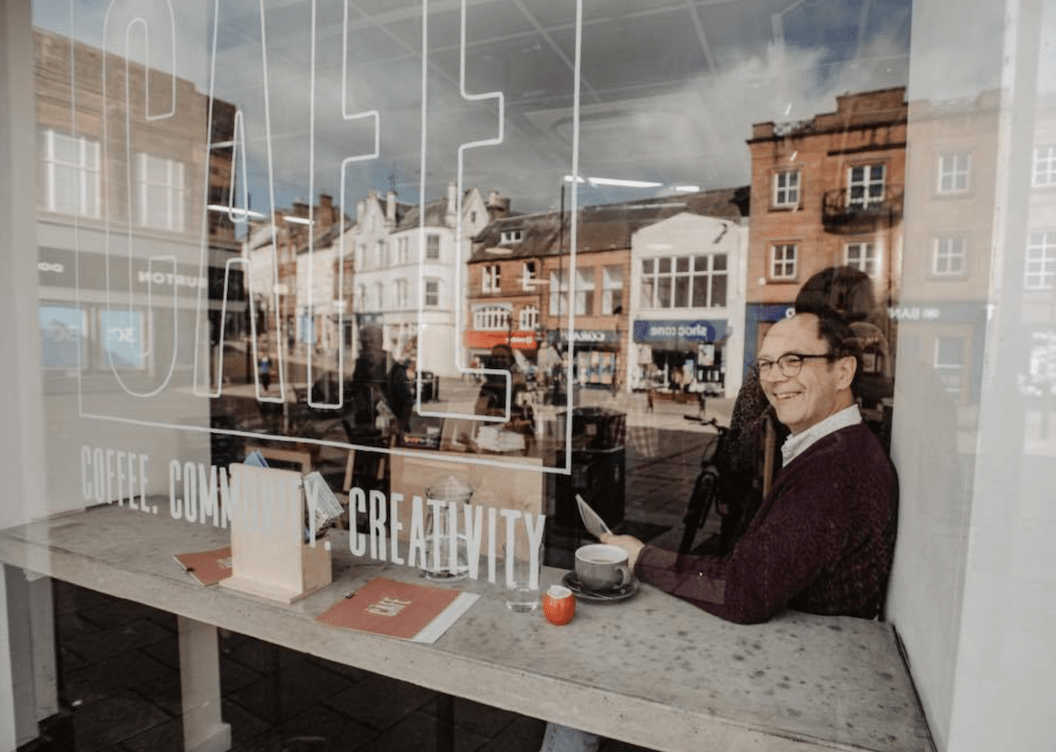
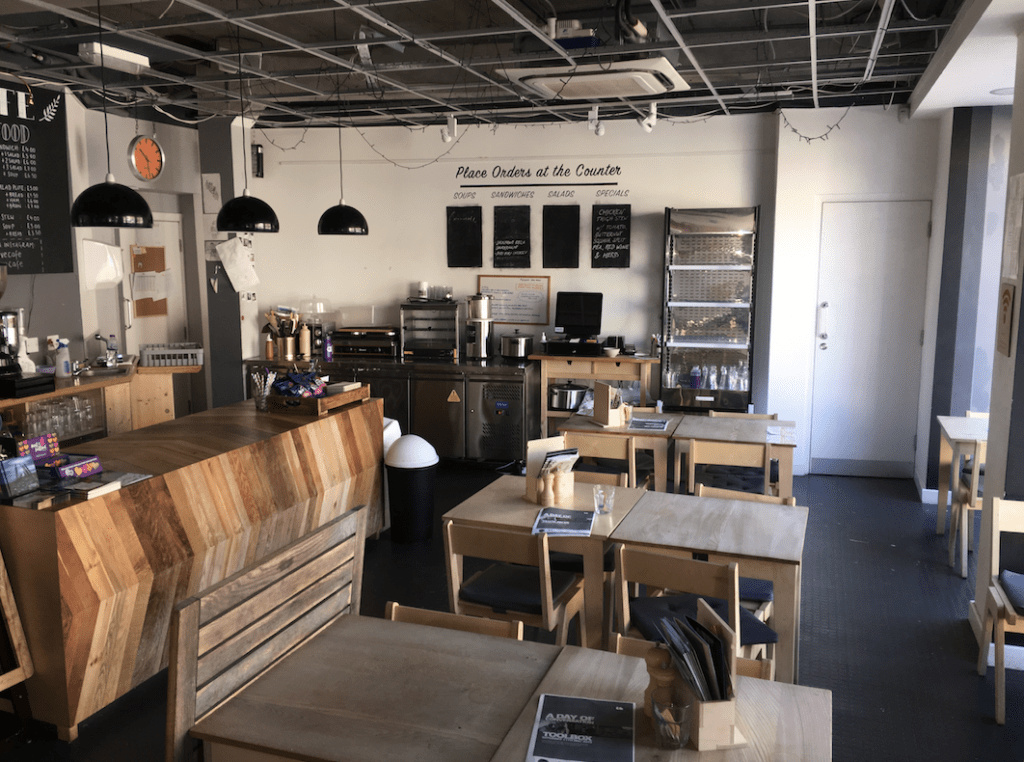
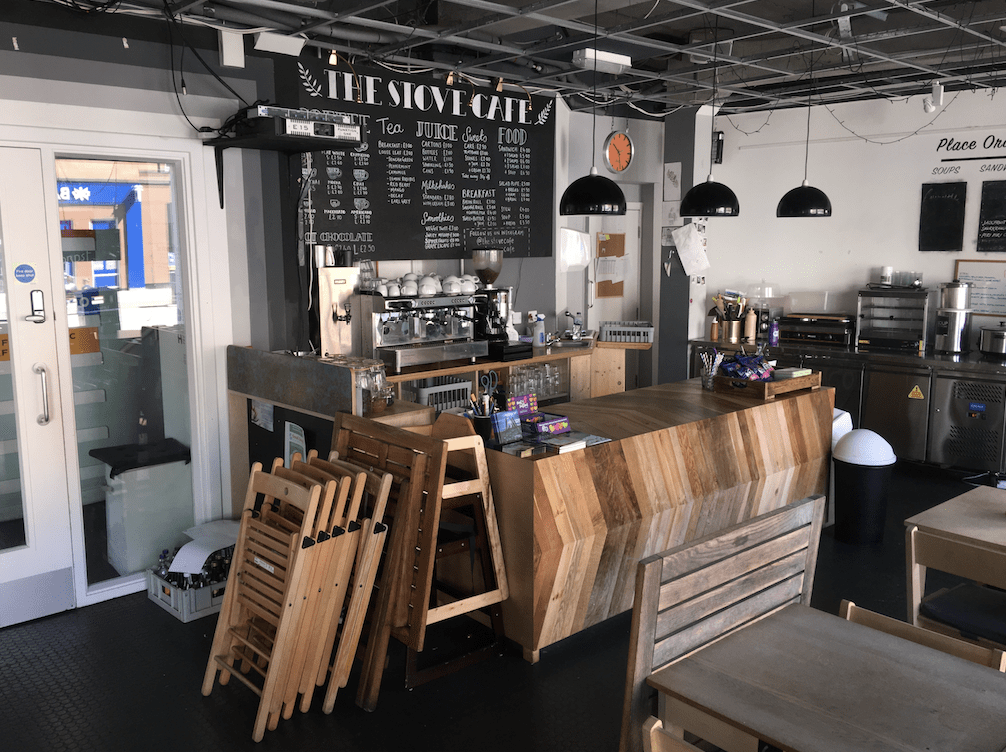
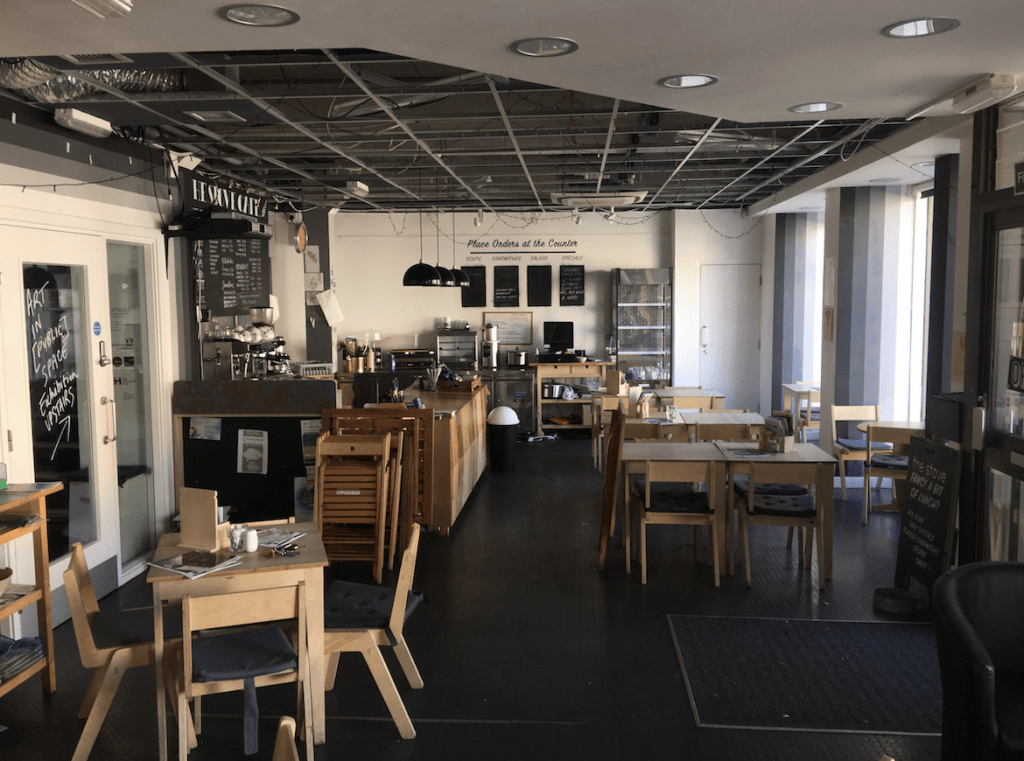
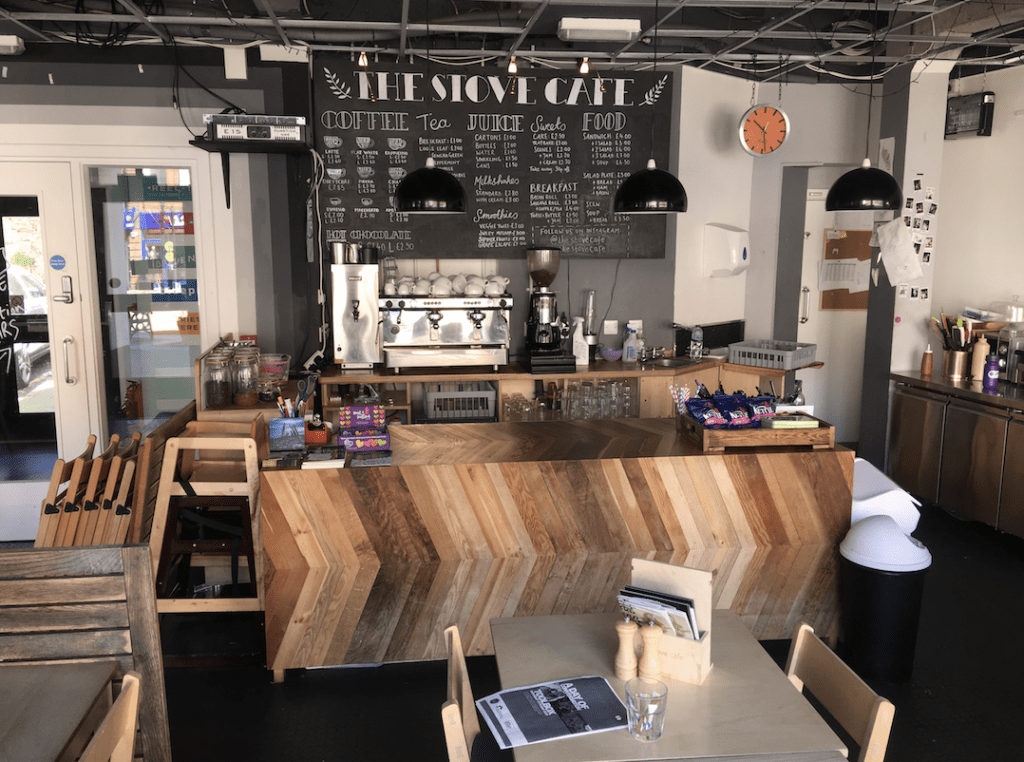
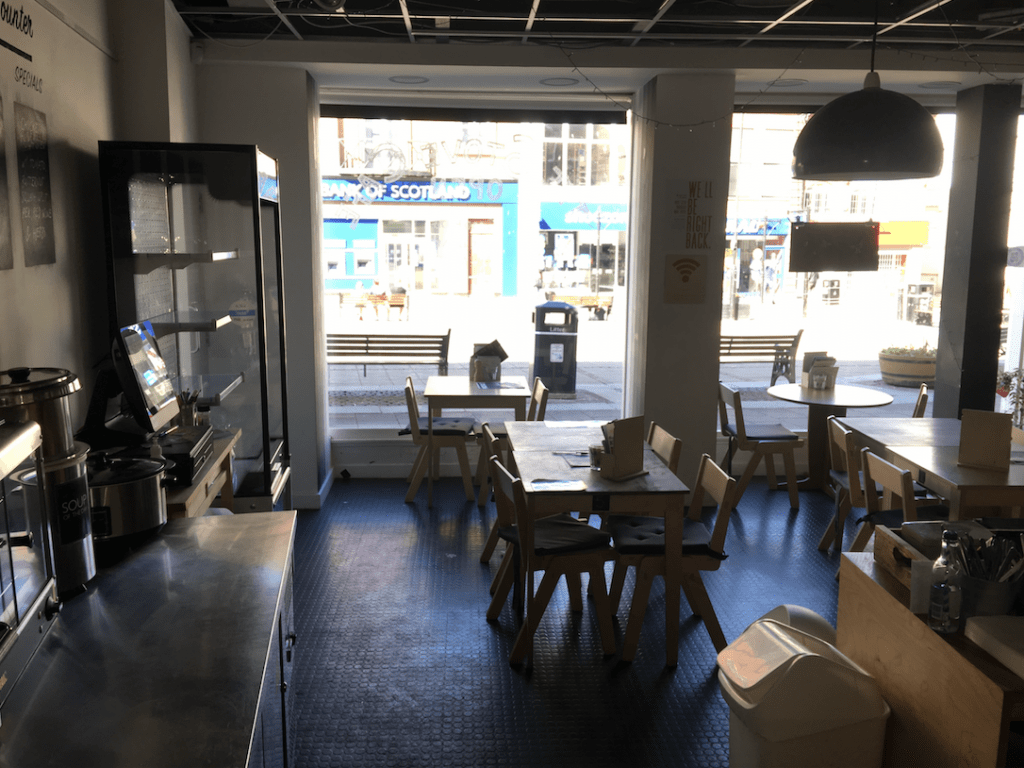
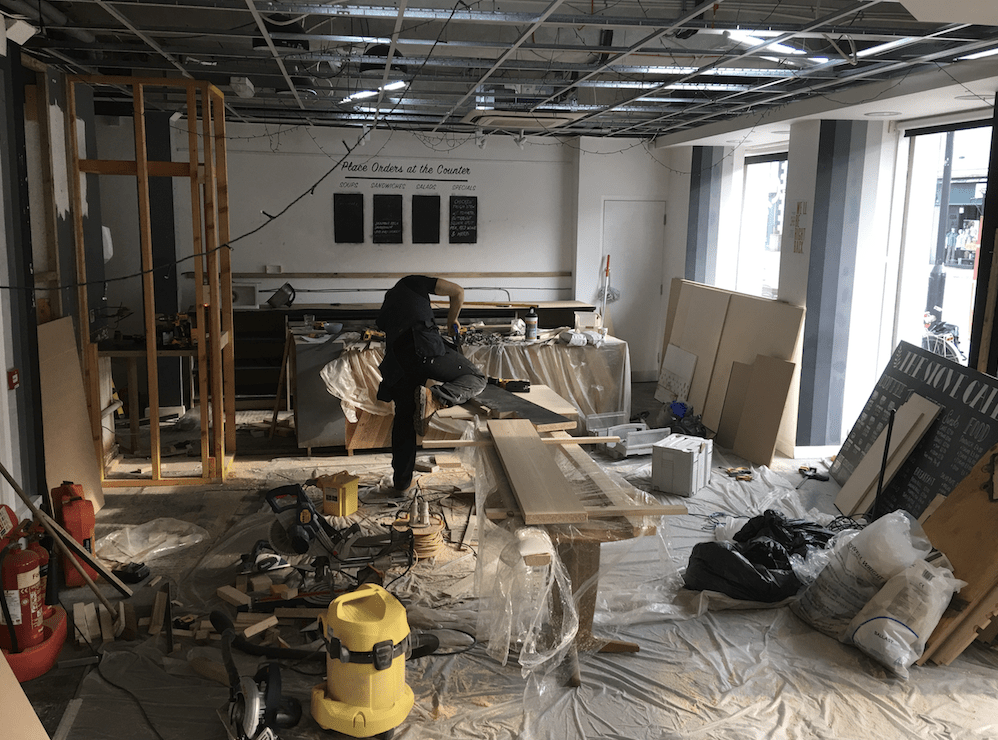
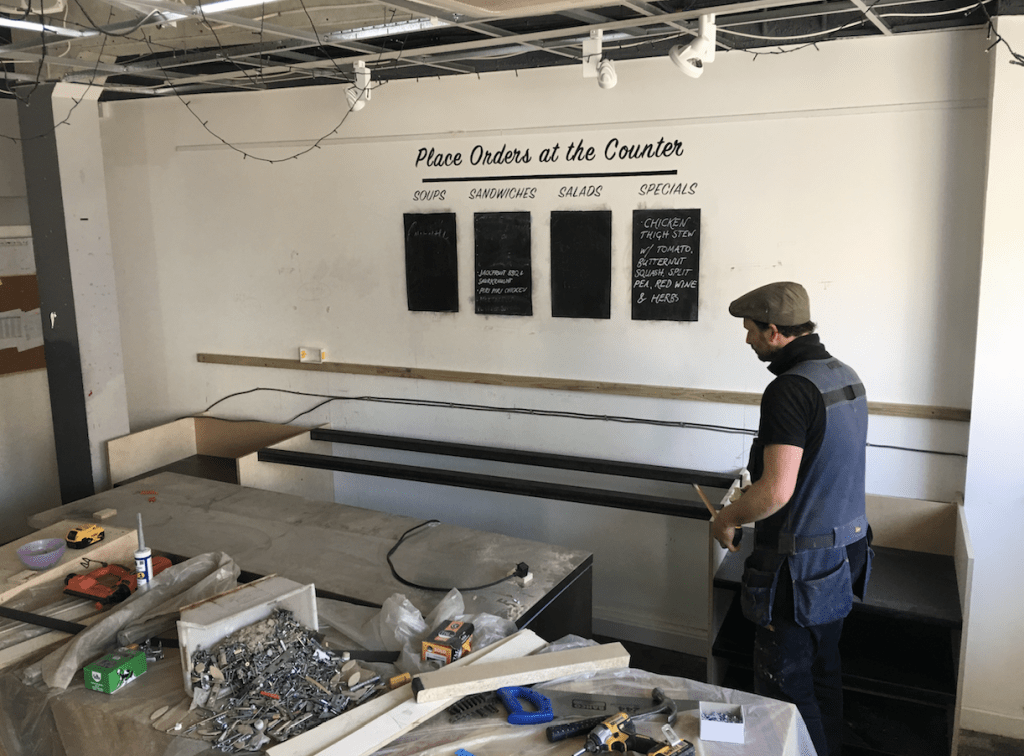
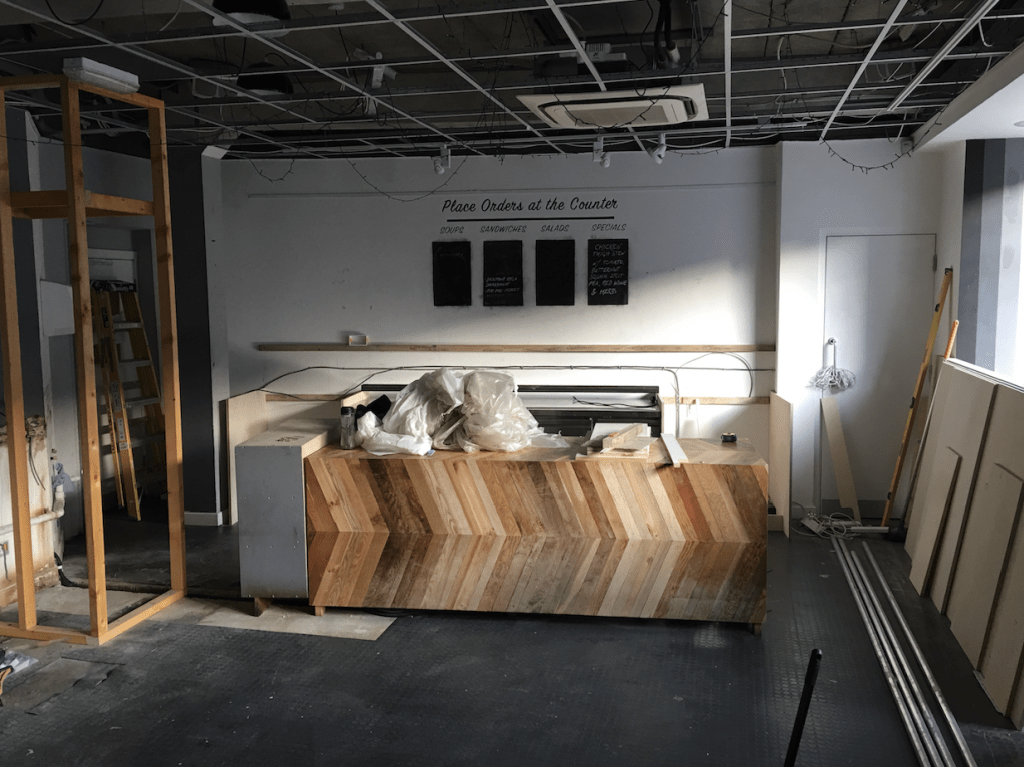
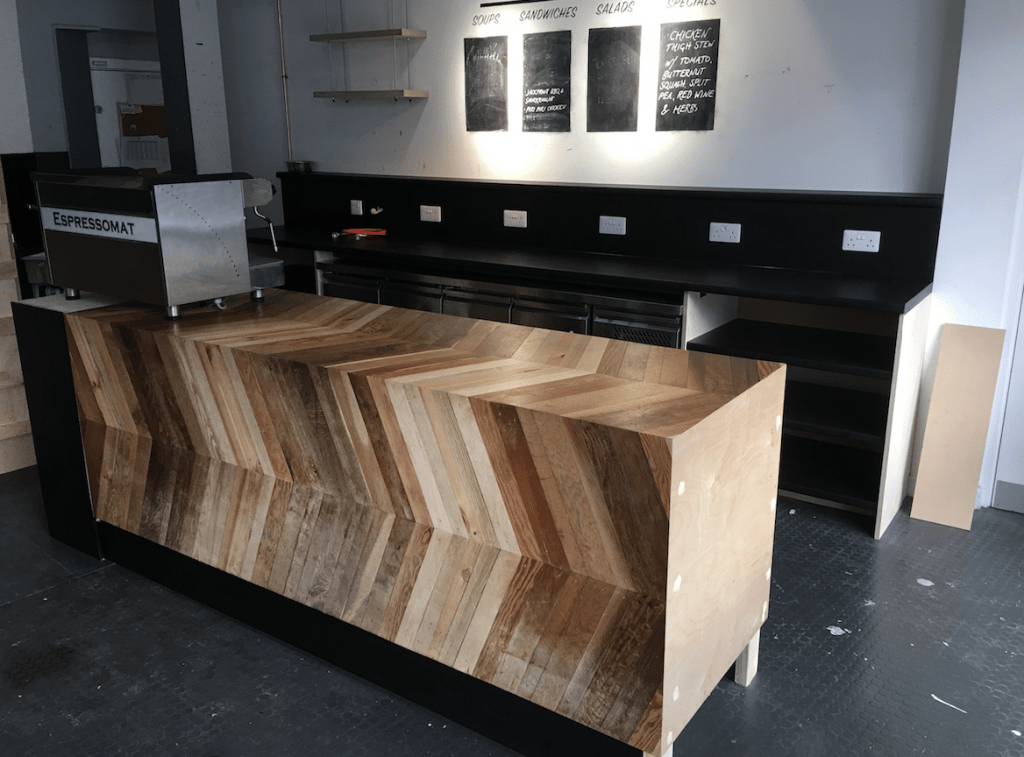
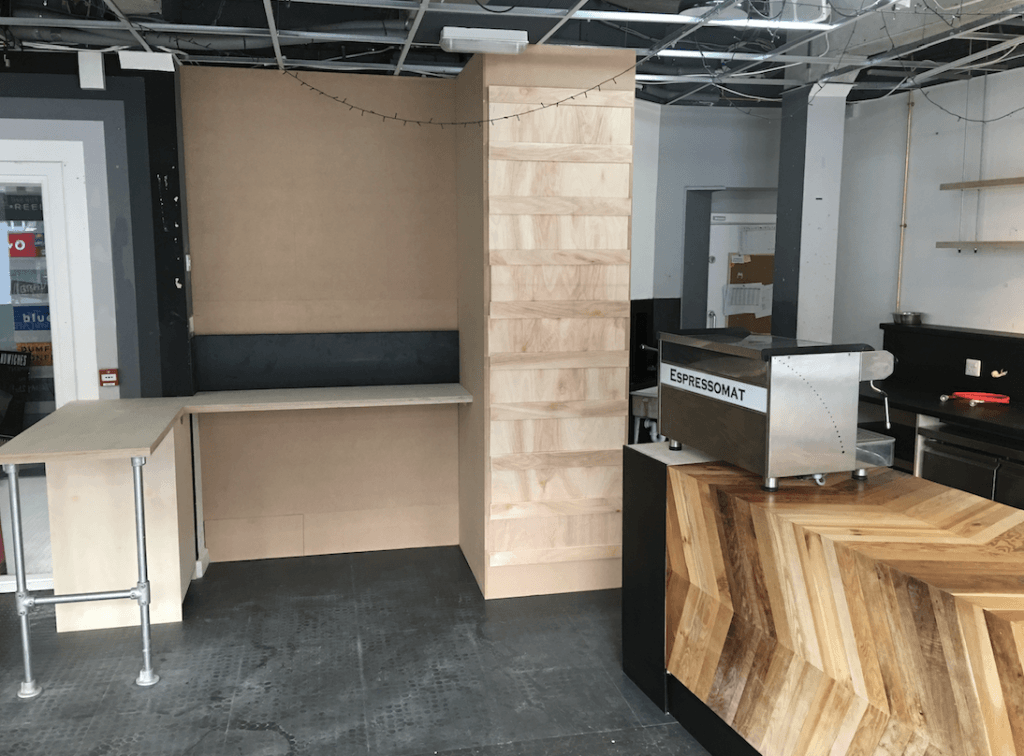
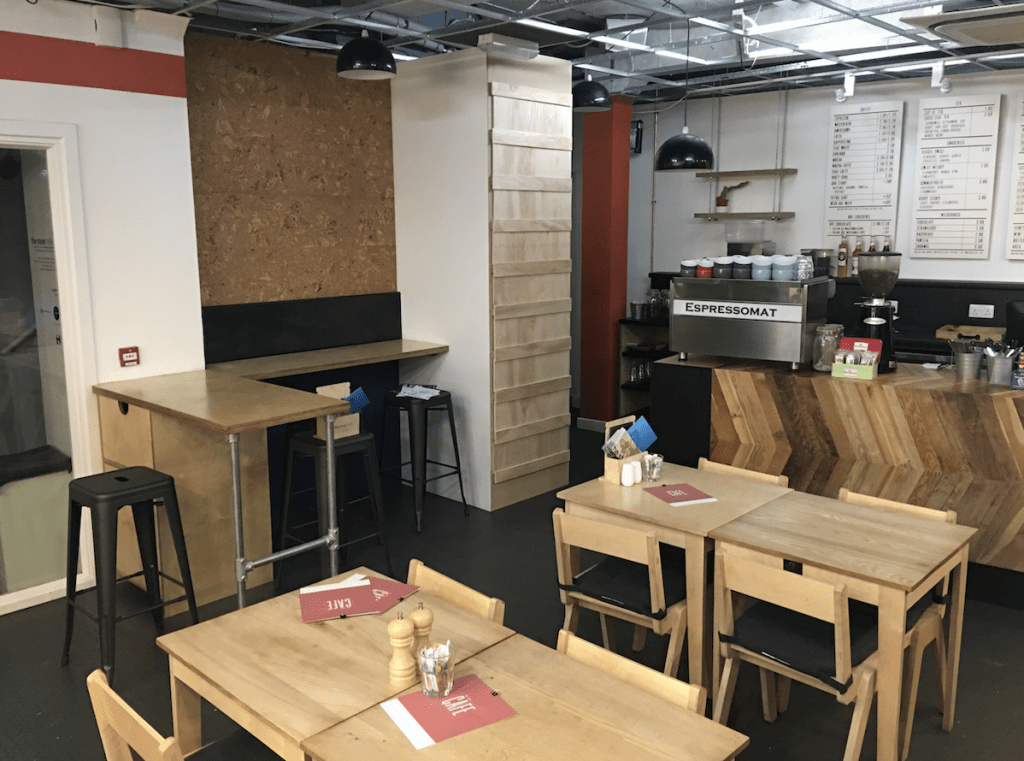
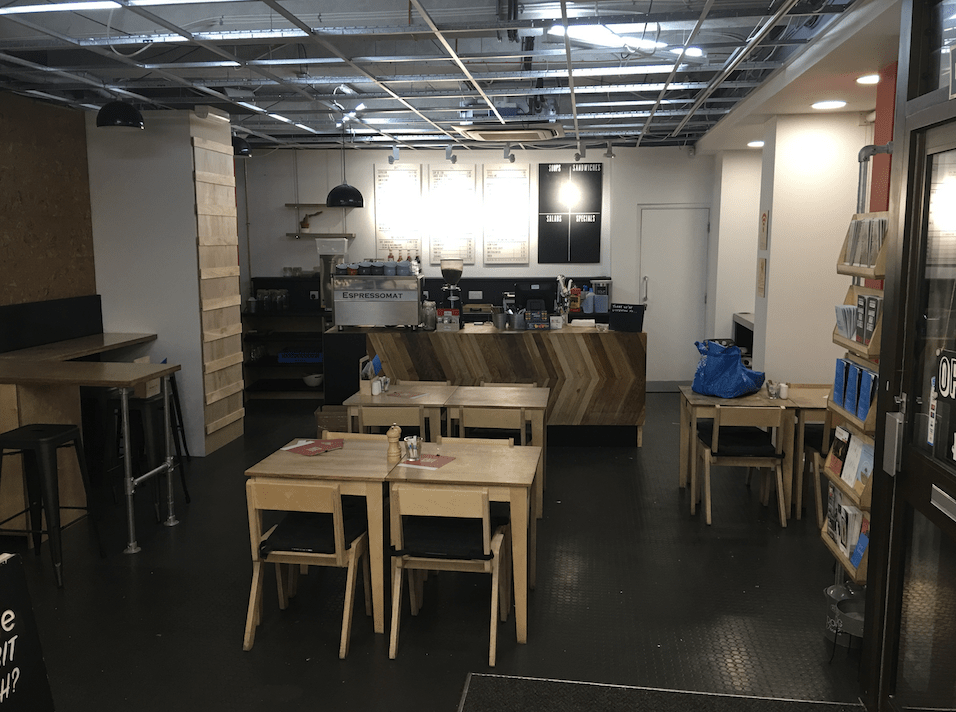
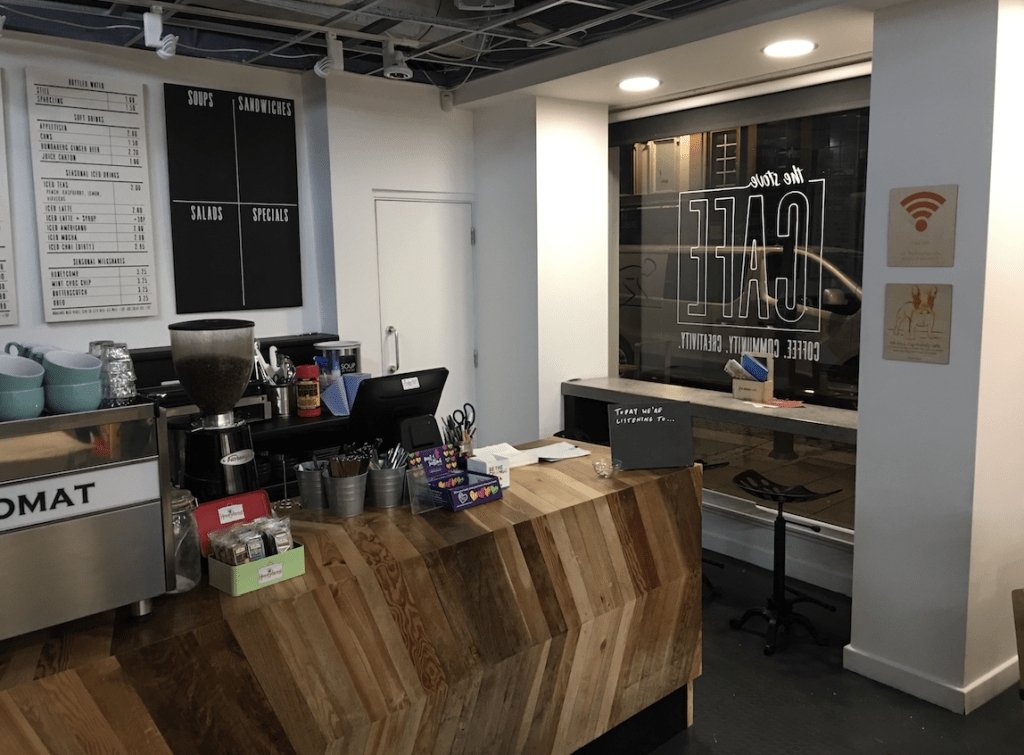
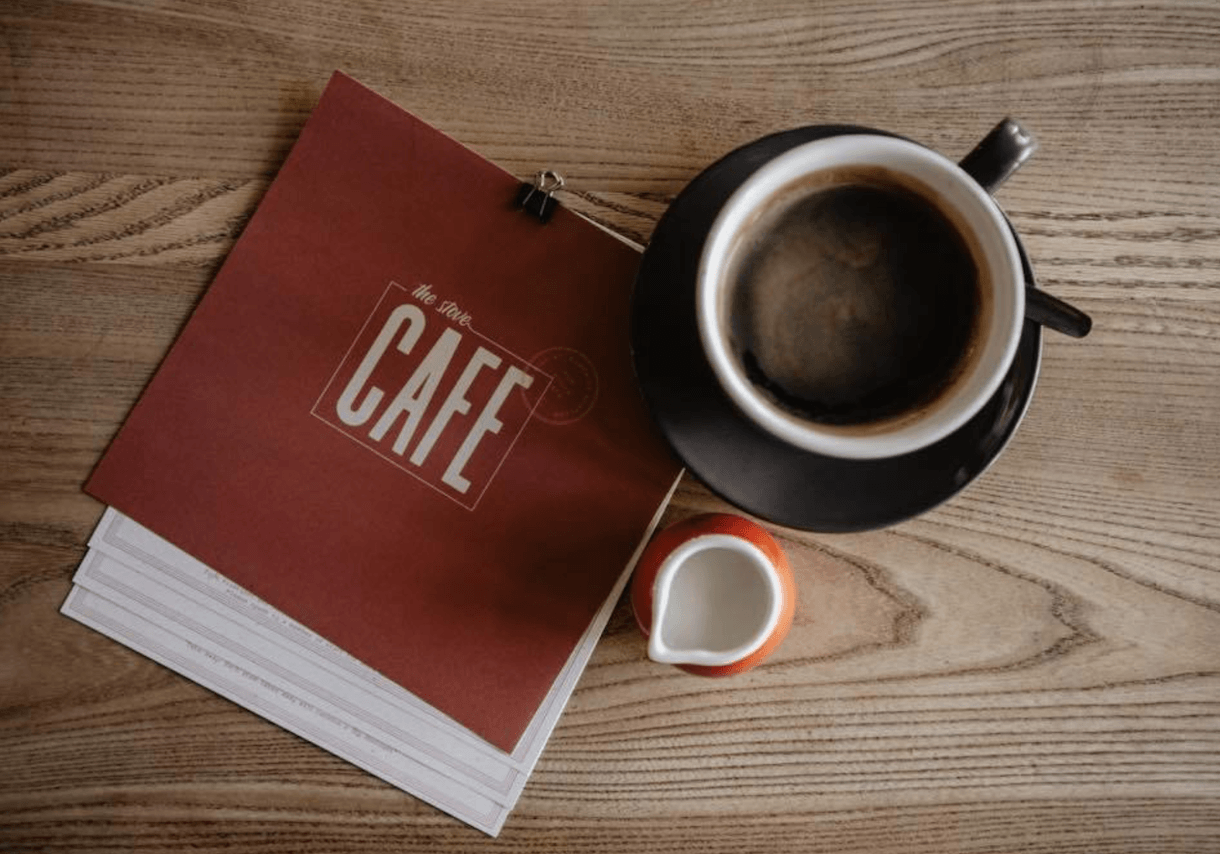
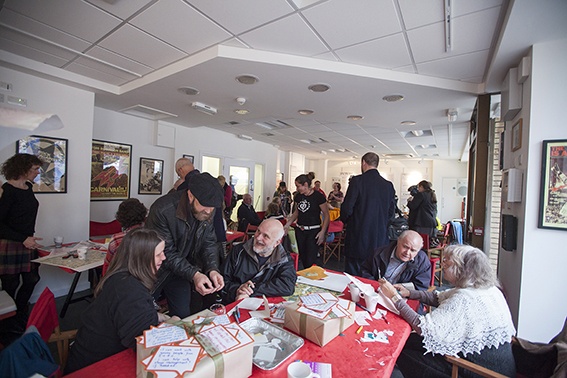
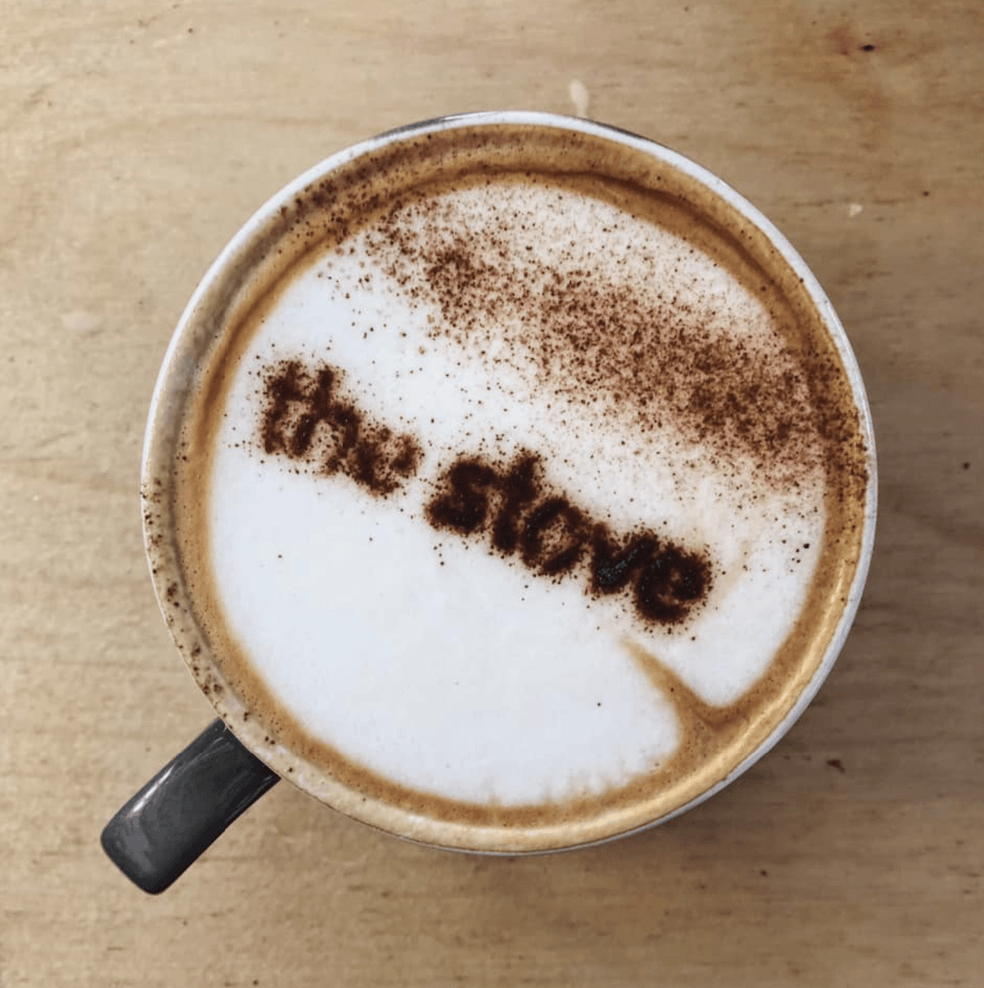
The Stove Cafe is the social heart of our social enterprise to bring new life to the town centre through culture and the arts and supporting community activity and career development for local people. Last year, we started to put together plans to make changes to The Stove cafe to improve on the look and feel of the space and to open up the space more to allow for more customers. The Stove’s Project Manager, Graham, led the Cafe refurb, along with Duncan Clowe from Duncan Clowe Joinery. The work Duncan did, along with the help of his dad, was superb and we cannot thank him enough! Make sure you check out his Facebook page and get in touch with him if you’re needing joinery work done! Check out the Stove Cafe refurb process photos below:
Since we’ve reopened the Cafe, we have been overwhelmed by the response from our customers and have been lucky to welcome some new ones in too! When you buy a coffee at the Stove, you are being part of a new vision for your High Street. Your support helps us to create opportunities, run projects and an events programme for everyone. To keep up to date with news from The Stove Cafe, follow their Facebook page here or their Instagram page here.
And don’t forget – become a member of The Stove Network and receive 10% off all food and drink in the cafe! Sign up to become a member by clicking here.
How do we connect up the culturally-led work that is happening in communities across D & G and build our region into a powerhouse of enterprise and opportunity?
There is growing recognition that something special is happening in D+G – our creative sector is working at the heart of rural communities and helping to inspire, facilitate and connect other initiatives (eg taking over underused buildings) that are making a real difference for places and the people that live there. The Stove Network has been both a resource and catalyst for the region through its work in Dumfries town centre. It has formed in-depth working partnerships with the local authority and other groups/agencies, building a portfolio of experience in bringing together community, agency and business interests to develop its work in place-making and culturally-led regeneration.
The Stove has received national and international recognition for their pioneering work in this field and with the advent of the new South of Scotland Enterprise Agency (SoSEP) an opportunity has been identified to develop a plan to strengthen the connection between existing projects and seed new ones for the benefit of the region as a whole.SoSEP has granted The Stove funding for a focused piece of work, based on their Enterprising Communities proposal, to look at the opportunity for better shared learning, the support needed for this activity in place-making and culturally-led regeneration and pathways to opportunities in Creative Industries.
How can we work together to strengthen these for our region? What support does this work need to flourish and grow localised decisions for the places we live?
For the next 6 months The Stove will be carrying out a feasibility study for Enterprising Communities, under their project – Embers – igniting culturally-led regeneration across Dumfries and Galloway – to explore and define a joined-up vision for work in place-making and culturally-led regeneration and enterprise in Dumfries and Galloway. This piece of work will not focus on the model to deliver this work but on how we can strengthen the pathways between the work we ALL currently do. We will look at what we need to support this, to encourage new work and sustainable development in this area.
How do we build on existing networks in the communities and cultural/creative sectors – overlaying and combining them to create a powerfully integrated regional field of shared resource, capacity, knowledge, skills and opportunity?
Embers will be led by Katharine Wheeler for The Stove with support from across our networks, agencies and partners. Firstly, Katharine will look at areas of best practice in place-making across the region and secondly, produce a feasibility document as a regional development model for place-making and culturally-led regeneration across Dumfries and Galloway defining out how best to take this forward.
We are working closely with Carnegie Trust who will be providing case studies and help in identifying significant indicators of this work throughout the project.
The feasibility study – Embers – will explore a regional development model in relation to the main aims of how the new South of Scotland’s Enterprising Partnership (SoSEP) can support place-making, creative industries and culturally-led regeneration across Dumfries and Galloway.
This will feed into SoSEP’s current enquires:
What forms of support are needed to enable the communities in the South of Scotland to become more resilient and to help communities grow?
Advise within that what type of support SOSEP could provide, and how, to enable community organisations to become more successful.
What would success look like – for communities and for SoSEP?
We have already been in communication with some of our partners and other organisations and groups across the region about this piece of work and will be looking to connect with others. If you are wanting to find out more about this, or get a copy of our initial Enterprising Communities proposal please email [email protected] directly.
Eight years ago a group of artists in Dumfries started a conversation. Standing here in 2019’s ‘A Year of Conversation’, this initial spark has grown into 4 separate social enterprises, which between them provide regular employment for more than 40 people and a working partnership between the community, Council and Government towards a new future for our town.
And, what have we have learned? We’ve learned that keeping the conversation going is the single most important thing of all – for conversation is an open space of possibility, it is owned by no-one, rather it is stewarded, nurtured and protected by everyone who takes part. Inclusive Growth is the new mantra of Scottish Politics – it’s a vision of a society and an economy that does not simply value numbers, but rather supports economic activity that benefits communities, places and ALL the people who live there. For this idea to make any sense at all, it needs to be shaped and held in a conversation, one that is rooted at a profoundly local level, a conversation that is open and free to roam without limits imposed by those who wield ‘power’. Rather, the true power must be in the principle of conversation itself.
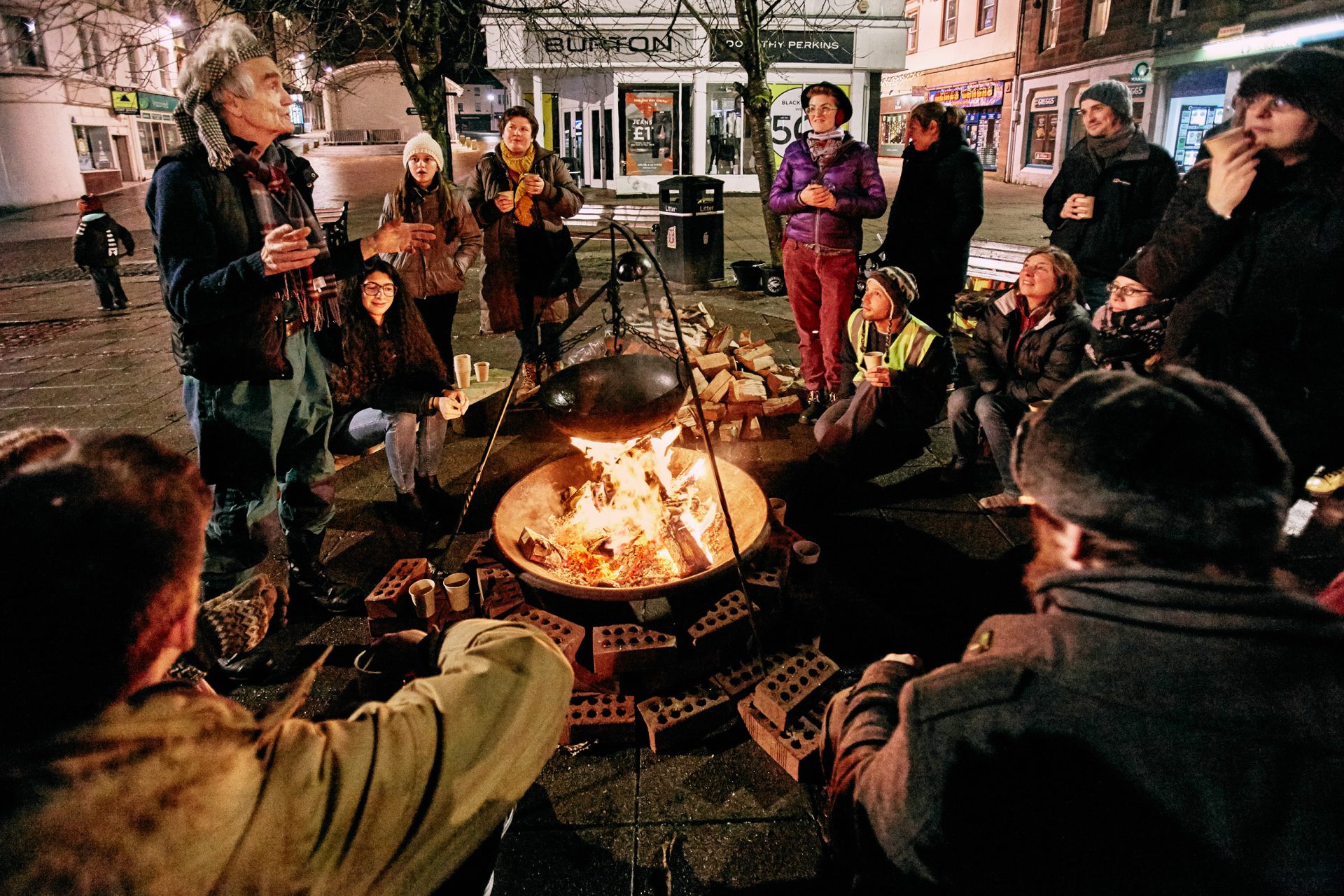
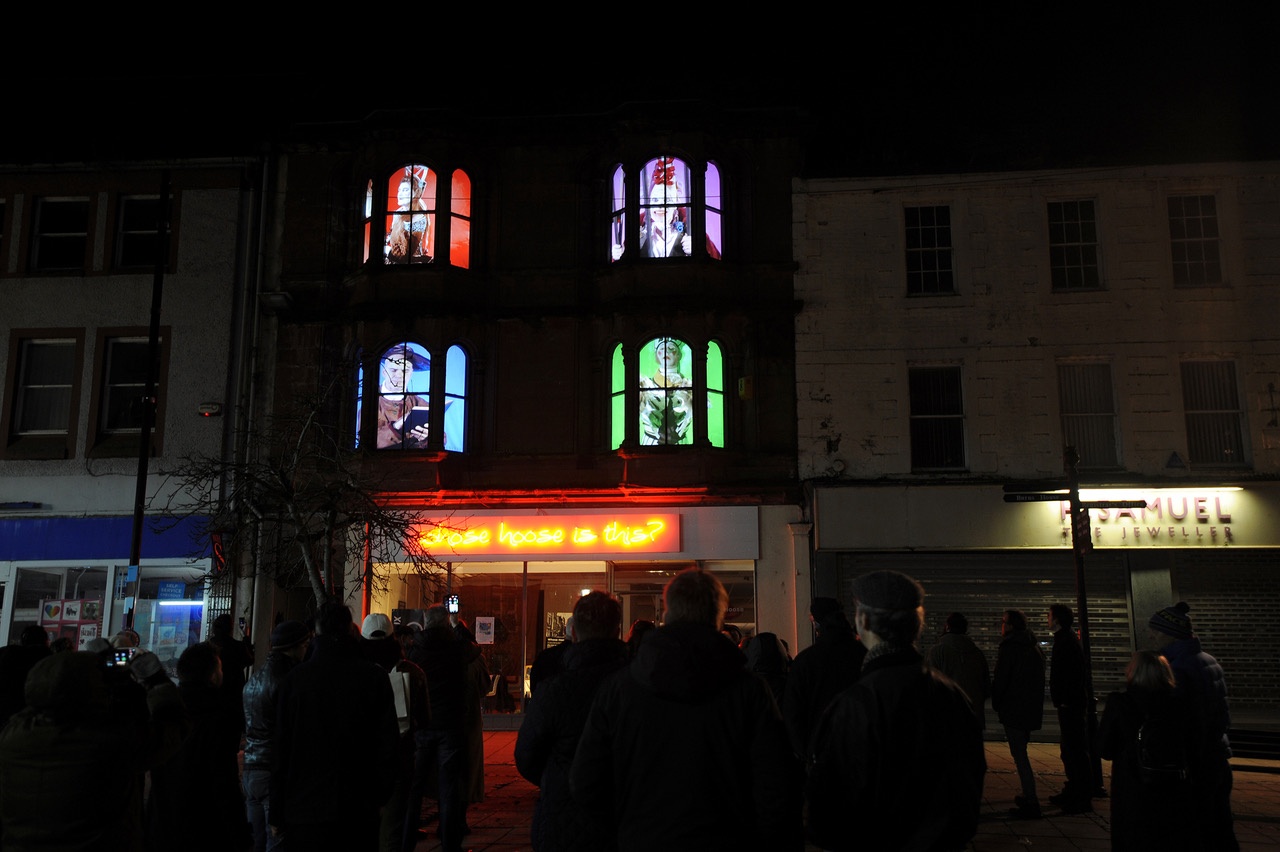
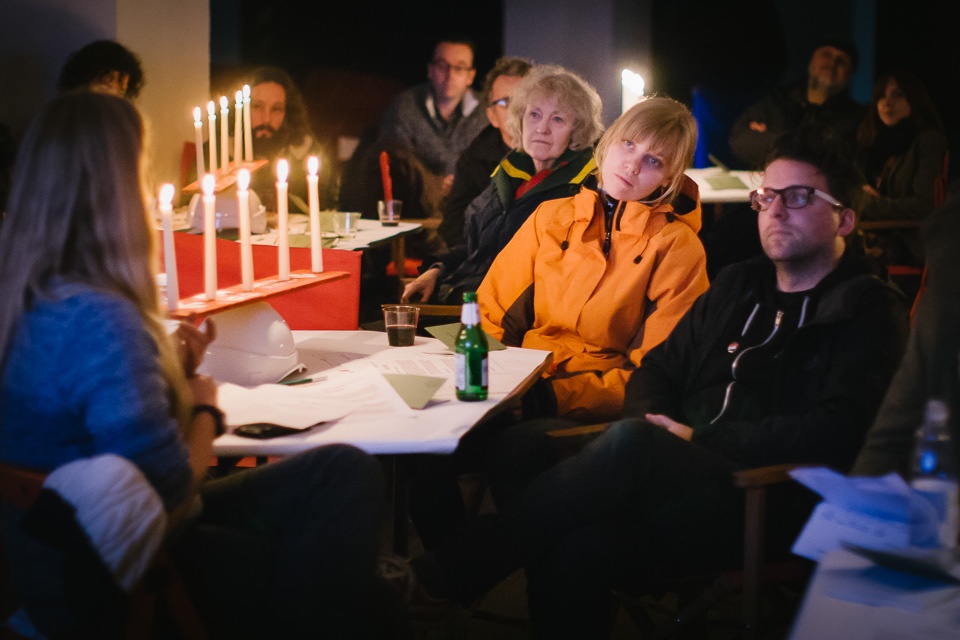
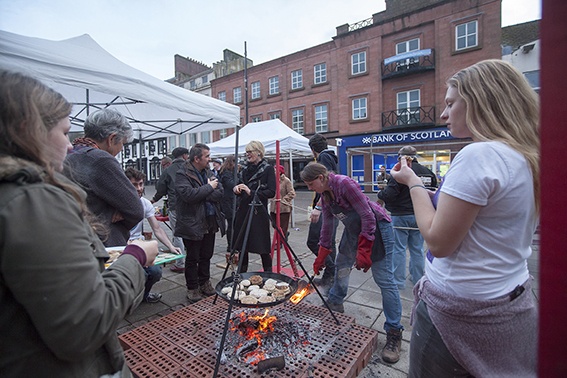
In 2001, our conversation in Dumfries began with a on open question: ‘What is the purpose of a small market town in 21st Century rural Scotland?’. Dumfries had fallen on hard times, there were in excess of 70 empty shops in the town centre. What is now popularly cried the ‘Death of the High Street’ (big retailers pulling out of High Streets because of online shopping and Out of Town retail parks) was already happening fast. We wondered what creativity and culture could do to help, it wasn’t that we had any answers to the problem that we wished to promote…on the contrary! But, we saw how important the health of the town centre was to the sense of identity within our community. We knew that town centres were places for people to gather to celebrate, to protest, to remember – but what are the mechanisms of interaction between people (commerce, leisure, services etc) that are necessary to maintain a town centre as a place for us all to gather in?? The withdrawal of big national and international concerns from our town centre created a vacuum, but it also presented an incredible opportunity for a new kind of town centre – one founded in an ‘inclusive localism’. We knew that this could only grow from a spirit of conversation which made a space for everyone’s voice to be heard. We have helped steward this conversation for eight years now – asking our question in myriad different ways..town dinner parties, a crowd-sourced Town Charter, a giant chalk drawing in the local square, an annual festival celebrating the role of the river in the town, a 2 year exploration of Dumfries’ relationship with Norway, a monthly open-mic evening for new writing – spoken or sung. We now operate two High Street buildings as ‘can-do places’ or ‘arty community centres’ or ‘alternative town halls’ depending on the flavour of the town conversation as you choose to see it.
This is what could be called ‘Conversational Practice’, but really, it is just a set of shared values about the way to treat people and to operate as a human being. Being in conversation is a useful metaphor that encompasses the three core values of our collective work in Dumfries..which could also be seen as necessary ingredients for a good conversation?:
To work through collaboration (not in isolation)
To take risks
To put people first and consider the emotional landscape of all actions
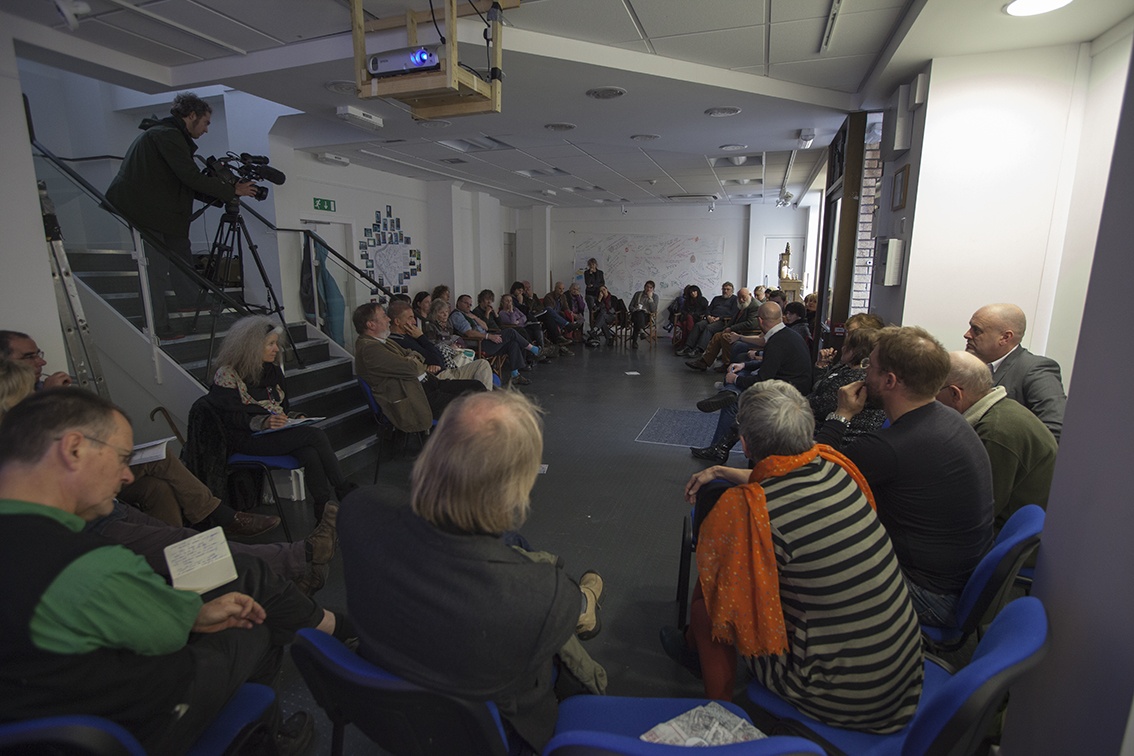
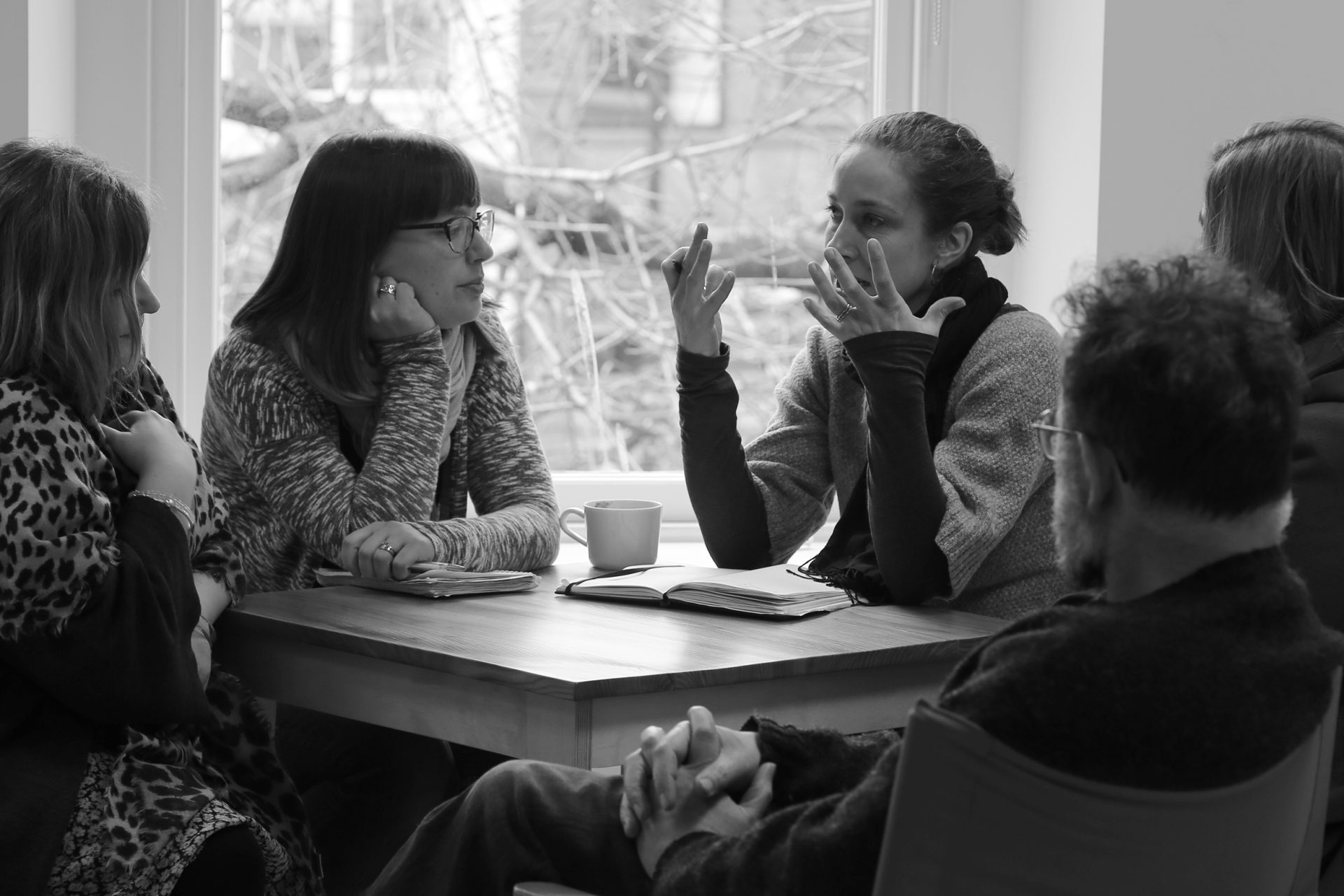
The Stove Network is taking part in A Year of Conversation in two ways: through the first two weeks of May we are staging an interactive exhibition and series of events to explore ‘Art in Public Space’ which centres around a series of conversations with artists working in public. Then, in June, we are shaping all of our regular programming activity into a ‘Month of Conversation’. Our conversation month will also mark a significant shift in our practice as we move onto a new topic of conversation – the new conversation space that we will help to hold for our town is ‘how we grow our own culture’ and how everyone can give themselves permission to be part of that endeavour.
Pop in for a chat!
Matt Baker is a public artist, since 2011 he has focused on long-term activist strategies for the social, economic and political structures of his home region in South West Scotland. He was one of the founders, and is based with, The Stove Network in the heart of Dumfries town centre. www.thestove.org
In a recent survey undertaken by Dumfries Music Conference, ‘music venue provision’ was highlighted as the number one priority for the development and fruition of local bands and solo artists.
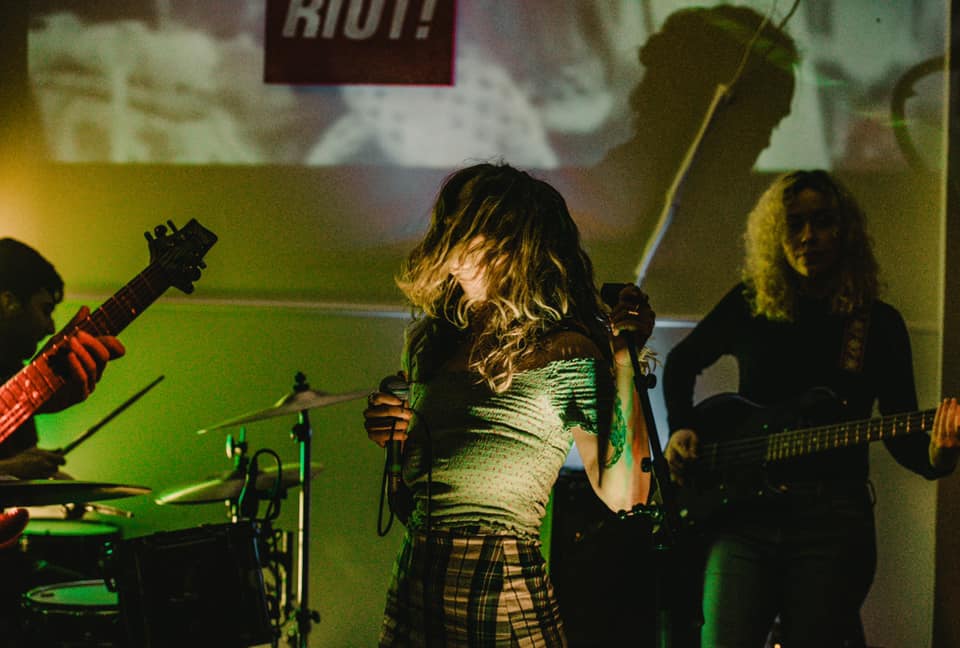
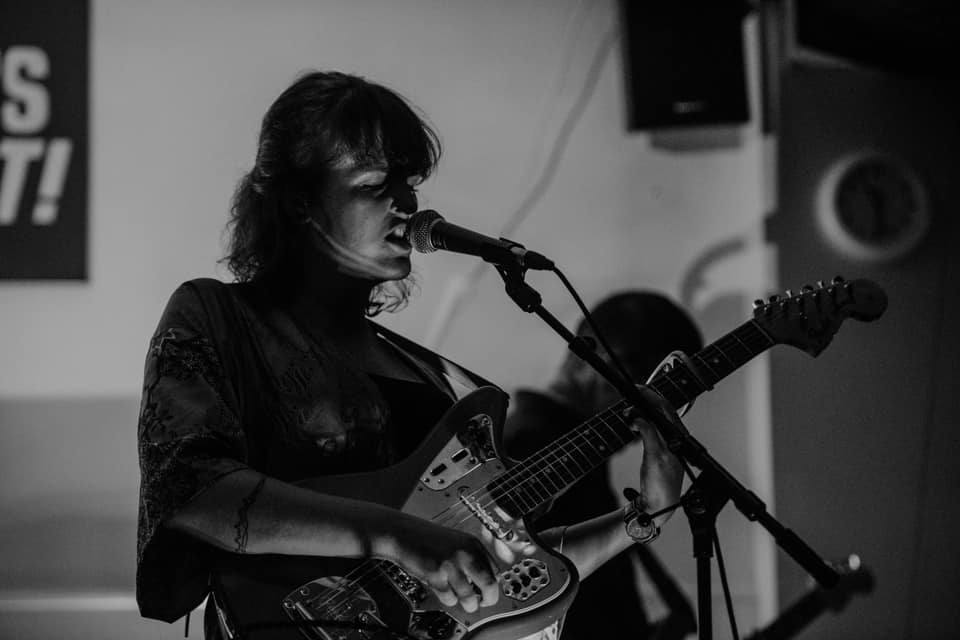
Music venues provide the bedrock for musicians to build their audience, hone their sound and cement their unique appeal as a live act. With the increase of streaming platforms and free releases, the live experience, more so than ever, is tantamount to the success of musicians and artists. DMC has always tried to nurture the local sound across a broad spectrum through live gigs at 100 High Street, establishing the Stove as a bold, intimate and thoughtful space to hear the freshest music from local and national acts. Now, moving into the seventh year of the annual conference we want to celebrate the spaces out-with our headquarters and challenge the established notions of where music ought to live. In short, we’re re-imagining the music venue.Inspired by organisations and festivals such as the Hidden Door, Empty Shop Durham, the Moth Club and various other initiatives throughout the country, the Plaza is attempting to redefine the nature of music venues, employing a ‘takeover’ model using the unusual, the empty, the abandoned and the wild, we will expose the places where music could, and should, live. Bringing to the surface some of the key questions around music venue provision in Dumfries & Galloway.
With the deeply unfortunate news of the relocation of the region’s largest music festival we equally want to encourage a greater understanding of the contribution live music makes to the local economy as well as start the conversation with our scene on how a ‘DIY’ ethos may lead to the creative community becoming more than it ever could have imagined. We want to challenge not only our audiences and ourselves but equally ask the right questions of our local authority as well as other ‘decision-makers’, how do we build, together, the infrastructure necessary for this particular (and most lucrative) of creative industries to flourish?
The Plaza affords us the opportunity to encourage, support and, together with our young audiences, develop careers aside from music-making in photography, film, event management, programming and installation – whilst also inviting artists and the music community to help us build a new kind of space, every 2 months.The Plaza, which takes its name from a former dancehall and concert venue on Dumfries High Street, launched in April 2019 at the Rowing Boat Club, a finale showcase, wrapping-up the Female Takeover – a month-long series of events celebrating the contribution of women in music with a programme of industry panels, film, live gigs and exhibitions. Inspired by the stories, photographs and memorabilia of the Plaza, we are re-imagining and re-awakening the experiences of this cherished music venue.
The D&G music scene is a remarkable and a unique thing. It’s down to the festivals, event-makers, marketers, pubs, nightclubs, bands and artists that it has become such a force. We want to celebrate the established, create room for a new sound, support our scene and build new careers, helping to develop the talents and skills of young people in the region through doing what we do best – making it for ourselves and reclaiming the right of access to culture and live music.
Are you interested in the Plaza? Have/know of a space you think would be useful the let us know by contacting [email protected].
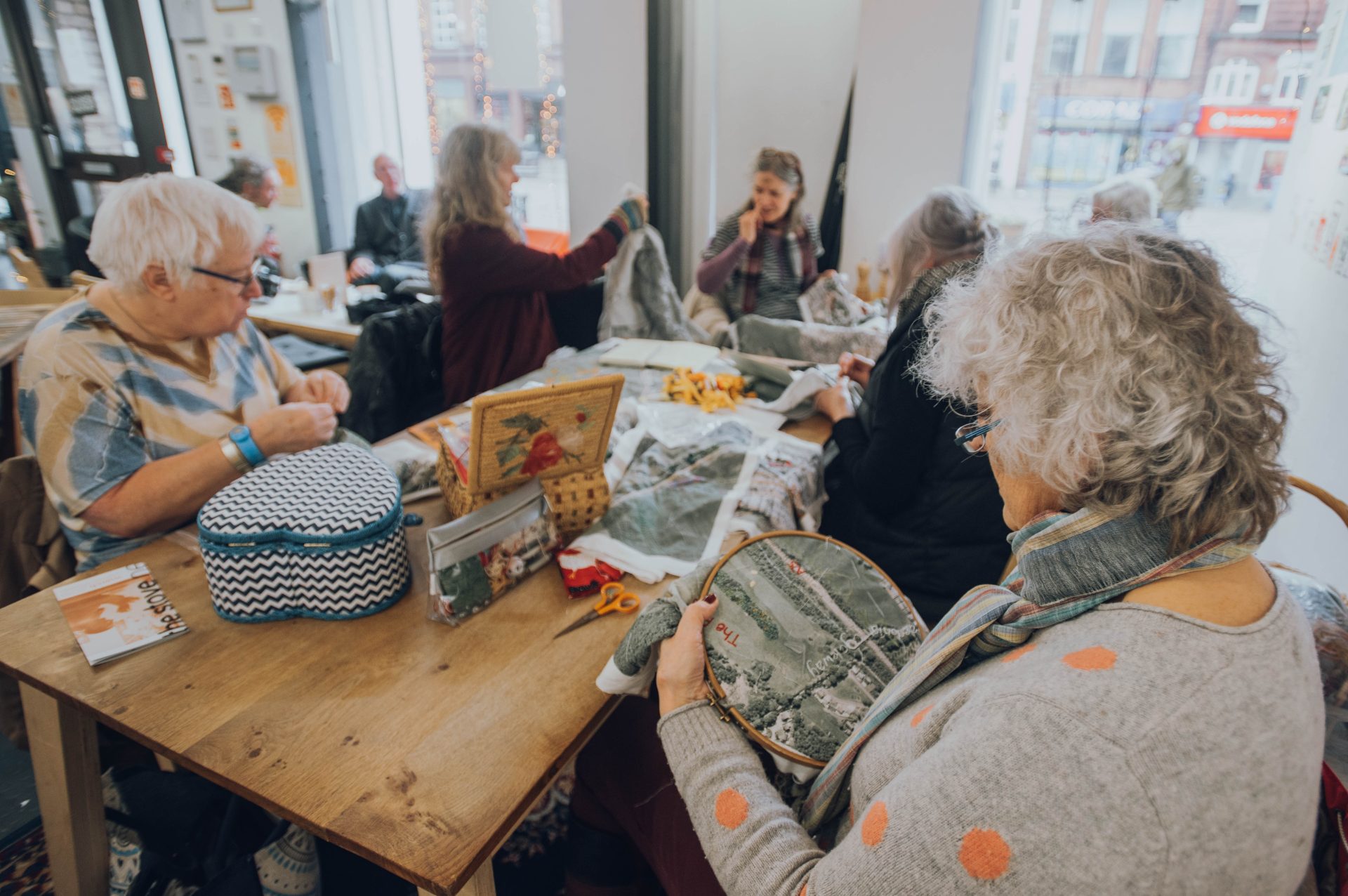
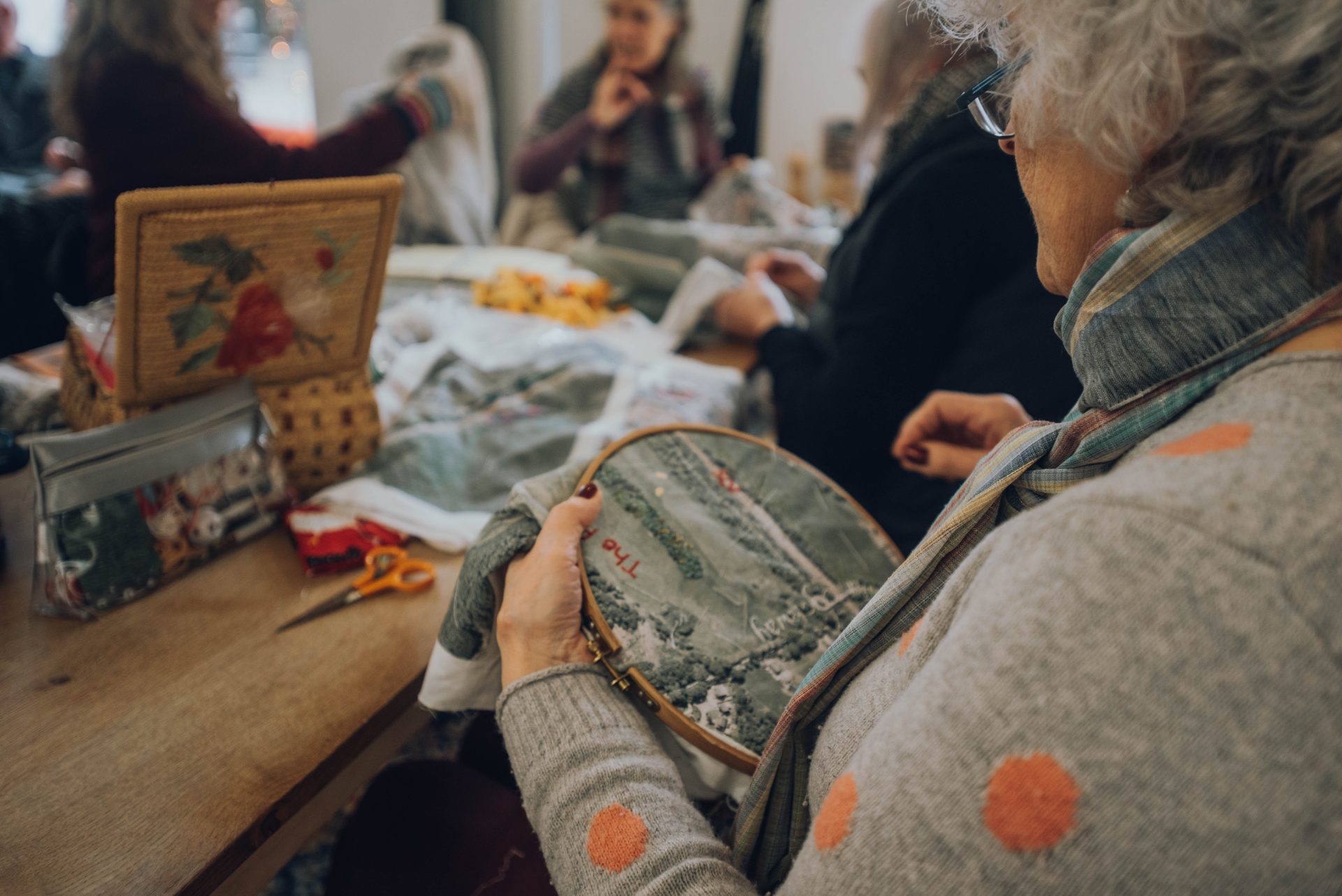
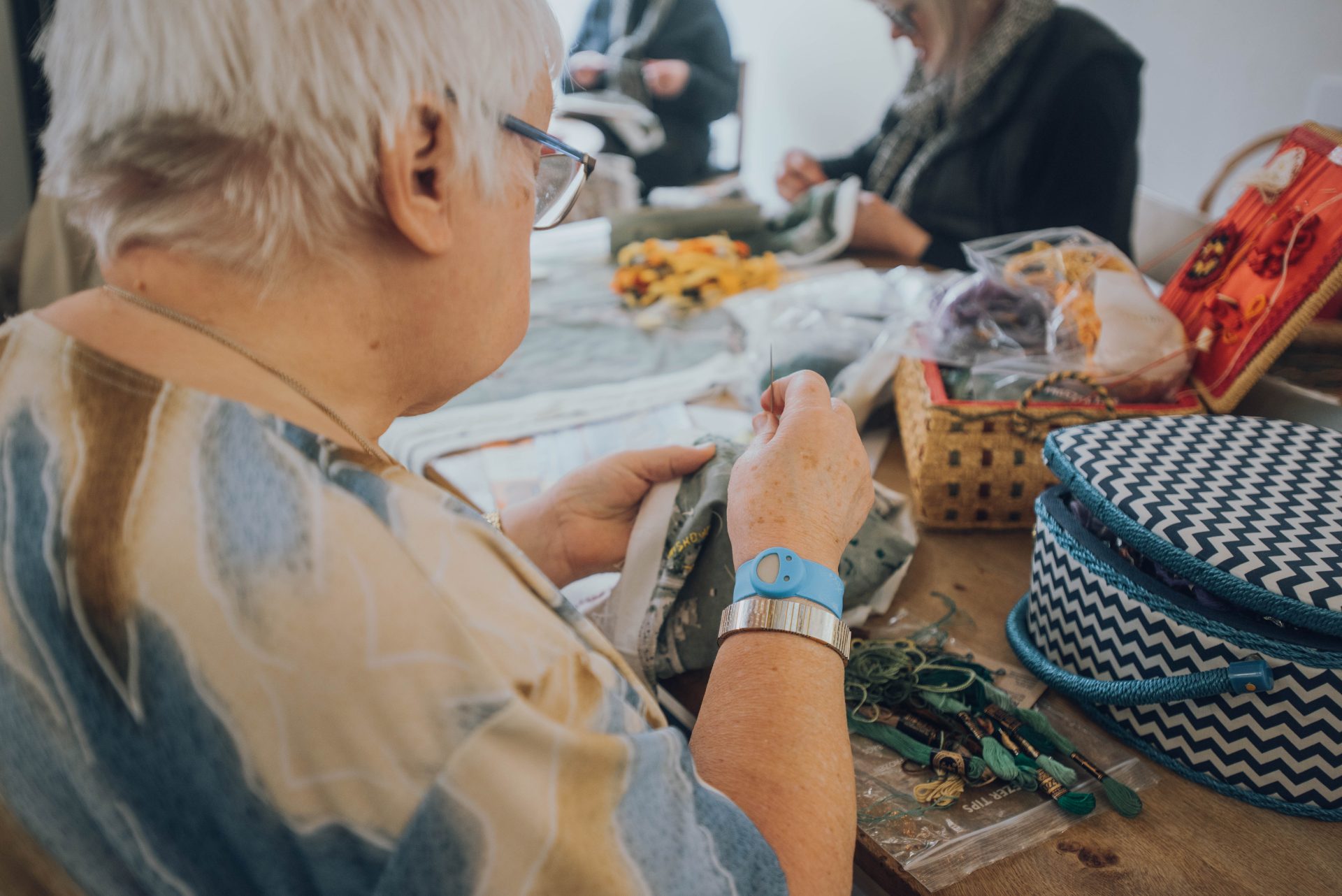
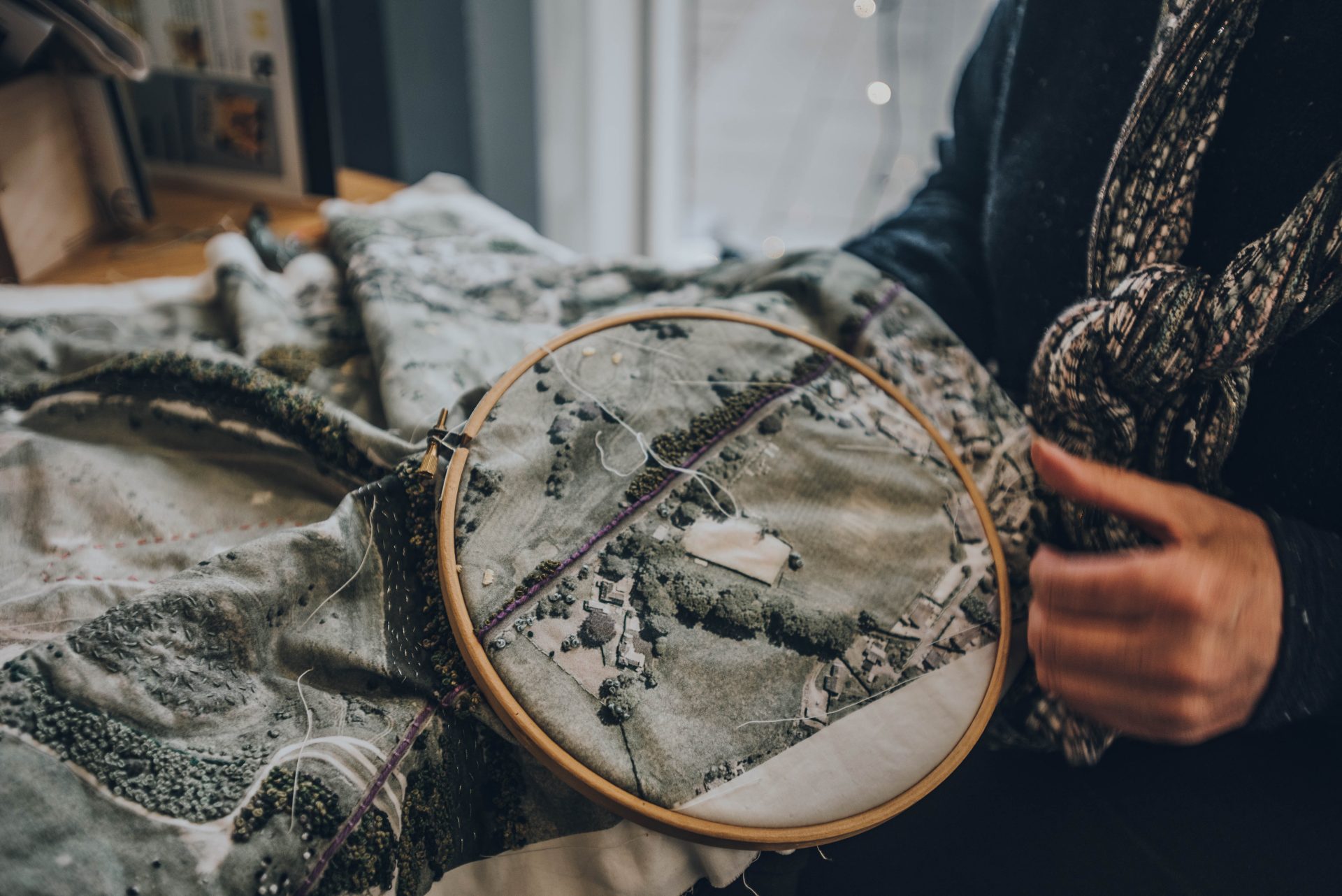
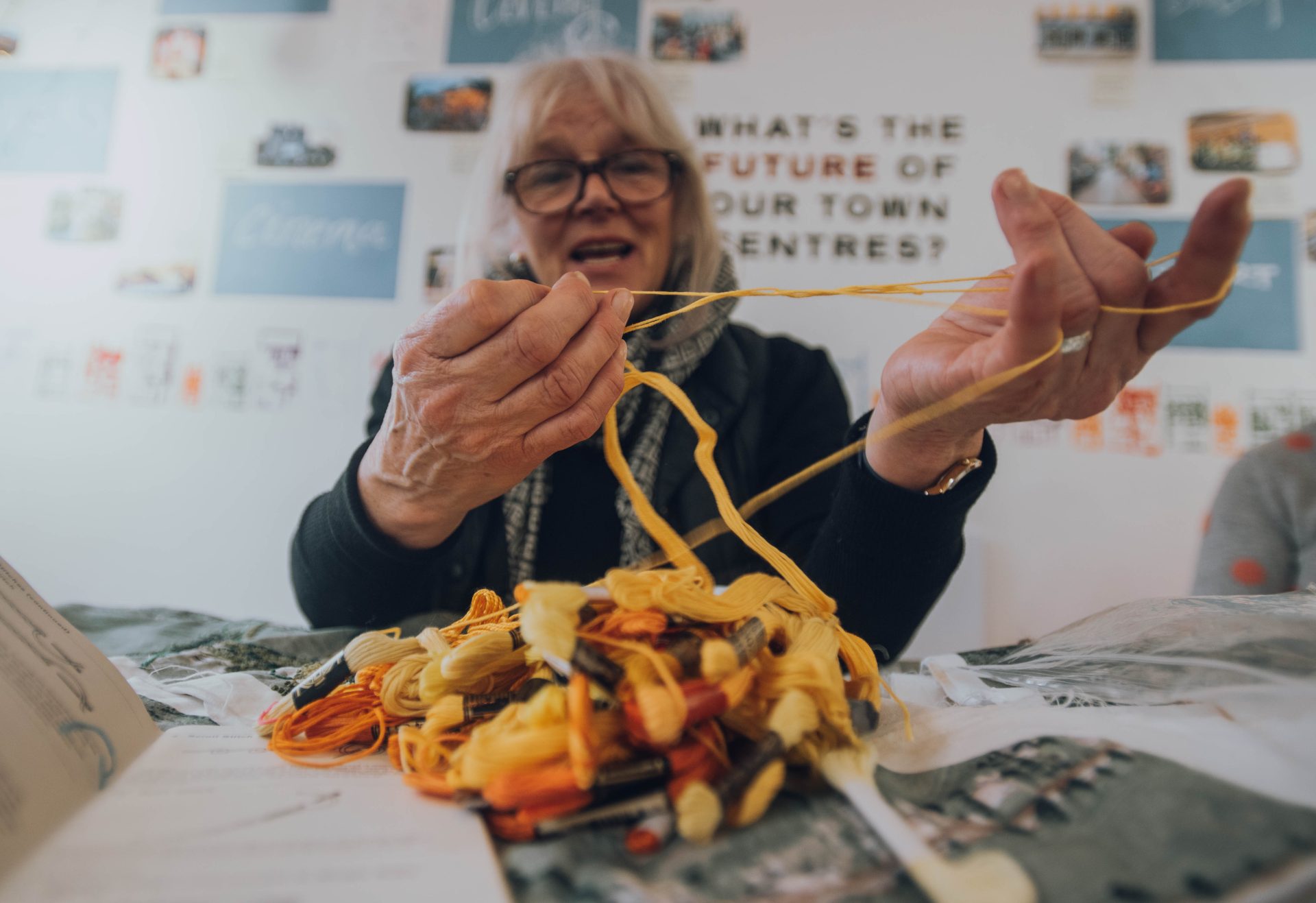
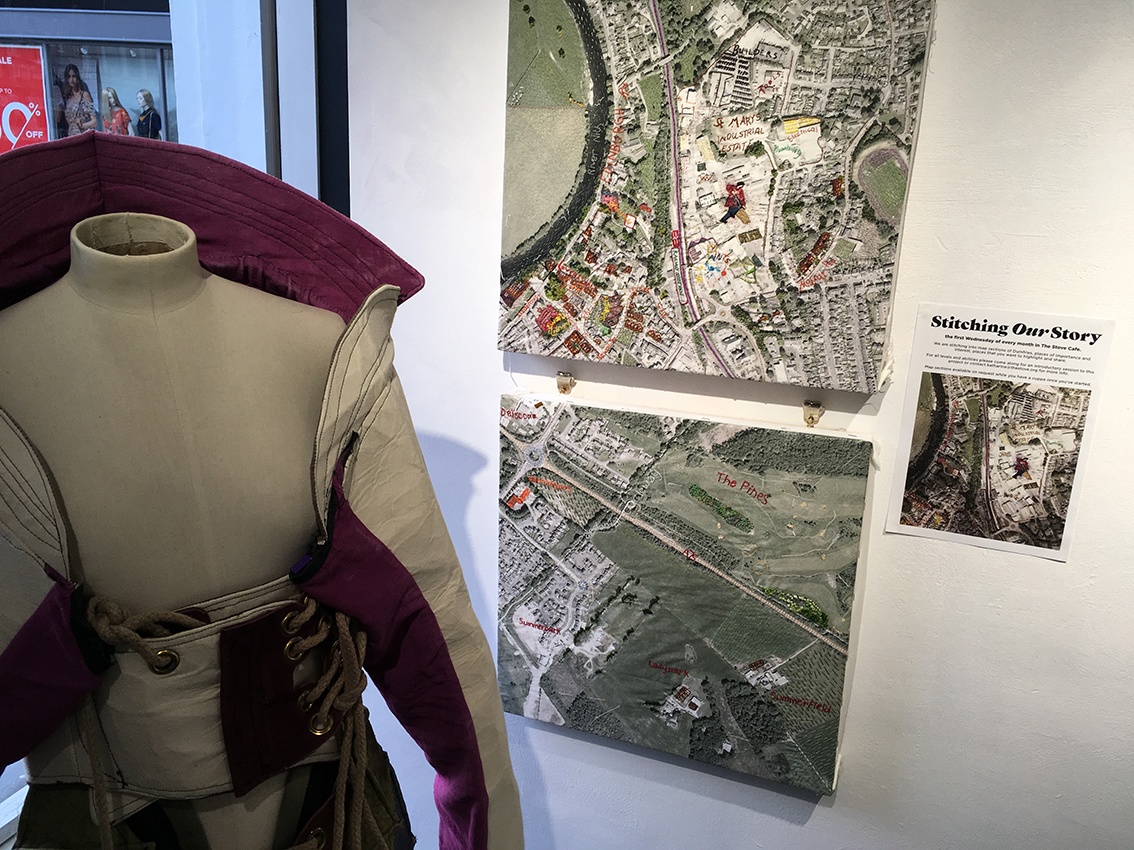
Stitching Our Story began in 2016 as part of The Stove’s project ‘Our Norwegian Story’. The project was a series of events and activities led by Curatorial Team Member, Katharine Wheeler, which celebrated Dumfries’ unique connections to Norway. Stitching Our Story was created as a two day event and led by artist Deirdre Nelson. The event then turned into a 4-week block and was supported by our very own local artist and Archival Historian, Alyne Jones. Stitching Our Story has continued every month since due to the immense support and enthusiasm from a small focused group of stitchers. They meet on the first Wednesday of every month in The Stove Cafe, and spend a few hours talking stitching significant places on to map squares and sharing their unique stories and experiences of the town.
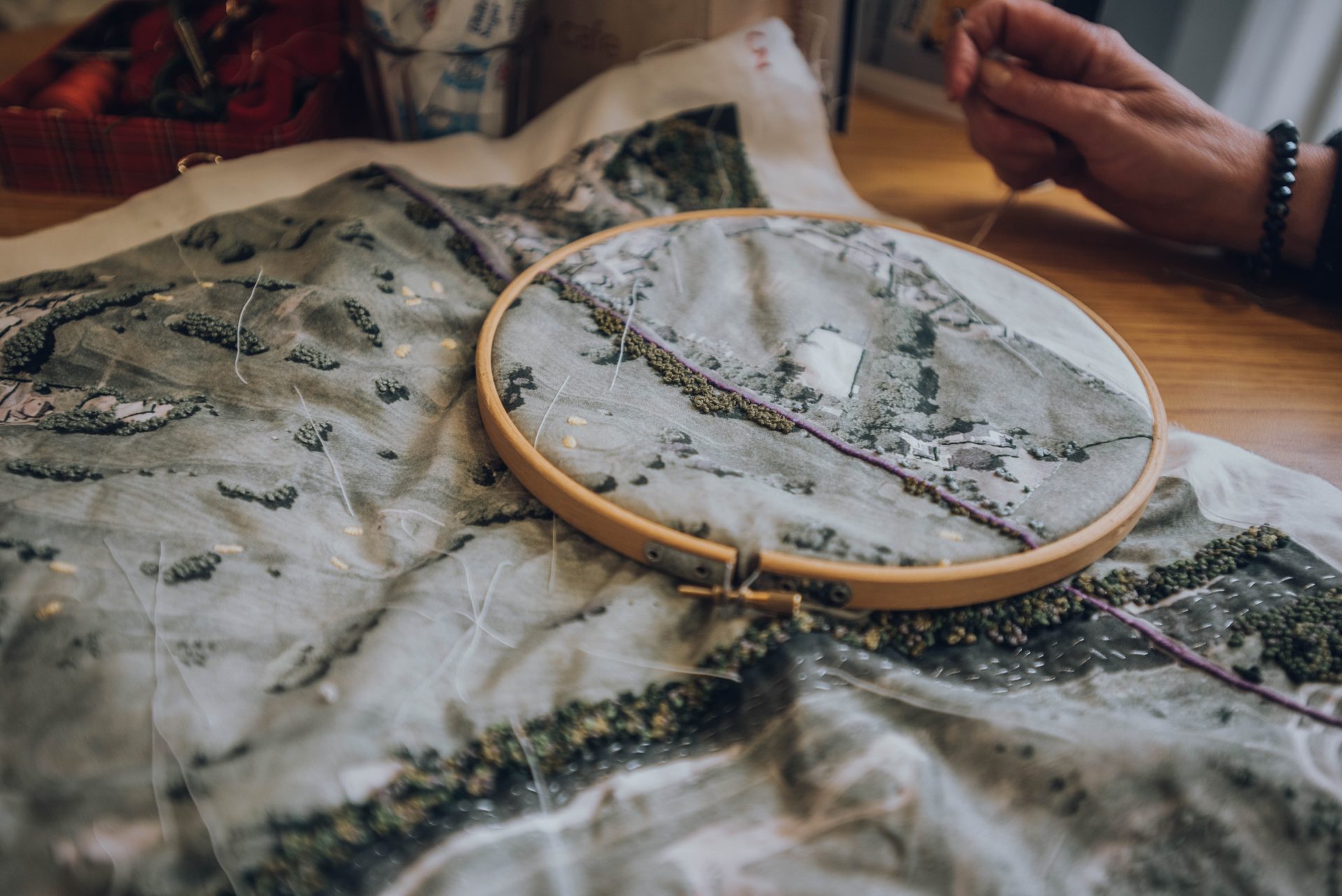
Initially, the group focused on places in Dumfries which played a significant role in the town’s Norwegian connection, including the iconic Rosefield Mills, which was used as the Headquarters for Norwegians in Exile during WWII. It was through their research of this particular building they were able to find out about other connections and places of significance and made time to sit together, talk about the stories that connect these places, share memories both old and new, the visions they had for these places and the importance they place on them stitch by stitch.
Over two years, the Stitching group have 20 beautifully stitched squares; some more detailed and others more sparse, all varied, personal and lovingly handled. The group are now looking to where they would like to go next with the project and are aiming to bring it all together for the end of 2019 and find a way to allow the squares to feel complete without covering every area in the same way. They hope to leave room for parts that are untouched next to areas that are more detailed, and find a way to display this work at the end of the project.
Norway is still very much an important factor in the stitching sessions and the group have continued to celebrate this connection when ever the chance arises – including the recent unveiling of the Whale Bench in Dock Park, which is situated opposite Rosefield Mills. They also recently joined Oceanallover’s Orographic micro-festival at The Stove to exhibit some of their map squares.
Stitching Our Story continues on the first Wednesday of everything month from 3-5pm. It is open to all and they hope to welcome some new members over the year to help them continue to recognise important places in Dumfries.
by Katharine Wheeler, Stove Curatorial Team member since June 2015.
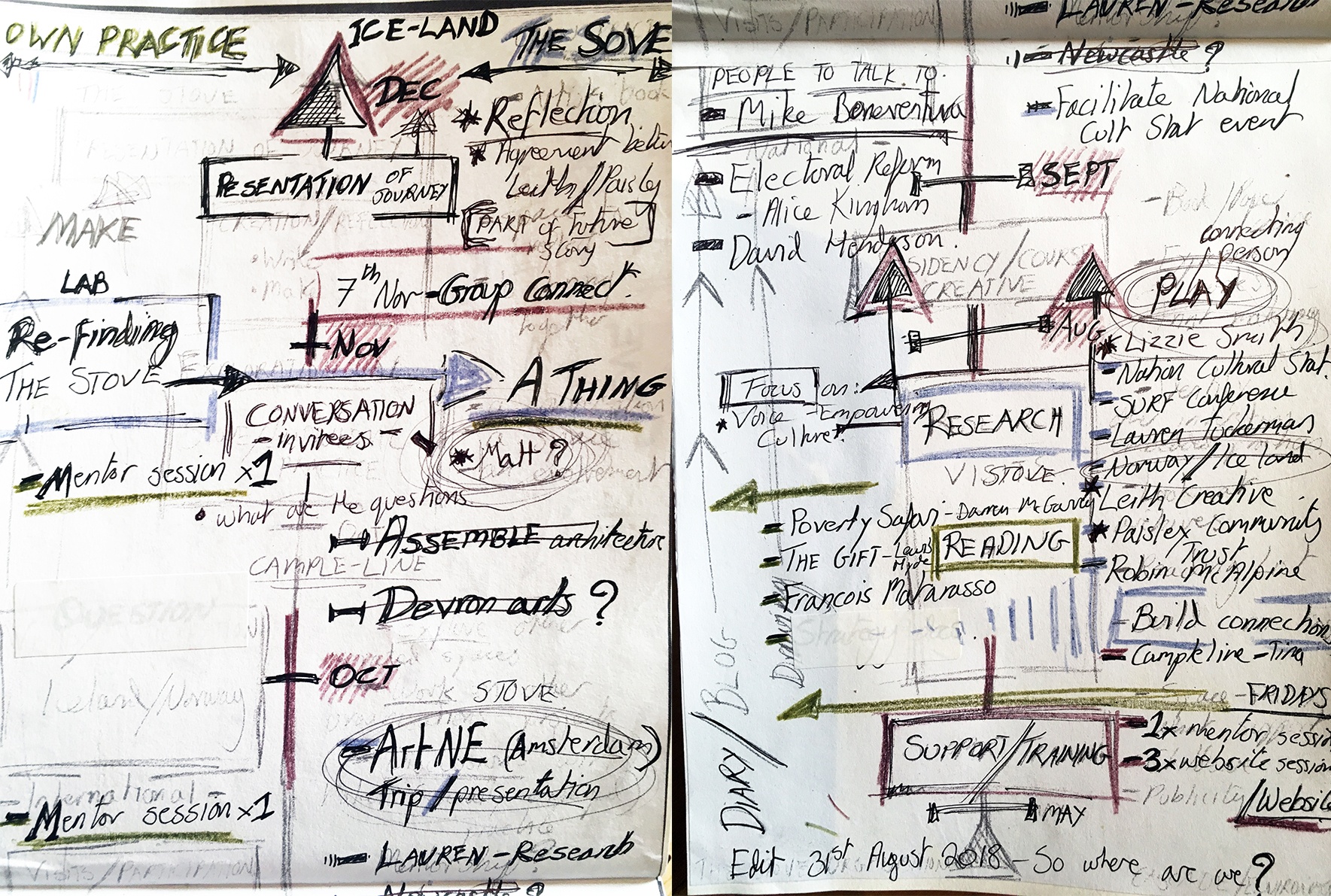
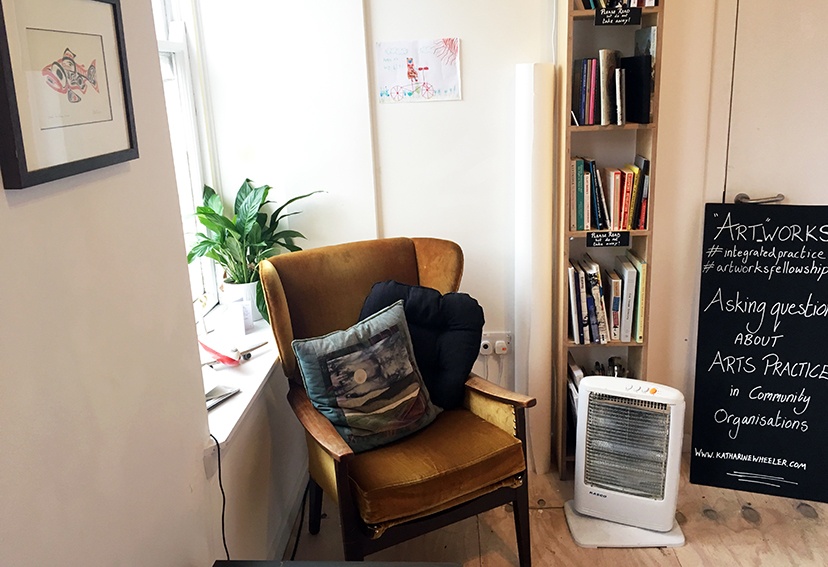
Katharine has been doing an Artworks Fellowship the past 10 months with The Stove and Artworks Alliance, a period of artist-led development and deep interrogation of practice presented through personnel and honest reflection.
Early last year an application crossed my desk, and that of The Stove’s, to submit a proposal as an artist/organisation pairing for a supported period of interrogation and artist-led CPD (continued professional development) in Participatory Practice.
This is a language learned through my deepening involvement with The Stove over the last 3.5 years but can still send me into a labyrinth of jargon…anyone who has attempted to casually slip “Participatory Practice” into lunch-time conversation knows my pain! Never-mind trying to communicate what that work can involve, what the “thing” is that I do within that. It is there, it’s benefits come through the the things we make with people, the conversations we have, the ideas we share and the projects that this creates where people, from all backgrounds and experiences, really are working together to creatively change the places they live, and it may seem cheesy but the lives it changes (including my own) in the process. It is this process, the ethos, the change I see it make in people and places that I am passionate about and makes me want to be able to communicate it, to understand what the “thing” is that makes it work, or not work in many cases, what are the sometimes very subtle differences between an activity that really is engaged, collaborative with others, and one that isn’t.
So how is this relevant to my Artworks Fellowship with The Stove. Well we were asked two things: to think about what we wanted to develop in ourselves as artists (blue sky, anything we wanted to achieve) and come up with a line of interrogation, a question, that our Artworks journey would relate to in our participatory work with the paired organisation. I found this incredibly difficult, to identify a question that I felt was relevant to this “thing” that I was passionate about. I wanted to reflect on this “thing” that makes our work at The Stove so profound, as an organisation and for me as an individual artist. But I kept getting lost in the language, trying to understand the structure. I needed to really understand this “thing” outside of the jargon and identify my part within it, my relationship to it, before I could reflect on it. What am “I” and what is “It” and is the separation important.
In this way we were maybe different from the other 4 pairings, as I had become completely entwined in the structure of The Stove and my practice had developed profoundly within that but I could not see what it had become exactly. As you might notice I do not tend to do anything by halves…continued professional development you say…some might just go away and do something but I needed to spend months pulling it all a part. I did end up just doing some things in the end – drawing, reading (or compulsively buying books and trying to find the time to read them) – turns out that is also important.
Artworks became a lens from which to observe myself, The Stove, my/our work, relationship, everything I did I began to look at with interest: Why do I/we do it that way, what is the usefulness of that, what is important? I set aside Fridays as Artworks days, points for reflection, often Fridays were over-run catching up on project enquiries, partnership development, talking with people. Sometimes I thought I would drown in what seemed self-indulgent reflection of my “practice” and what was important within that, sometimes I got lost in Stove world, lost myself entirely to the “Organisation” and Artworks gave me a life line back to look at what my individual needs were, and why they were both important for myself as well as The Stove.
I didn’t identify a single line of interrogation, I observed the process of finding the dilemmas in my work with The Stove, the tensions, our working process and how this is relevant to our work with other people, to the “thing” we do with our communities. My journey with The Stove became more about looking at all the pieces and how do they fit together, what piece am “I” in the organisational jigsaw, what pieces may be over-used, under-used, lost under the table.
In hugely simplified terms what came out of it for me is that Participatory Practice (one that involves others at its roots and not just its surface) is not about how it all fits together, or what the picture looks like at the end, it is about the “process” by which you choose to approach it, who is involved, the time you spend along the way. If this process was a walk it would be about who is there at the beginning, who joins at various points for a little while or for the whole jaunt, how our route changes direction and navigates the places we go through, how those places change us, and how we constantly choose and re-adjust our route. And whether we are aware this is still only one way and we can only ever see it from our individual perspective, how can we take that into account? In that sense it is truly about valuing the individual rather than coming up with one umbrella we can all fit under – spoiler…you will never find that umbrella!!! And why would you want to.
A creative practice is a deeply personnel thing…this journey became a deeply personal thing but it has also added another level of understanding to what I do with The Stove…even if I am still a long way from being able to fully communicate it.
If I were to communicate one thing from this learning then it would be if you really want to include other people in your work, to co-develop and collaborate, then you need to create a process together that you agree on and then surrender to a journey that leads you in directions you have not considered or planned on. And in order to do that you will need to understand each-others methods of communication.
We use cookies to improve your experience on our website, analyse traffic, and personalise content. By using our site, you consent to the use of cookies. Please read our privacy policy for more information.
Cookie Preferences
Manage your cookie preferences below:
Essential cookies enable basic functions and are necessary for the proper function of the website.
Name
Description
Duration
Cookie Preferences
This cookie is used to store the user's cookie consent preferences.
30 days
Statistics cookies collect information anonymously. This information helps us understand how visitors use our website.
Google Analytics is a powerful tool that tracks and analyzes website traffic for informed marketing decisions.
Contains information related to marketing campaigns of the user. These are shared with Google AdWords / Google Ads when the Google Ads and Google Analytics accounts are linked together.
90 days
__utmx
Used to determine whether a user is included in an A / B or Multivariate test.
18 months
_gali
Used by Google Analytics to determine which links on a page are being clicked
30 seconds
_ga_
ID used to identify users
2 years
__utma
Used to distinguish users.
Persistent
__utmb
Used to determine new sessions/visits.
30 minutes
__utmc
Used to determine if the user is in a new session/visit.
Session
__utmt
Used to throttle request rate.
10 minutes
__utmv
Used to store visitor-level custom variable data.
2 years
__utmz
Stores the traffic source or campaign that explains how the user reached your site.
6 months
_ga
Used to distinguish users.
2 years
_gat
Used to throttle request rate.
1 minute
_gid
Used to distinguish users.
24 hours
Clarity is a web analytics service that tracks and reports website traffic.