Support Us
Categories
Musings News Project Updates

homegrown – an introduction

With the out-break of COVID-19, we face a shared reality that will live on in the minds of this and further generations in pictures, stories, songs and memories. We are faced with questions we never foresaw answering.

In this time of social distancing, The Stove’s field of operation for community, creativity, care and gathering within spaces both shared and public is now radically altered, without objection. Isolation, distance and confinement are the new normal.

The priorities have shifted. The Stove has always functioned in collaboration; collaboration with communities, with artists, with other arts and community organisations, with policy-makers and as a team. In addressing this new normal we propose four values that will frame our work:

Insight
Perseverance
Open-heartedness
& Solidarity

Over the coming weeks, we invite you to explore with us these values through a series of creative challenges, conversation, commissions and activities that can be done in isolation and through connecting with one another via the internet and in so doing, build and maintain resilience in the present, as well as build hope and strategies of change for the future.

We choose to acknowledge and ask the right questions, host the conversations and create the new spaces where these can happen, aside from the café, pub, High Street or studio.
As humanity has always done, we will attempt to record and archive these projects, and together with our community, inspire a new folklore so that we might retain and remember this time, however it may be, for the posterity of generations’ hereafter.

Homegrown is exactly what the Stove is all about, and what it continues to be. Responsive, locally initiated, developed and owned.

As always, we are open to every idea that comes through our inbox. So please do get in touch if you would like to contribute, in any form, place or style you would like.

Categories
Musings News

Don’t Forget the Self-Employed!

At The Stove we recognise the position and the responsibility we have within the region’s cultural, creative and community sectors. Of our 600+ members, we estimate that as many as half will be self-employed or freelancers.

With the national shutdown of the economy for COVID-19 virtually all freelancers and self-employed people have had their incomes wiped out overnight as events and regular contracts have been cancelled – people are literally facing personal bankruptcy overnight. This in contrast to people employed on PAYE who will now be supported with 80% of their wages through the Government’s national bailout package.

First off, we have written to the region’s MSPs and MPs asking them to advocate for the Scottish and UK Governments to take urgent action to support the self-employed sector.

In Dumfries and Galloway 17.2% of people in employment are self-employed, against a national average of 10.8% (source: Skills Development Scotland – Regional Skills (D&G) Assessment 2016).The vast majority of self-employed people submit a tax return every year and it would be straightforward measure to extend the 80% package to the self-employed on the basis of, say, an aggregate of their last 3 tax returns to assess average earnings. Such a measure has been adopted by Sweden and different European countries are also supporting their self-employed economies.

Currently the self-employed in the UK only have access to statutory Sick Benefit (£94 per week – if they are ill) and have been given a 6 month ‘holiday’ from advance tax payments.

The cultural, creative and community sectors have been one of the regions success stories of recent years, being one of the very few local industries that is attracting people to relocate or move back to the region. Figures show that there are now more people employed in the Creative Industries in D&G than there are in Agriculture (source: SoSEP) – this is a sector with high value jobs of exactly the sort we are trying to attract to the region through initiatives like South of Scotland Enterprise and Borderlands. It is imperative that we, as a country, act immediately to protect this vital sector within our local economy and support the people and families that rely on self-employment/freelance work.

At The Stove we know how important we are to the ecosystem of the cultural, creative and community sectors – organisations like us can function as a conduit between individual freelancers/small teams and national/international partnerships and funding – we can draw budgets into the region that are spread amongst the local sector. Typically, The Stove puts £200,000 per annum into the freelance economy of D+G. Our first instinct at the start of the health emergency was to maintain our support for the wider community around us – both the folk we work with as participants in our work, but also the wider creative community. We have been able to honour all the existing commitments we have to freelancers across all our projects (and also keep on our café staff).

Looking into the future we know only too well that the freelance community normally expect regular work through organisations like us at festivals and events. We are working hard at the moment to find ways that we can continue to deliver on projects and offer new contracts to freelancers. We are a creative community and opportunities to do useful and creative work for the local community will present themselves!

Currently we are working on ideas to bring the local cultural, creative and community sectors together at this very challenging time – in the hope that we can be a useful collective resource and also forge some self-help initiatives that will help this struggling within our own sector. If you have anything you would like to contribute then do get in touch.

Please stay tuned to the various Stove platforms for updates.

#Homegrown

Categories
Musings News

Solway to Svalbard: In Conversation with Stuart Macpherson

Coming up this Friday, 28th February as part of National Theatre Scotland’s Just Start Here festival in Dumfries will be the next development of Solway to Svalbard, an creative project led by composer and musician Stuart Macpherson, in collaboration with filmmaker Emma Dove and sound recordist Pete Smith.

Following a successful starter residency supported by NTS, and a recent trip to Svalbard on the trail of the barnacle geese – the project has continued to grow and develop, so we are so excited to find out more about how the work has been developing! Ahead of Friday, Stuart tells us more about the project:

How did it all begin?

Well… funnily enough it all started off with a commissioning opportunity through the Stove Network for one of their members to create a piece of work responding to the brief of Migrating Birds, to coincide with the opening of Kathy Hinde’s Luminous Birds installation that was coming to Dumfries.
At the time there was another Stove project exploring Dumfries’ ties to Norway and I thought I’d explore the avian link between Norway and Scotland.  I knew the barnacle geese that came to the Solway each year had something to do with Norway but didn’t realise that was just their spring staging point and they in fact came from Svalbard. Pretty impressive… there’s also loads of really cool mythology surrounding the geese which is fascinating.
Anyway, the resulting piece that I created was “Flight” – a migratory soundscape incorporating field recordings and free triggered samples.  Pretty early on in the process of making that piece I started to think about where they stop on their journey and the idea of exploring those environments.  I really liked the idea of incorporating visuals and some proper field recordings.  Also, I guess I had grown a bit of a fondness for the geese through working on “Flight” and felt that I wasn’t quite finished with them yet!

Its important to me that I make work that has a relevance to where I am and with what is around me.

I also wanted to work on this project with other artists that have ties to the region, Emma and Pete were an obvious choice, I love both their work, they’re really good at what they do and in fact both had been involved in some level with “Flight” too.

What about geese particularly sparked your inspiration?

Initially the folklore surrounding the barnacle geese was the bit that got me hooked, the idea that folk actually thought they hatched from barnacles on bits of driftwood… totally brilliant!  But I guess very quickly there was an admiration that grew for them, it is amazing what they do – the distances they travel each year.  They evoke a lot and represent all sorts of different things to different folk, all the while they’re just being a cool wee goose flying between here and the high arctic trying to eat the best grass when it grows and raise a family… I like that.

I believe you’ve visited Svalbard twice now, along with your key collaborator Emma Dove to record the geese as well as the natural surroundings. How has this affected the work?

I’ve actually only visited Svalbard once… and that was with key collaborators Emma Dove and Pete Smith.  We also have spent a fair amount of time at Caerlaverock filming and recording the geese and last April/May I spent a month on a wee island in Northern Norway (just in the arctic circle) where the geese spring stage on their way north.
So yeah, a lot of this project has been about filming and recording the environments that the geese pass but also about talking to people and what place means to them.  It was particularly important for the three of us to make it to Svalbard as that has really put things into context, to be able to explore the furthest extents of the flyway and get a perspective from both ends.

Its been an interesting one as a project that started off with the geese has ended up with lots of chat about people, its been a very organic process.  We’ve learnt a lot from each other.

How’s it been working with the National Theatre of Scotland?

I’ve been really enjoying working with NTS on the project, they’ve been incredibly supportive, not just with the narrative development of the work but also with the technical/practical side of things and being able to help hold the production elements of the project… something that I personally find pretty overwhelming.
They’ve got a huge amount of experience and all this resource that we have been able to access, so its been a really great process for us.
We’ve been working closely with director/playwright Davie Anderson and he feels very much like part of the Solway to Svalbard team now, having that outside lens to look at a project has been a really helpful.  He’s been encouraging and supporting us to explore different ways of presenting the work… its definitely been a change from what we are used to within our own practices and at times a little daunting but actually it has been really refreshing and enjoyable and genuinely feel the work will be the better for it.
Its also been great to work up at Rockvilla, to have a bit of separation to properly focus on a project has been super helpful, not to mention that it’s a really cool space to work in.

What should we expect?

That’s a hard one as we’re still working that one out ourselves… I guess showing the work through Just Start Here allows us to properly test for the first time all the different elements of the work, that up until now we have been unable to.  As well as figuring out how to actually make this work we’ve been focusing a lot on the narrative of the project, and feel we’ve got to a really strong place with that.  There’s obviously elements that will be missing for this showing, but we’re hoping that folk will be able to get a good idea of what the finished work might be like.
For lots of different reasons this is a pretty complicated show, we’re combining multiple screens with surround sound design and live musicians as well as dialogue and other more theatrical elements.  So on that side of things it looks and sounds pretty cool… not the kind of thing you see very often… especially in a social club.

What are the future plans for the work?

What is great about Just Start Here is that it is an opportunity to test ideas and to see how folk respond to those ideas.  There will no doubt be things that need tweaked afterwards as well as other elements that we simply have not had time to get to yet.  We have a rough diamond here.

As I’ve said previously I’m really enjoying working with NTS on the project, so would like to continue that journey and see where we end up.  But the idea would be to create a touring work… it makes perfect sense to me that a work based on migration should travel itself.

Solway to Svalbard will be a part of Friday evenings Just Start Here festival, in Dumfries on Friday 28th February. Limited tickets are still available for the evening are £5 per person, and available online here
Categories
Musings

Love Letters to Europe

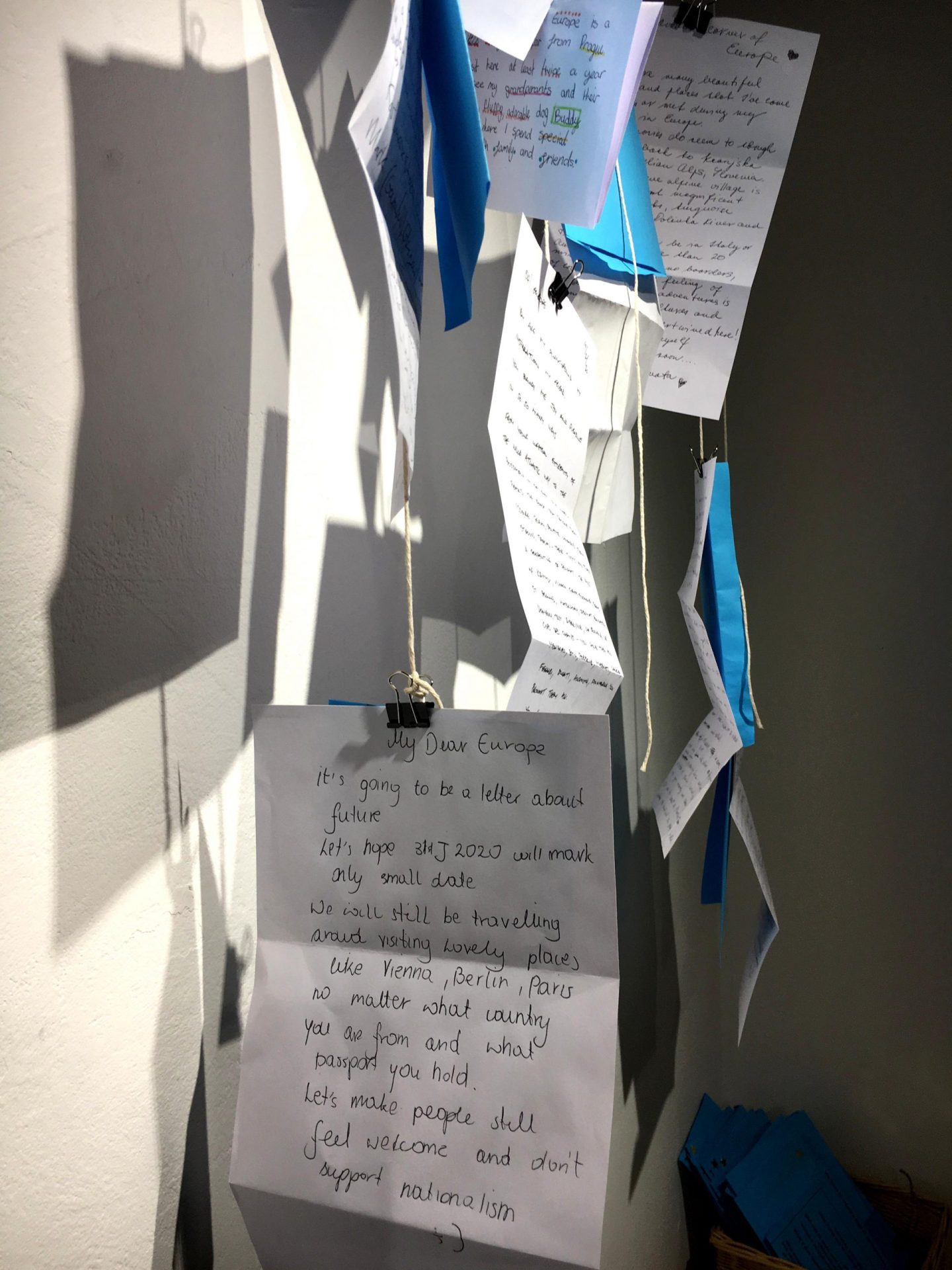
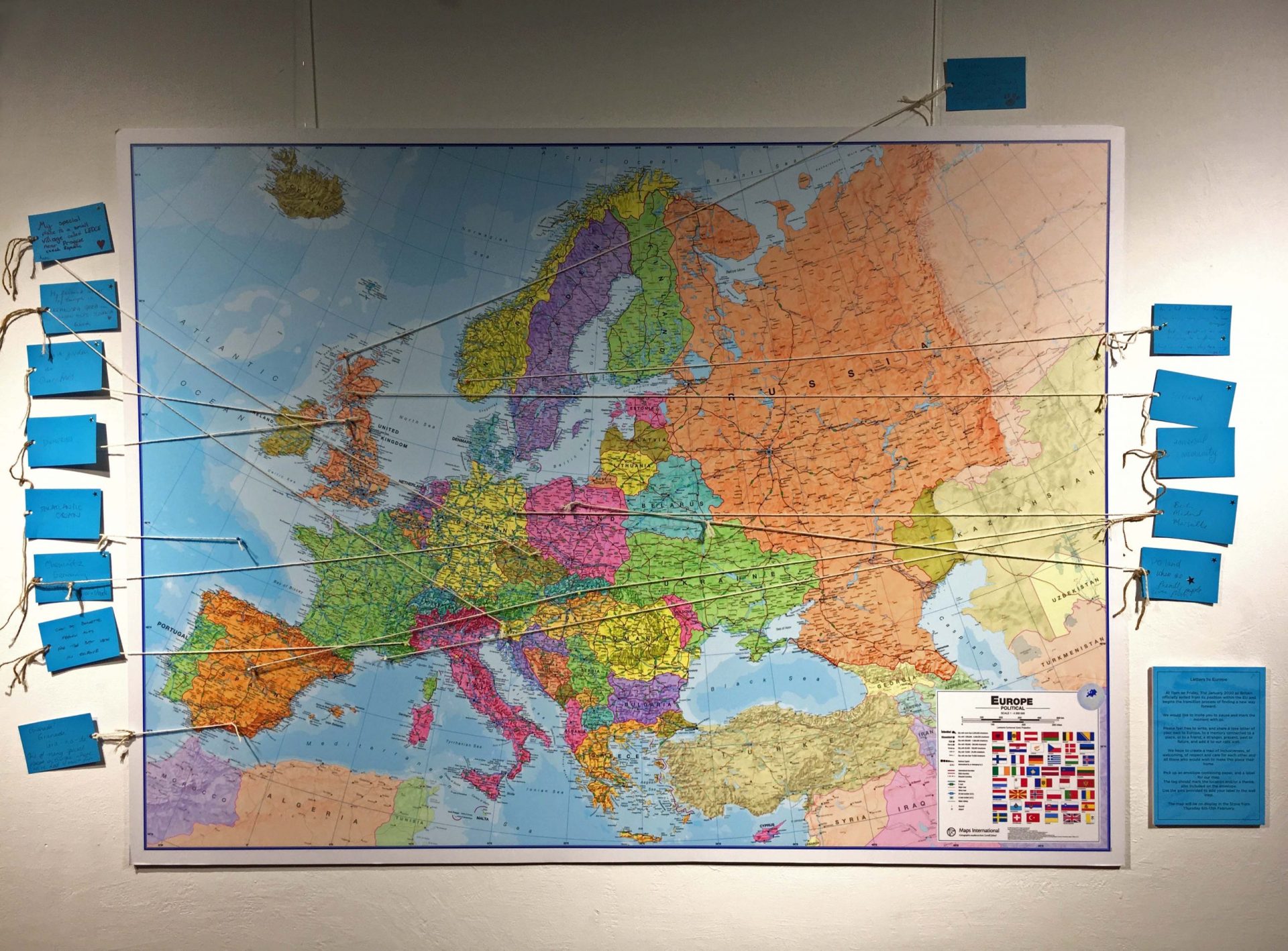
At 11pm on Friday, 31st January 2020 as Britain officially exited from its position within the EU and began the transition process of finding a new way forward – the Stove’s Conversing Building project invited attendees of the Big Burns Supper’s Europa Picnic hosted by the wonderful Hope London, and visitors to the Stove cafe to pause and mark the moment with us.

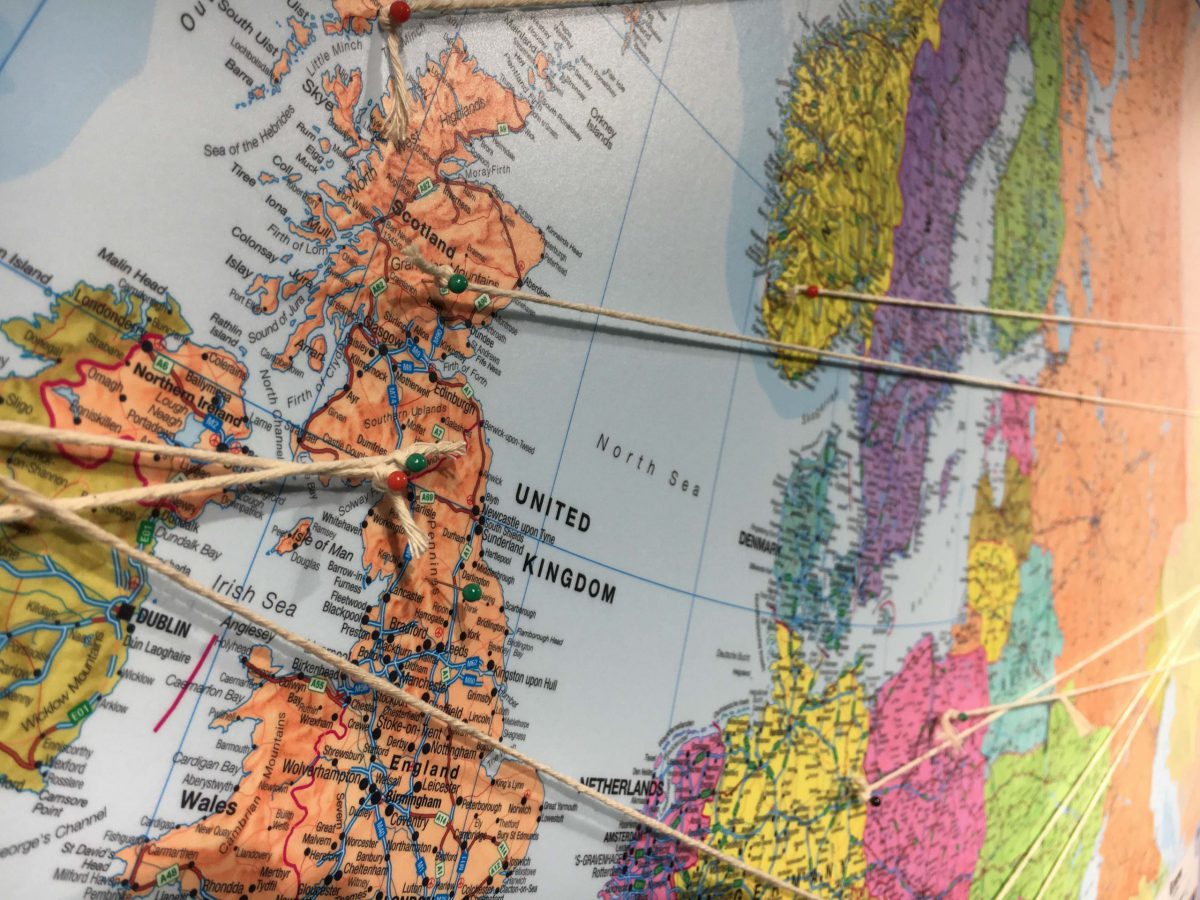
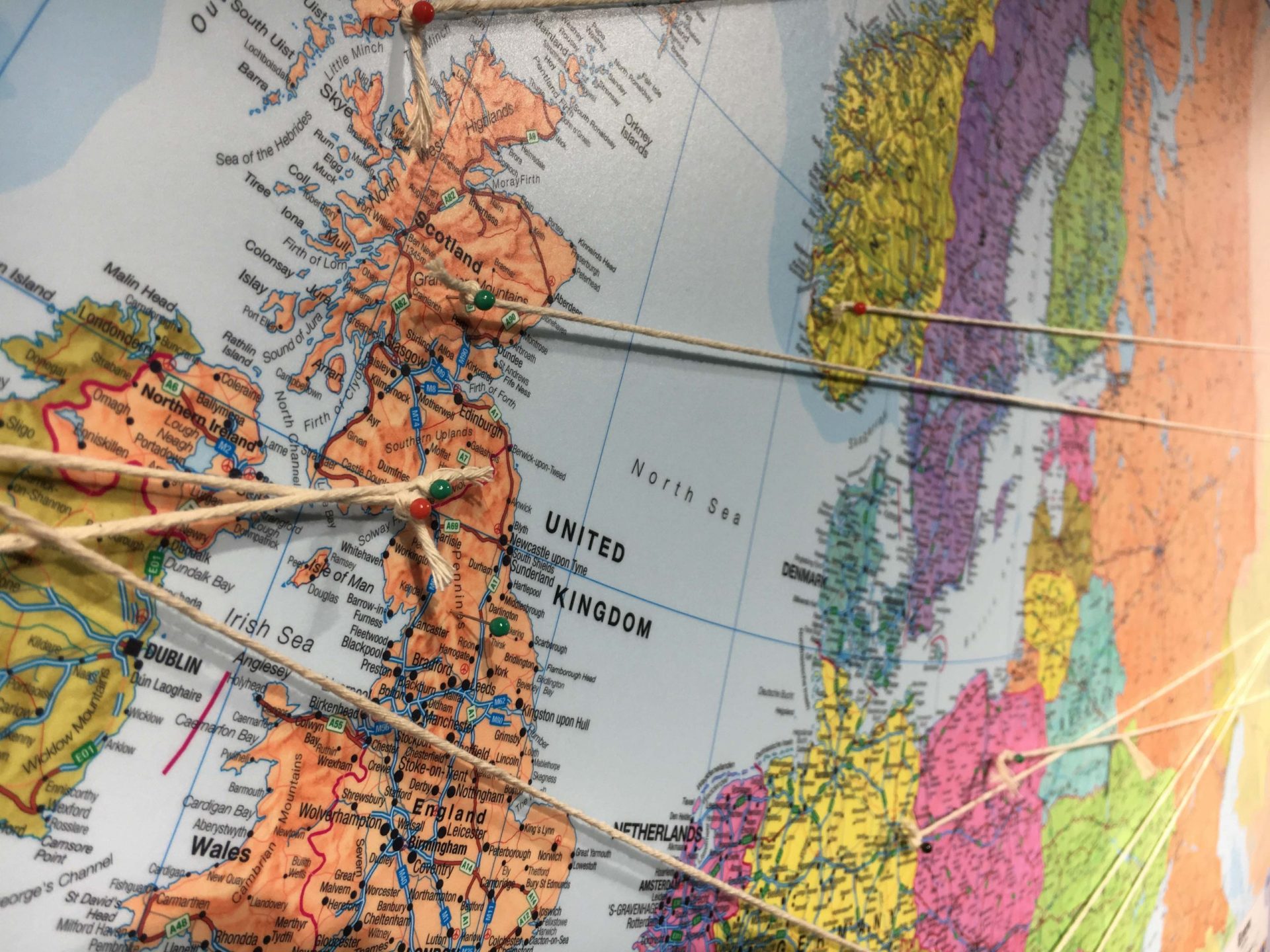
Audiences were invited to write and share a love letter of their own to Europe: to a memory connected to a place, or to a friend, a stranger, present, past or future, and add it to a large map in our cafe, creating a map of inclusiveness, of welcoming, of respect and care for each other and all those who would wish to make this place their home.

“It’s going to be a letter about the future.”

The map was on display in the Stove from Thursday 6th-13th February. Thank you to everyone who took the time to contribute a letter to the collection.

Categories
Musings Opportunities

Behavin trials a new kind of experiment for Just Start Here 2020

Behavin?
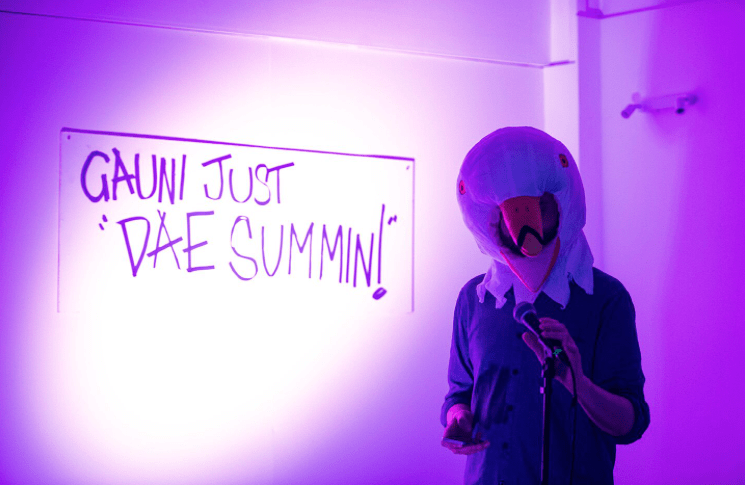
In July of 2019, a micro-festival of performance art, live music and spontaneous creative action took place across the High Street of Dumfries. Set-up to agitate, disrupt, celebrate, poke fun and play, Behavin’ invited performance artists, the local community, musicians and local artists to contribute to a new kind of scene for Dumfries. 2019 featured the world’s smallest music venue, drag performance, Kung Fu master-classes, a band of seagulls, plays in our elevator theatre and a madcap day of extraordinary work from artists throughout Scotland.
And since then, it’s all gone a little bit quiet. The streets have resumed their normal operation of passers-by, people watchers, the school run, lunch- time meetings, chai latte soirees and bank appointments, all this alongside the looming avian threat of a hungry, sausage-roll-loving-seagull. Colloquially known as ‘Rats With Wings’ (also a good name for a death metal band).
Until now.
Behavin’ have been invited to take part in Just Start Here 2020 with the National Theatre of Scotland. And this year, we’re doing just that, starting right at the beginning. Our troupe (if you can call it that) is banding together once again to play, chat, explore ideas and perform, in the very heart of the High Street.
Welcome to Elsewhere, bring a chair.
We don’t know what it will be. We’re sure we’ll be sitting on a chair. We’re sure it might rain. We’re certain it’s in Fountain Square. Something is starting.
With Just Start Here, we’re in the most unique position as local artists to explore, create, start, challenge and expand our creative horizons. And we invite you, our community, our network to start something too. Join us on the 28th and 29th of February and explore how we can start a new kind of creative ambition for Dumfries.
___
Just Start Here is a two day festival of bold new work, taking over shop-fronts, working men’s clubs and the streets of Dumfries this February. Organised by National Theatre of Scotland, Just Start Here will take place on 28th and 29th of February 2020. Tickets are available now, for details on how to get yours along with the full line please visit the NTS website:
Tickets and General Information
Festival Line Up

Artists Kerry Morrisson and Helmut Lemke perform a durational piece as part of Behavin 2019.
Categories
Musings Project Updates

Glaciers in the Stove Cafe

FORTUNA | FOGGYDOG | CHILD’S | SOCKS | DENNISTOUN | ANT HILL | BYRD | LEONARDO | DECEPTION | CREVASSE | PINE ISLAND | POLAR TIMES | SHAMBLES | SHARK FIN | UTOPIA | ZEPHYR | ROSE VALLEY | MYKLEBUSTBREEN | KUTIAH LUNGMA | KING OSCAR | SUN | SALMON | SILVERTHRONE | RADIANT | CHAOS | CROWFOOT | FOX | GREY | HELHEIM

There are 178,000* glaciers currently around the world. How many of them can you name?

People name things for lots of reasons; to claim ownership, to map, to locate, to commemorate or congratulate, to know or mark a time, or a place or a landscape.

In the naming of things we gain familiarity. It is easier to image a glacier called Foggydog, than one without a name.

If we can’t name them, how will we miss them when they are gone?

At the moment, 10% of land area on Earth is covered with glacial ice, including glaicers, ice camps and ice sheets. Glacial ice store about 69% of the world’s fresh water, if all land ice melted, sea level would rise by approximately. 70 metres worldwide.

Glacial ice often appears blue when it becomes very dense. Years of compression gradually make the ice denser over time, forcing out the tine air pockets between crystals.

Since the early 20th Century, glaciers around the world have been retreating at unprecedented rates. Many are retreating so rapidly that they may vanish within a matter of decades. Glaciers are considered among the most sensitive indicators of climate change as they are so affected by long term climatic change such as precipitation, mean temperature and cloud cover.

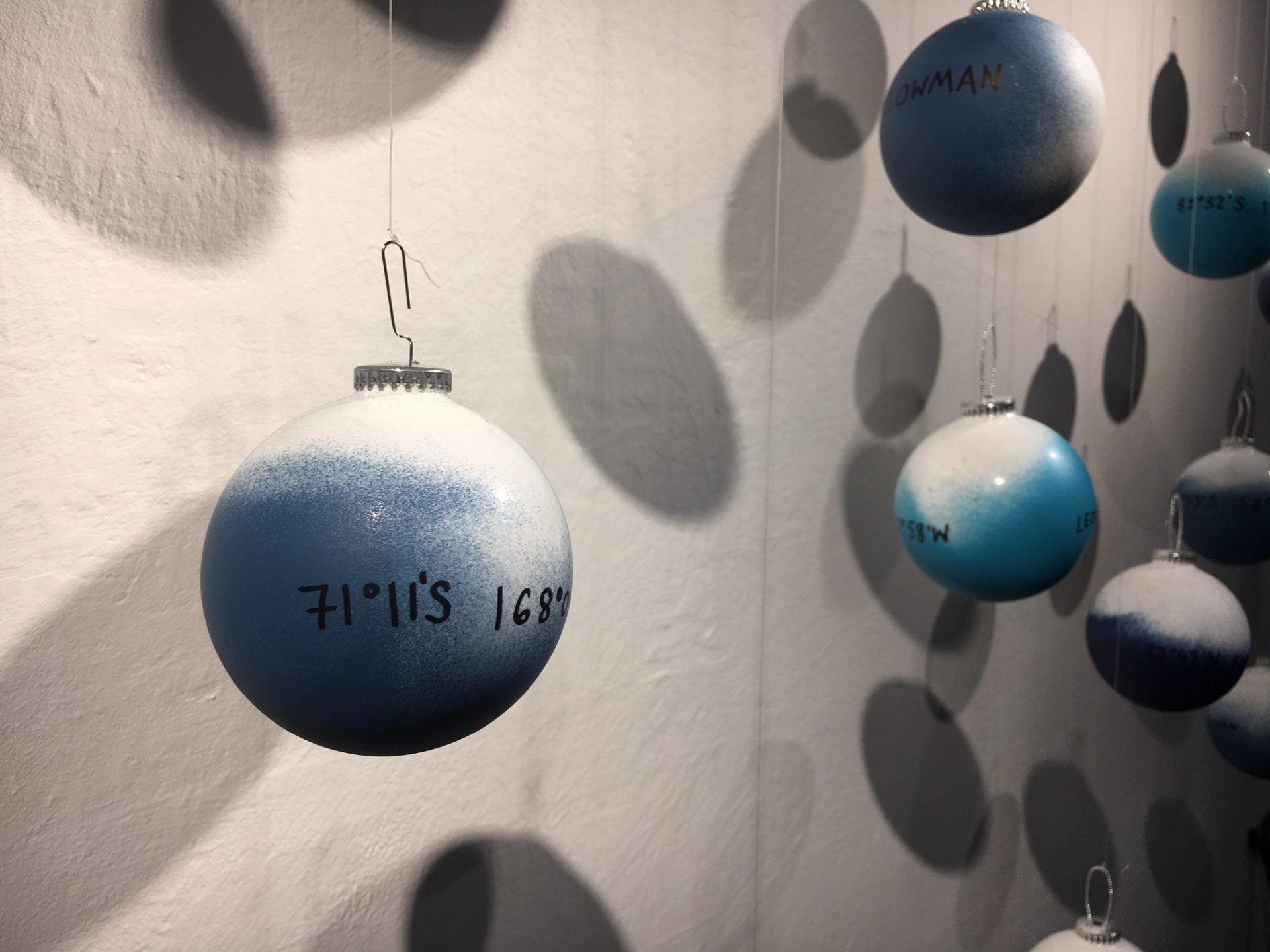
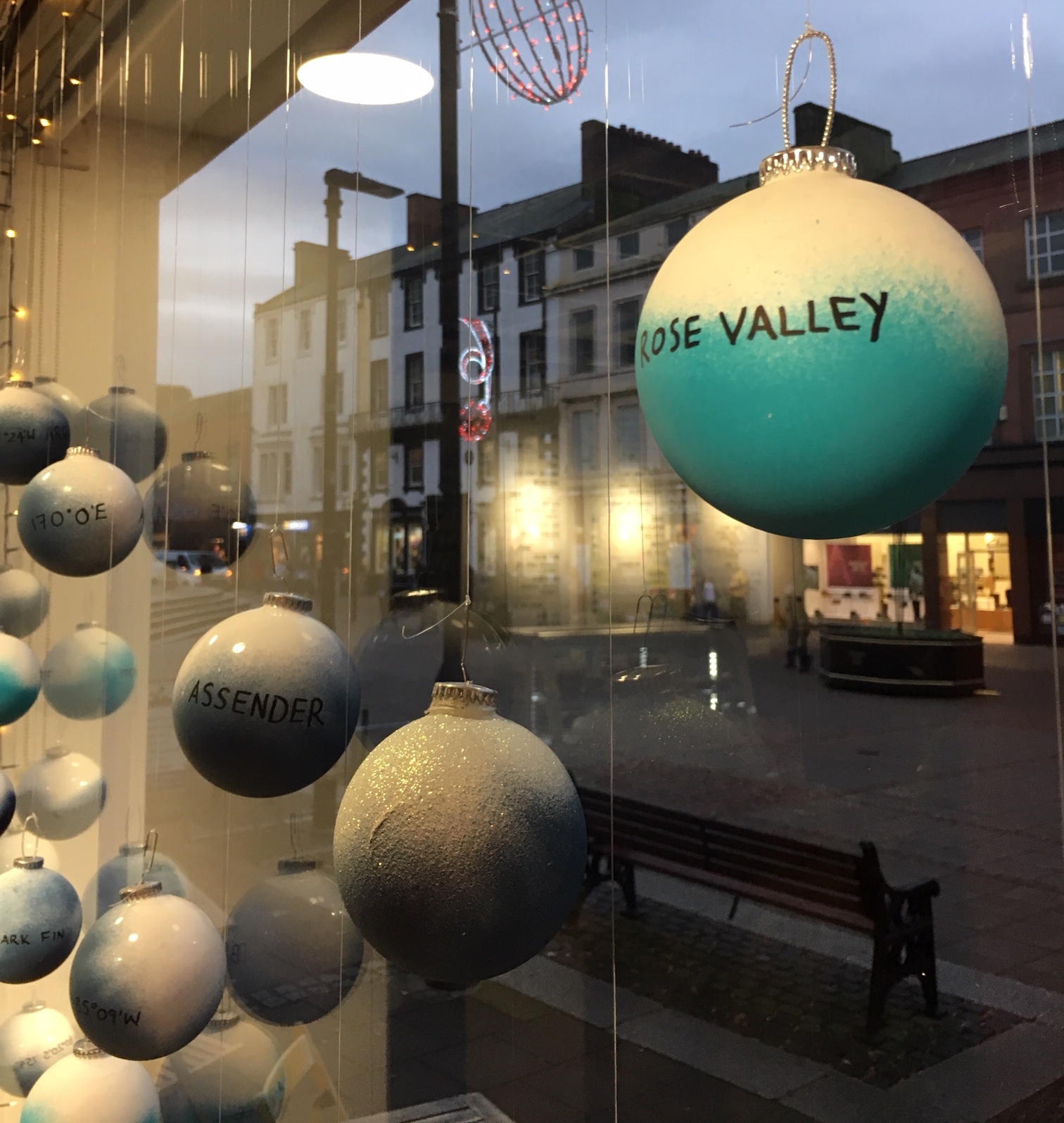
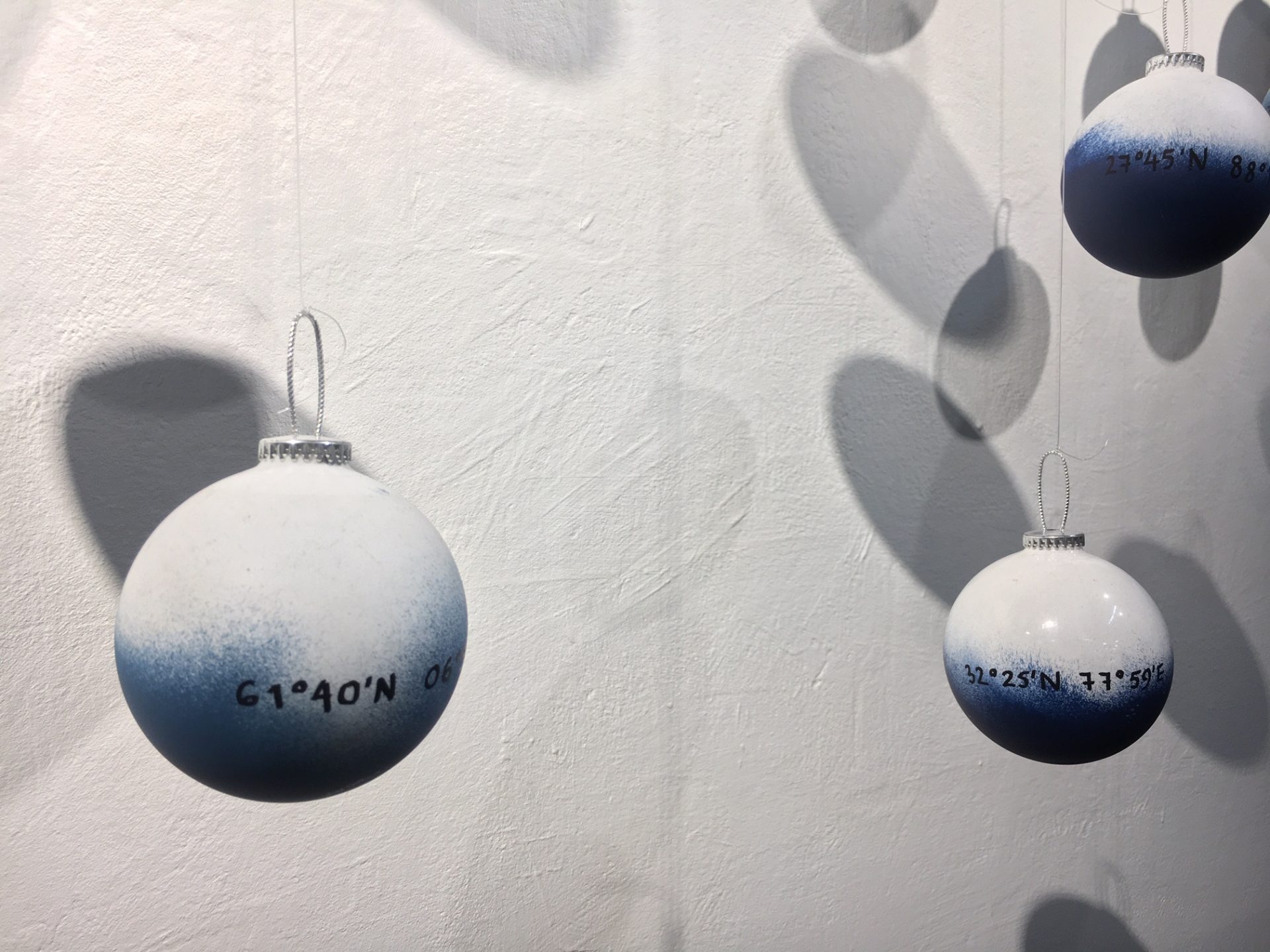
In the Stove cafe as part of our Christmas decorations, we have christened over 80 of our festive baubles ceremoniously after some of our favourite glacier names, alongside the co-ordinates so you can look them up yourself. Pop in for a closer look.