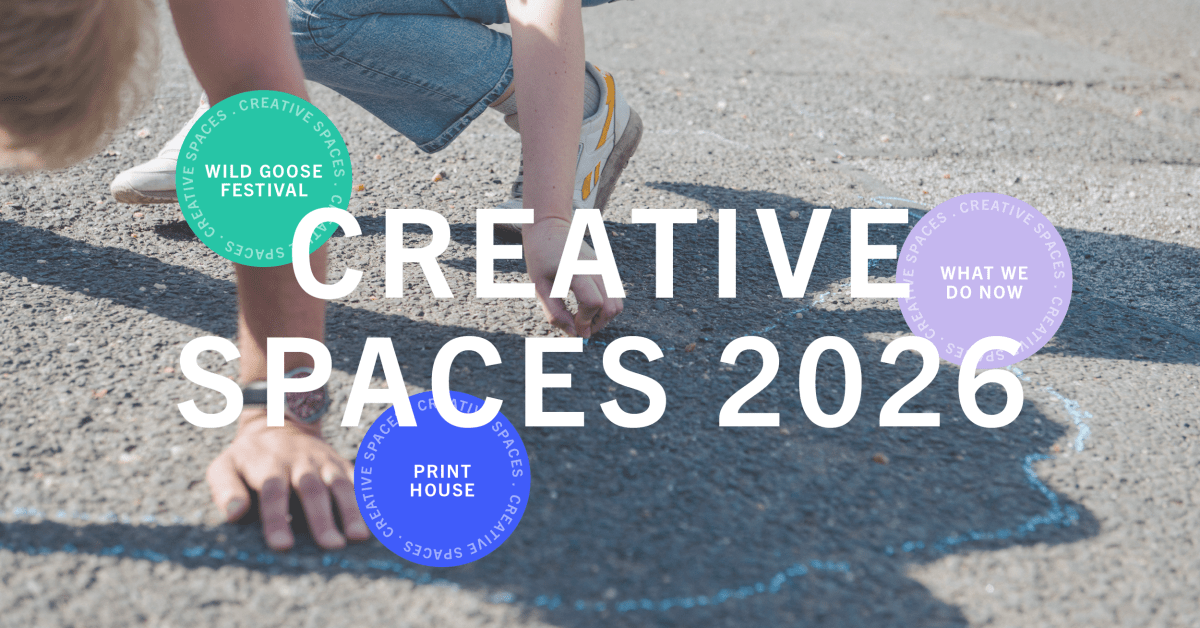
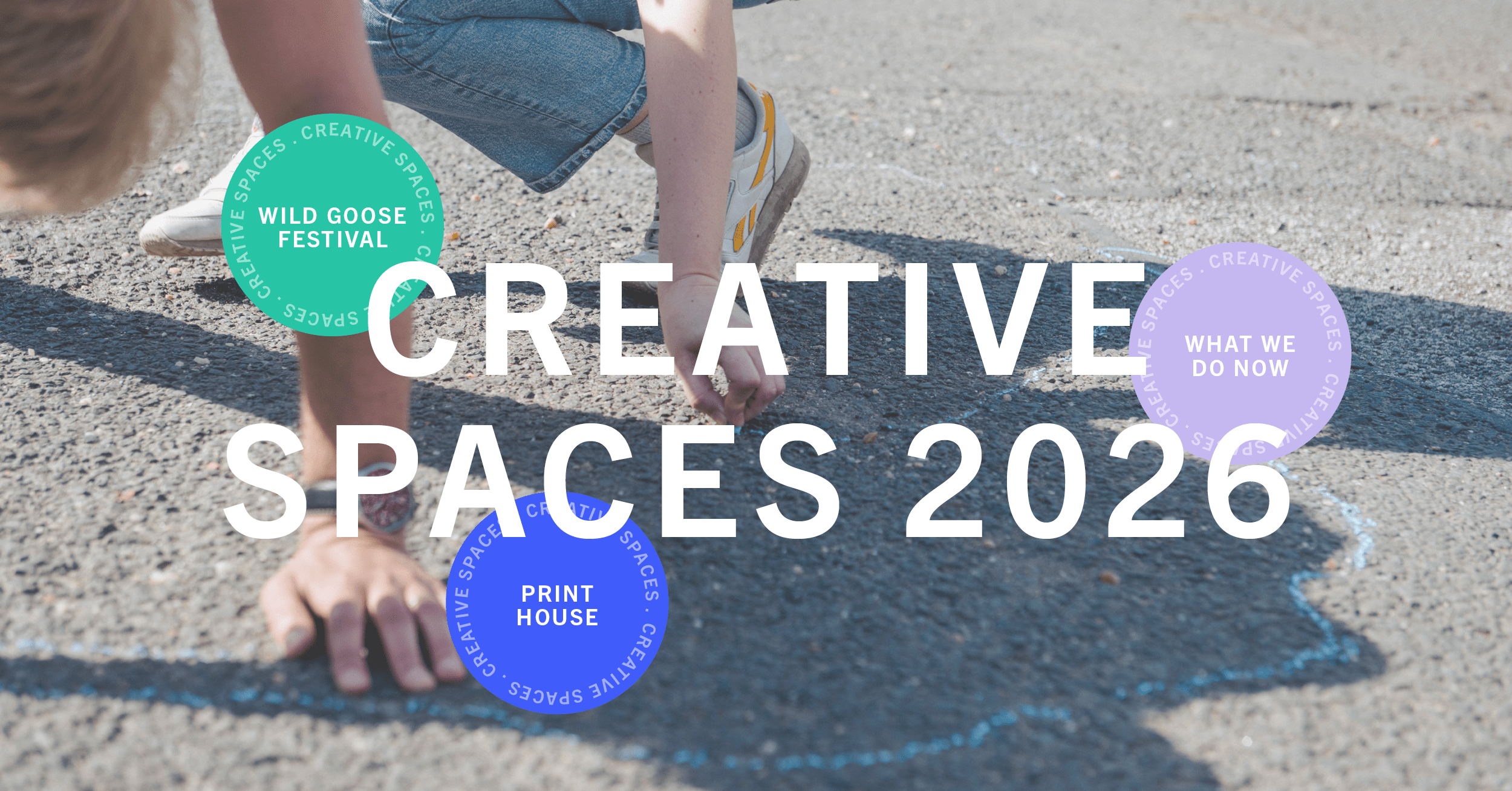
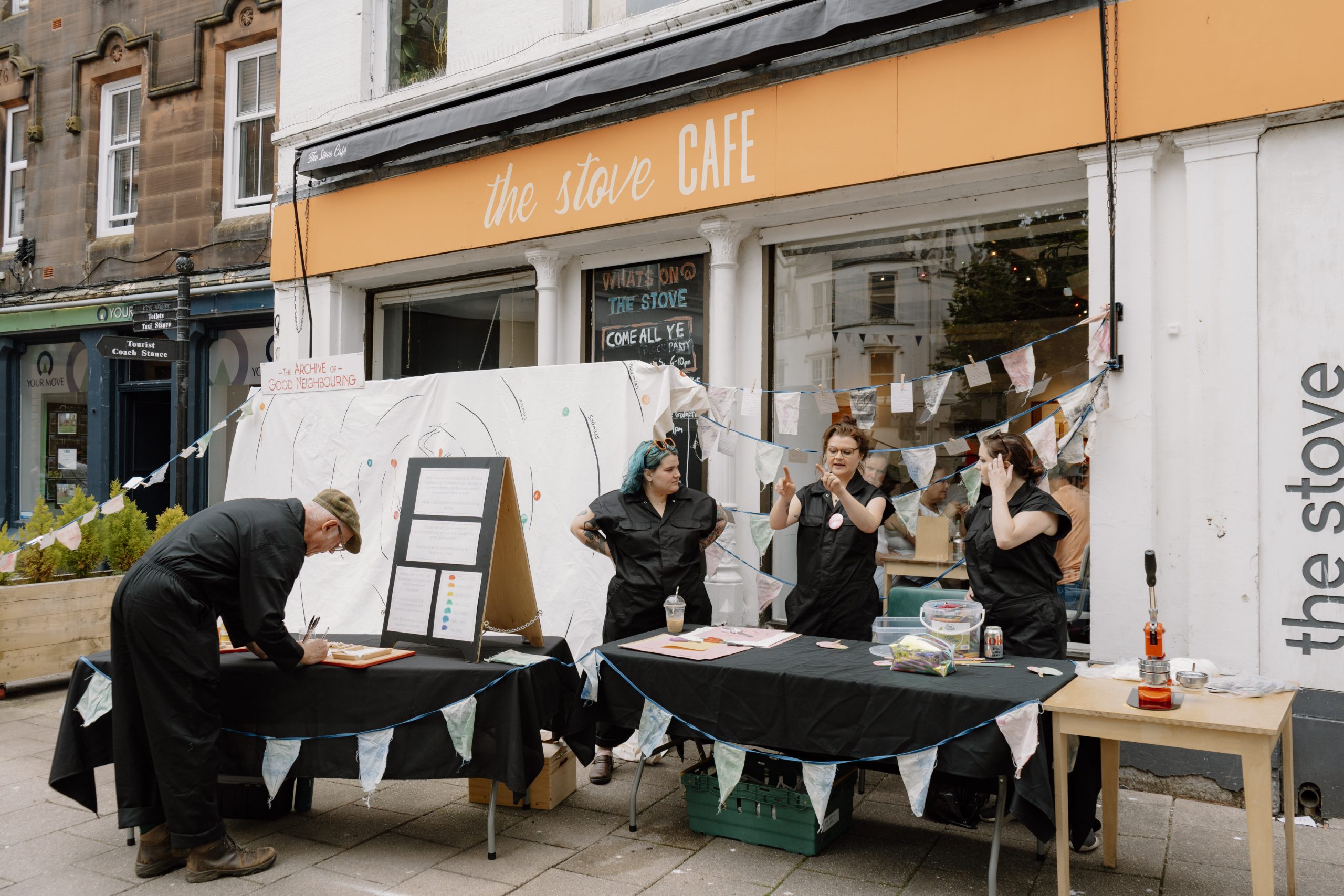
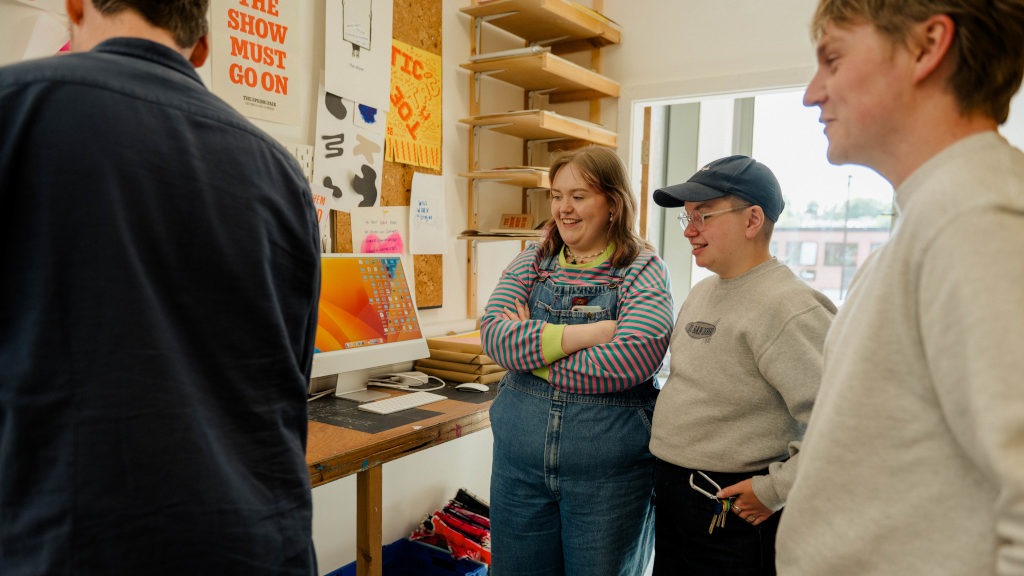
We have 3 roles available this year, each with a different focus.
Location: The Stove, Dumfries Application Deadline: 12 pm (noon) on Friday, 6th March
The Roles
Wild Goose Festival:
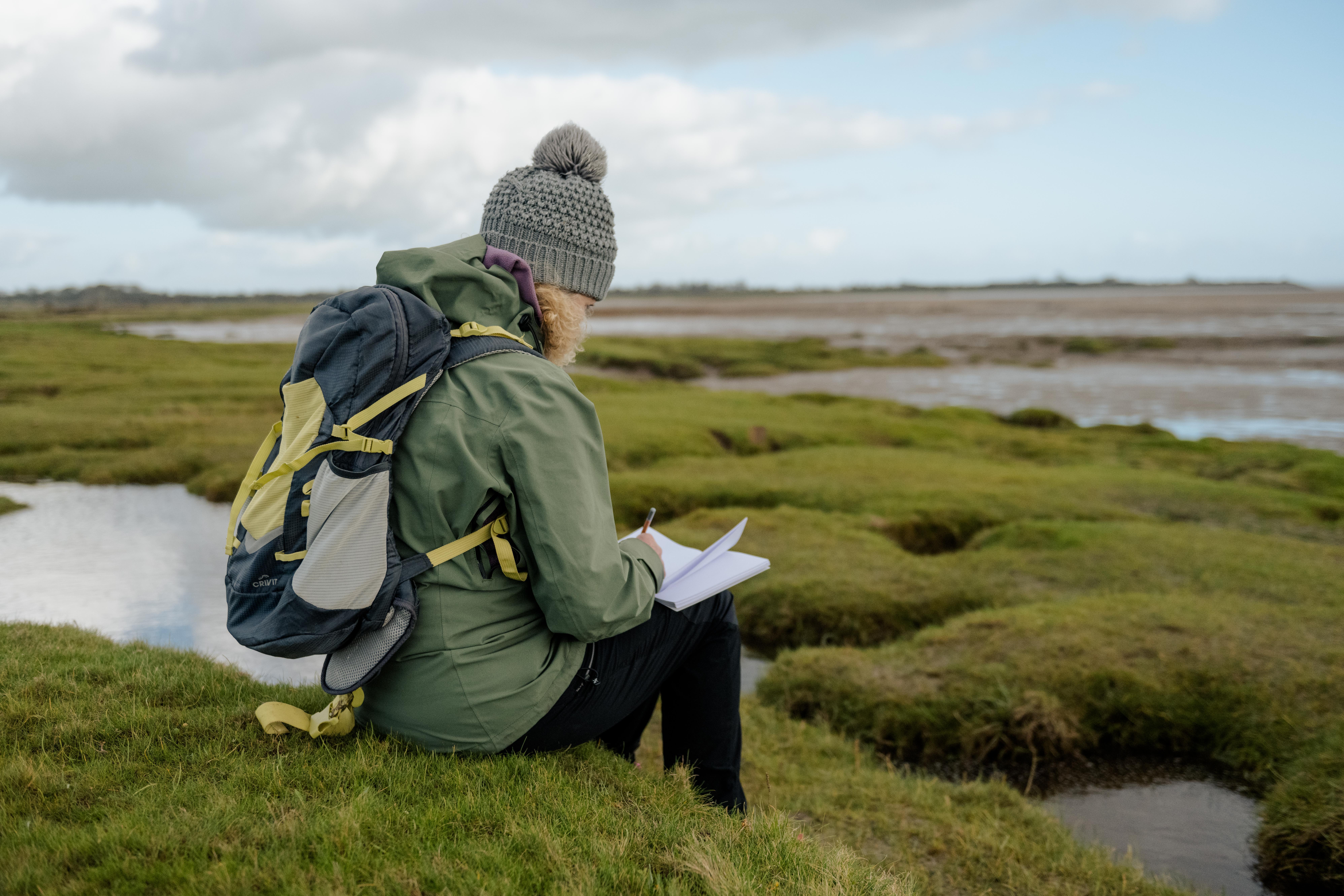
This role is for someone interested in wildlife, ecology and the natural world, and curious about how art and culture can engage with environmental issues. A background or interest in writing or storytelling, performance, music or sound might suit this role.
You’ll develop a creative line of work connected to the Wild Goose Festival, working with creative practitioners, partners and young people throughout the year. This role will contribute creatively to the development of outreach and education programmes in schools, with partners and with the programming & delivery team for Wild Goose Festival.
This role suits someone who cares deeply about the natural world, who has a passion for inspiring the imaginations of young people and families, and can work effectively as part of a team.
What We Do Now
This role is ideal for someone with a strong connection to Dumfries & Galloway beyond Dumfries town centre, and an interest in public art, social geography and local decision-making. A background or interest in socially-engaged practice might suit this role.
Embedded within the What We Do Now programme, you’ll explore creative placemaking as a practical way of working — collaborating with communities and contributing to projects rooted in real places.
This role suits someone who has exceptional communication skills, can listen deeply and let that listening inform a creative process. You should enjoy working with others and building relationships.
The Print House
This role is for someone with an interest in print, creative writing, design, illustration or comics.
You’ll learn how The Stove’s Print House operates, work alongside the development of community programmes from concept through to delivery, whilst growing your creative practice. You’ll work particularly closely with the Off the Margin programme, supporting creative projects with marginalised and under-represented communities.
This role suits someone who enjoys making, learning by doing, and using creativity to widen access and participation.
Rate of Pay and Conditions
Pay range £753.20per month. 14 hours per week (2 Days). One day in the office, working with other associates, with the second day being more flexible.
How to Apply
Feel free to be creative with your application; have fun! We will accept any of the following formats:
• Covering Letter (no more than 500 words)
• Video (no more than 3mins)
• Voice note
Answering the question “Why do you feel that a Creative Spaces Associate role is the right opportunity for you right now?”
Please specify which of the three Associate Roles (WWDN, Wild Goose Festival or Print House) you feel would be the best fit, and why. Please note that we will consider your application for all 3 positions, but it’s useful to know what your preference is. You can include in your application an idea for a specific project – workshop, event, creative output – which would link to one of the specific roles.
Please make sure that you include a CV or text sheet with your name, contact details and up to 5 examples of recent work (this could be images, videos or write-ups).
Please submit your application by email to [email protected] (max file size of 10MB) with the heading ‘Creative Spaces Associate’
For more information about the opportunities, check out the linked document here:
We are committed to creating an inclusive and accessible programme for everyone. We welcome applications from people of all backgrounds and experiences, and are happy to discuss any access requirements or adjustments needed to support people to apply and participate fully. Applicants will be invited to complete an Equal Opportunities Monitoring Form, collected anonymously to help us monitor and improve inclusion across our work.
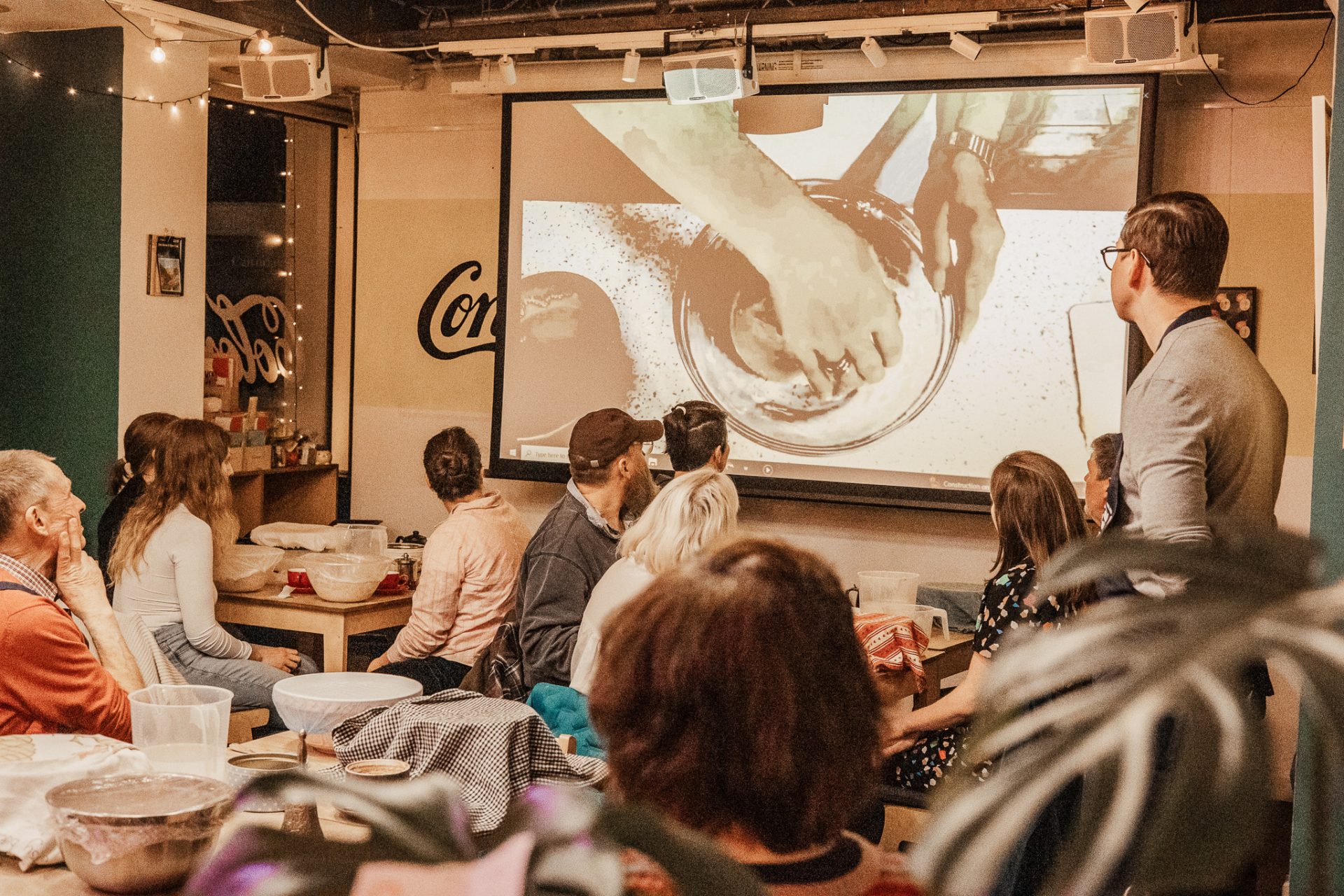
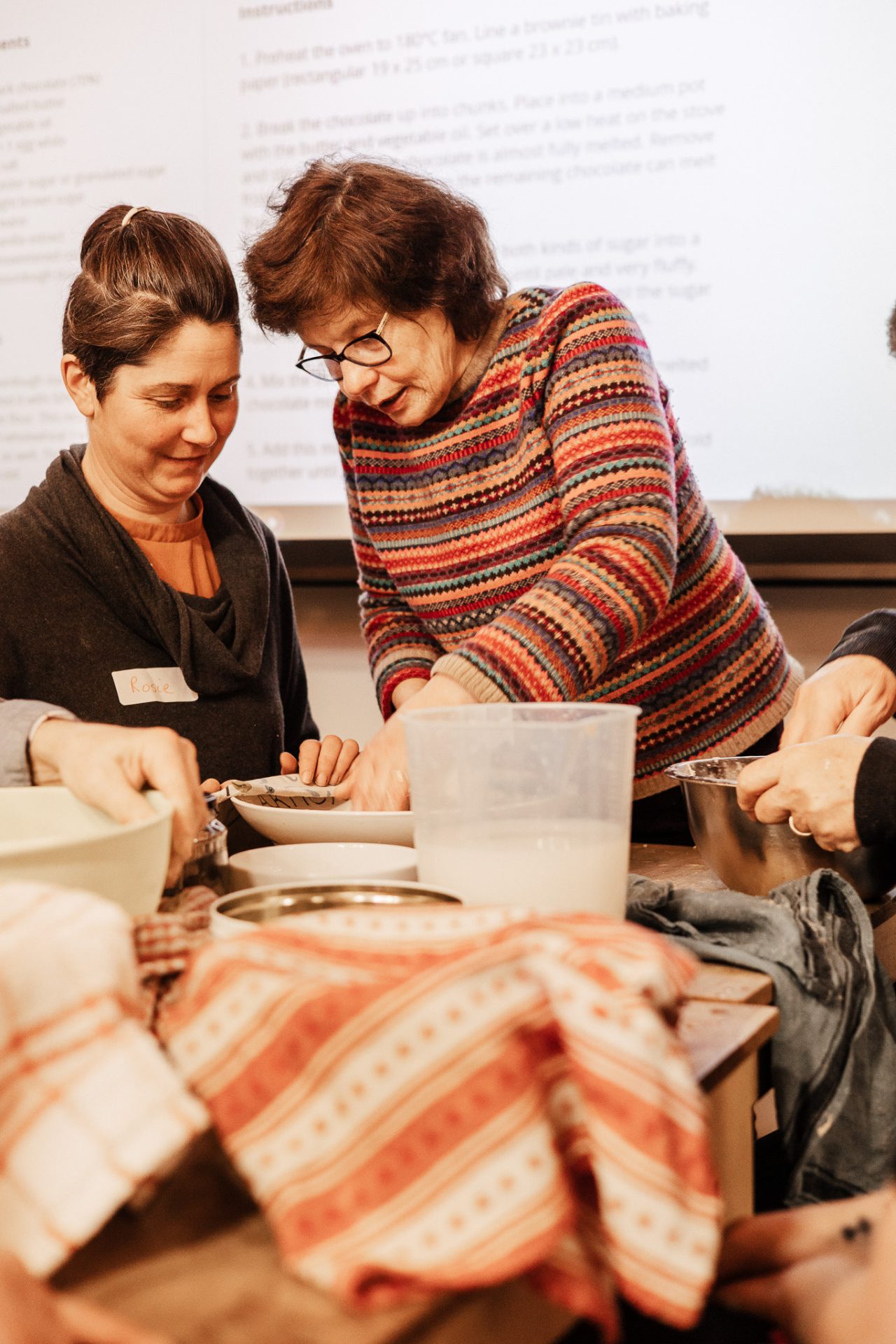
Doughlicious is a bread club with a twist. Share recipes and techniques in a relaxed atmosphere and engage in some hands-on activities. Open to all! Discover more about Doughlicious here.
Image by Jamie StrykerImage by Jamie StrykerImage by Jamie Stryker
The levain will be provided, but you’ll need to bring some tools from home. These are: A mixing bowl, a cloth or cover for your bowl and a jam jar.
We also have a small ‘Bread Book’ reference library for you to look through to get inspired and learn new techniques.
Free In-person donations welcome to go towards materials for the event.
Location: The Stove Café, 100 High Street, Dumfries.
Hours: Minimum 15 hours per week.
Pay: £12.60 Per Hour.
Days Required: Mondays and Saturdays, with the possibility of flexible additional hours available Tuesday to Friday.
The Role
We’re looking for an experienced, enthusiastic, and reliable Café Team Member to join our friendly team, with an immediate start available.
If you love working in a busy setting, enjoy helping to create a positive environment, and delight in providing excellent customer service, we’d love to hear from you!
Prepare and serve hot and cold drinks, including coffee and specialty beverages.
Prepare and serve hot and cold food.
Take customer orders and provide warm, friendly and efficient service.
Handle payments accurately.
Maintain cleanliness and organisation of the café at all times.
Restock food, drinks, and supplies as needed.
Follow food safety and hygiene procedures.
Support opening and closing duties.
What We’re Looking For:
Experience is essential in a café or hospitality setting.
A positive attitude towards:
Working as part of a team.
Interacting with customers.
Creating a welcoming, inclusive atmosphere.
Strong attention to detail and pride in your work.
Ability to multitask and stay organised in a fast-paced environment.
What We Offer:
Real Living Wage employer.
Immediate start available.
Supportive and welcoming team.
A fun, energetic workplace.
Opportunities to learn new skills and develop within the role.
To Apply, please send your CV and a short message telling us why you’d be a great fit to [email protected].
Applying in a Way That Works for You
We want our application process to be as inclusive and accessible as possible. You are welcome to communicate with us in whichever way feels most comfortable and natural to you. If you have any questions—about the application, the role, or anything else—please don’t hesitate to get in touch at [email protected].
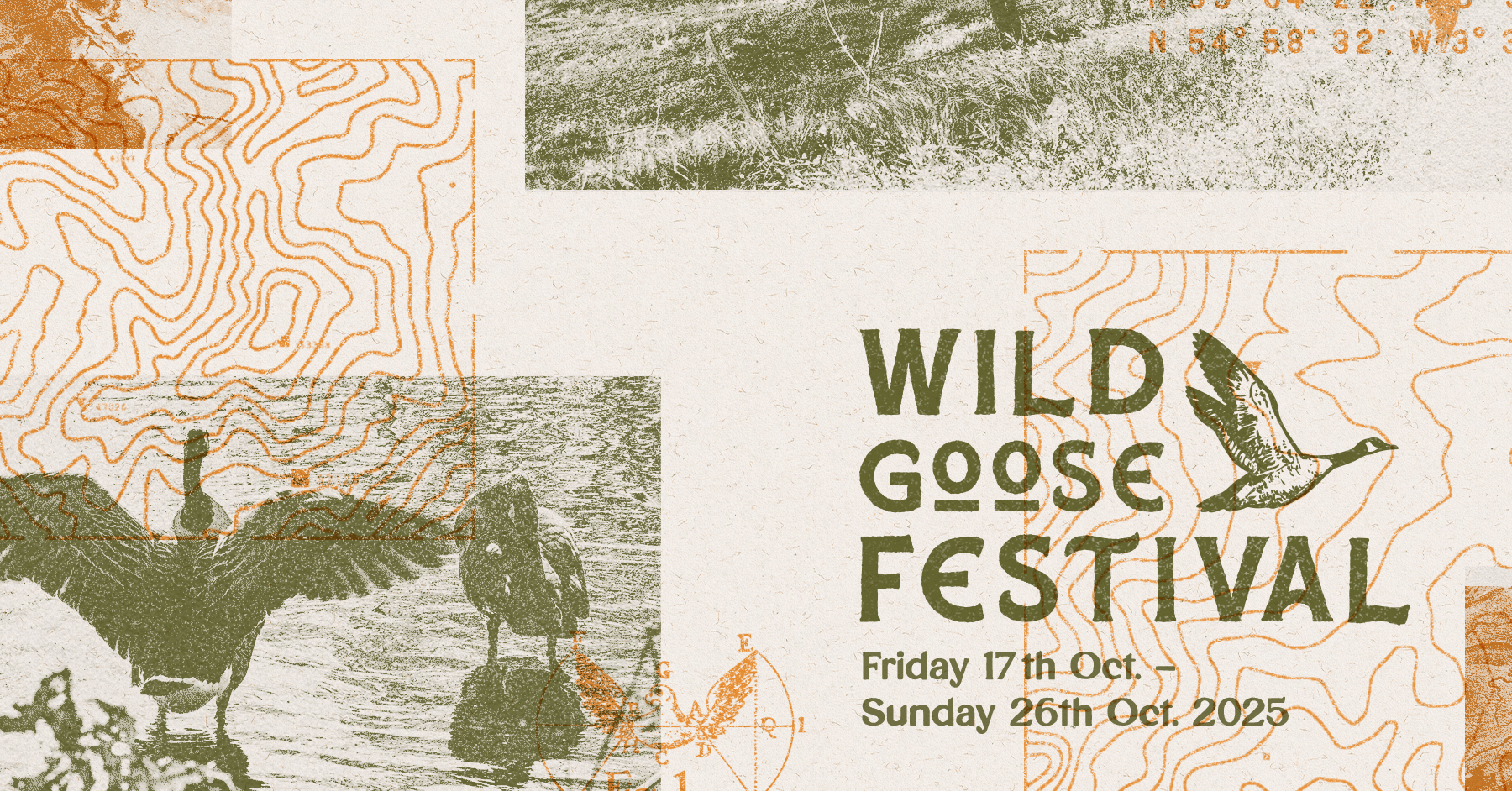
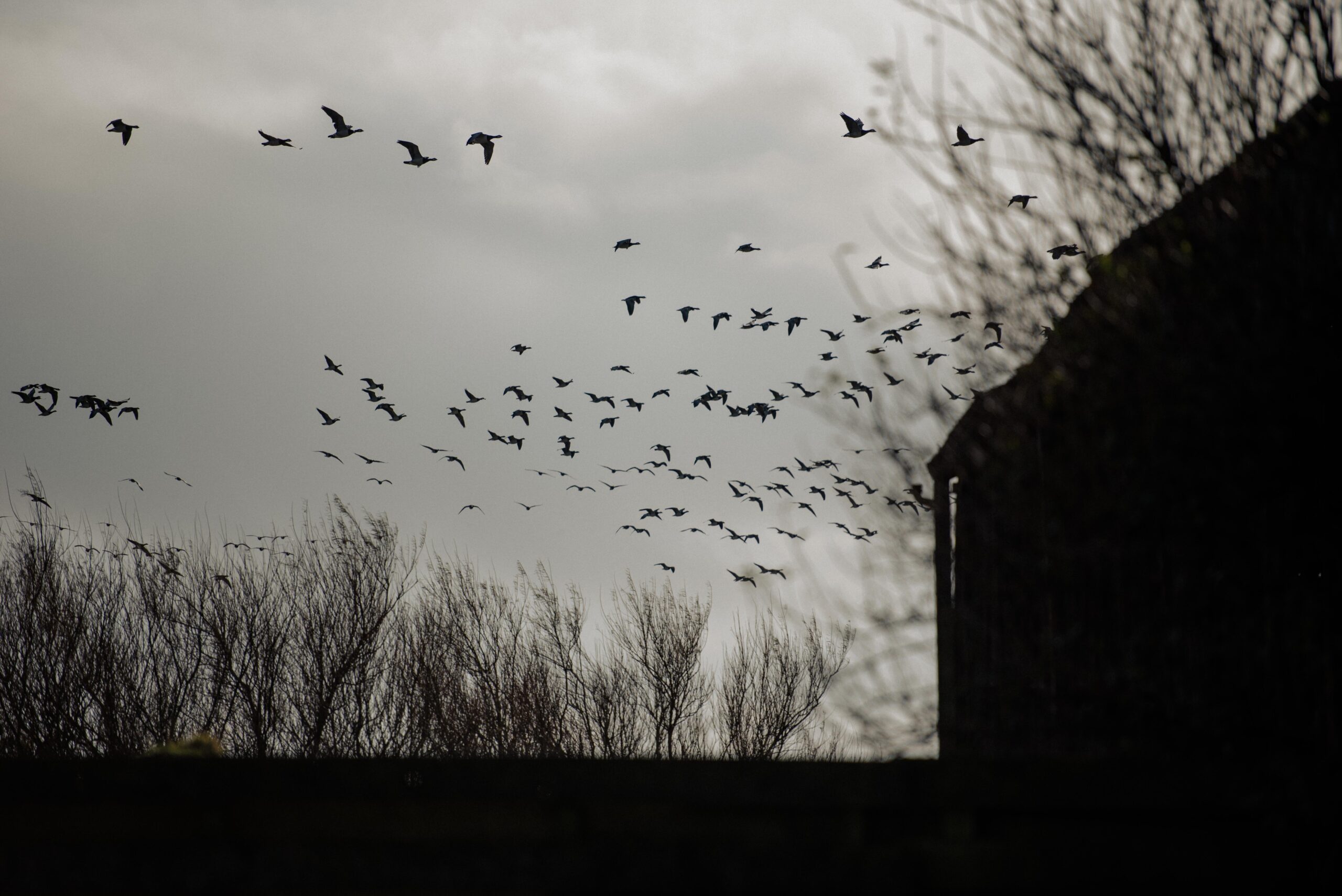
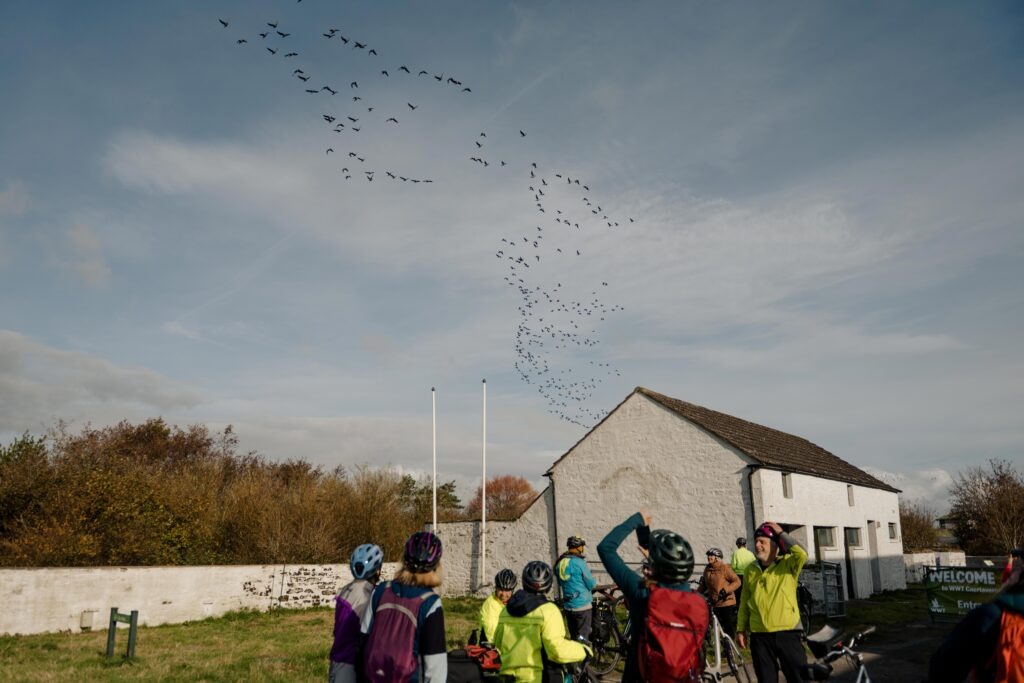
As the geese prepare for winter and make their return to Dumfries and Galloway, so does this year’s Wild Goose Festival. Since its founding in 2020, the Wild Goose Festival has become a cornerstone of the regional calendar, known for uniting people through creativity, education, and environmental stewardship. Now in its sixth year, the festival will run from 17–26 October 2025 with a vibrant and expansive programme for young and old. This year’s festival follows the exciting news that Wild Goose Festival has been awarded the Galloway & Southern Ayrshire UNESCO Biosphere Green Charter Designation—a proud milestone that celebrates the festival’s deep commitment to sustainability, biodiversity, and the people who make the region special.
Rooted in the remarkable migratory journey of the barnacle geese from Svalbard to the Solway estuary, the festival honours the deep ecological and cultural ties that define Dumfries & Galloway. Every autumn Dumfries & Galloway welcomes tens of thousands of wild geese, including barnacle, greylag geese, brent geese, Canada geese, pink-footed geese and Greenland white-fronted geese, after their long migration, some travelling over 5000km to reach us!
Originally established as a celebration of this inspirational journey, the festival now focuses more widely on deepening the connection between us and our region’s unique and diverse habitat. It honours both the wildlife that call it home and those species that visit each year, as well as encouraging visitors to reflect on their connections to the natural world.
This year’s programme offers opportunities for young and old to explore our region’s wildlife and landscape across a variety of activities. The festival also takes inspiration from the geese’s remarkable journey by acting in the spirit of community, creativity, and wellbeing. As such the events not only offer educational knowledge but invite visitors to build meaningful relationships across generations and reconnect with each other as well as the environment they live in.
This year, the festival kicks off with Behavin’ – a variety and open mic night at The Stove Café. The main festival will start soon after, with fringe events keeping us busy throughout the month until the grand finale in the form of a Halloween Ceilidh in Dumfries.
Overall, this year’s festival will offer over 70 events as far as the Goose can fly – from Stranraer to Dumfries to Annan, our programme stretches along the whole of the Solway.
Whether you’re looking for outdoor adventures, creative workshops or family-friendly fun, this year’s programme will have something for everyone. A highlight is once again the Wild Goose Festival Hub – the centre of activity for our indoor events. This year, it is located in the Carers Centre on Nith Street which will be a fitting home that highlights this year’s focus on community, creativity, and wellbeing.
So get ready to head to the Hub to make badges or join a storytelling session, or explore the unique landscape and wildlife of Dumfries and Galloway at one of our outdoor events across the region. The events will be either free or low cost and while a few require booking, you will be able to join most of them without advance notice.
Produced by The Stove Network, Wild Goose Festival is part of the Scottish International Storytelling Festival 2025, and proudly supported by TRACS (Traditional Arts and Culture Scotland), Dumfries & Galloway Council, Annandale & Nithsdale Community Benefit Company, and Creative Scotland.
The Creative Scotland Independent Review marked a moment of national reflection — a chance not only to strengthen how we support culture across the country, but to reimagine Creative Scotland’s role as a partner in building a fairer, healthier, and more resilient society. At The Stove, we hope our submission offers a meaningful contribution to this vital conversation and helps shape a cultural infrastructure that works with and for all of Scotland’s people and places.
Below is The Stove’s full submission to the Creative Scotland Independent Review.
We welcome the opportunity to contribute to the independent review of Creative Scotland. We strongly support the principle of increased investment in culture and want to emphasise that any recommendations for improvement suggested here must not be used to justify divestment from Creative Scotland or reductions in grant budgets. Instead, we see this review as an opportunity for honest reflection on how Creative Scotland can evolve in its remit to support Arts and Culture in Scotland and be a vital part of a national commitment to culture as a foundation of a healthy society.
Given the tremendous remit of this review, we have chosen to focus on a single, actionable recommendation to develop Creative Scotland’s role within this wider context: that Creative Scotland adopt a more place-based approach to supporting culture across the country. This aligns closely with the ambitions of Scotland’s National Performance Framework, A Culture Strategy for Scotland1, the Place Principle, the Culture in Communities report published by the CEEAC Committee in 20232 and the national approach tested through Scotland’s award-winning Culture Collective programme.
Access and The Limits of a Market-Led Model
There are stark inequalities in access to cultural opportunity across Scotland. Geography, economic disadvantage, rural isolation and systemic underrepresentation all contribute to a funding system that is more advantageous to those with privilege, proximity, and established networks. In rural areas like Dumfries and Galloway this is even more visible making it harder to participate in or make a career possible in the arts. People face structural barriers from; travel, provision and learning opportunities, and lack of support and infrastructure. The reliance on a centralised, project by project model that does not take a strategic and place-specific approach to these challenges will only deepen these inequalities.
Creative Scotland’s current model also reinforces a competitive, market-led system. This limits the strategic potential of public investment in culture and inhibits the long-term thinking that could deepen the impact of what is currently invested and help broker further investment from other sources for wider social impact.
We would like to see Creative Scotland work with Scottish Government to take a Community Wealth Building approach to investing in culture and move away from Culture as an ‘industry’ in conventional economic terms as part of Scotland’s transition to a Wellbeing Economy.
Regional Visibility and Presence
A key challenge identified through our experience is the limited regional visibility and direct presence of Creative Scotland in regional and localised strategies. For many individuals and communities, Creative Scotland can feel distant, abstract, and difficult to break into. A lack of regional infrastructure both in terms of physical presence and tailored support exacerbates barriers to more joined up and equitable engagement in funding processes.
Creative Scotland could increase its relevance and impact by establishing stronger, more regular connections within regions. This might include regional relationship managers with embedded roles in localities, dedicated contact points for advice and collaboration, and an active presence in key regional forums. A shift like this would help Creative Scotland better understand the nuances of local cultural ecosystems and enable more responsive and context-aware decision-making.
Building a more visible and accessible Creative Scotland presence would also signal a cultural shift from being primarily a funding body to becoming a collaborative partner in regional development and cultural strategy.
A Place-Based Approach
A place-based approach would mean working with and supporting collaboration between locally rooted organisations and networks that play a coordinating and developmental role within their communities. These organisations are best placed to understand need, build trust, and support capacity building, especially among those underrepresented in traditional funding systems.
At The Stove, our work through the What We Do Now network (WWDN) has shown how a local hubs model can work together to support creative development of ideas, build the capacity to deliver projects, bring in additional investment, and build long-term visions for culture in towns across Dumfries and Galloway. Examples of the impact of this approach can be seen through LIFT D&G in Lochside, who with our support secured Creative Scotland funding to continue to bring high quality arts intervention to their community, a significantly underserved community in terms of cultural provision. Similarly, Creative Stranraer, a grassroots hub supported by The Stove is emerging as a centre for creative activity, skills development and community-led regeneration in a part of Scotland often overlooked in national cultural policy. These initiatives show how targeted investment in local cultural infrastructure can empower communities, nurture talent and deliver long-term social and economic value.
In The Stove’s Creative Placemaking Approach (2024)3 we set out a vision for the role and significance of culture in supporting healthier, fairer and more sustainable communities across Scotland. This is an approach we have tested through What We Do Now in towns across our region, placing creativity at the heart of wider goals around wellbeing, skills, enterprise, climate justice and local democracy. Scotland is at a turning point, with policy ambitions increasingly emphasising locally led change and place-based strategies.
We would like to see Creative Scotland take a leading role in developing their remit to align with a whole place approach to culture across Scotland.
Participative Culture
An important consideration in this review is the distinction between supporting professional cultural practice and facilitating broader community participation in culture. These are fundamentally different types of activity, each requiring its own approach to funding, development and evaluation. The latter is about ensuring that all have access to the positive impact participative culture has on individual and collective wellbeing in communities.
Sector support for the distinction of participative culture and how it is supported was highlighted in a recent event The Stove hosted at the Scottish Parliament (Nov 2024), Creative Placemaking: Culture in Communities, co-hosted with MSP’s Colin Smyth and Emma Harper and attended by over 70 representatives working with culture in communities.
We would like to see Creative Scotland play a more strategic role in clarifying these distinctions. This would require work with Scottish Government and other national funding bodies (Screen Scotland, Historic Environment Scotland, Foundation Scotland, Inspiring Scotland) to separate and align strategies around how culture is funded and developedas two distinct priorities with their own measurements of success and a clear understanding of the remits of each within that. This shift would be an acknowledgement of the vastly different needs of participative and community-led culture and its significance as the generative foundation for our Cultural Sector more broadly.
A More Equitable Future for Culture in Scotland
Culture in Scotland needs to be supported in a way that is fair, inclusive and reflective of the places people live. That requires a rebalancing of support, not a replacement of Creative Scotland’s current work, but an evolution of its approach.
We would like to see the following priorities for Scottish Government and Creative Scotland to work on together:
Regional Strategies: work with local authorities and regionally significant organisations to develop funding and support aims for each local authority area. Allocate a proportion of funding specifically for regional delivery and help to develop outcomes that are region wide to measure against this investment. This would enable locally accountable decision-making and ensure resources reach underserved areas.
Support for Local Hubs: Recognise organisations with a proven track record of community-led practice and resource them not just as delivery bodies but as convenors, hosts and capacity-builders for local creative sectors that are not supported.
Develop Peer Networks and Learning Structures: Foster regional networks that allow creative practitioners to connect, share learning, and build resilience across geographies.
Enhance Evaluation and Evidence: Take a leadership role in evidencing the deep and lasting impact of culture on community wellbeing, inclusion, and economic resilience. Develop a shared framework with funded organisations that reflects local as well as national priorities.
Clarify Creative Scotland’s Role within a Wider Ecosystem: Explore the limits of Creative Scotland’s remit and seek greater strategic alignment with government departments, local authorities and national cultural infrastructure to better support community-based work.
We offer this submission as a constructive contribution to the conversation and in the spirit of generosity and collaboration. We believe that by working together, we can build a cultural infrastructure that truly supports all of Scotland’s communities.
When Jodie Barnacle-Best first joined The Stove as a Creative Spaces Associate in 2021, she was just beginning to carve her path in community arts. Fast forward to 2025, and she’s stepping into a major leadership role as Vice Chair of the organisation.
We caught up with Jodie to talk about what this appointment means to her, what she’s most excited about, and how she hopes to shape the future of The Stove with collaboration, care, and creativity at its heart.
Jodie Barnacle-Best
Congratulations on your new role! It’s really exciting to see you step into this position, especially as a Creative Spaces Alumni. What inspired you to take on the role of Vice Chair at The Stove?
Thank you! I’ve had the pleasure of sitting on The Stove board since May 2022 and before then was a Creative Spaces associate between 2021-22. The Stove has been such a constant in my career in community arts practice – it really has seen me through a journey of skill, experience and confidence building! As well as being on a journey myself, I feel I have been privy to the growth of The Stove as an organisation. It has been wonderful engaging with and supporting the team over the last 3 years as a board member. I enjoy all things governance and the considerations that go into overseeing strategy, structure, vision and values and it has always been a joy to navigate these topics collectively.
Through my roles in arts organisations in the Central Belt I’ve become used to working closely with other boards as a team member. This role reversal gives me an insight into how Trustees can most effectively support the team and the wider organisation. I’m now in a position with my own career where I feel I have the insight, expertise and capacity to commit even further through my new role as Vice Chair. Playing my small part at The Stove has always been such an honour that I knew I couldn’t turn down the opportunity to contribute even further.
It’s truly inspiring to see a board led by two optimistic and encouraging women. How do you see yourself and Lynsey working together as Chair and Vice Chair in the months ahead?
Lynsey and I started on The Stove board at around similar times, so I’ve had the privilege of getting to know her personally and working alongside her for a few years. Lynsey’s approach as Chair over the last year has really inspired and encouraged me to step out and put myself forward as Vice Chair. She leads by listening, encouraging others, is always willing to reflect and adapt and has an epic amount of experience under her belt (so she gives great advice). Not only do I feel we have a shared vision for The Stove, I believe, more importantly, we have shared ideas surrounding process and principles. We both strongly believe in the importance of putting people first.
Undoubtedly, we will work closely together, sharing and supporting each other to fulfil our potential in these roles. While we have many similarities, I’m excited by how our different approaches, experiences and perspectives will be of use to The Stove!
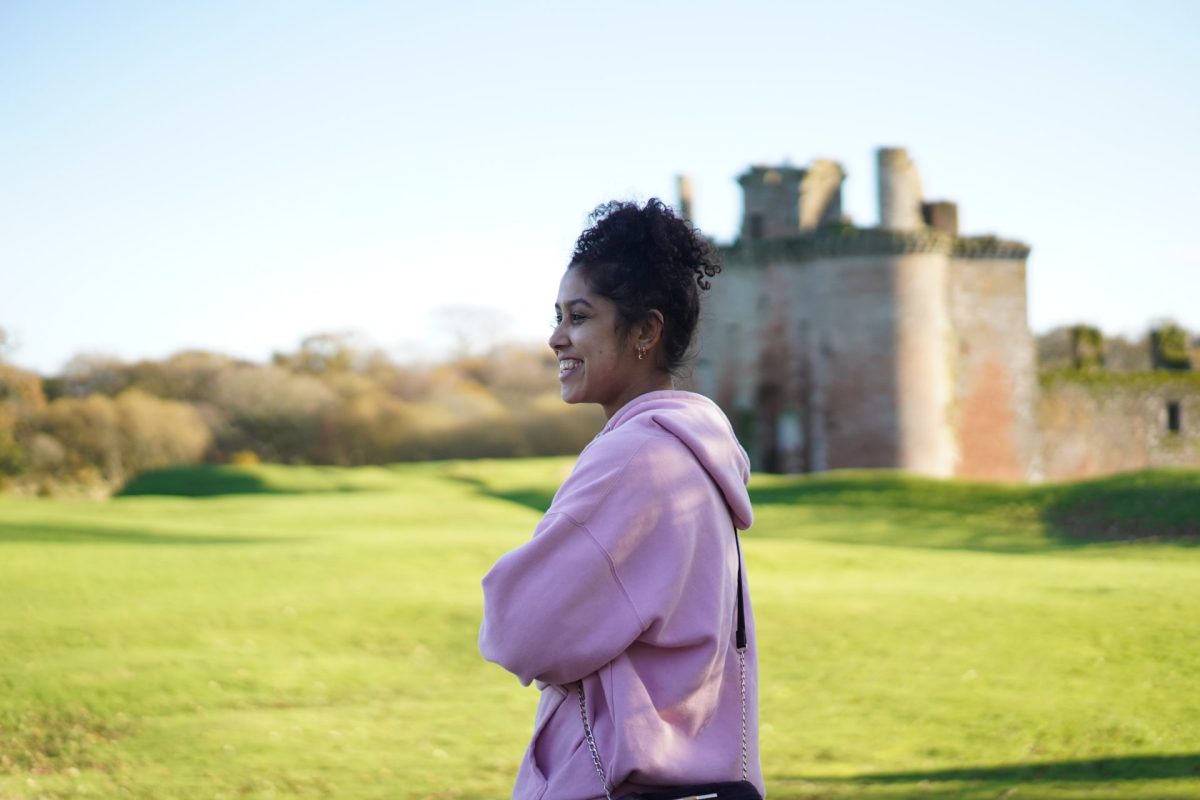
Jodie Barnacle-Best at Caerlaverock Castle
You’re just beginning this journey, but do you have any key aims or priorities you’d like to focus on as Vice Chair in the coming months and years?
It is an incredible time to become Vice Chair as we look to a change in leadership in the next few months. Alongside the rest of the board and the Stove team, I’ll be focused on ensuring this transition is as smooth as possible. While change can be daunting, it brings with it immense opportunities which I am excited to help The Stove make the most of.
Adding to this immediate focus, I am interested in exploring ways to make being a board member more accessible to a variety of people. I am particularly keen to further develop relationships in the region and find exciting and meaningful ways to bring greater local resident and youth representation into Stove governance and decision making.
As the youngest member of the board in its current iteration, are there any particular messages, objectives, or initiatives you’re passionate about championing—especially for young people in the region?
I am really proud of being a young board member, having joined the board at 24 years old and now being 27. It is unusual to see youth representation on boards and I am passionate about considering how more youth voices can be heard at a strategic level. Boards aren’t often appealing to young people and there are often considerable barriers to entry. I’ve always enjoyed my time on the board and felt welcome and empowered within my role. I am keen to develop pathways and support mechanisms within governance structures within The Stove to increase youth engagement at this decision-making level.
I am in awe of the incredible creative work undertaken by young people in the region – it truly is a fantastic community of exciting, innovative and driven creative talent covering visual arts, theatre, music, creative facilitation and production and more! Creative Spaces Producer Mia Osborne continues to create enormous impact through her roles across the region and I look forward to amplifying and championing all the work of the Creative Spaces team.
I am always open to talking further about any Stove related topics, but am particularly always open to chatting about opportunities and thoughts regarding creative practice when it comes to young people in the region – please do reach out!
For those who may not be familiar with The Stove, how do you describe its impact and importance to Dumfries?
In my conversations across Scotland, it is not often that I am asked to describe the impact and importance of The Stove as the work by the incredible team is already widely well recognised and respected. However, I am always delighted to amplify this when I have the chance! I am very proud of the national and international impact of The Stove leading the way as a model of good practice in creative placemaking and cultural community strategy amongst many other things.
On a local level, The Stove’s venue programme is extensive, varied and inspiring. It brings life and light to Dumfries High St and provides an incredible opportunity for people in the region to get creative and to get together. On a personal level, The Stove has had an immense influence on my creative journey as a part of the team and now a part of the board. It is a great nurturing environment and has set a high bar in how I expect to feel as part of an organisation!
Jodie’s appointment comes at a pivotal moment for The Stove, with a major leadership transition just around the corner. We’re delighted to work alongside her as we continue to shape a vibrant, collaborative future for The Stove and the wider region.
We use cookies to improve your experience on our website, analyse traffic, and personalise content. By using our site, you consent to the use of cookies. Please read our privacy policy for more information.
Cookie Preferences
Manage your cookie preferences below:
Essential cookies enable basic functions and are necessary for the proper function of the website.
Name
Description
Duration
Cookie Preferences
This cookie is used to store the user's cookie consent preferences.
30 days
Statistics cookies collect information anonymously. This information helps us understand how visitors use our website.
Google Analytics is a powerful tool that tracks and analyzes website traffic for informed marketing decisions.
Contains information related to marketing campaigns of the user. These are shared with Google AdWords / Google Ads when the Google Ads and Google Analytics accounts are linked together.
90 days
__utmx
Used to determine whether a user is included in an A / B or Multivariate test.
18 months
_gali
Used by Google Analytics to determine which links on a page are being clicked
30 seconds
_ga_
ID used to identify users
2 years
__utma
Used to distinguish users.
Persistent
__utmb
Used to determine new sessions/visits.
30 minutes
__utmc
Used to determine if the user is in a new session/visit.
Session
__utmt
Used to throttle request rate.
10 minutes
__utmv
Used to store visitor-level custom variable data.
2 years
__utmz
Stores the traffic source or campaign that explains how the user reached your site.
6 months
_ga
Used to distinguish users.
2 years
_gat
Used to throttle request rate.
1 minute
_gid
Used to distinguish users.
24 hours
Clarity is a web analytics service that tracks and reports website traffic.