The last time I baked was some 30 years ago; Hot Cross Buns. They turned out like hot cross rocks. Inedible. I decided then it was time to give up on home made bread and yeast as my track record was littered with failures.
Fast-forward some thirty years, and, due to a series of events, I found myself attending the Douglicious gathering. To be more accurate, as a new recruit at The Stove, I was facilitating it. I meeted and greeted and made teas and coffees. And I watched and listened.
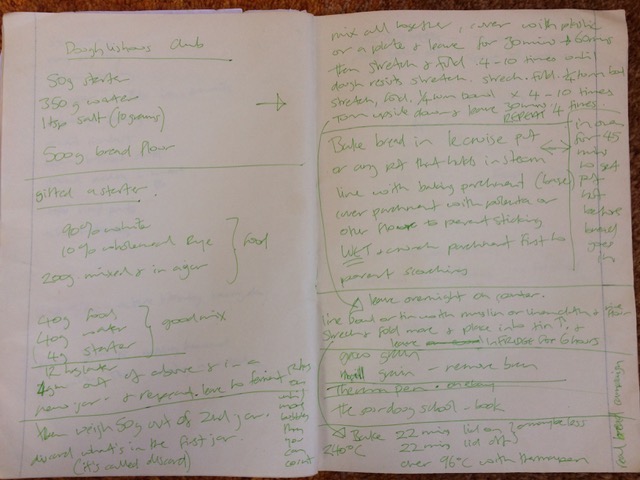
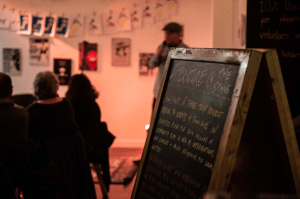
Kerry’s dough making notes
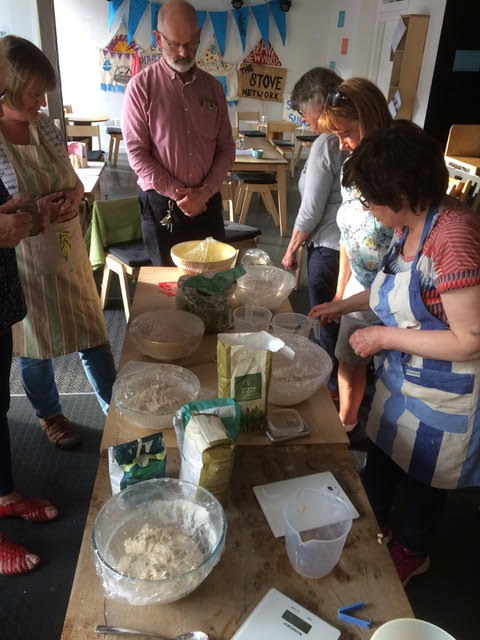
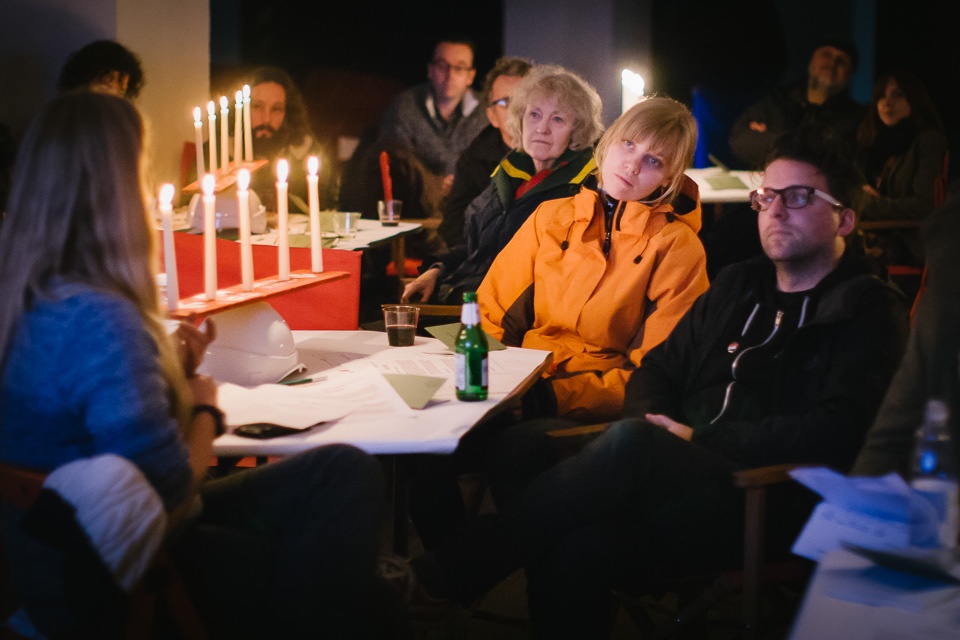
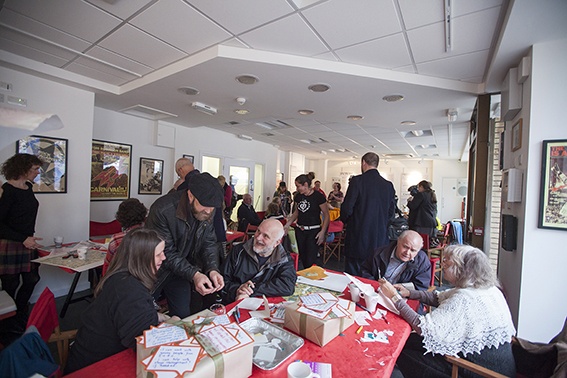
They were preparing sour dough. Liz, the wonderful woman who initiated Douglicious, handed out sour dough starter to all those who had brought with them flour and a bowl. She brought extra bowls and flour for those who hadn’t brought their own, so everyone had the opportunity to have a go.
I looked on. I was fascinated. I knew nothing about sour dough and I’d never, ever, thought about baking my own. I became engrossed and wanted to know more. When the dough was resting, we all sat around the tables, tasted samples people had brought with them, and talked about bread. I joined in.
I asked so many questions and Liz and the group were extremely accommodating, answering all of them. I took notes. At the end of the evening, Liz offered me the dough she had prepared. I hadn’t participated in the dough making, so was thrilled to be offered the sour-dough-in-the-making to take home and finish. I stretched it and rested it four times before going to bed.
The next day I baked it and it turned our perfectly: completely edible and delicious. Liz also gave me my own sour dough starter and I’ve been baking (dare I say) perfect sour dough loaves at home ever since. Who’d have thought it? Certainly not me.
Interested? The next Doughlicious event is on Wednesday, 17th July at 7pm. Full details available here
Since starting with the Curatorial Team almost 3 years ago, the amount I have learned and the people I have had the opportunity to work with has been invaluable to how my life has unfolded. The Stove creates a space for growing and nurturing whether it be people or ideas, and it’s safe to say I have came a long way since the nervous person sitting on the interview chair babbling about fairy lights.
I had a little experience working with the Stove before joining the Curatorial Team; the first interaction I had was with the Environmental Arts Festival. I have a background in being involved in local events and was pointed in their direction as a volunteer by Sleeping Giants, a partner of the Stove. Not quite sure what I had got myself into, I ended up meeting a group of extraordinary people who had created a community and used their creativity to produce an event that had reached me like no other had in my previous experience. I actually cried after the end of that project, the thought of going back to my usual day-to-day pub work filled me with dread and not knowing when the next opportunity would be.
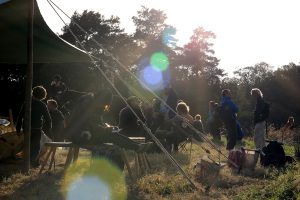
EAFS 2015 at Morton Castle
The advert came up for the CT position and I thought there wouldn’t be a chance in hell that I would get the job but it would be good to throw my name in the ring for experience. I got an Interview… (How I have no idea but I did!) In the Interview, Fairy Lights were mentioned A LOT. I had resigned myself to “well you gave it a shot at least”. Now I’m not entirely sure if the existing team were within their right minds or, like myself, had no idea what they had gotten themselves into, but that day changed my life.
From there I went on to focus on the events and expand my practice with community work. Nithraid Festival has been the biggest part of my role here and has taught me so much that I had previously taken for granted as until then I was always brought in later to an events delivery. Being the project manager and planning from the very ground up has given me priceless knowledge, sometimes through trial and error, of working with the local community and authorities to deliver a festival that has grown along with myself into something I am proud of.
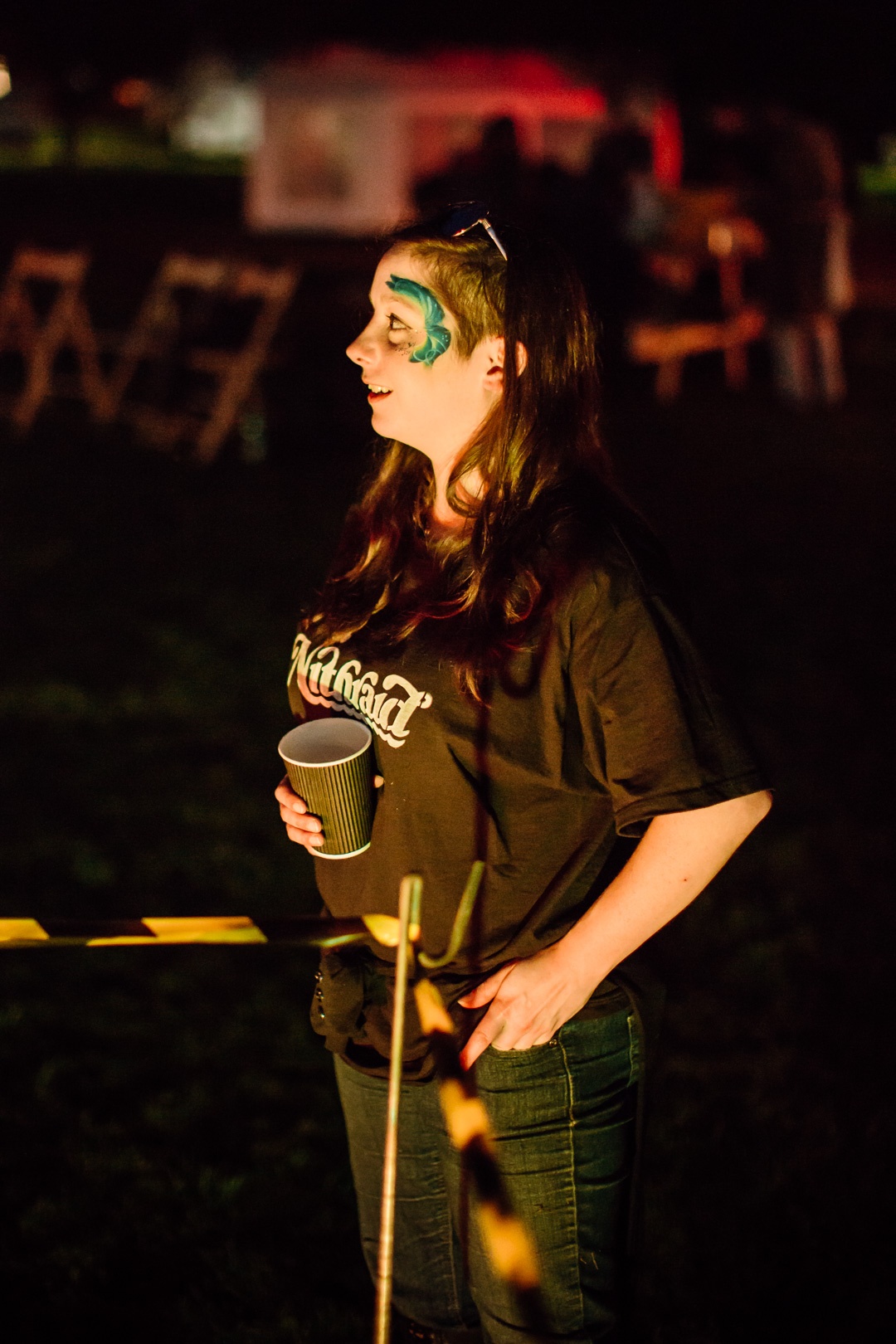
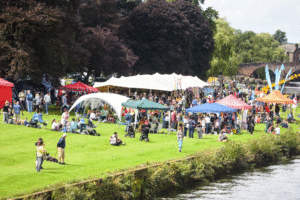
Nithraid River Festival 2018
Another part of the job that I loved working with was health as a subject be it physical or mental health. I created a project called the Light Room in October 2016 that entailed tackling prejudice, working with a diverse range of groups and a lot of (you guessed it) FAIRY LIGHTS. After that and the curse of the fairy lights you will be glad to know I learned my lesson – and the event opened my eyes to how we can use art to get conversations happening. That was what being part of the team did, you have a group of people with all different ranges of expertise and they will help you work through a project or idea. Even when you have been up a ladder for 5 hours and are tangled in a mass of cables they will be up those ladders with you. It’s not just for those that join the CT, every person that comes into the Stove with an idea are guided on how to do it them selves, and not “we will do it for you”.
Every experience has been a huge learning curve and not one day is the same – that is what I will forever treasure working as part of the CT and any time I think, ” What have I got myself into now?” I welcome it.
___
A huge and special thank you to Sal for her sterling work the past two and a half years on our Curatorial team, but don’t worry – Sal isn’t going anywhere just yet, you can still find her in the Stove managing room bookings and events production, and as Project Manager on Nithraid – coming up this year on the 31st of August!
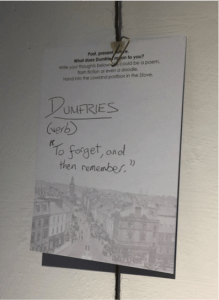
Eight years ago a group of artists in Dumfries started a conversation. Standing here in 2019’s ‘A Year of Conversation’, this initial spark has grown into 4 separate social enterprises, which between them provide regular employment for more than 40 people and a working partnership between the community, Council and Government towards a new future for our town.
And, what have we have learned? We’ve learned that keeping the conversation going is the single most important thing of all – for conversation is an open space of possibility, it is owned by no-one, rather it is stewarded, nurtured and protected by everyone who takes part. Inclusive Growth is the new mantra of Scottish Politics – it’s a vision of a society and an economy that does not simply value numbers, but rather supports economic activity that benefits communities, places and ALL the people who live there. For this idea to make any sense at all, it needs to be shaped and held in a conversation, one that is rooted at a profoundly local level, a conversation that is open and free to roam without limits imposed by those who wield ‘power’. Rather, the true power must be in the principle of conversation itself.
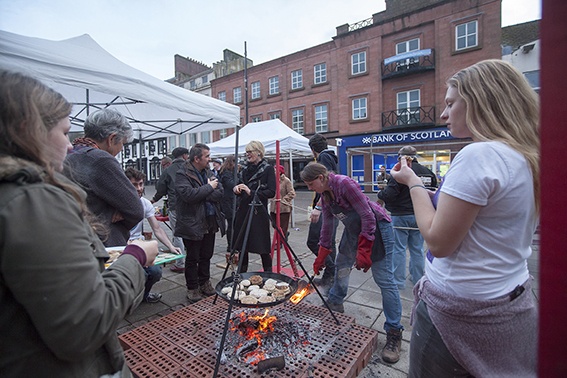
In 2001, our conversation in Dumfries began with a on open question: ‘What is the purpose of a small market town in 21st Century rural Scotland?’. Dumfries had fallen on hard times, there were in excess of 70 empty shops in the town centre. What is now popularly cried the ‘Death of the High Street’ (big retailers pulling out of High Streets because of online shopping and Out of Town retail parks) was already happening fast. We wondered what creativity and culture could do to help, it wasn’t that we had any answers to the problem that we wished to promote…on the contrary! But, we saw how important the health of the town centre was to the sense of identity within our community. We knew that town centres were places for people to gather to celebrate, to protest, to remember – but what are the mechanisms of interaction between people (commerce, leisure, services etc) that are necessary to maintain a town centre as a place for us all to gather in?? The withdrawal of big national and international concerns from our town centre created a vacuum, but it also presented an incredible opportunity for a new kind of town centre – one founded in an ‘inclusive localism’. We knew that this could only grow from a spirit of conversation which made a space for everyone’s voice to be heard. We have helped steward this conversation for eight years now – asking our question in myriad different ways..town dinner parties, a crowd-sourced Town Charter, a giant chalk drawing in the local square, an annual festival celebrating the role of the river in the town, a 2 year exploration of Dumfries’ relationship with Norway, a monthly open-mic evening for new writing – spoken or sung. We now operate two High Street buildings as ‘can-do places’ or ‘arty community centres’ or ‘alternative town halls’ depending on the flavour of the town conversation as you choose to see it.
This is what could be called ‘Conversational Practice’, but really, it is just a set of shared values about the way to treat people and to operate as a human being. Being in conversation is a useful metaphor that encompasses the three core values of our collective work in Dumfries..which could also be seen as necessary ingredients for a good conversation?:
To work through collaboration (not in isolation)
To take risks
To put people first and consider the emotional landscape of all actions
The Stove Network is taking part in A Year of Conversation in two ways: through the first two weeks of May we are staging an interactive exhibition and series of events to explore ‘Art in Public Space’ which centres around a series of conversations with artists working in public. Then, in June, we are shaping all of our regular programming activity into a ‘Month of Conversation’. Our conversation month will also mark a significant shift in our practice as we move onto a new topic of conversation – the new conversation space that we will help to hold for our town is ‘how we grow our own culture’ and how everyone can give themselves permission to be part of that endeavour.
Pop in for a chat!
Matt Baker is a public artist, since 2011 he has focused on long-term activist strategies for the social, economic and political structures of his home region in South West Scotland. He was one of the founders, and is based with, The Stove Network in the heart of Dumfries town centre. www.thestove.org
In a recent survey undertaken by Dumfries Music Conference, ‘music venue provision’ was highlighted as the number one priority for the development and fruition of local bands and solo artists.
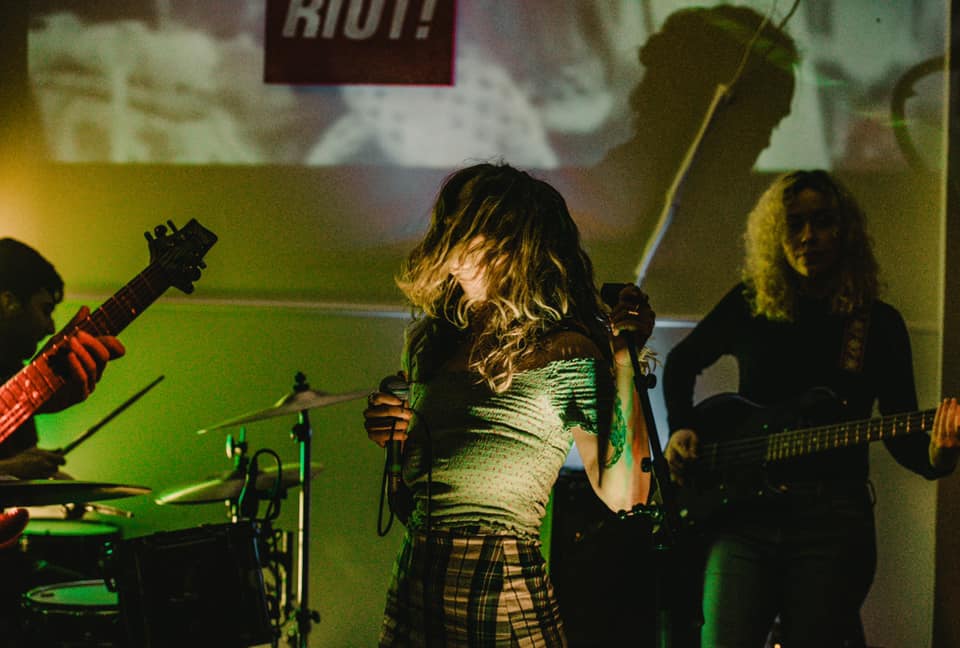
Music venues provide the bedrock for musicians to build their audience, hone their sound and cement their unique appeal as a live act. With the increase of streaming platforms and free releases, the live experience, more so than ever, is tantamount to the success of musicians and artists. DMC has always tried to nurture the local sound across a broad spectrum through live gigs at 100 High Street, establishing the Stove as a bold, intimate and thoughtful space to hear the freshest music from local and national acts. Now, moving into the seventh year of the annual conference we want to celebrate the spaces out-with our headquarters and challenge the established notions of where music ought to live. In short, we’re re-imagining the music venue.Inspired by organisations and festivals such as the Hidden Door, Empty Shop Durham, the Moth Club and various other initiatives throughout the country, the Plaza is attempting to redefine the nature of music venues, employing a ‘takeover’ model using the unusual, the empty, the abandoned and the wild, we will expose the places where music could, and should, live. Bringing to the surface some of the key questions around music venue provision in Dumfries & Galloway.
With the deeply unfortunate news of the relocation of the region’s largest music festival we equally want to encourage a greater understanding of the contribution live music makes to the local economy as well as start the conversation with our scene on how a ‘DIY’ ethos may lead to the creative community becoming more than it ever could have imagined. We want to challenge not only our audiences and ourselves but equally ask the right questions of our local authority as well as other ‘decision-makers’, how do we build, together, the infrastructure necessary for this particular (and most lucrative) of creative industries to flourish?
The Plaza affords us the opportunity to encourage, support and, together with our young audiences, develop careers aside from music-making in photography, film, event management, programming and installation – whilst also inviting artists and the music community to help us build a new kind of space, every 2 months.The Plaza, which takes its name from a former dancehall and concert venue on Dumfries High Street, launched in April 2019 at the Rowing Boat Club, a finale showcase, wrapping-up the Female Takeover – a month-long series of events celebrating the contribution of women in music with a programme of industry panels, film, live gigs and exhibitions. Inspired by the stories, photographs and memorabilia of the Plaza, we are re-imagining and re-awakening the experiences of this cherished music venue.
The D&G music scene is a remarkable and a unique thing. It’s down to the festivals, event-makers, marketers, pubs, nightclubs, bands and artists that it has become such a force. We want to celebrate the established, create room for a new sound, support our scene and build new careers, helping to develop the talents and skills of young people in the region through doing what we do best – making it for ourselves and reclaiming the right of access to culture and live music.
Are you interested in the Plaza? Have/know of a space you think would be useful the let us know by contacting [email protected].
By Martin O’Neill, Curatorial Team member and Programme Lead for The Stove Network
‘We have a tiny minority of people calling themselves artists. I am recommending that everyone should be an artist. I am not recommending in a spirit of dilettantism, but as the only prevention of a vast neurosis which will overcome a wholly mechanized and nationalized civilization.’ Herbert Read 1955
permission Dictionary result for permission /pəˈmɪʃ(ə)n/ noun
the action of officially allowing someone to do a particular thing; consent or authorization.
Between 2017 – 18, 100 High Street set out an agenda to become a hub of activity, treading a programme of events, workshops, films, gigs, ‘interruptions’ and discussions. Each, in its own way, opened the door to re-imagining the role of art not only on the High Street, but also aside from the main centres of ‘culture’. Its discussions were more often than not grounded in a sense of movement towards a common goal – and that was to shape a vision hand-in-hand with the community, of a new high street.
There then arrived, through this work, the establishment of the Midsteeple Quarter – with a job to continue envisioning the role of our town centre, alongside the community with a much more considered approach in its creativity, so as to create a consistency in the exchanging culture of ideas between the company, their ideas, agendas and the community.
Kevin Reid leading the Door Toon Army’s Street Clean last year. Image Credit Galina Walls
With the recent community asset transfer of the Baker’s Oven to Dumfries High Street Ltd and the unfortunate news of the private purchase of two buildings within the quarter, despite the community raising over £20,000 in small donations, there came into being something which might be termed a ‘movement’. Finally, a commonality, ignited by something outwith our control, has cemented Dumfries as a community that will not take the continuing deterioration of our High Street for granted, or something that is to be expected. As a young returner to Dumfries, I’d left my hometown with a sense of freedom, untethered to the slow unwinding of power, in the face of an international financial crisis, looking forward instead to a quicker pace. On returning, disillusioned by the mechanisms of culture embedded in much of the central belt, there seemed to be a new momentum in creativity within the town. And since then, a lot has happened.
Now the conversation has changed, because some people have changed – become ignited by the processes of making, by the open exchange of ideas, concerns and angers by freeing themselves from the idea that it was outwith their control – some might call it a revitalisation of local democracy. (Shrugs and slinks back)
Now with this, what’s left to do? By no means is this conversation over. But it’s time to return to something based on the principles, which lead to the formation of the Midsteeple Quarter. What’s to say of the role of artists (in the assumption that everyone is an artist) in the community, regardless of its place. Our High Street is now our blank canvas, our open stage and our studio.
Permission
‘What’s stopping you?’
An 85-year-old man recites his poetry for the first time to over seventy people at an open mic. A fourteen-year-old songwriter closes one of the biggest music conferences in Scotland. Thirty people, armed with boiler suits, litter pickers and paint brushes come together on a Sunday afternoon to clean up their High Street. Two local businesswomen decide to start a makers’ market. And a community group decide to turn their local area around by working hand-in-hand to change the perception of their home, for the better.
The word, above all else, is permission.
Each person, at some point, allowed themselves the freedom, through a collage of experiences both positive and negative, formative and reactionary to give themselves the permission to experience, challenge and provoke themselves into action. And thereafter, begin to challenge the structures of bureaucracy and the permissions therein.
And that’s what the Network is.
In 2019 we will challenge not only ourselves, but those around us by providing the opportunities, the experiences and the space for our members to realise their own potential through a considered programme with its feet firmly on the ground.
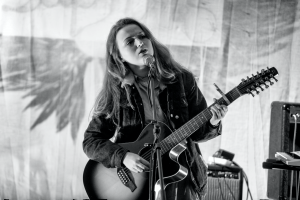
Katy Ewing performing at Brave New Words last year
In our projects we will endeavour to uncover the stories untold, the conversations not yet heard and build the platforms necessary for something new to emerge and by doing so, offer these the permission to be shared, vocalised, staged or exhibited. In this, through the filtration of a process defined in the values enshrined by our community and the principles of a participatory art-form, as yet undefined but still discovering, we will try to unlock each person’s potential.
In 2019 and forward we’re looking into how our projects communicate not only with one another but with activities, events and workshops in and outside of 100 High Street, and thereby build new communities shaped through collective interests, whatever that might be.
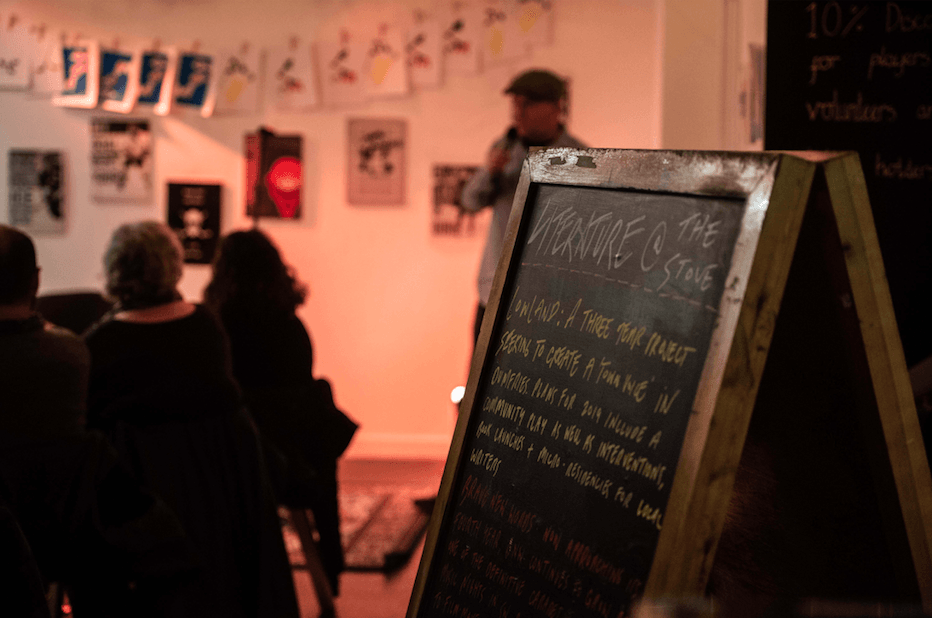
Lowland will seek the stories as yet untold – past, present and future.
Dumfries Music Conference will reignite the music venue and raise awareness about women in the industry from across Scotland.
Conversing Building will expand to illuminate conversations around public space, democracy, art and civic responsibility.
Creative Futures will continue to offer the mechanisms of support and creativity for its local community to thrive.
Brave New Words is opening its doors to filmmakers, performance artists and makers of sound and light. Challenging, each month, the world at large with work from local people.
Reel to Real is growing, including nights of good food from our cafe and a programme of international film, highlighting global issues with intimate local relevance.
And 100 High Street will continue to host, produce and collaborate with our local community as well as national companies bringing to life remarkable projects that seek to inspire, provoke, engage and entertain.
Writers Free For All in January. Image Credit: Kirstin McEwan
There are inevitable dangers in every process and practice, especially those that rely on funding. With each step that the Stove makes in its programming and its wider output, we tread deeper into an undefined land, with unexpected pitfalls, challenges and agendas that require time and sensitivity to fully appreciate and learn from. But if the routes ahead of us were already defined, we would sit in the shadow of an easier road, and in that lose who we are as practitioners with a collective responsibility.
To quote our newly completed Blue Book, a handy guide to our work at the Stove:
‘The Stove is just a part of the conversation happening throughout the world. How can people better take control of the places they live, and by doing that, how can we create a better society for everyone? At the heart of it, the Stove is all about Dumfries. Born from a respect for ourhome town, we believe we can shake things up and begin to reclaim our town as something everybody can be part of. Sure, it’s a big idea and we don’t have all the answers but we’re not ones for sitting back and letting the big decisions happen without us. We believe we can reclaim, inspire and forge big new ideas on community, art,and citizenship alongside our neighbours, communities and partners. We believe that art is a gateway for people to better understand their lives, their sense of place and their rights. By doing this, through our programme and our work with partners, both local, national and international we’re building new careers, challenging the outdated ideas on community and art and making those in power listen. So, be part of the conversation. Drop in for a chat in our cafe, come see a film, perform at Brave New Words, join Blueprint100 and learn new skills or volunteer at Nithraid. There are so many ways to get involved!’
So, what are you going to do?
Come along and find out.
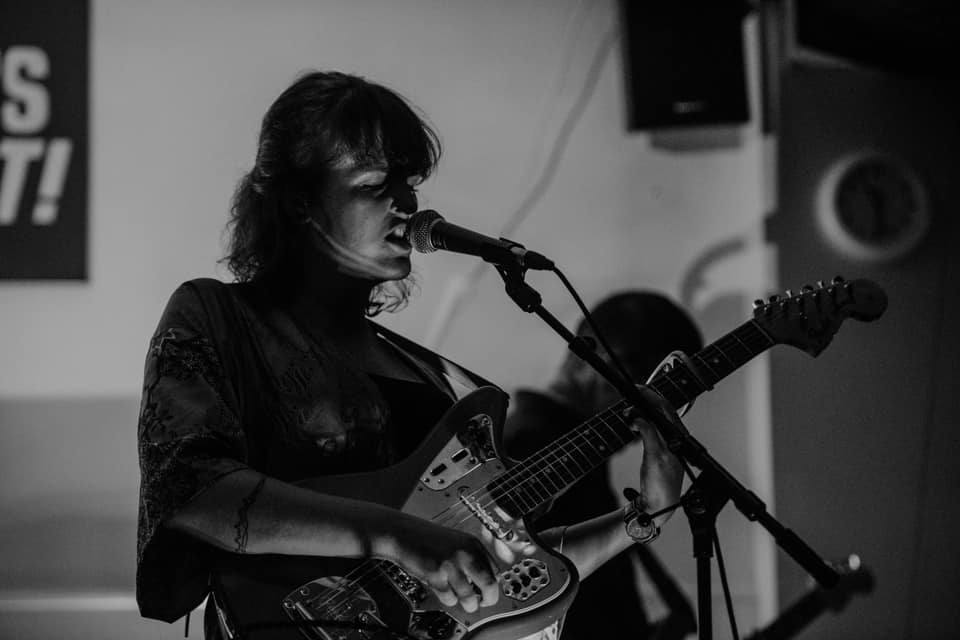
Kate Kyle performs as part of the line up for the Sapling gig in December
Lauren is a researcher who has been working with the Stove for over a year looking at the Stove as a business and how it interacts with other organisations, the community and its members.
I first came across The Stove three years ago when I was working in a different job, but as soon as I started this research project I knew I wanted to work with them. My supervisors recently asked me why this was, and that made me reflect on what attracted me to working with The Stove.
The first thing I remember about meeting The Stovies was how friendly they were, and their interest in what I was researching. That was a big plus for me. When I asked to research them, they proposed a more collaborative approach. This was right up my street, I wanted to research with them, rather than do research on them.
From the perspective of my topic, this was also interesting. I’m looking at how ‘open’ organisations are to different sources of information. And already The Stove was showing that they were ready to collaborate with researchers. They understood that it would take up their time and were careful to make sure the research was the right fit for them.
Their openness to working with me did not stop there. I was invited to different events, meetings and discussions. While some of the other researchers I know working with other companies were struggling to get information from organisations, I was heading to meet The Stove’s partners, sitting in on team meetings and attending the board away day.
Throughout this time, I built up a rich picture of how The Stove does business, and how it works with partners, the community and its members. While I am still in the middle of getting all my notes and interviews ready to be analysed, I have a few insights into what makes The Stove an interesting business.
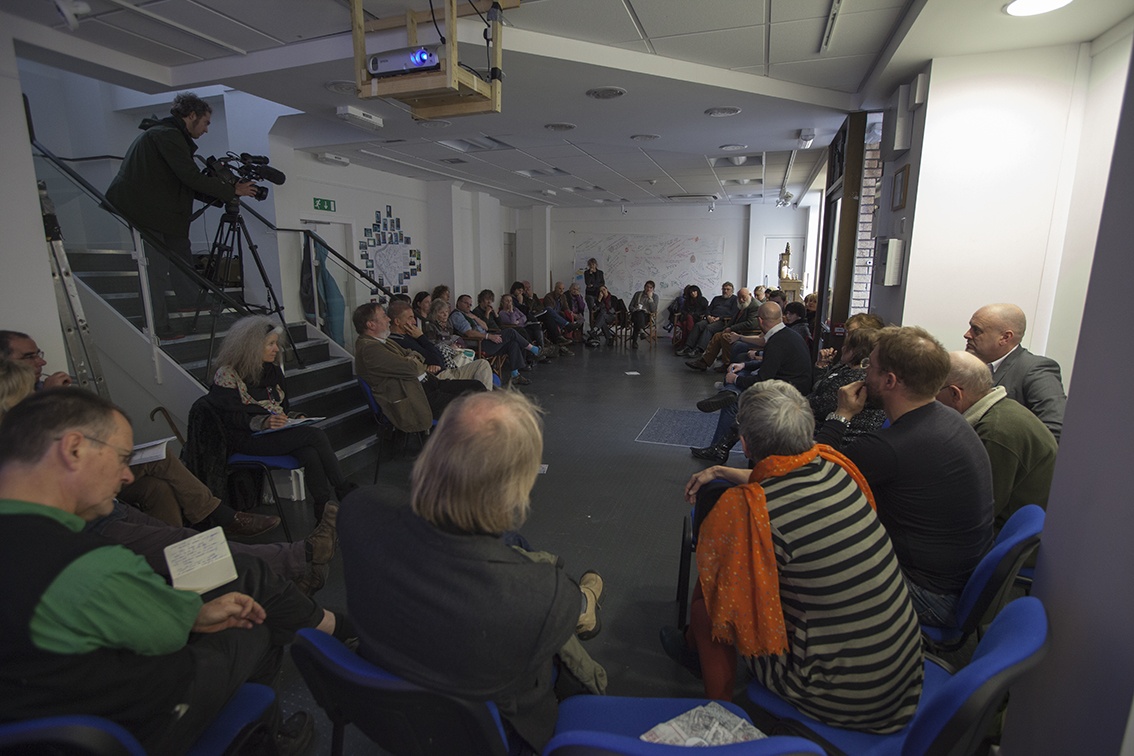
The Stove’s Curatorial Team is one of the ways they are unusual. The majority of charities and community groups will have a voluntary board (which The Stove also have) who are in charge of overseeing the organisation, but who also may have a huge impact on the direction of the organisation. The Stove has two levels to set direction, the board and the CT, and at the board away day, both levels came together to generate ideas for the future of The Stove.
In terms of my research, this was interesting and important. The Curatorial Team is made up of practising artists who have strong ties to the community of Dumfries, and they therefore bring in practical experiences and their ideas help shape The Stove.
When looking at how they decide when to work with another organisation, we spent a lot of time talking about the ‘fit’ between The Stove and the possible partner. There isn’t a set of conditions an organisation or person had to meet to work with The Stove. The way people work is important in making this decision. That’s not to say that The Stove expects everyone to do things their way. It looks more like the ethos of the approach that matters. The values embedded in how people work are important to The Stove.
Although I’m two thirds of the way through this research project, I still feel I have so much to learn and that my observations, thinking and ideas will grow. I know one thing for sure, I’m so grateful I was able to work with The Stove and they have supported me with so much throughout the process.
Lauren will be presenting and sharing alongside researcher Lizzie Smith as part of an open discussion on the role of cultural and third sector organisations like The Stove this month. It’s open to all and takes place on Thursday, 21st February.
We use cookies to improve your experience on our website, analyse traffic, and personalise content. By using our site, you consent to the use of cookies. Please read our privacy policy for more information.
Cookie Preferences
Manage your cookie preferences below:
Essential cookies enable basic functions and are necessary for the proper function of the website.
Name
Description
Duration
Cookie Preferences
This cookie is used to store the user's cookie consent preferences.
30 days
Statistics cookies collect information anonymously. This information helps us understand how visitors use our website.
Google Analytics is a powerful tool that tracks and analyzes website traffic for informed marketing decisions.
Contains information related to marketing campaigns of the user. These are shared with Google AdWords / Google Ads when the Google Ads and Google Analytics accounts are linked together.
90 days
__utmx
Used to determine whether a user is included in an A / B or Multivariate test.
18 months
_gali
Used by Google Analytics to determine which links on a page are being clicked
30 seconds
_ga_
ID used to identify users
2 years
__utma
Used to distinguish users.
Persistent
__utmb
Used to determine new sessions/visits.
30 minutes
__utmc
Used to determine if the user is in a new session/visit.
Session
__utmt
Used to throttle request rate.
10 minutes
__utmv
Used to store visitor-level custom variable data.
2 years
__utmz
Stores the traffic source or campaign that explains how the user reached your site.
6 months
_ga
Used to distinguish users.
2 years
_gat
Used to throttle request rate.
1 minute
_gid
Used to distinguish users.
24 hours
Clarity is a web analytics service that tracks and reports website traffic.