Support Us
Categories
Musings

Looking Forward / Looking Backward

By Hayley Watson.

It’s September already, and I’m still trying to pare away the feeling that this month is a fresh start – a miniature new year, though distinguished by routine, structure and peeled-from-the-packet stationery rather than Big Ben’s chimes, Auld Lang Syne and kisses. The thing is though, a year and a half out of education I’ve still ended up synchronising my ‘fresh starts’ with the end of summer. I’m not sure if this is by accident or coincidence (or, if you want to get philosophical, whether or not there’s even a difference). This time last year I’d just moved to Italy, and this year I’m in the process of moving back to Glasgow, which is a phrase I think I’ve said about a thousand times since I came back to Annan.

The recurring element of how my last five summers have ended, no matter what my plans have been, is suitcases I’ve stuffed my life into and usually an obligatory Ikea trip. The suitcase zippers burst a little along the edges, and anticipatory, so do I. This time around feels like it should be the same but I’m not so sure. Italy felt like an adventure, easy to romanticize. Working for shit pay and hopping from flat-to-flat takes a while to get old when there’s late summer heat and vino-tinto-tinted streets to meet you every time you finish a shift. And the last time I lived in Glasgow, I was a student – I don’t need to expand on why that combination worked.

Beginning my latest move to Glasgow comes in tandem with the end of my contract as blueprint100’s Associate Artist supporting its re-development. Working with blueprint100 this year, after my first experiences shaping its early structure and with four extra years of life behind me, has offered an opportunity to consider the continual motions of change we experience in early adulthood and how organisational support and belonging to a community can make it all feel a little bit more… easy. When I first started working with blueprint100 I was a teenager who’d just realised creative careers are possible, and now I’m an adult (I guess?) who’s a bit overwhelmed by just how many different ways there are to pursue creativity professionally.

A huge part of my role over the past few months has been consulting past blueprint100 participants on their experience and their professional and creative needs. Reflecting on how my own professional practice continues to evolve has been really interesting alongside speaking with other young adults going through the same process – I think we’re all very excited and very ready to take on creative careers, whether full-time or freelance or whatever else (the beauty of creative work is how flexible it can be). At the same time, we’re now living through a pandemic. One excited hand locks fingers with a frustrated/confused/kind of scared one. It’s been comforting for me to understand how similar our feelings and our needs are at this stage of our lives, and this has reaffirmed how important it is – at any stage of life, but especially during the ‘uncertain’ ones – to feel like you’ve got a community behind you.

Community, then, has been a core theme that needs to be considered as part of blueprint100’s identity following our re-development this year. As blueprint100 moves forward, its membership will be re-integrated into The Stove, as it was in its very early days. As part of The Stove, we’ll be centred on creative opportunities that are community-focussed – in alignment with The Stove’s own mission. I started writing this not wanting to mention the pandemic at all (I’ve already failed) but after 2020 I really do think isolation of any kind is the last thing any of us want – including in our creative practices. For a lot of the people I spoke to, myself included, it was blueprint100 & The Stove which introduced us to working creatively in a way that might just possibly make this region feel like the exciting place you want it to be. For a lot of us again, this is something that continues to direct our creative practices. It’s an approach that’s fresh and unique when you’ve previously only experienced creative opportunities which focus exclusively on yourself and the development of your skills as an individual.

Alongside community-focused practice, the future of blueprint100 is one of building an inclusive and accessible creative community. If you’ve spoken with me at all since June when I started the initial consultations, I’ll probably have mentioned ‘accessibility’ and ‘inclusivity’ so much its borderline annoying. I’m pretty sure the words are even on my CV. That’s fine though. I believe, especially where the arts are concerned, accessibility and inclusivity can’t be taken into account enough. Throwing yourself into creative spaces when you’re not even totally sure of your identity as a creative practitioner yet is hard! And there are barriers as well to even claiming this identity alone – if you’re working in a bar 5 days a week, tired when you’re not working, and the total amount of time you can dedicate to even thinking creatively amounts to like, maybe an hour here and there, it’s difficult to feel as though you’ve got any sort of creative identity at all.

By establishing a community of young creatives in the region – whether online or eventually in the real world – we can learn that actually, wherever we’re at right now is fine, and its normal. This doesn’t mean we all need to be in the same positions, but rather that we can see creative careers don’t tend to happen in a smooth, linear, get-a-degree-then-do-a-grad-scheme way. Accessibility and inclusivity within this community should go beyond just being buzzwords. It’s making sure people feel able to speak up and even interrogate its structure without possessing 4 years’ worth of art school language. It’s shaping the opportunities within it to suit its members, rather than the reverse. It’s creating access to the space and tech to get work done because maybe you can’t get a quiet space at home. It’s knowing that maybe you can’t swap shifts to get involved with something, but people get it, and other opportunities will still be there whenever you are. No judgment.

Something I’ve gained from re-evaluating blueprint100’s role in its participants creative and professional development is a better acceptance of my own. I mentioned earlier the vast means through which you can pursue a creative practice, and as much as I said this can be overwhelming it’s also been quite reassuring. Being able to work creatively full-time in the early stages of your practice is a position of privilege, or very good luck. As with many other positions of privilege, not possessing it can have some kind of weird stigma attached. I studied Fashion Design at uni, and felt guilty every summer that I chose not to try and get an unpaid London internship. In the first months after graduating I felt guilty for not applying to graduate jobs that would cover my commute costs and little else. Since then I’ve learned that honestly? I love fashion, but I love being able to eat and pay my bills even more. Van Gogh gets touted as an icon of ‘starving artist’-hood but its reductive to think his work would be any less beautiful if he didn’t have the struggles of simply surviving to deal with. Poverty is only poetic to people who’ve not experienced it.

I guess what I’m getting at with that paragraph is that actually, working full-time in a factory and part-time in a creative role has actually been pretty good. Tiring, but good. It’s totally possible to continue the trajectory of your career while earning enough to live, and day jobs really aren’t as bad as you’re led to believe when you’re still maintaining some sort of constructive creative practice. I originally wasn’t going to move back to Glasgow until I had like… my absolute dream first graduate job. I’ve since decided that it’s equally completely cool to take a 50/50 approach to building my career instead – I’m going to be working part-time in clothing manufacture again, and spend the rest of my time working creatively on a freelance basis. It’s pretty exciting, a little like dropping everything to move to the city and become an artist but with the added security of actually having a predictable income every month.

I seem to have a talent for taking these blog posts a lot further than they’re probably intended to go (blame lockdown and reduced opportunities for rambling to people in real life). If you need a tl;dr for this – blueprint100 has developed, grown, and changed in the past few months at a faster pace than it ever has before. I have too.
Categories
Musings

Quarter-Life Crisis: Where was Matt Baker at 25?

By Hayley Watson.

Feeling secure in your 20s is tricky at the best of times, and our generation are lucky to have a housing crisis, yet another recession and a global pandemic punctuating our continued ‘coming-of-age’ panic. Add a desire to pursue a creative career into the mix – if you’re reading this I don’t need to tell you how unstable this can feel because you likely already know – and you’ve got a recipe for a real headf…iasco. This interview is part of a series where I ask established creative professionals, people you and I might view as ‘real adults’, what they were doing at 25. I have my suspicions that they were probably as confused then as we are now and I’m determined to prove it.

To start this series off, I chatted with OG Stovie Matt Baker. Matt is a public artist, one of the Stove’s founding members and orchestrator within the Stove’s curatorial team. In this interview, he reflects on squatting in 90’s London, learning to trapeze, drinking expensive champagne for free alongside feral cats and (most importantly) finding value in your journey just as much as your destination.

Tell us a bit about yourself and where you’re at now..

I describe myself first and foremost as an artist – I have been on a long and varied journey in my practice but have made a living from my creativity since the mid 1990’s. I started out as a sculptor (having studied Architecture at uni and then getting an apprenticeship with a sculptor) and worked mostly on commissions. Gradually I became more and more interested in the way art projects involve people and how they can be a means for people to become more active and involved in their communities. I became more and more involved in what is often called ‘socially-engaged’ or ‘participatory’ art practice and eventually this led to me being one of the founders of The Stove Network in 2011. I am very proud to have been part of the Stove from the beginning and am constantly amazed by the way it continues to develop and support the growth of many creative people and play a part in the wider community of our region.

I live in the centre of Dumfries, by the river, and have a daughter called Marly who is at Duncan of Jordanstone in Dundee studying Fine Art. Talking to her about her artwork and developing practice is one of the greatest joys in my life.

You were 25 in 1990. There’s a lot going on in the world in 2020, but what was happening then? What’s the biggest news event you can remember from this time?

1990 was a year of great political instability – it felt like everything was falling apart. There were Poll Tax riots, prison riots, environmental protests, pitch battles at giant outdoor raves. Mrs Thatcher finally resigned….it felt like everything had to change. But somehow it didn’t and the Tories stayed in power for another 7 years!

Where were you living? Who with?

I was living in a squat in East London – it was an area of housing that was to be pulled down for a new motorway and full of creative people. It felt a very hopeful place until the police moved in to evict everyone – it was quite a battle. But there was no follow on plan and everyone dispersed 🙁

I was living with my girlfriend and other friends from uni – everyone had tried coming to London to get started in creative careers, but finding enough money to live was hard.

Did you have a job? What was it?

No, not really. I was doing odd jobs like deliveries, removals and short contracts with employment agencies to make a living. What was keeping me going creatively was volunteering as part of the team that was setting up Circus Space near Kings Cross. This was a training centre for aerial circus arts (trapeze etc). We converted an old bus garage into the centre. I learned rigging and trapeze and had a trapeze act with my girlfriend (we weren’t very good!).

Is there something you did when you were 25 that no one knows about?

The thing that really springs to mind was spending months with my girlfriend building a platform bed and decorating our room in the squat – we painted the whole floor with a perspective chequerboard pattern of red and green squares, it took forever and the house was demolished straight afterwards! But we kept the wood from the bed and built an outdoor toilet at the next place we lived – but that’s another story…

What was your dream job at the time?

What me and my girlfriend dreamed of was finding someone who wanted to buy and renovate a house in Spain. We figured that they could pay us to do the work for them and live in the house while the work was going on and I was going to make sculpture in between working on the house. Still sounds kinda nice!

If you had to choose one memory from your 25th year, what would it be?

We felt like we were a wee gang of eccentrics – an oasis of civilisation and creativity in a cruel and broken world. One of us worked in theatres in the West End and used to get given some of the props from shows – we had a beaded curtain that Vanessa Redgrave used to walk through every night. I had a job doing deliveries for a shop selling Champagne and the guy who ran it gave me bottles from time to time. That is what I remember: eating beans on toast, while drinking insanely expensive champagne, surrounded by theatre props and the feral cats that lived everywhere…whilst putting the world to rights and helping each other build our dreams for the future.

If you could tell your 25-year-old self one thing, what would you say? And what do you think your 25-year-old self would say to you?

I would tell my 25-year-old self to be braver about approaching people to help him realise his dreams – the world felt very scary and grown-up at that time.. what I didn’t realise is that ‘grown-ups’ remember being young and helping others is something that feeds their creativity too.

I suspect my 25-year-old self would have had a lot of questions about what I do now – I suspect I would have been concerned that I was compromising the purity of my art by being involved in so many other parts of the world other than just ‘true art’. I guess that is what I have found out is that art is everywhere, it is an attitude and set of values that can be brought to bear anywhere…there is no ‘true art’, just lots of different kinds of art and each has its value. But every creative person has to find their own journey and there are no right answers (I’d like to have told my 25-year-old self that too!).

Are you where your 25-year-old self thought you’d be now?

Absolutely not – my 25 year old self wanted to carve stone every minute of every day….even if he wasn’t actually doing that then!

We sometimes focus too much on success and forget how much our failures help us grow. What were your biggest failures from back then?

I utterly failed to move to Spain and build houses. I planned a massive theatre/circus/installation show with whoever would talk to me about it. It never happened. I won an architecture prize and at the presentation ceremony there were lots of famous architects who were looking for people to work with. I was so freaked out by the whole thing that I hid – I have often wondered how life could have been different had been brave enough to talk to some of those folk. But I have no regrets at all – I have been blessed to have a wonderful creative life and have met many amazing people on the way.

Finally, do you have any ‘words of wisdom’ for the 20-somethings reading this?

I think ‘keep going’ is the biggest thing. It is a cliché to say that this is a ‘marathon, not a sprint’…but it’s true. Also, don’t be too precious about every opportunity needing be 100% ‘right’. It is easy when you have a lot of time to think, to ‘overthink’ and talk yourself out of things because they might not feel perfect. You need to look at the wider impact of opportunities, not just what you personally will be doing, but who you might meet, the new skills you might learn. Think about yourself on a journey and you are collecting skills, tools and people on the way…then see any opportunity that comes along as part of that journey, rather than a destination. I still have absolutely no idea where I am going – but I’ve loved the journey so far and am committed to continuing to explore. A creative life is just one big experiment!

You can find out more about Matt’s past work on his website, https://mattbaker.org.uk

Categories
Musings

Five Years of Bravery

It was 2015. A year in from the Scottish independence referendum, when stickers faded pale on lampposts and flags fluttered limply in the breeze, or un-tethered, clung to high fences like a loose pair of nickers. It was as though some basic law of thermodynamics failed to take place. As if that fiery energy ought to have moved on. Heated up some other vessel or agitated another movement. Instead, it lingered in the air, resigned itself to the bar stools and blogs for the time being. And most people just got on with their lives, some relieved, some numb and others, angry as ever.

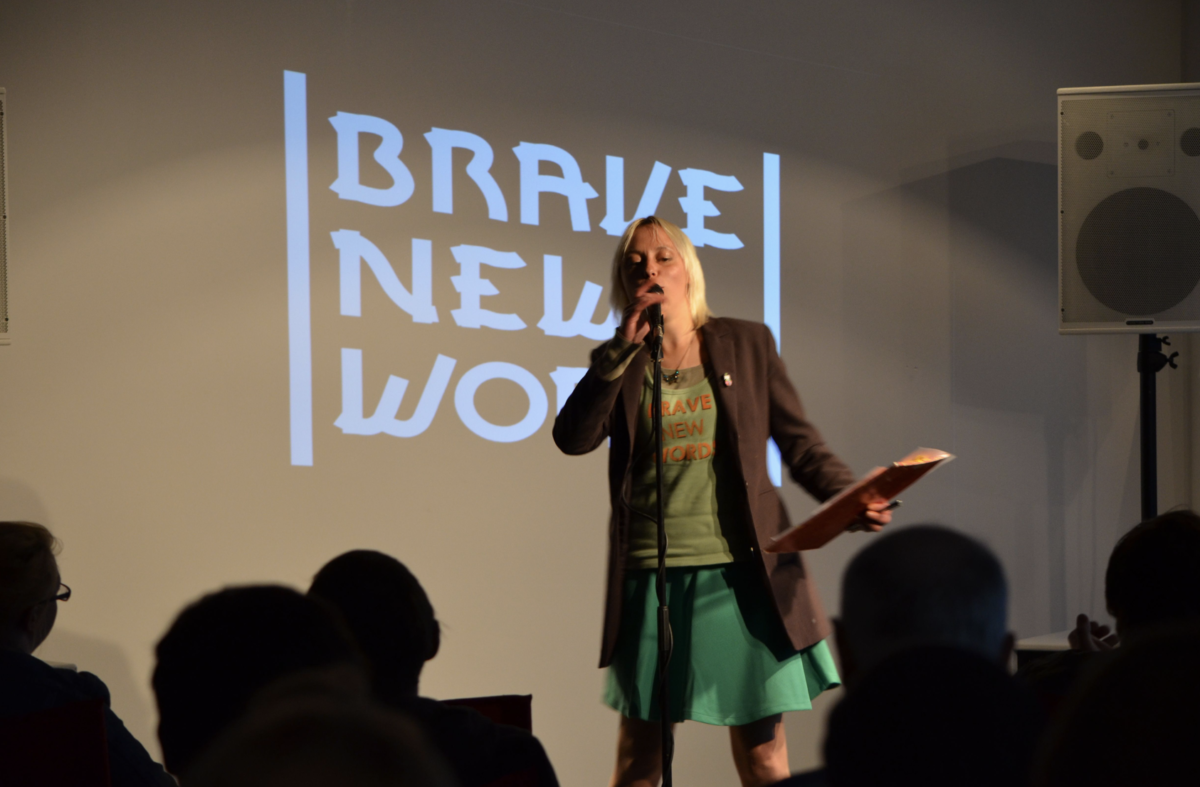
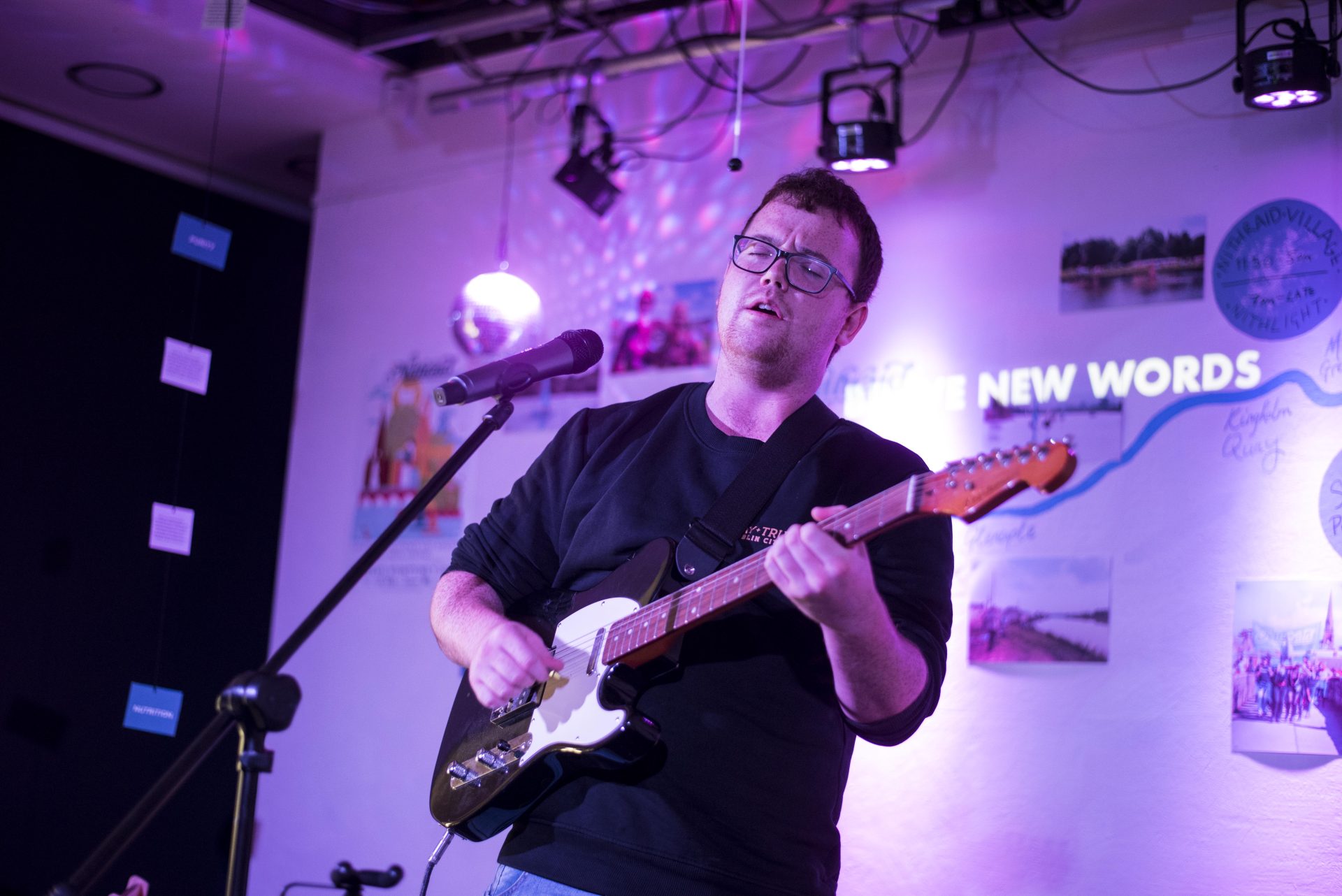
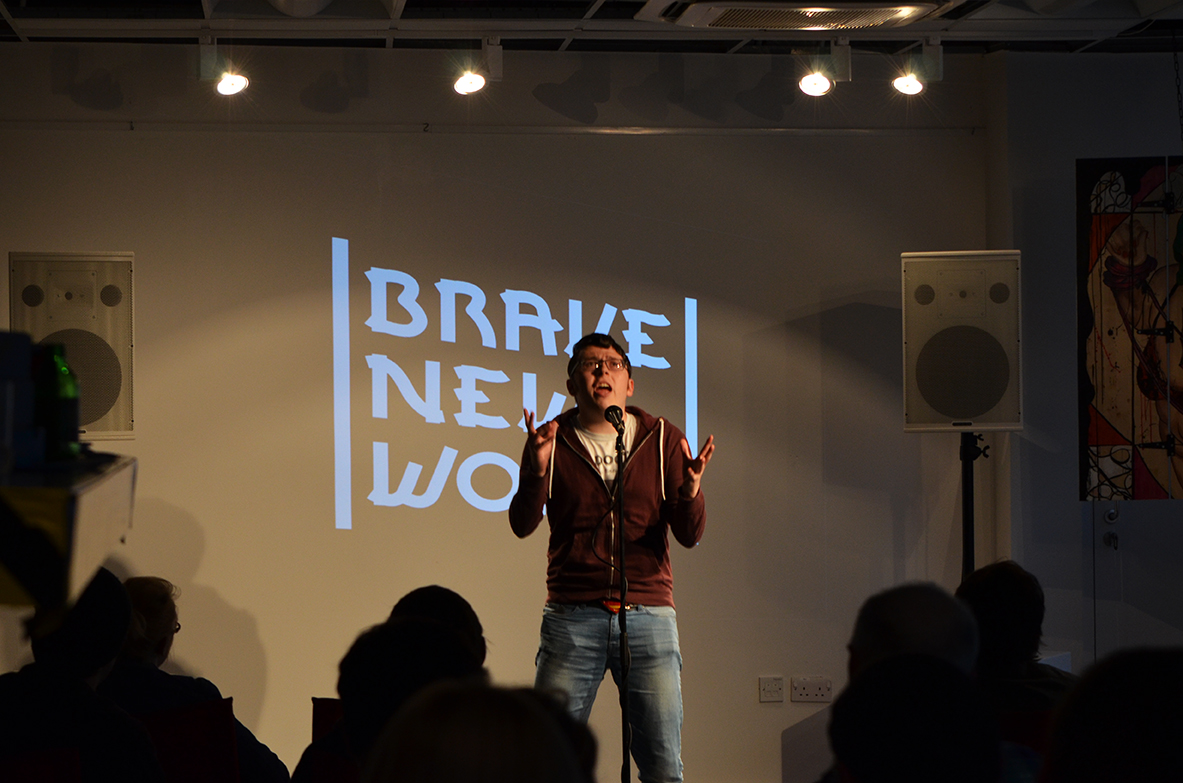
Writers Sarah Indigo and Eryl Sheilds concocted Brave New Words as a space to confront some of that undirected energy left from the referendum. We worked with them on structuring the day, talking with schools, community groups and others to come along and work it all out through a series of writing workshops, discussions and debates. That evening, we hosted the first Brave New Words Slam, an evening of spoken word, performance and beat-style poetry, reminiscent of the back alley bars of Brooklyn circa 1960 lit up the High Street. Well, not maybe not quite like that. But in my head, everything feels a bit like that. The poets played a blinder. From the ages of 14 to 80, it felt like something pretty special had happened.

A year later, we lost Sarah too soon. A light went out in the spoken word community in Scotland, with tributes pouring in from the central belt to the Galloway coast. Her work broke stigmas, challenged the status quo and energized everyone she came into contact with. Each birthday since then is not only a celebration of words spoken, sung, shot, signed or silenced. It’s a tribute to our founder and visionary.

This year, as it stands, is so unlike all the others. We’re not able to meet. And whilst we’re all weary of the rolling lockdowns, the dead air of pubs without music, the face masks, the rumbling anxiety of purchasing a pint of milk from the supermarket. It seems that now it’s more important than ever to celebrate as we once did and to share our thoughts, feelings, creativity and power with each other is so vital in making sense of the world around us. Beyond the peeling vinyl stickers of the town centre and the tequila-scented hand gel.

Just as in 2015, there’s an energy now that lingers in the air. What it is we can’t be as certain of what it is as then, but it comes out in the quieter moments of our lives. That’s when stories are written, songs are sung and creativity thrives.

Brave New Words is not possible without people. Literally. I’ve tried. More than a couple of empty mic nights confirm this. It’s the space to take a chance, often when you never you thought you had it in you. And each month, it’s completely different from the last. From epic poems on elderly cats, to Kate Bush inspired fluorescent neon dancing, 10 minute silences and rabble rousing political speeches.

So join us as we celebrate everything Brave this September. I mean, what else is there to do?!

Be Brave.

Categories
News Project Updates

Lowland: Re-Imagined

In the good old days, if you recall, before the big bad virus swept across the world. You know, that flu that awakened our most primal of fears, leaving us high and dry, bleaching banana skins from the supermarket shelf and losing all concept of social cues and humility. The ‘good times’, before bumping into an old colleague in the supermarket left you equal parts scattered like some unassembled jigsaw and petrified, marooned and struggling in vain to stitch together some semblance of a normal, pleasant English sentence from the ruined, anxiety ridden attic of your mind whilst gripping a bottle of disinfectant (anti-viral of course) just in case they dared step foot within your 2 meter sanctuary of social isolation.

Pause for air.

Well, before all that, we had such things called ‘plays’. ‘Plays’, or ‘live TV’ (not really, but bear with me) were these real-life moving pictures where people called ‘actors’ would perform words written by writers, too strange and socially awkward for most other professions.

These ‘plays’ would be performed in ‘theatres’. Theatres were buildings that came in all shapes and sizes. From majestic stone coliseums in Greece, to tiny wee almost-shed-like structures near Whithorn on the Galloway coast. Yes, they were quite the hit for some time. People would travel in their millions to a tiny, expensive over-crowded city in Scotland to watch some semi-sane people dance and prance their way on stages in dive bars and portaloos. The legends of the Internet are rife with memories and photographs of these most magical, dumb and dangerous shenanigans.

Then the Big Bad came and ‘plays’ weren’t able to take place in theatres, with people, sitting right next to you, loudly chewing Werthers Originals, letting their mobile phones ring loudly occasionally interspersed with quiet farts now being considered a health risk. So much of them went online, in Instagram stories and glitchy Zoom sessions where you got to sit and stare at yourself, striking the odd socially-conscious facial cue to let them know you were in fact listening and not just scrolling through cat videos on YouTube. The same too happened here, at the Stove with the ‘Lowland’ play, ready to be performed in Lochside, Moniaive and Langholm, Lowland sank back into the dusty shadows of the rehearsal room and sat, patiently waiting for the time to return. Realising after three to four months that maybe wasn’t looking all that likely, it was time for a re-imagining!

Originally conceived and developed with the help and guidance of local young writers, poets and dramatists, Lowland initially explored what it meant to ‘belong’, using postcards filled out by Doonhamers, featuring drawings, poetry, stories and the occasional dirty joke. Over 500 of these postcards were filled out during poet Stuart A Paterson’s residency with the project over a year ago.

As time went on, the play started to take a bit of shape. Several adaptions, rewrites and voyages into dead-end dark tunnels later, the play was ready to be rehearsed with a talented community cast of local actors, writers and performers. Just as it was coming to the scripts-down, lights up, camera action…the big bad burst on through the stage door and it all went quiet.

Since then, the play has been re-adapted as a podcast in 2 chapters (originally it was meant to be a radio play but there was just too much swearing). Following on from the cast’s first digital get-together and read-through of the adapted script, we are embarking on a journey into the world of audio plays!

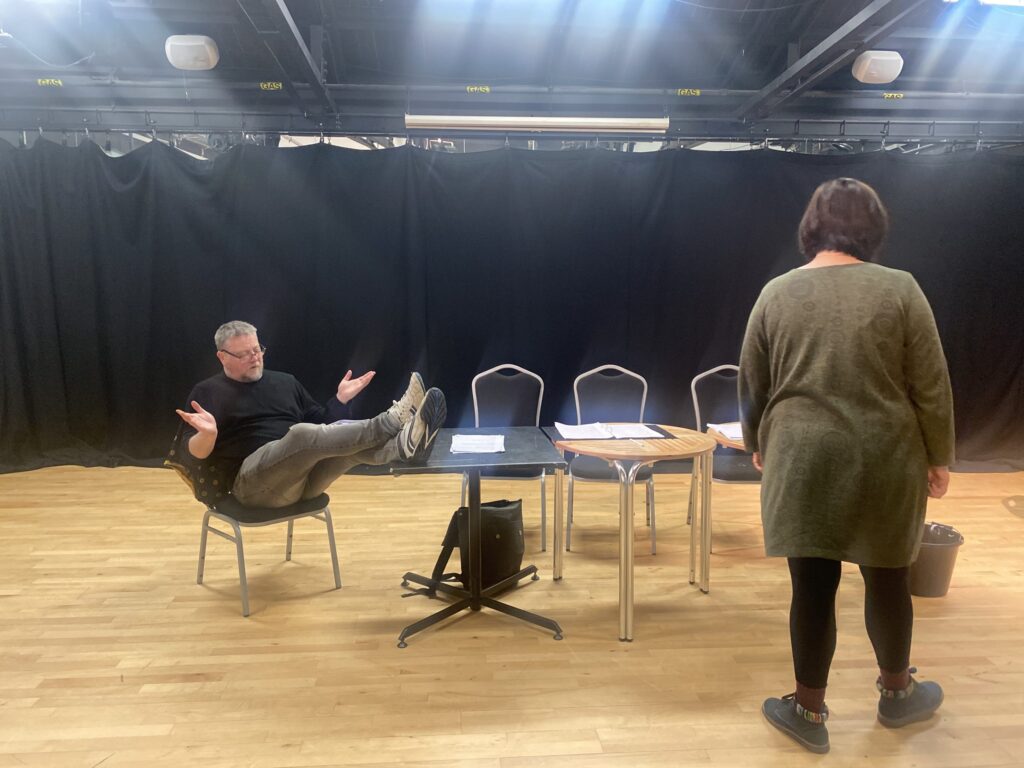
We can’t say it’s been easy. Four months of mourning for live theatre and foggy lockdown head doesn’t do a playwright any good. And the pubs were closed. Yet now, ladies, gentlemen and everyone in-between we are delighted to be returning to the rehearsal room (albeit in cyber space) and are almost ready to buckle down and get recording! Lowland: The Play is on its way. And we can’t wait for you to hear it…

So, what’s it all about?

‘Let me get this straight. You’re telling me I have to present some new fangled resources centre, right in the middle of the scheme, with little to no idea what it will actually be used for. On top of all this, they’re all here, Barnside, for a consultation. Only, there is no such thing. I’m nothing more than a salesman. And if I don’t do this. I destroy three years of clawing my way back out of the gutter…for a job.’

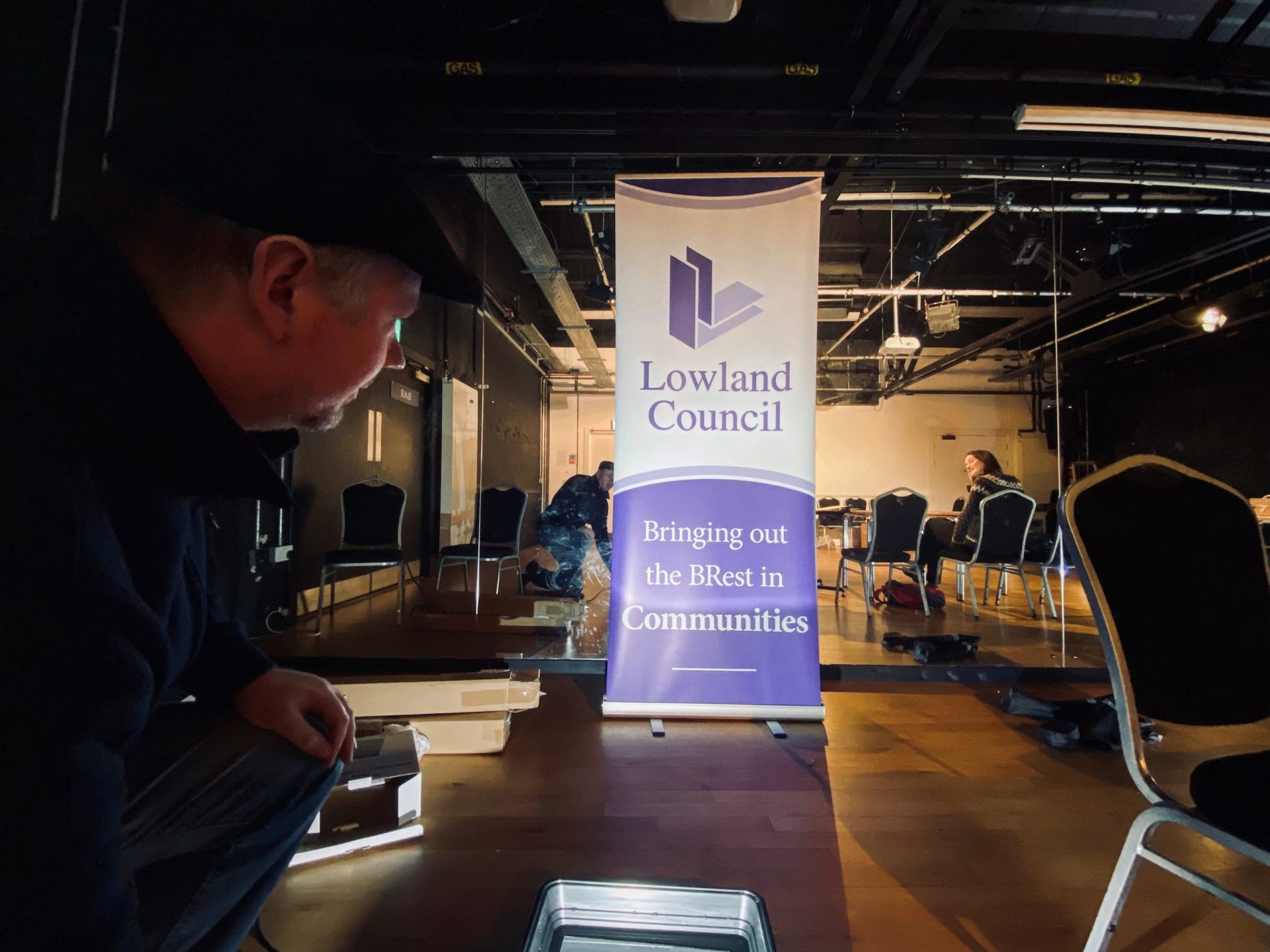
Barnside is sinking and the residents are on the edge of revolution. The local council, in its bleary wisdom, have been drafted in to ease the tensions. Only, not everything is as it seems and sooner or later, something’s got to give.

A play in two acts, inspired by over 500 postcards reflecting on life in Dumfries written by Doonhamers. Lowland: The Play features a community cast, devised through collaboration with local writers’ groups, communities and members of the local council, Lowland is the tale of a consultation gone wrong.

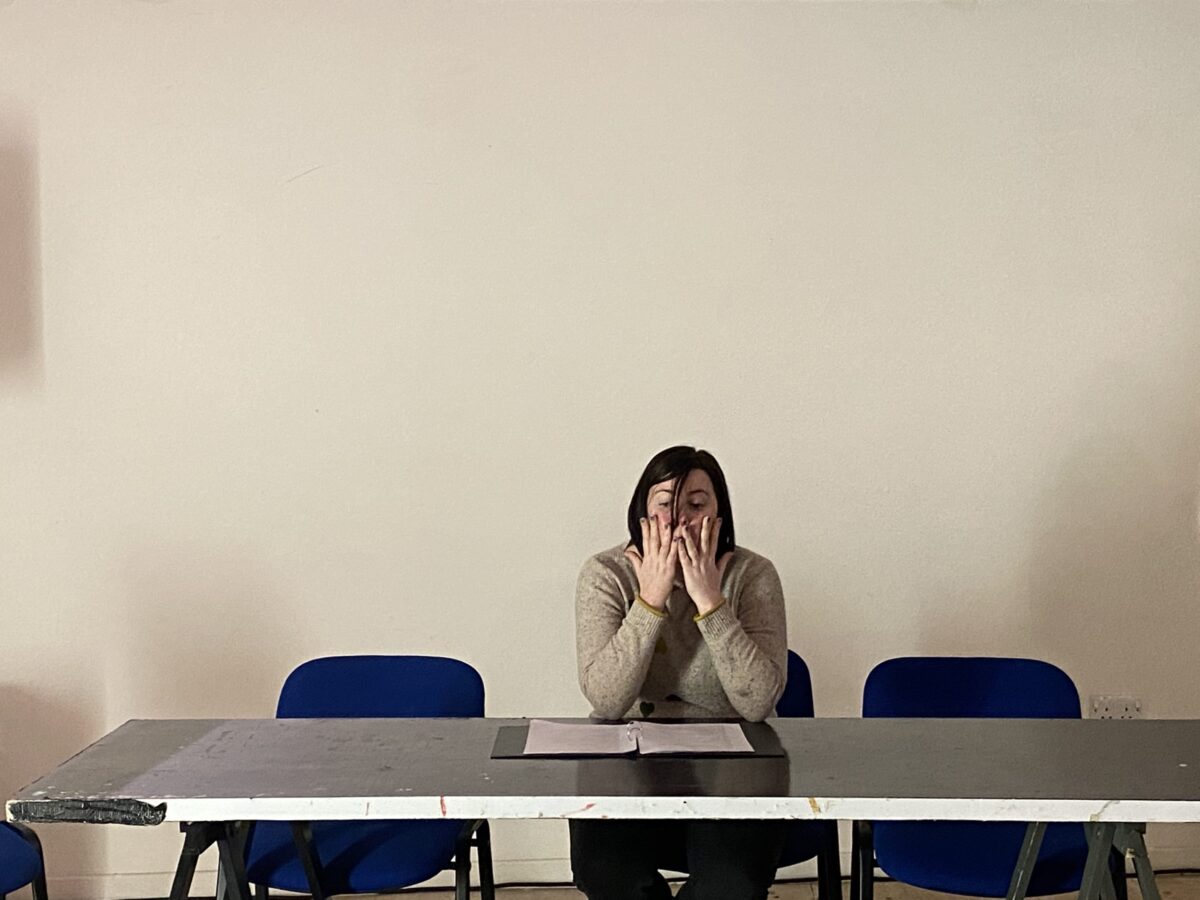
As Angela, a council officer, prepares for a consultation, one year in the making, her boss throws a curve ball, eradicating all her best intentions, leaving her and her assistants in disarray and woefully unprepared. As a storm rages on outside, a community prepares a coup d’état…

Lowland is a tragi-comedy, offering a satirical and emotional look at the nature of community, power, local democracy and belonging.

Next Up: Meet The Cast

Categories
Musings News

Response to the Culture, Tourism, Europe and External Affairs Committee on the current Covid-19 crisis on our sectors

This is The Stove’s response to the call-out from the Cross-party Committee on Culture, Tourism, Europe and External Affairs on the impact of covid-19 to Scotlands Culture and Tourism sectors and how our sector should be supported at this time.

We see it as part of our role in the region to advocate for those working in the creative sector in D+G but there is strength in numbers so we strongly encourage others to send in responses so that as many voices can be heard as possible – link here

photo credit Kirstin McEwan

Response submitted on the 17.8.2020

This response comes from our experience as a community focused organisation in the High Street of Dumfries, ongoing discussion with the freelance creative community of Dumfries and Galloway, the small groups and businesses we work with and as many of the national discussions and emerging reports we can sanely be part of.

Q – how best the industry can be supported during this unprecedented time.

We need urgent support for the freelance creative economy in Dumfries and Galloway in the form of a) paid work opportunities for freelancers, b) support for local arts infrastructure to effectively support freelancers and c) support for a network that can learn and share learning from this activity.

This paper develops a series of proposals for support and a long term vision through an understanding of the cultural sector that has been brought into sharp focus by COVID.

NEEDS

  • We need devolved local delivery of support that takes into account the monumental variety of work and structures that produce and deliver it within our sector at a grassroots level
  • We need a long-term VISION that embraces innovations in how we value cultural and creative work – wider social benefit, place-based initiatives and community wealth building, localised power and delivery
  • We need to talk about what we have missed, not just what we have done, and be clear on who has not been heard or supported
  • We need to be honest about the “real” long-term impact of support, who will not benefit and why. We need to share and recycle ALL support given – if we invest into spaces/buildings/large institutions for example, how can they then pay that forward to others in the sector and their surrounding community through resource, space, knowledge sharing, local expertise and procurement and be held accountable to that?
  • Fundamentally we need a grassroots and sector-led approach led by the people who make creative work and the local communities it should benefit and be a part of

OUR FOCUS IN DUMFRIES AND GALLOWAY

Our building and community is a non-residential and transient community. At the very start of lockdown it became clear that others were better placed than us to provide the type of community care roles that we have seen a lot of creative place-based groups and organisations take in the field creative community-led work we operate in.

Our focus became the immediate and devastating impact on our local community of creative freelancers who are the pillars that hold up the region’s creative sector – small creative businesses, local projects, independent festivals and events across SW Scotland. The freelancers in our community do not have a platform in national conversations on arts, culture and their economic impact and value, advocating for them as well as providing work opportunities and networking support became our way to act.

We have been approaching this twofold – by taking part in as many of those local, regional and national conversations as we have capacity for and actively working with our membership and creative community so that the grassroots of the sector can be as loud and visible as possible in shaping how we move forward.

For our small acts of solidarity and creativity see our Homegrown Blog

Atlas Pandemica is a new project, like Homegrown, specifically developed in response to COVID, it commissions artists to gather and react to stories of the pandemic’s impact on often unheard voices in our communities and develop creative visioning for going forward into a more socially inclusive future.

It is this grassroots workforce in creative and cultural activity alongside local groups and organisations that we have seen as key collaborators and indicators of the resilience and innovation by local folk and communities.

Our long-term, strategic aim here is to support a regional network of Creative Placemaking activity that helps build and sustain a robust creative workforce whilst responding to real need at local community level.

GRASSROOTS CULTURE

The creative and cultural sector that is embedded in communities is under-represented across our national agencies and as such also lacking in engagement and relative collection of data in terms of their wider economic impact for our places and communities.

The Stove’s recent Embers report, April 2020, highlighted the necessity of supporting community-led, localised action and the lack of understanding of the value of this work to healthy economies. The grants for self-employed creatives were welcome but they do little to consider and understand the expense needed to continue to work as a freelance worker in our industry (support for three months of living/work expenses in Scotland coming out lower than the UK average of £2900, under £1000 a month) SEISS Statistics.

” Performers and other creative practitioners like me earn on average £10k a year and do not fit within the Chancellor’s characterisation of those left out of the SEISS. It is claimed that those who are excluded represent just 5% of the self-employed workforce, earning on average £200k – this is very clearly not the experience of the more than 40% of Equity members who have not been able get support so far.”Equity letter to Government

Excluded UK estimates that 3 million freelancers across sectors have been excluded from any support.

This needs to be courageously recognised so that it can be addressed in the plans we now take forward. Through our experience this includes, but is not limited to, the following groups and activities in cultural and creative industries:

  • Voluntary
  • Community-led
  • Freelancers
  • Young emerging and those not registered as self-employed
  • Vulnerable groups and minorities
  • Informal learning programmes and groups
  • Independent festivals and events

“Creative workers–one of the more vulnerable sectors of the workforce–are already seeing devastating impacts on their income, not only in turnover terms, but also in their charitable contributions and sponsorships. Leaving behind the more fragile part of the sector could cause irreparable socio-economic damage.” – p5 Oxford Economics Report – The projected economic impact of cvoid-19 on the UK Creative Industries 15.6.2020

Our ideas around this add to the pool of information, research and experience coming from creative freelancers across the globe, community groups and workers, academics, think tanks etc. to justify a more holistic and creative approach to economic recovery that makes use of our community groups and organisations (Community Wealth Building, Carnegie Trust on Wellbeing, Wellbeing Economy, Anchor Organisations). We need the investment to start making it happen and the courage to do it in a localised, place-based way.

Through our work at The Stove we have seen the impact that can be had when the ground is made fertile and people are given the agency to develop and grow things locally.

A CULTURE COLLECTIVE

We see an opportunity to devolve resource and power to local people by supporting creative freelancers and groups and organisations that are already working as part of their communities to develop locally responsive projects that can also take advantage of cross sector opportunity for long-term benefit.

What if we were to pay out of work people in the Creative and Community sectors a fair wage to work in their local communities to start new projects (or build on things started in lockdown) – these could be cultural projects like choirs, writer’s groups etc. but they could also be environmental projects or new social enterprises. Our skill set is to ‘make shit happen’, we are producers, innovators and entrepreneurs! If this National Task Force was to get things started then the national agencies and funders could come in behind and help take things to the next level and, before you know it you have communities making their places, economies and health better.

The premise is simple – our Embers report has clearly shown the pivotal role played by creative practitioners and small creative organisations to initiate and maintain momentum in placemaking projects. These may start with cultural projects, but quickly develop into new social enterprises, asset-based and environmental initiatives. In short – do some cultural pump-priming in a community setting and the payback in terms of community resilience, economic development and people’s wellbeing is incredible.

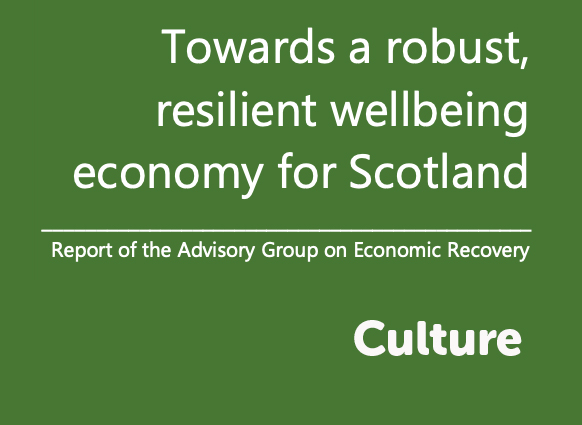
This idea is based on power of community and cross-sector collaboration and respondent to the Guiding Principles from the Report by the Advisory Group on Economic Recovery – p12. More on the development of this can be found on The Stove Blog here

A LONG TERM VISION

We believe support needs to align towards a clear VISION that can be shaped by the changing needs of the sector and is representative of the wide variety of work this includes – notably the less heard voices of creative freelancers, voluntary and community-led groups and organisations. It needs to be local, be a collaboration between the sector and our communities and feed the local innovation that is already there.

Carnegie Trust UK’s recently published (1st July 2020) “Conversations with Communities” initial findings state it brilliantly

“The COVID-19 emergency has let us see what only the state can do – set up hospitals; fund research into a vaccine; shift resources to the front line – and what only communities can do – mobilise and respond quickly by building on existing relationships; pool collective resources; think creatively about what assets are available.”

While the Government is able to float ideas for action, these can only become a reality through collaboration with the arts and creative sector. For example, the idea of a National Arts Force needs all of us in culture to come together and work with other bodies to shape a plan that can make this happen…only we the creative practitioners on the ground know how this could work…we must take our place at the discussion table for the sake of everyone who works in our sector and for society at large.” – https://thestove.org/creativity-and-community-as-part-of-the-national-recovery/

We have the knowledge, we have the tools, we have the live projects that are working and the historical examples of what activities and investments are impactful in a deeper, wider sense of economic resilience and wellbeing, now is the time to stop pitching our systems to big business and outdated ideas of ‘growth’ as a measure of societal success.

Categories
Musings News

Culture and Creativity in the National Recovery Plan

On Monday the National Advisory Group on Economic Recovery published their report with recommendations for priority actions. The report recognised that a) the creative sector had been particularly badly hit by COVID, and b) that culture and creativity had a big part to play in our nation’s recovery. Below is specific section on culture and creativity in the report:

While the Government is able to float ideas for action, these can only become a reality through collaboration with the arts and creative sector. For example, the idea of a National Arts Force needs all of us in culture to come together and work with other bodies to shape a plan that can make this happen…only we the creative practitioners on the ground know how this could work…we must take our place at the discussion table for the sake of everyone who works in our sector and for society at large.
The National Arts Force idea is something that The Stove and others have put forward –  see here for further detail and background on the idea. Please do get in touch if you want to help make this idea a reality.
You can find the full report from the Advisory Group on Economic Recovery – here