On Monday the National Advisory Group on Economic Recovery published their report with recommendations for priority actions. The report recognised that a) the creative sector had been particularly badly hit by COVID, and b) that culture and creativity had a big part to play in our nation’s recovery. Below is specific section on culture and creativity in the report:
While the Government is able to float ideas for action, these can only become a reality through collaboration with the arts and creative sector. For example, the idea of a National Arts Force needs all of us in culture to come together and work with other bodies to shape a plan that can make this happen…only we the creative practitioners on the ground know how this could work…we must take our place at the discussion table for the sake of everyone who works in our sector and for society at large.
The National Arts Force idea is something that The Stove and others have put forward – see here for further detail and background on the idea. Please do get in touch if you want to help make this idea a reality. You can find the full report from the Advisory Group on Economic Recovery – here
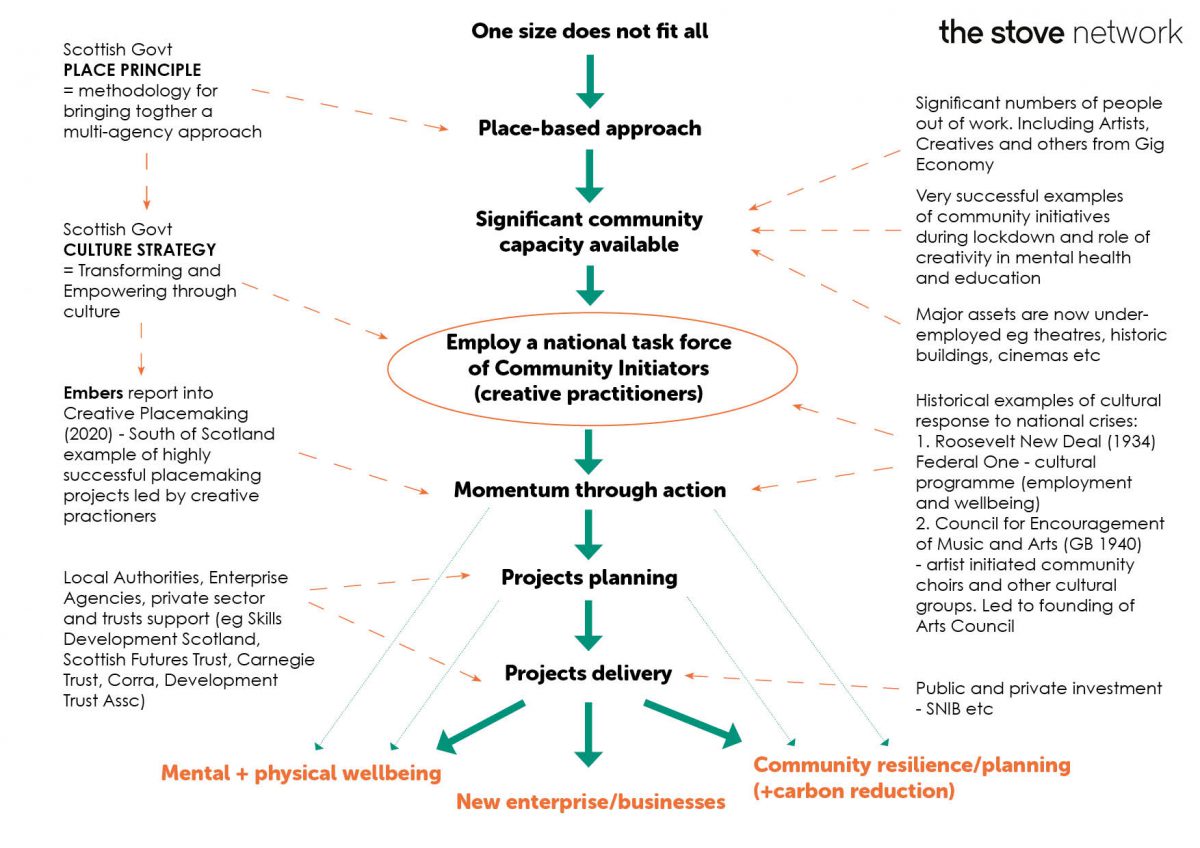
The diagram above is The Stove’s submission to The Advisory Group for Economic Recovery for Scotland. It is just the first germ of an idea and we are sharing it now in the hope of generating further discussion with others in the Creative and Community sectors.
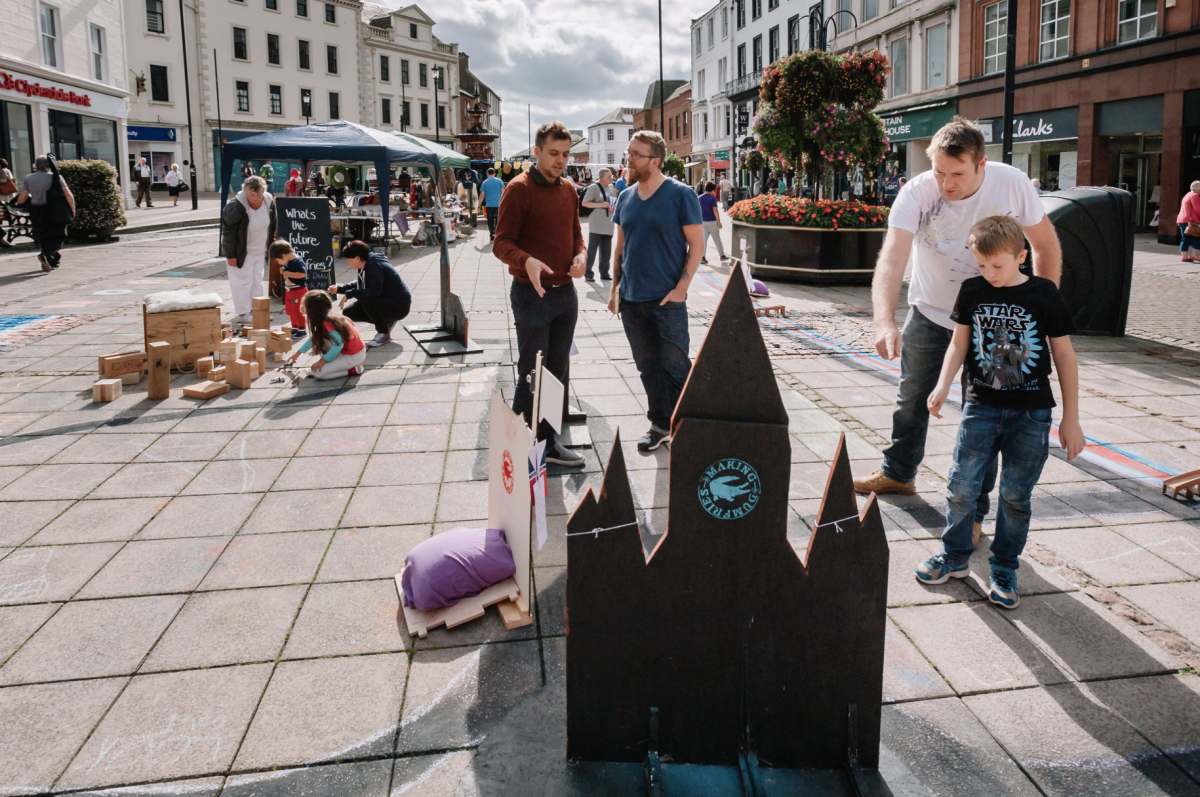
The premise is simple – our Embers report has clearly shown the pivotal role played by creative practitioners and small creative organisations to initiate and maintain momentum in placemaking projects. These may start with cultural projects, but quickly develop into new social enterprises, asset-based and environmental initiatives. In short – do some cultural pump-priming in a community setting and the payback in terms of community resilience, economic development and people’s wellbeing is incredible.
In the current climate we have thousands of creative practitioners with little prospect of working in the short and medium term. We have communities who have experienced working together for mutual benefit during lockdown and we have many brilliant resources (theatres, sports centres etc) that are lying temporarily idle.
What if we were to pay out of work people in the Creative and Community sectors a Basic Income to work in their local communities to start new projects (or build on things started in lockdown) – these could be cultural projects like choirs, writers groups…but they could also be environmental projects or new social enterprises. Our skill set is to ‘make shit happen’ we are producers, innovators and entrepreneurs! If this National Task Force was to get things started then the national agencies and funders could come in behind and help take things to the next level and, before you know it you have communities making their places, economies and health better.
It may sound mad, but something not so very different was successful in the US as part of Roosevelt’s New Deal in 1934 and again in 1940 in Britain with the Council for Encouragement of Arts and Music which saw a force of musicians staring choirs and orchestras all over the country during wartime.
That’s as far as we’ve got til now – whaddyfink? Let us know and help us shape the idea if you think it has legs..
A major report into Creative Placemaking by The Stove Network has recently been released. It presents an in-depth investigation into the importance, impact, and potential influence of Creative Placemaking for the local economy and well-being of communities in the South of Scotland.
The Embers Report aims to ignite creative and culturally led regeneration by exploring the work and experience in Dumfries and Galloway and helping to define a joined-up vision for work in Creative Placemaking for the South of Scotland. Embers presents Creative Placemaking as a collaborative practice that uses the tools of arts, culture, and creativity to work as part of our communities, responding to local needs to build a better quality of place.
In this time when community responses and collective action are at the front of everyone’s minds, there has been a long history of community activity in the South of Scotland, with people coming together to look at the future of their towns and villages. A common factor across many of these projects is the involvement, and often leadership, of creative people who are already embedded in their communities and in collaborative activity with the arts, culture, and creative industries.
“What we hope is that the Embers Report will be a map, advocacy document and proposal for support needed to further advance the really great work in placemaking that we can see happening in our communities. People are doing amazing things as part of their communities, bringing all sorts of life experience, expertise and ideas together to make a better place for everyone who lives there. Ideas don’t always work but when they do they are making a real difference in people’s lives.”
– Katharine Wheeler, Curatorial Team Member and lead on the Embers report.
The Embers Report was produced with the support of the South of Scotland Economic Partnership (the forerunner of the new South of Scotland Enterprise agency) and the Carnegie Trust UK. Embers involved six-month detailed consultation with people and projects working in local communities, including Dumfries, Sanquhar, Lockerbie, Langholm, Moniaive, Stranraer, and Wigtown.
With the coming of the Borderlands Growth Initiative and South of Scotland Enterprise, there is an unprecedented opportunity for the South of Scotland to create genuinely bespoke development strategies, suited to its unique character. Creative Placemaking should be at the heart of this, through the way that communities are coming together to develop new social enterprises and place-based projects.
“We hope to continue to support Embers to strengthen local government collaboration with community groups and local enterprise, to enable communities to improve their own wellbeing according to local priorities.”
– Pippa Coutts, Research and Development consultant for Carnegie Trust UK.
The Embers Report puts forward a series of clear recommendations which contributors hope will be taken forward by regional and national agencies operating in the South of Scotland.
Effective Creative Placemaking engages communities at the grassroots level, building on the existing culture, activity, and relationships in each place. It brings people, communities, groups, and organisations together to co-develop better strategies for our places. It utilises the Creative Industries and spans Community Development sectors, contributing to long-term social outcomes for our communities.
The Creative Industries play an important role in our towns, particularly at this time. It is vital that our region supports its creative sector, which has been such a success story in recent years. There are currently more people working in the Creative Industries in the South of Scotland than there are in agriculture, yet many of the people working in this industry are freelance and self-employed, and the COVID-19 crisis has taken a terrible toll on these important local businesses. The Embers Report presents a roadmap for integrating creative businesses into communities and the future inclusive economy of our area.
“How can we, as a creative agency for change, make things slightly different here.”
– Lucy MacLeod, Creative Director for Outpost Arts, Langholm
The Embers report is available to download by here: Embers Report
By Martin O’Neill, Stove Curatorial Team and Head of Programming
What is the responsibility of art in times of crisis?
Things look very different now.
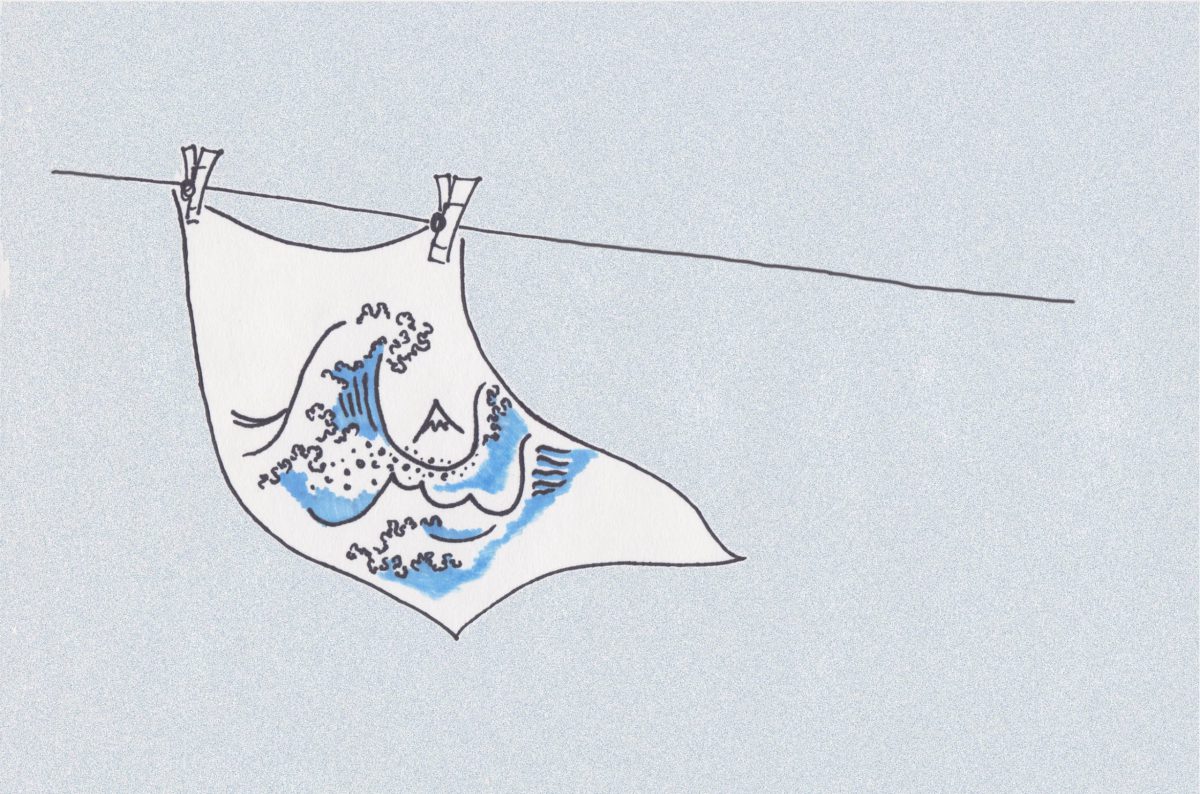
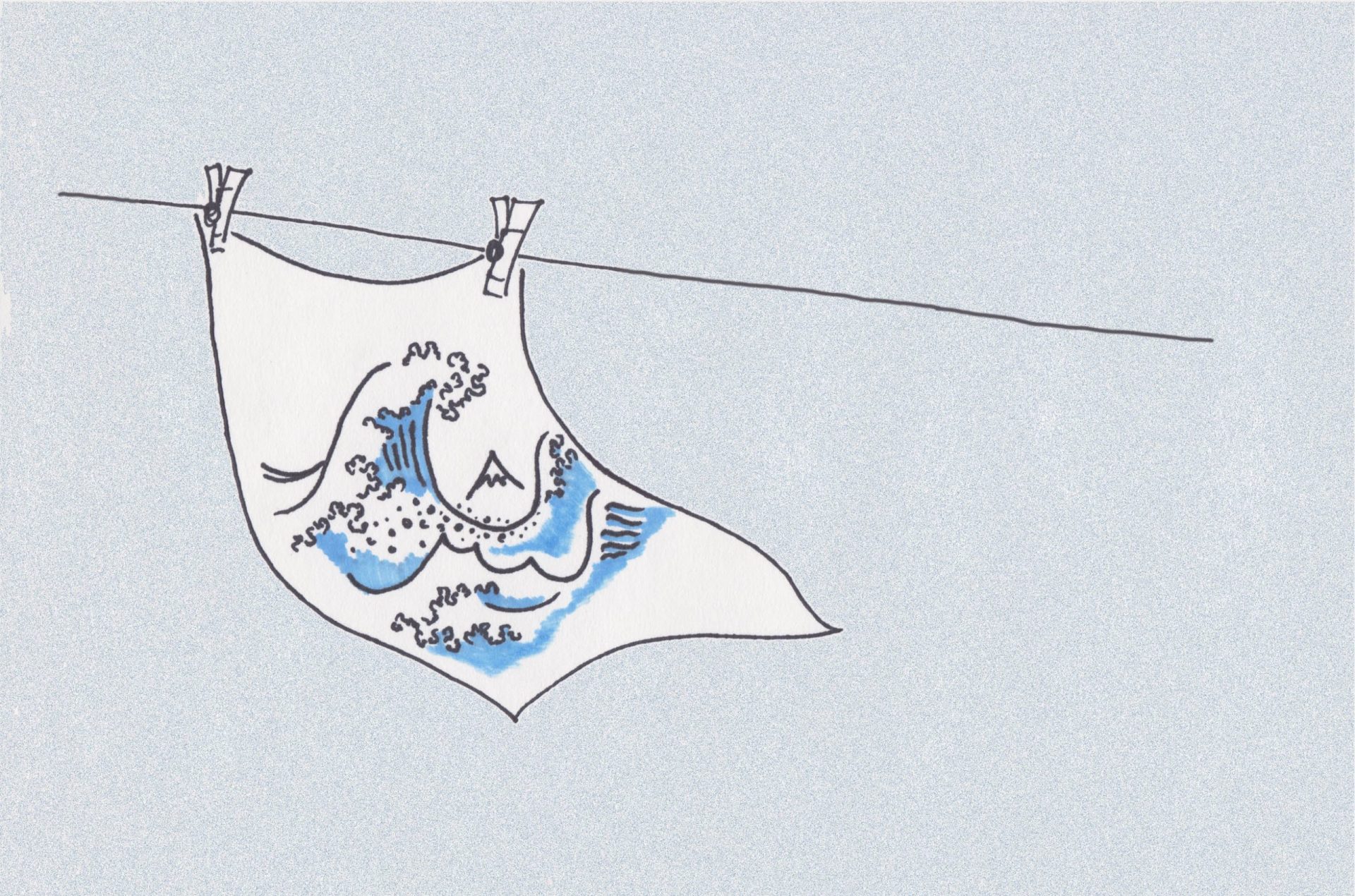
My neighbor has washed the same tea towel, every two days, for the last three weeks. It’s Hokusai’s wave.
I didn’t really want to notice this. I never really thought about my neighbor’s washing line, let alone her tea towel. Aside from the fact it seems a little bit much to wash it every two days, it’s in my life now and it’s past the point of familiarity. Like the traffic lights at the foot of the road I crossed every day, the ‘Clearance Sale’ vinyl on a shop on the High Street, the two grizzly dogs on the Mill Green; it’s ubiquitous. Maybe Irene has been washing her tea towel, hanging it on the washing line every two days for seventeen years. Or maybe it’s just her little routine in the lockdown. The tea towel waves heroically in the breeze, and I’ll get on with other things, cooking, reading, watching the television. And before the sun dips, it’s gone.
Similarly, a friend of mine, on his daily walk observed new paths, termed ‘desire lines’, a consequence of footsteps eroding the earth, un-foiling a path across parks, fields, forest floors or gardens. These lines leading home have multiplied over these three weeks of lockdown.
These observations of the mundane might represent a reacquainting, or revelation of the environments we thought we knew. Our neighbors, the paths leading home, the way time passes. Crisis, in this case, has given us pause and somehow focused our lives entirely on the in-between. But for all its meditative qualities, it is scored with a sadness as yet not understood.
This reflection comes at the worst possible costs, not only of the very real threat of our health and our lives, but also the alienation of our lives from one another. This new perspective is weighted with an anxiety, needle-pointed in the reality of the weekly shop, or a visit to the chemists. We move in a heightened awareness of one another, yet for many, this is a privilege un-bestowed to key-workers, from the NHS to the supermarket cashier, their roles akin now to soldiers in warfare. Their responsibilities, particularly of those whose work has often been derogatively termed ‘un-skilled’ by governments, represent the fragility of socio-economic systems as well as the hypocrisy in the demonization of labor in our country.
The role of art, then through this, seems nearly un-definable. More often than not, definitions of its role in this time appear and disappear like mirages in a desert, and mostly its definitions return to the safety of ‘entertainment’, or the spectacle. The live-streamed play, the virtual tour…
Artists and creative freelancers are hit with a financial insecurity on a scale unseen since the financial crash of 2008, so for the most part, artists are now seeking to consolidate and revise their work so that it might ‘prove its worth’, an unfortunate consequence of the precariousness of our professions. Others are overwhelmed with a sense of responsibility to focus on new work, finish their novels, work on their next collection, underpinned by capitalistic notions of productivity, that we have somehow been given ‘free-time’, a sentiment in ignorance of the psychological ramifications of a national health pandemic.
Many may be thinking that art is facing a crisis in meaning. It’s understandable, given the anxieties of this time. Yet art, throughout history, has demonstrated its capacity to survive. Whether in its ambiguity as a social movement, its ties to the political landscape, its power in advocacy, its role in activism and its power to reflect our lives and emotions. At the root of this are its defining characteristics, that of survival and its role as a healer.
The Stove’s driving force has been, throughout the years, the untapped power of conversation and creativity through the act of gathering, building and celebrating communities within a town ripe for acknowledgement, and change. We now are seeking to find ourselves once again, and perhaps through this, re-define our role as community artists, producers, and community members, as a team. Our power is in being embedded in the life of our town, yet our responsibilities are often taken for granted, both in government, local and national as well as internally, with such focuses on events to bring together the branches of our community, to one space, becoming familiar in the day-to-day motion of the organisation. The challenge now then is, without the physical space, how do we connect?
In Home Grown, these questions are at the forefront of our activity. Beneath it, values of solidarity, open-heartedness, insight and perseverance seek to illustrate the present as well as symbolize our hopes for the future. Similarly, these values represent our work up till this point. For now, they must hold their ground.
Beneath the surface of all this, is a search for belonging. The Stove represents the questions of where art and creativity belong aside from the corridors of mansions, the museum or the free-market. In this search, art is not defined by product or spectacle but in essence its role in the make-up of Who We Are, not only as people, but as a community, threaded together by a common care for one another. This art then seeks to celebrate that which makes us human, in a place, and what that then means, and how it defines us.
Who we will be when we return, and who will be with us, we cannot know yet. Our community and our town must take time to heal, and this art will flow through these times with the community in conversation, in activity and in reflection to weave some new future, knowing its responsibility, to then ask of those in power where their responsibility lies.
For now, we must acknowledge these moments in-between, the desire lines, the tea towel in the breeze, the slow flow of time, for whatever they may not mean to us now, they will be the backbone of some future as yet unwritten.
What makes a place? And what role does creativity have in times of crisis?
Katharine Wheeler of the Stove Curatorial Team and Lead Artist/Researcher for our Embers project, reflects on the role of ‘creative place-making’ in wake of the national lockdown.
As people pull together to face the collective challenges and strain at this time and without the usual noise of other ‘news’ it is the kindness, ingenuity and resilience of people that are centre stage. We can see more than ever the generosity and value local people, groups and organisations invest in supporting their communities.
Small businesses re-organise themselves to take food to our most vulnerable (often without payment), neighbours leave groceries on the doorsteps of those they barely know, people pledge all manner of support and money to those they have never met, we share creative ideas to keep us busy and explore ways of connecting when we cannot physically meet.
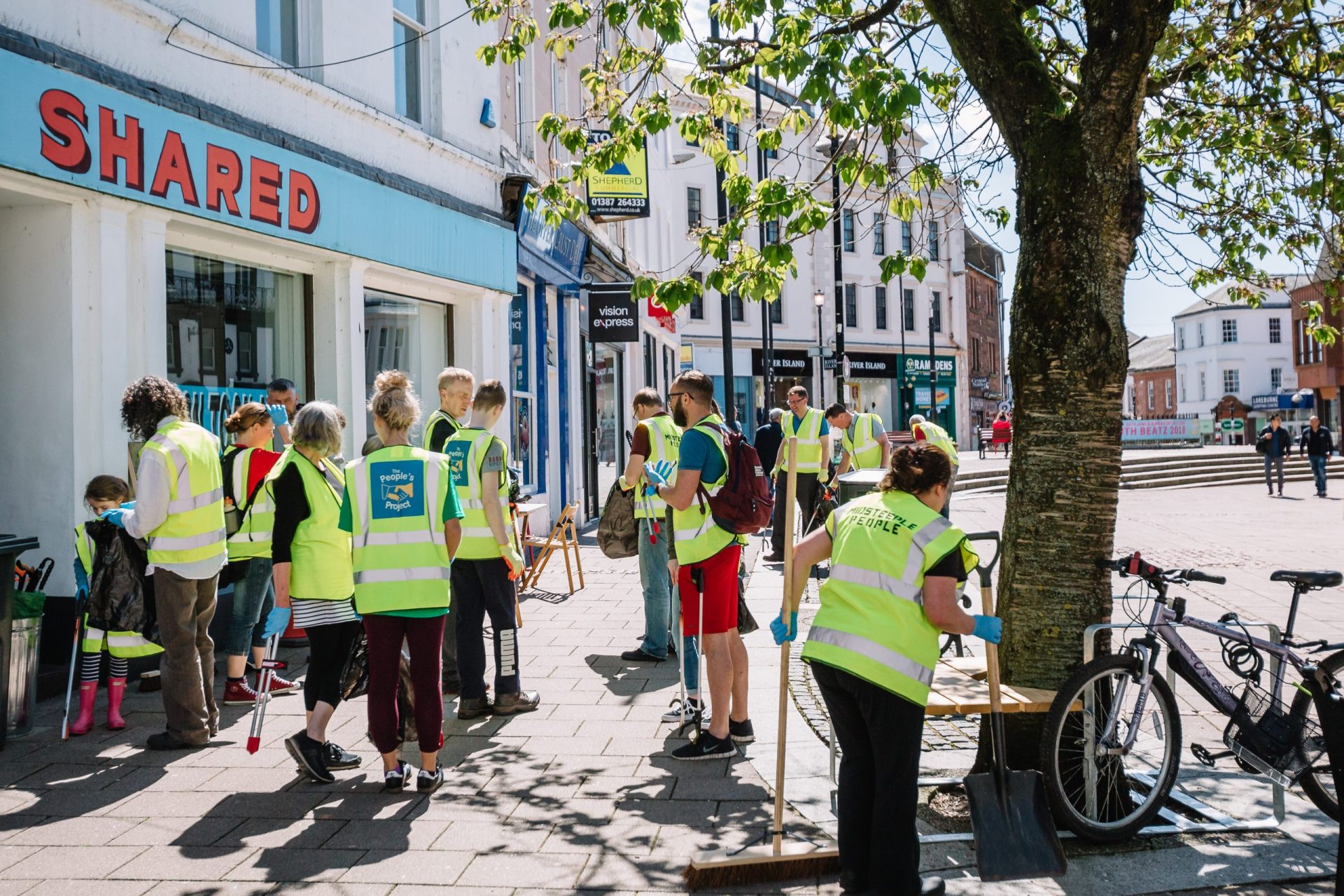
The Stove has always been many things for many people – a café, an events space, a space to gather and take part in activity, to have conversations about our place, to challenge ideas and perceptions, to grow projects and activity together. All of this expressed as seriously playful partnership with our community to support and grow a resilient, progressive and creative Dumfries and Galloway.
We strive to be for, and of, our community and have been asking ourselves “How do we reposition our work at this time?” as a creative community-led organisation that uses creative practice at the heart of what it does.
We have taken time to think and are exploring two directions:
in our program – as we explore new ways to grow activity that engages local people in reflection and co-development of work and activity
for our wider creative community – to reconnect and support this community at this time.
Through this we hope to support the building of a collective awareness and narrative of the ‘new normal’, one which helps the transition into the next stage of this new journey we are all on together. Our intention has not changed, this is an ethos and approach of Creative Placemaking. We have spent the last 10 months digging down into the grassroots practice of Creative Placemaking across Dumfries and Galloway through our Embers consultation talking to groups and organisations embedded in their communities about their work. Creative Placemaking is a collaborative practice that uses creative activity to connect and come together with other individuals, groups and organisations and respond to local needs with innovative solutions that focus on social wellbeing and inclusion in our communities.
Times such as this highlight the struggle in places that have had their local resource and ability to respond stripped in favour of centralised service provision. Our new reality is shining a spotlight on the value of our sometimes less recognised and smaller parts, our key workers, our local services and businesses, our sole traders and freelance workers, our community spaces and social relationships. We are seeing the value of our collective creativity to shape and adjust systems and support appropriate to our local need.
Where will we go from here? At the Stove we will continue to advocate for the value of our smaller community-focused parts and use activity to test and develop ways of working that invest and support the creativity and innovation around us to grow our local resilience.
A few related things to and look out for…
Embers report – to go live in a few weeks this report explores some of the fantastic work in our communities and proposes more considered understanding and support for Creative Placemaking work for the South of Scotland.
Don’t Forget the Self-Employed – talking about our responsibility to the region’s cultural, creative and community sectors. Of our 600+ members, we estimate that as many as half will be self-employed or freelancers.
Homegrown – addressing this new normal by proposing four values that will frame our work: Insight, Perseverance, Open-heartedness & Solidarity.
Third Sector D&G Resilience Map – a page created in partnership with Dumfries and Galloway Council that displays information from local community groups and organisations offering support or looking for support in response to the COVID-19 public health crisis.
As people pull together to face the collective challenges and strain at this time and without the usual noise of other ‘news’ it is the kindness, ingenuity and resilience of people that are centre stage. We can see more than ever the generosity and value local people, groups and organisations invest in supporting their communities.
Small businesses re-organise themselves to take food to our most vulnerable (often without payment), neighbours leave groceries on the doorsteps of those they barely know, people pledge all manner of support and money to those they have never met, we share creative ideas to keep us busy and explore ways of connecting when we cannot physically meet.
The Stove has always been many things for many people – a café, an events space, a space to gather and take part in activity, to have conversations about our place, to challenge ideas and perceptions, to grow projects and activity together. All of this expressed as seriously playful partnership with our community to support and grow a resilient, progressive and creative Dumfries and Galloway.
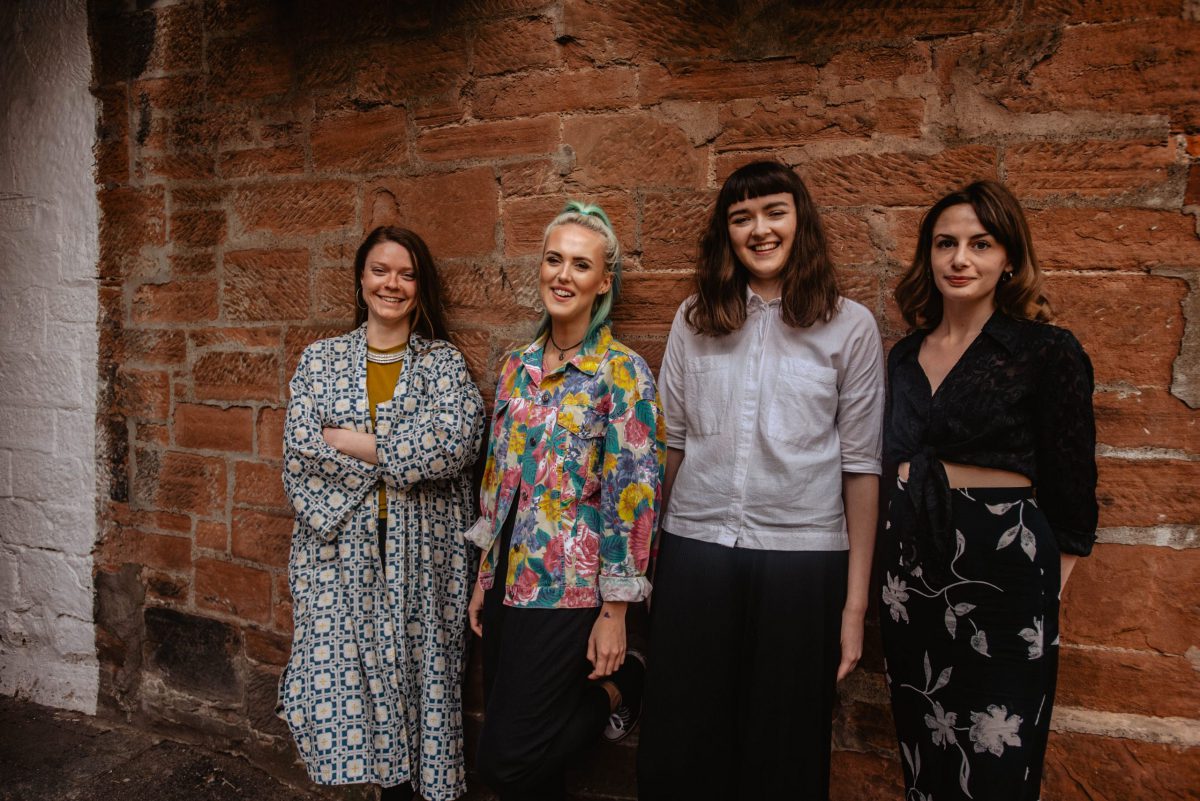
Our current Blueprint100 team, Jordan Chisholm, Kyna Hodges, Claire Bell and Blossom McCuaig are all coming up to the end of their year with us and we’d like to take this opportunity to say a huge thank you to the team for all of their contributions this past year. It has been an incredible 12 months working with Jordan, Claire, Blossom and Kyna and we’re excited to see what the future holds for these talented individuals.
The current team have been reflecting on their time with the Stove and are sharing their highlights, their triumphs and what they have learned on their year-long journey with us.
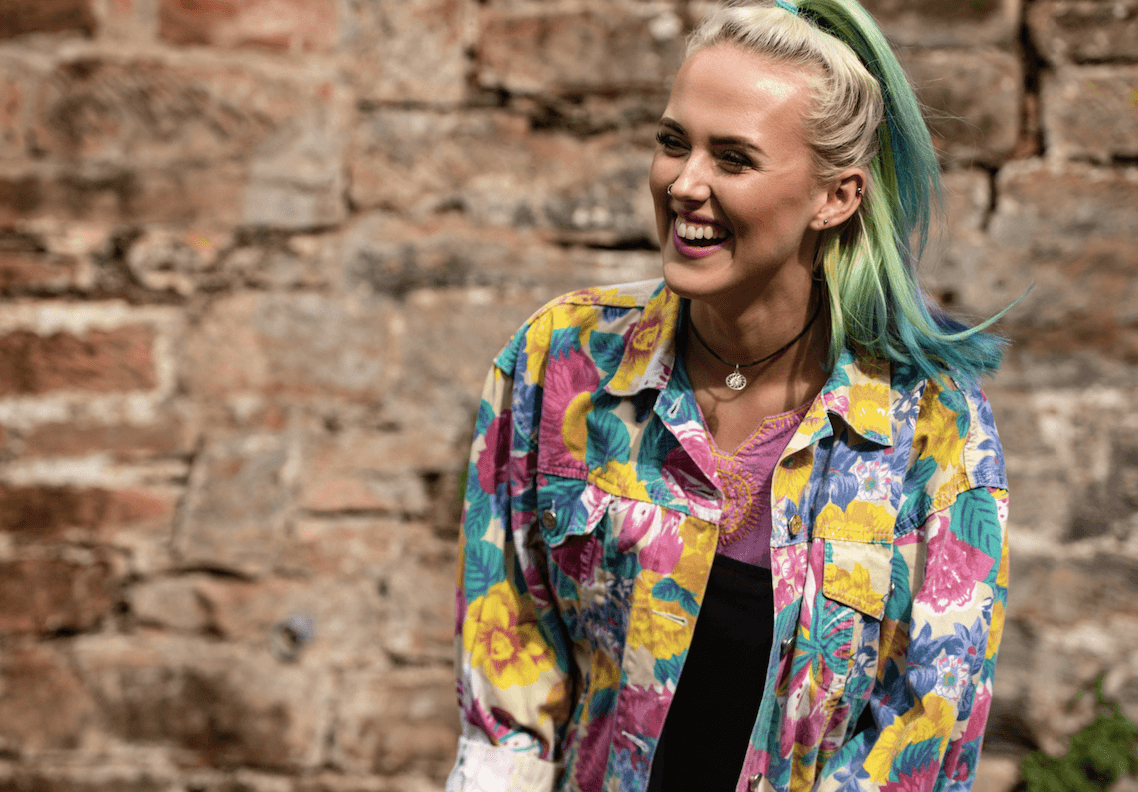
Jordan Chisholm
After a 4 week university placement at The Stove, Jordan joined the Blueprint100 team in August 2018 for an initial 6 months and continued for a further year with the new Curatorial Team. Jordan’s practice stems from both an interest in care and a performance art background and is deeply rooted in having conversations.
“My time with blueprint100 and The Stove Network has been incredible. It has been testing, eye-opening, uncomfortable, safe, uplifting and warm. I have been given the opportunity of a lifetime, to try and fail and try again and get some things right whilst learning how to respond to the things that don’t go how you once wanted them to.
Some highlights, for me, were being given the lead artist role for the Nithraid 2019 Salty Coo Parade; this project allowed me the opportunity to pay many young artists to contribute to this day (some from my own uni class, which felt liberating!)”
Read Jordan’s ‘Looking Forward’ blog post by clicking here.
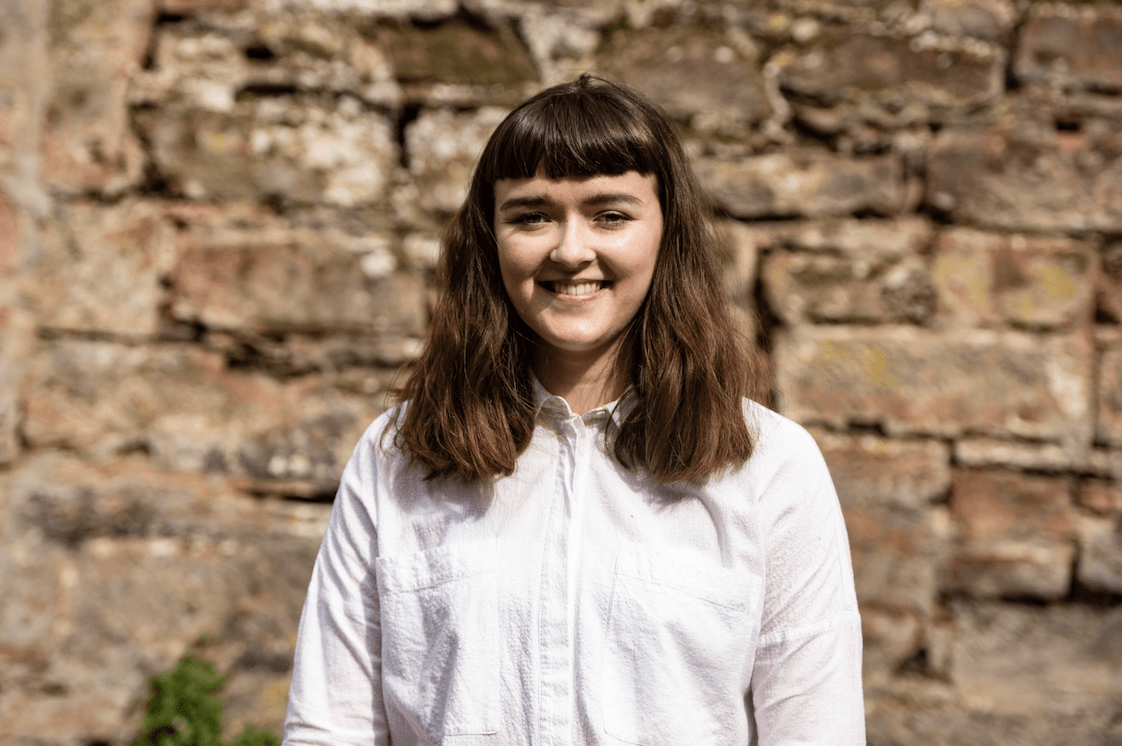
Claire Bell
Claire joined the Blueprint team last year after hosting a series of Life Drawing classes as part of the Blueprint100 regular programme of activity. Claire’s creative practice is grounded in drawing and mark making, as she observes, captures and plays with these to uncover the hidden patterns and connections within.
“A big part of my experience, for me, has been the huge amount of varied learning experiences I have had; through getting involved with a great variety of events and activity. There was Nithraid, in which I assisted the running of workshops such as flag making, as well as making costumes for the procession, which I also took part in through the town centre. Other events I’ve contributed in both big and small ways, are: Drawing Queer, Behavin? Festival, Mental Health Week and our monthly ‘Open Studio’. Although brilliantly varied, this work was very different to previous experience I had had. I felt at times that my overall ‘journey’ lacked focus, however, I ultimately found such value in not thinking too much about ‘is this exactly what I want to be doing’ but just doing it anyway. I encountered so many interesting moments along the way and learned much more than I ever would have by staying with what I already knew.”
Read Claire’s ‘Looking Forward’ blog post by clicking here.
We use cookies to improve your experience on our website, analyse traffic, and personalise content. By using our site, you consent to the use of cookies. Please read our privacy policy for more information.
Cookie Preferences
Manage your cookie preferences below:
Essential cookies enable basic functions and are necessary for the proper function of the website.
Name
Description
Duration
Cookie Preferences
This cookie is used to store the user's cookie consent preferences.
30 days
Statistics cookies collect information anonymously. This information helps us understand how visitors use our website.
Google Analytics is a powerful tool that tracks and analyzes website traffic for informed marketing decisions.
Contains information related to marketing campaigns of the user. These are shared with Google AdWords / Google Ads when the Google Ads and Google Analytics accounts are linked together.
90 days
__utmx
Used to determine whether a user is included in an A / B or Multivariate test.
18 months
_gali
Used by Google Analytics to determine which links on a page are being clicked
30 seconds
_ga_
ID used to identify users
2 years
__utma
Used to distinguish users.
Persistent
__utmb
Used to determine new sessions/visits.
30 minutes
__utmc
Used to determine if the user is in a new session/visit.
Session
__utmt
Used to throttle request rate.
10 minutes
__utmv
Used to store visitor-level custom variable data.
2 years
__utmz
Stores the traffic source or campaign that explains how the user reached your site.
6 months
_ga
Used to distinguish users.
2 years
_gat
Used to throttle request rate.
1 minute
_gid
Used to distinguish users.
24 hours
Clarity is a web analytics service that tracks and reports website traffic.