The last time I baked was some 30 years ago; Hot Cross Buns. They turned out like hot cross rocks. Inedible. I decided then it was time to give up on home made bread and yeast as my track record was littered with failures.
Fast-forward some thirty years, and, due to a series of events, I found myself attending the Douglicious gathering. To be more accurate, as a new recruit at The Stove, I was facilitating it. I meeted and greeted and made teas and coffees. And I watched and listened.
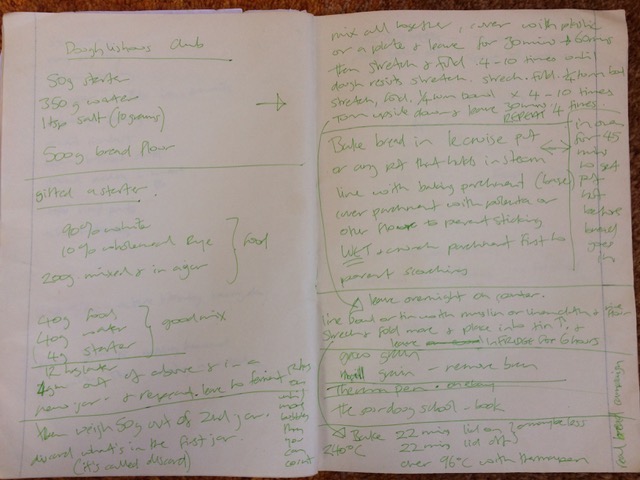
Kerry’s dough making notes
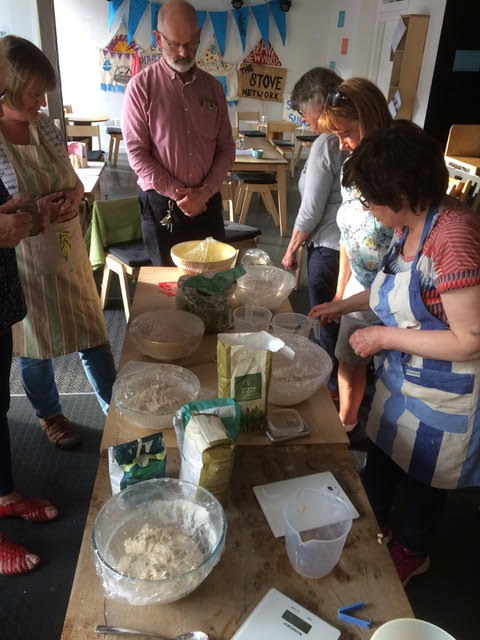
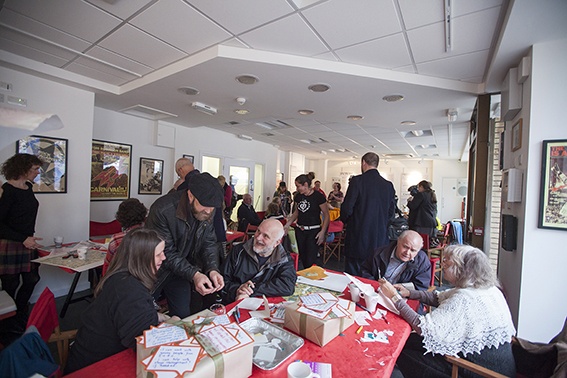
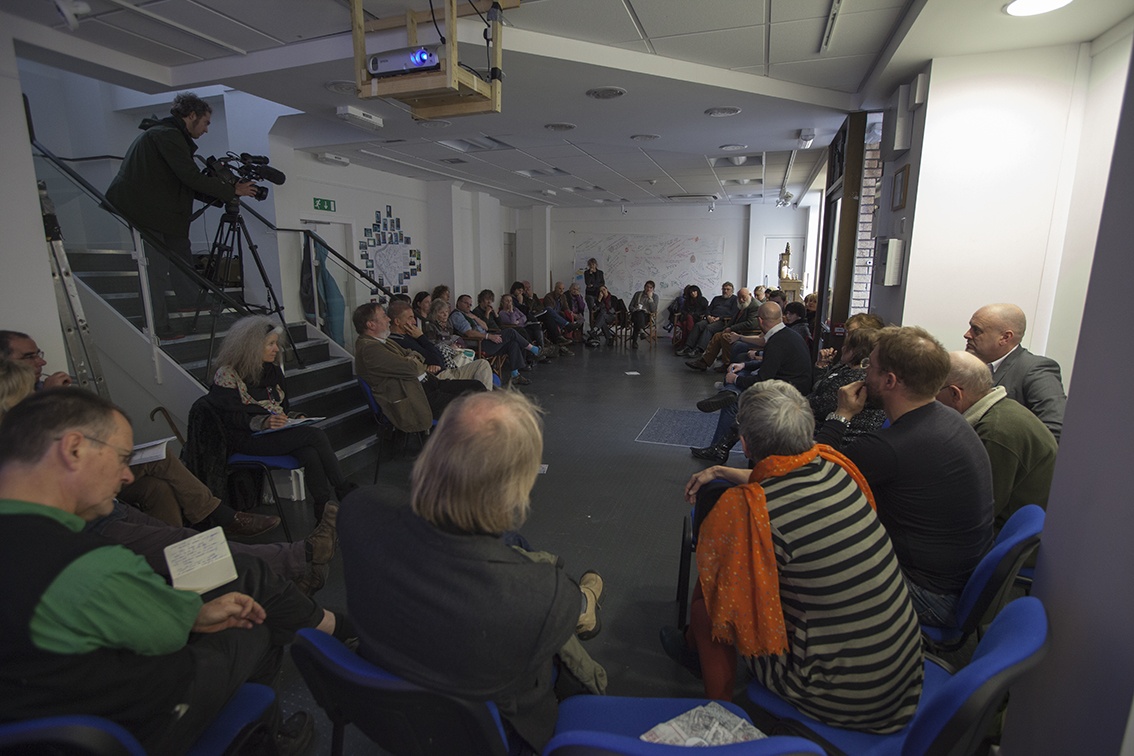
They were preparing sour dough. Liz, the wonderful woman who initiated Douglicious, handed out sour dough starter to all those who had brought with them flour and a bowl. She brought extra bowls and flour for those who hadn’t brought their own, so everyone had the opportunity to have a go.
I looked on. I was fascinated. I knew nothing about sour dough and I’d never, ever, thought about baking my own. I became engrossed and wanted to know more. When the dough was resting, we all sat around the tables, tasted samples people had brought with them, and talked about bread. I joined in.
I asked so many questions and Liz and the group were extremely accommodating, answering all of them. I took notes. At the end of the evening, Liz offered me the dough she had prepared. I hadn’t participated in the dough making, so was thrilled to be offered the sour-dough-in-the-making to take home and finish. I stretched it and rested it four times before going to bed.
The next day I baked it and it turned our perfectly: completely edible and delicious. Liz also gave me my own sour dough starter and I’ve been baking (dare I say) perfect sour dough loaves at home ever since. Who’d have thought it? Certainly not me.
Interested? The next Doughlicious event is on Wednesday, 17th July at 7pm. Full details available here
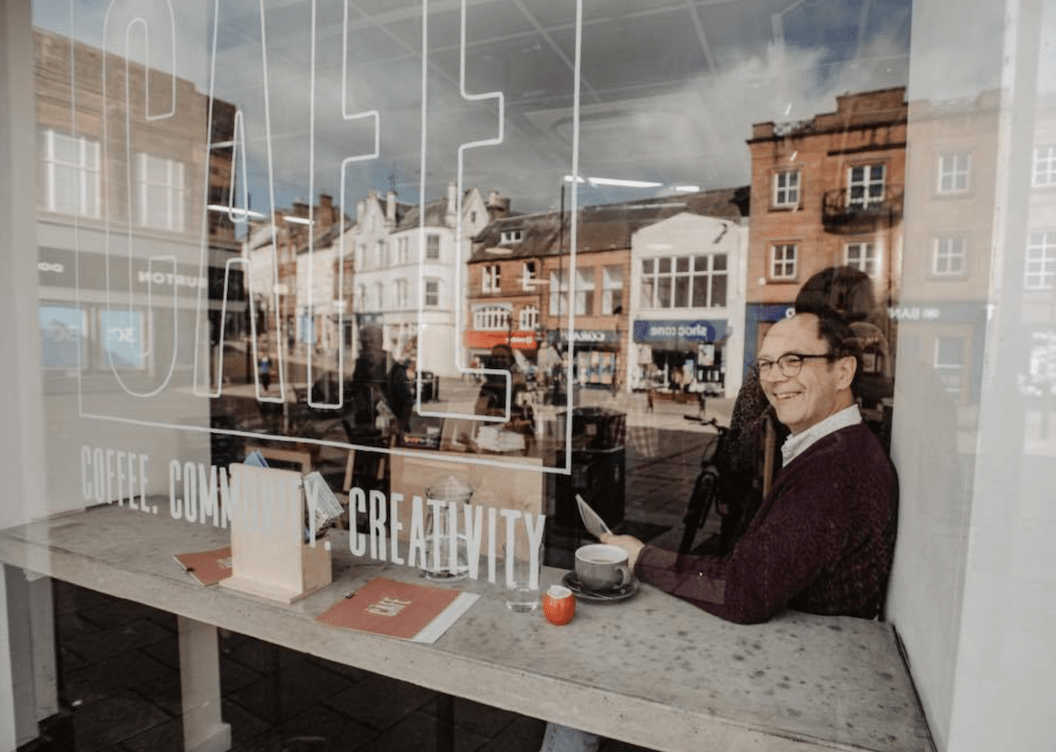
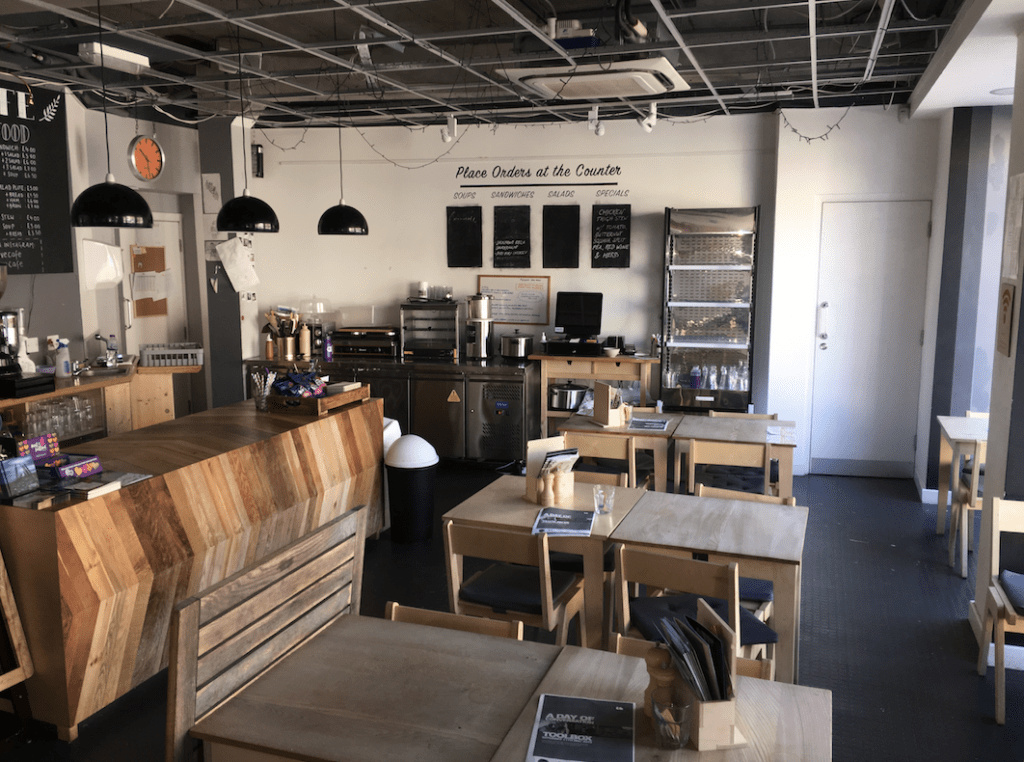
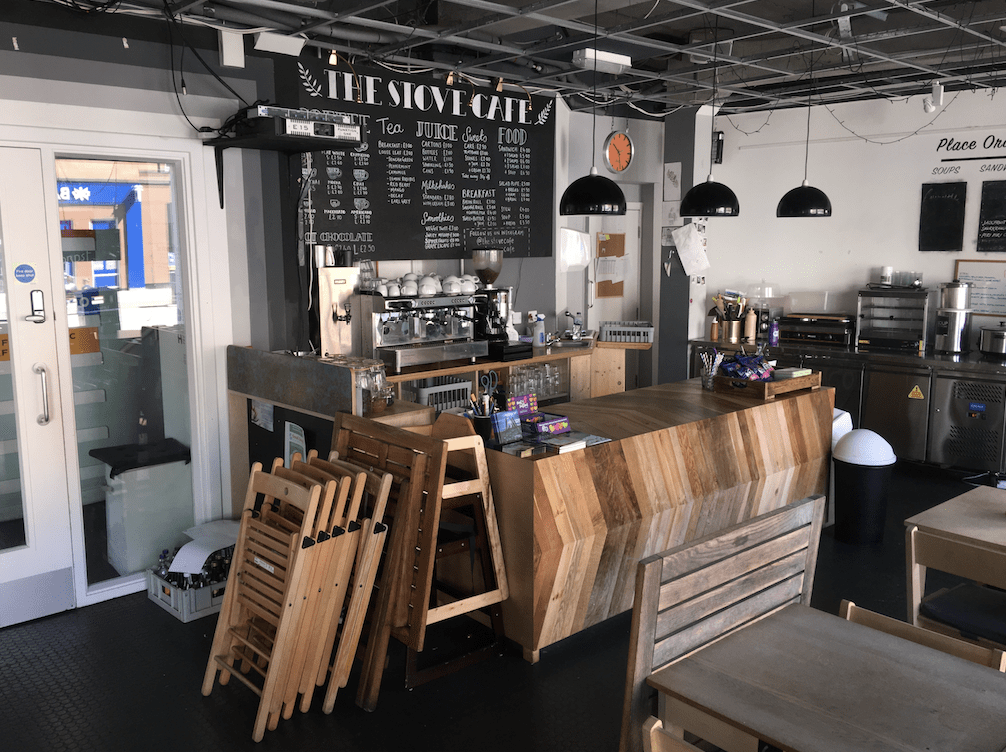
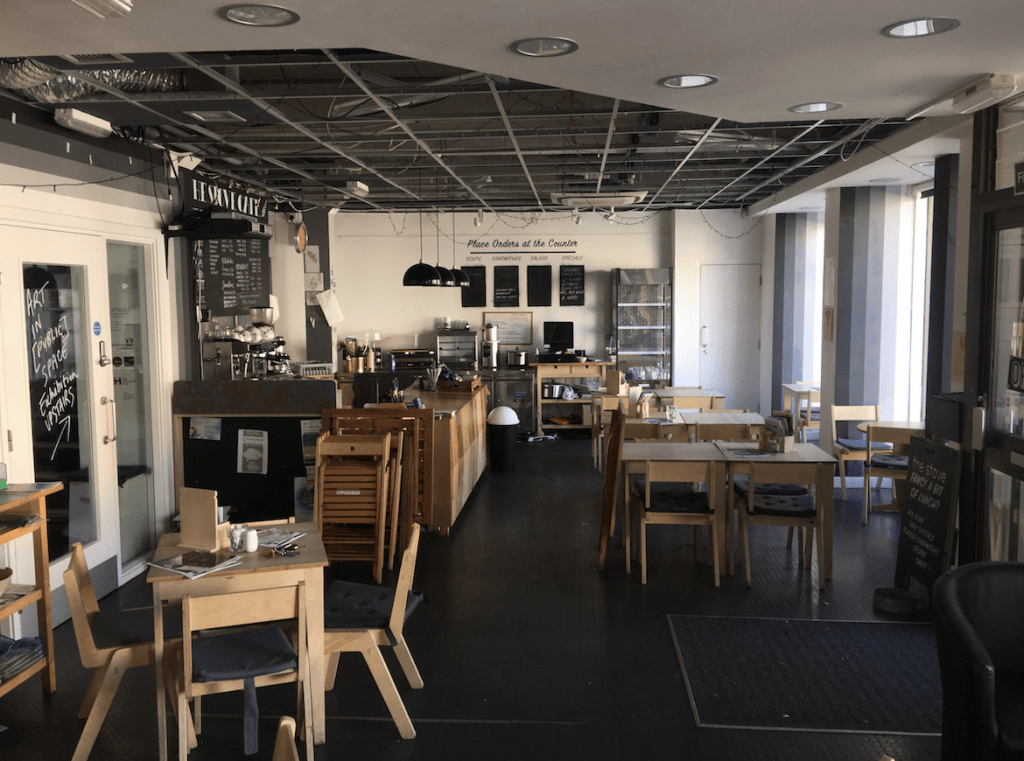
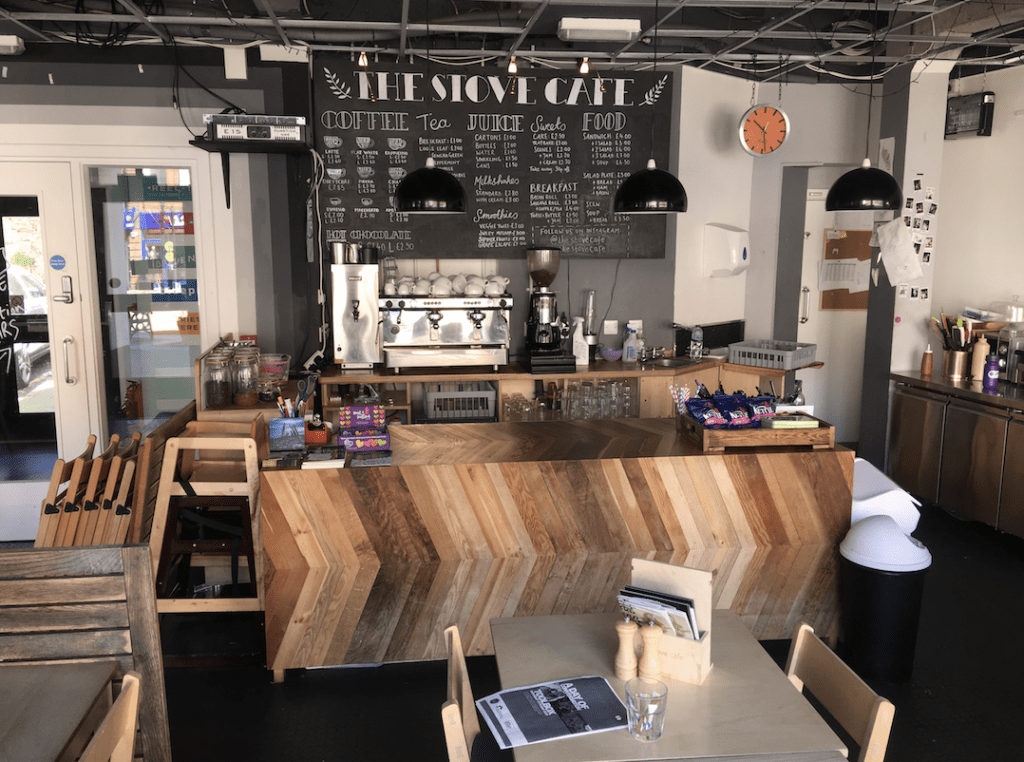
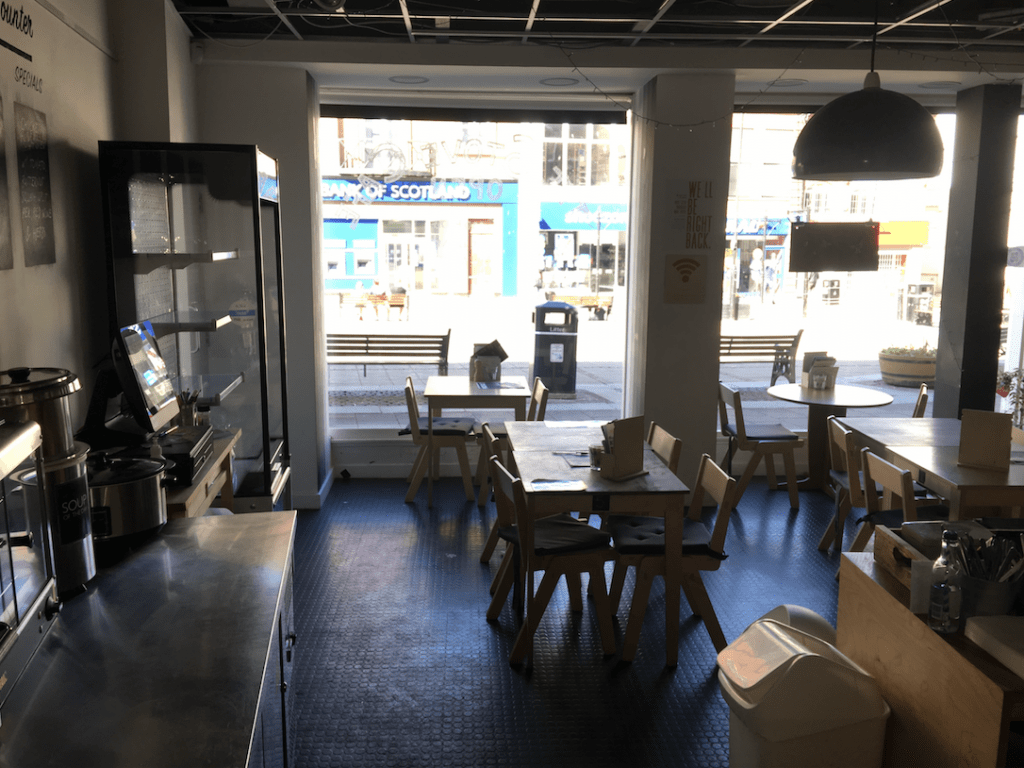
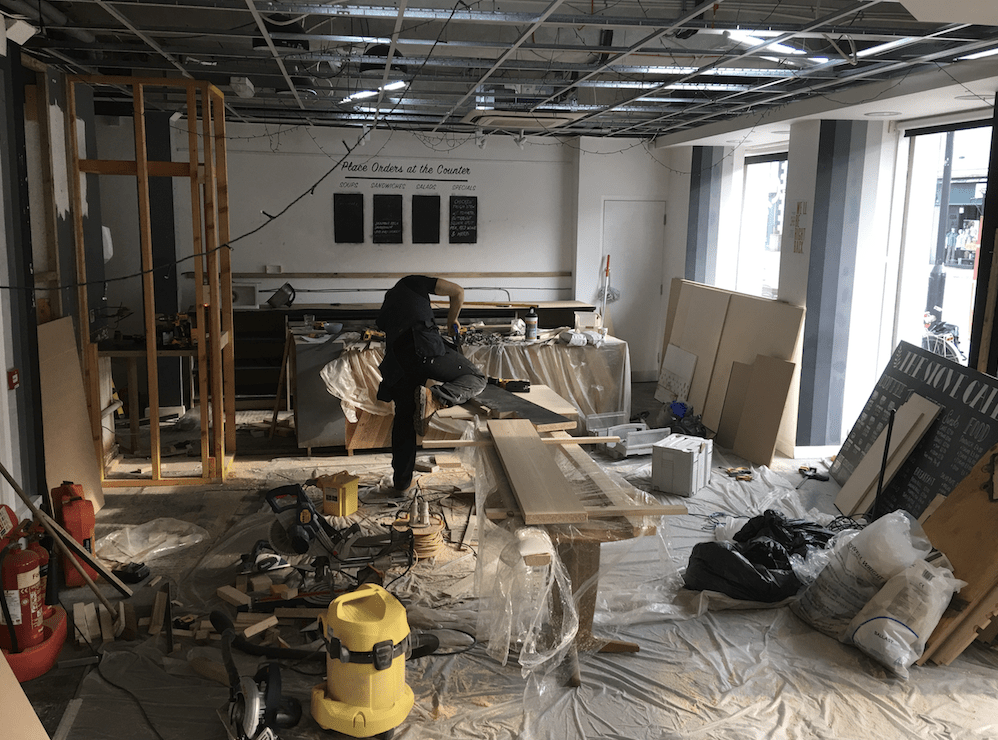
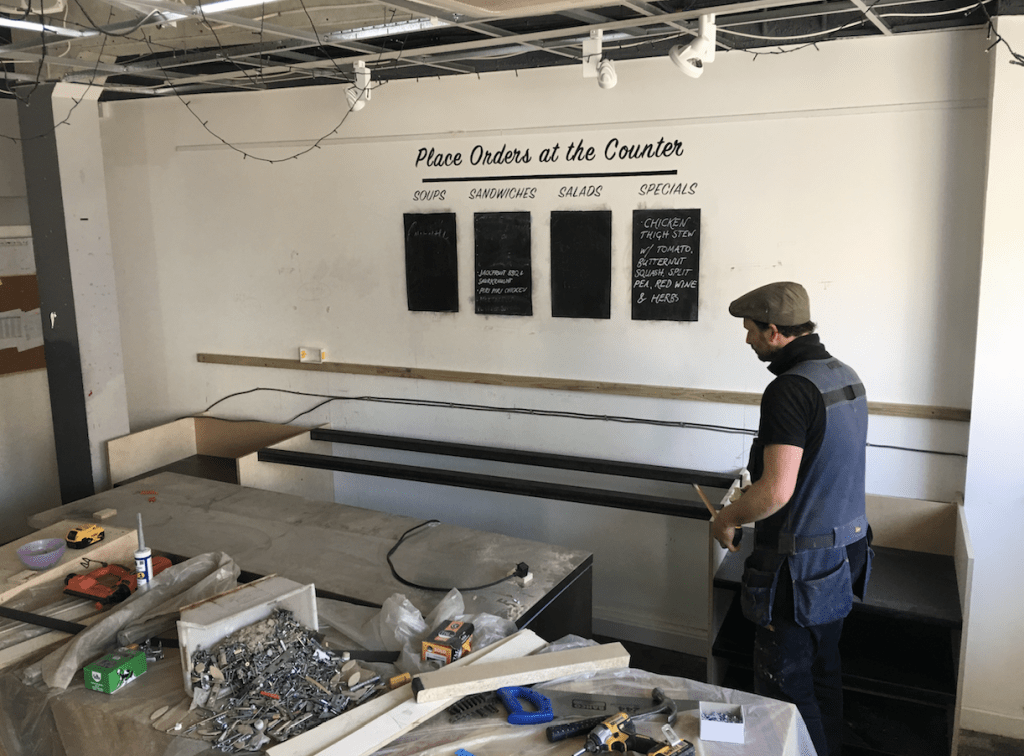
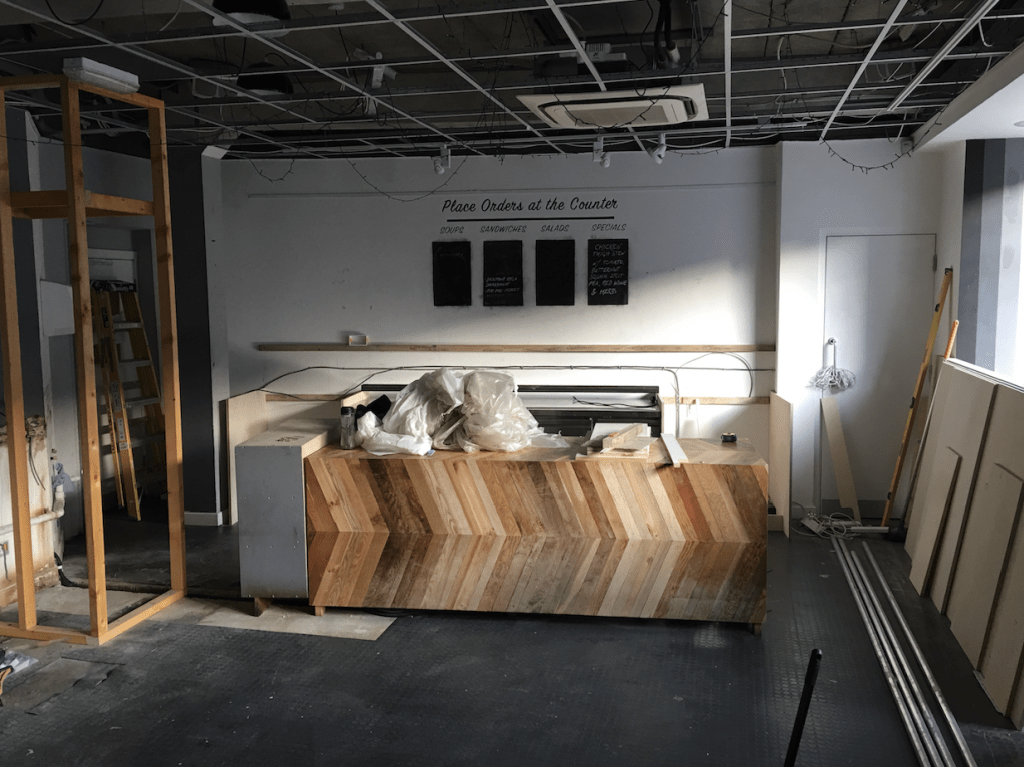
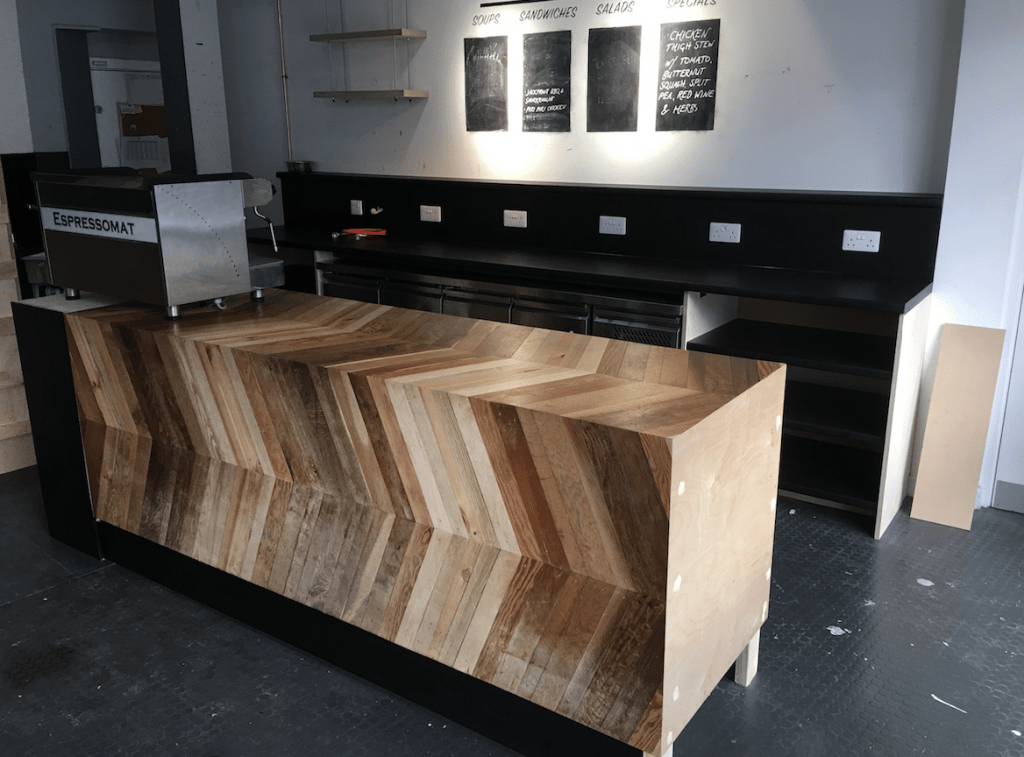
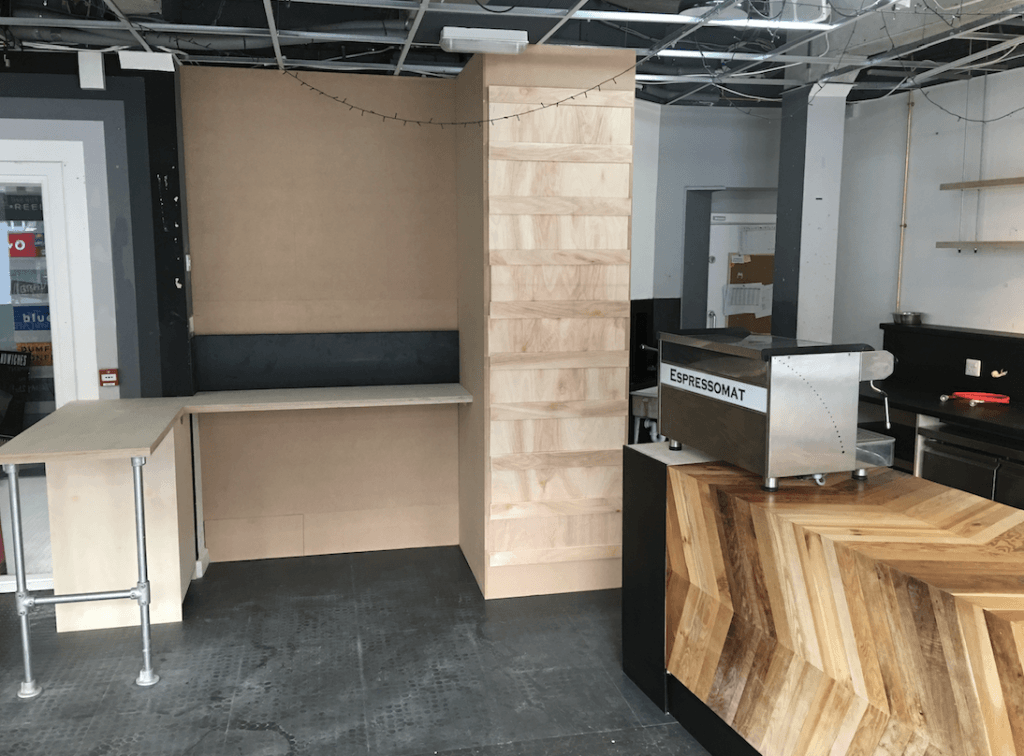
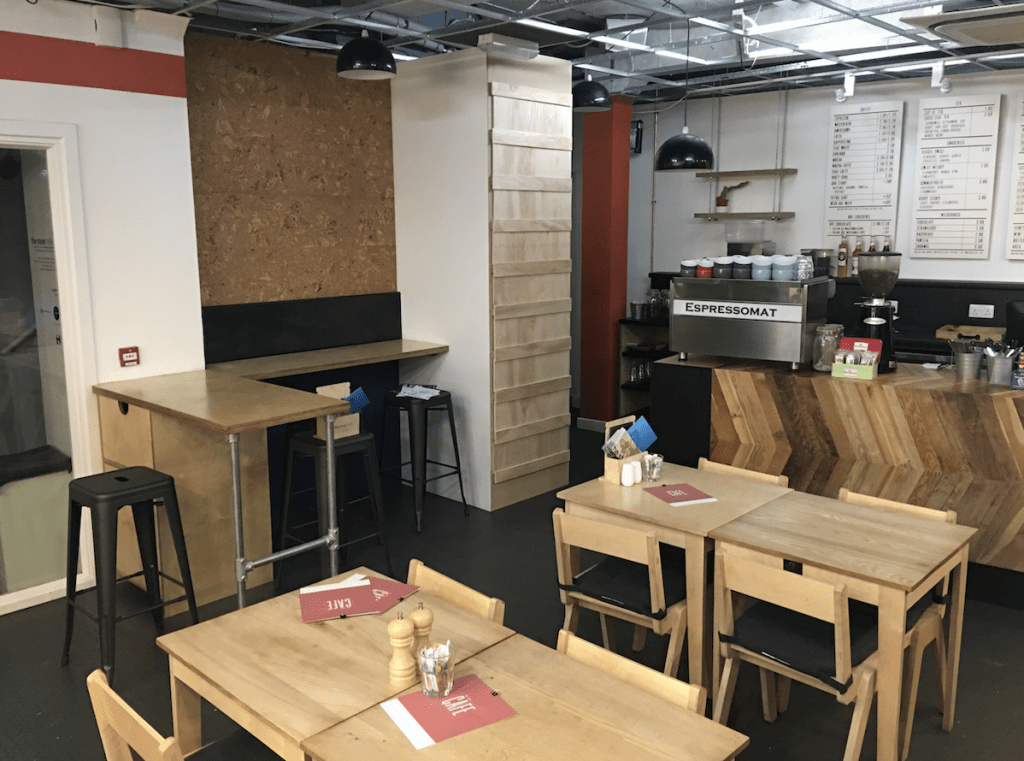
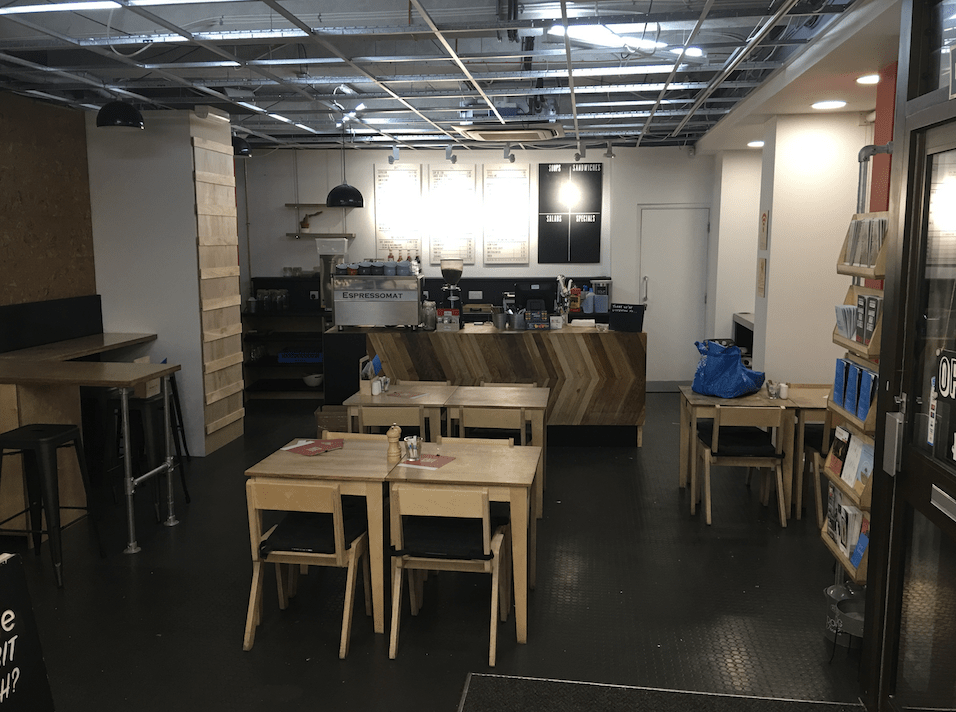
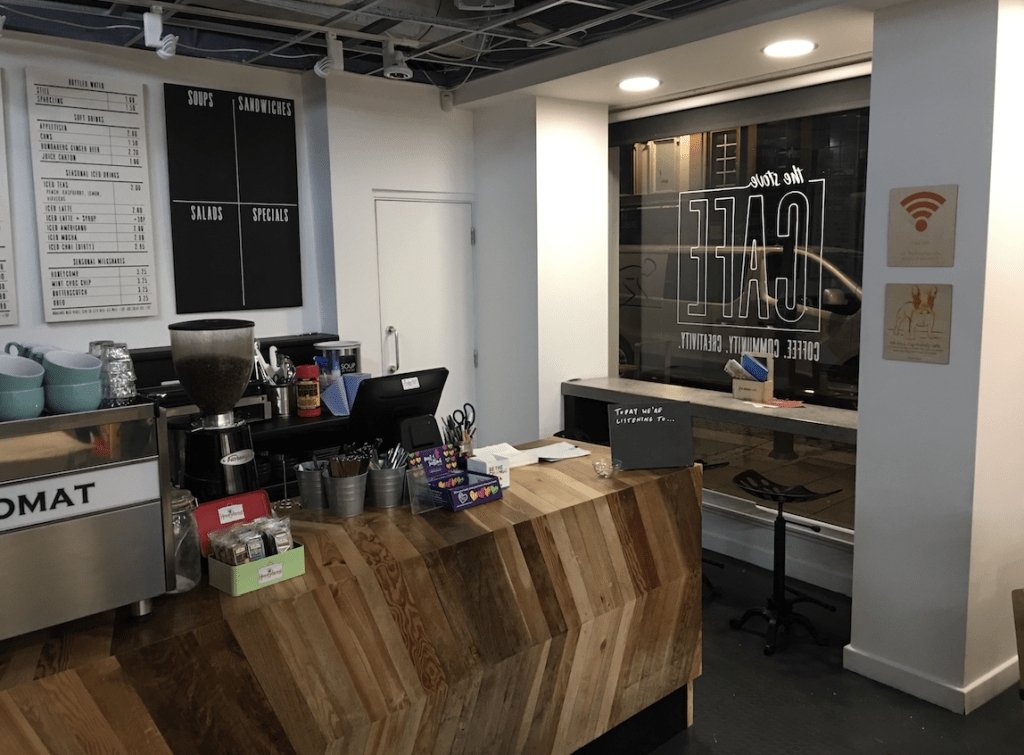
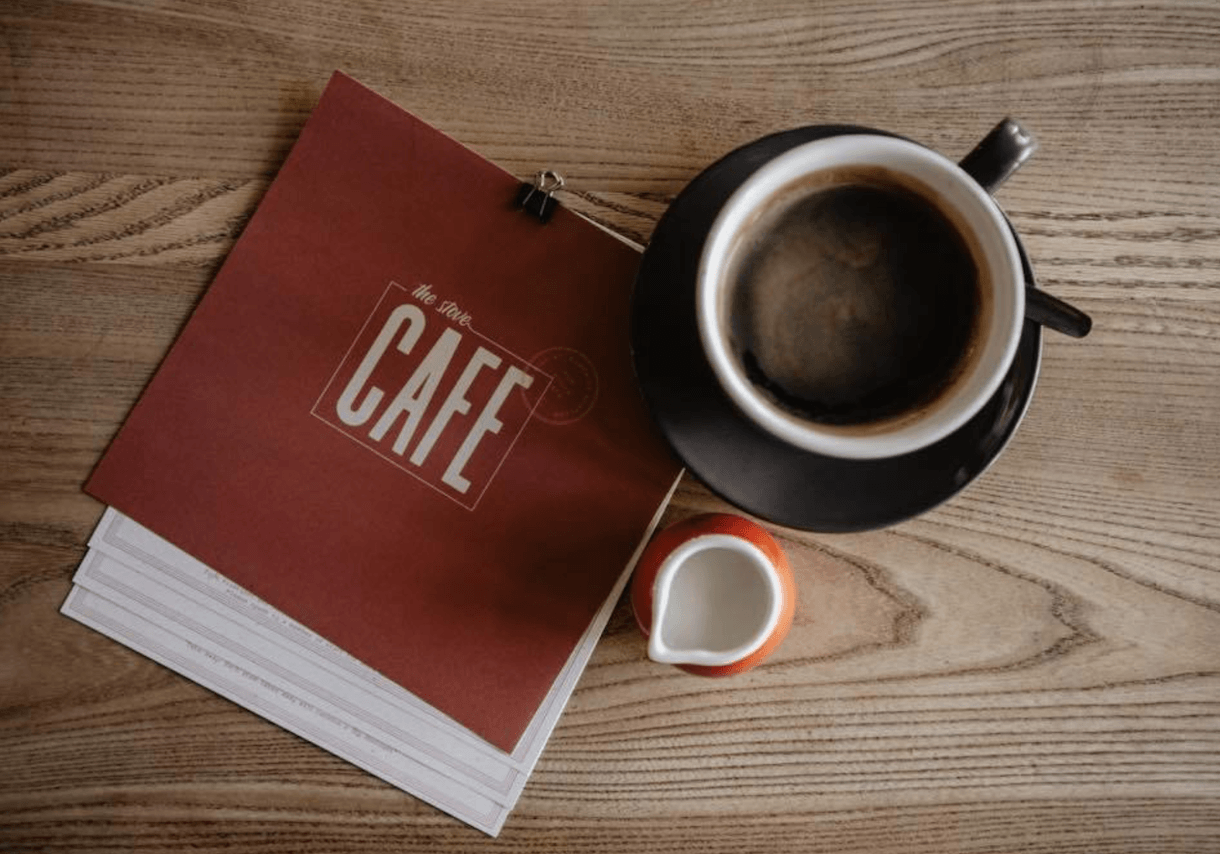
The Stove Cafe is the social heart of our social enterprise to bring new life to the town centre through culture and the arts and supporting community activity and career development for local people. Last year, we started to put together plans to make changes to The Stove cafe to improve on the look and feel of the space and to open up the space more to allow for more customers. The Stove’s Project Manager, Graham, led the Cafe refurb, along with Duncan Clowe from Duncan Clowe Joinery. The work Duncan did, along with the help of his dad, was superb and we cannot thank him enough! Make sure you check out his Facebook page and get in touch with him if you’re needing joinery work done! Check out the Stove Cafe refurb process photos below:
Since we’ve reopened the Cafe, we have been overwhelmed by the response from our customers and have been lucky to welcome some new ones in too! When you buy a coffee at the Stove, you are being part of a new vision for your High Street. Your support helps us to create opportunities, run projects and an events programme for everyone. To keep up to date with news from The Stove Cafe, follow their Facebook page here or their Instagram page here.
And don’t forget – become a member of The Stove Network and receive 10% off all food and drink in the cafe! Sign up to become a member by clicking here.
Since starting with the Curatorial Team almost 3 years ago, the amount I have learned and the people I have had the opportunity to work with has been invaluable to how my life has unfolded. The Stove creates a space for growing and nurturing whether it be people or ideas, and it’s safe to say I have came a long way since the nervous person sitting on the interview chair babbling about fairy lights.
I had a little experience working with the Stove before joining the Curatorial Team; the first interaction I had was with the Environmental Arts Festival. I have a background in being involved in local events and was pointed in their direction as a volunteer by Sleeping Giants, a partner of the Stove. Not quite sure what I had got myself into, I ended up meeting a group of extraordinary people who had created a community and used their creativity to produce an event that had reached me like no other had in my previous experience. I actually cried after the end of that project, the thought of going back to my usual day-to-day pub work filled me with dread and not knowing when the next opportunity would be.
EAFS 2015 at Morton Castle
The advert came up for the CT position and I thought there wouldn’t be a chance in hell that I would get the job but it would be good to throw my name in the ring for experience. I got an Interview… (How I have no idea but I did!) In the Interview, Fairy Lights were mentioned A LOT. I had resigned myself to “well you gave it a shot at least”. Now I’m not entirely sure if the existing team were within their right minds or, like myself, had no idea what they had gotten themselves into, but that day changed my life.
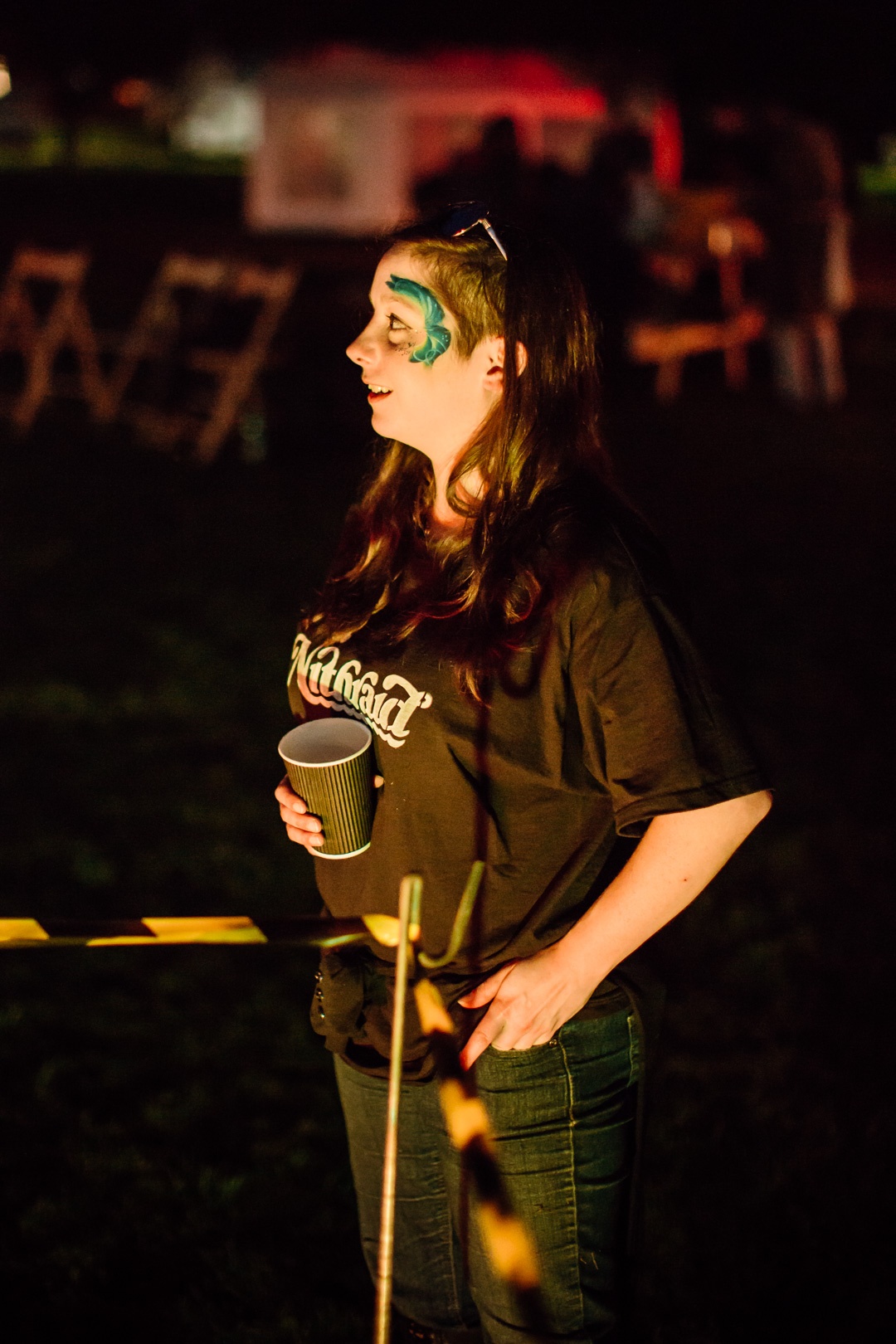
From there I went on to focus on the events and expand my practice with community work. Nithraid Festival has been the biggest part of my role here and has taught me so much that I had previously taken for granted as until then I was always brought in later to an events delivery. Being the project manager and planning from the very ground up has given me priceless knowledge, sometimes through trial and error, of working with the local community and authorities to deliver a festival that has grown along with myself into something I am proud of.
Nithraid River Festival 2018
Another part of the job that I loved working with was health as a subject be it physical or mental health. I created a project called the Light Room in October 2016 that entailed tackling prejudice, working with a diverse range of groups and a lot of (you guessed it) FAIRY LIGHTS. After that and the curse of the fairy lights you will be glad to know I learned my lesson – and the event opened my eyes to how we can use art to get conversations happening. That was what being part of the team did, you have a group of people with all different ranges of expertise and they will help you work through a project or idea. Even when you have been up a ladder for 5 hours and are tangled in a mass of cables they will be up those ladders with you. It’s not just for those that join the CT, every person that comes into the Stove with an idea are guided on how to do it them selves, and not “we will do it for you”.
Every experience has been a huge learning curve and not one day is the same – that is what I will forever treasure working as part of the CT and any time I think, ” What have I got myself into now?” I welcome it.
___
A huge and special thank you to Sal for her sterling work the past two and a half years on our Curatorial team, but don’t worry – Sal isn’t going anywhere just yet, you can still find her in the Stove managing room bookings and events production, and as Project Manager on Nithraid – coming up this year on the 31st of August!
How do we connect up the culturally-led work that is happening in communities across D & G and build our region into a powerhouse of enterprise and opportunity?
There is growing recognition that something special is happening in D+G – our creative sector is working at the heart of rural communities and helping to inspire, facilitate and connect other initiatives (eg taking over underused buildings) that are making a real difference for places and the people that live there. The Stove Network has been both a resource and catalyst for the region through its work in Dumfries town centre. It has formed in-depth working partnerships with the local authority and other groups/agencies, building a portfolio of experience in bringing together community, agency and business interests to develop its work in place-making and culturally-led regeneration.
The Stove has received national and international recognition for their pioneering work in this field and with the advent of the new South of Scotland Enterprise Agency (SoSEP) an opportunity has been identified to develop a plan to strengthen the connection between existing projects and seed new ones for the benefit of the region as a whole.SoSEP has granted The Stove funding for a focused piece of work, based on their Enterprising Communities proposal, to look at the opportunity for better shared learning, the support needed for this activity in place-making and culturally-led regeneration and pathways to opportunities in Creative Industries.
How can we work together to strengthen these for our region? What support does this work need to flourish and grow localised decisions for the places we live?
For the next 6 months The Stove will be carrying out a feasibility study for Enterprising Communities, under their project – Embers – igniting culturally-led regeneration across Dumfries and Galloway – to explore and define a joined-up vision for work in place-making and culturally-led regeneration and enterprise in Dumfries and Galloway. This piece of work will not focus on the model to deliver this work but on how we can strengthen the pathways between the work we ALL currently do. We will look at what we need to support this, to encourage new work and sustainable development in this area.
How do we build on existing networks in the communities and cultural/creative sectors – overlaying and combining them to create a powerfully integrated regional field of shared resource, capacity, knowledge, skills and opportunity?
Embers will be led by Katharine Wheeler for The Stove with support from across our networks, agencies and partners. Firstly, Katharine will look at areas of best practice in place-making across the region and secondly, produce a feasibility document as a regional development model for place-making and culturally-led regeneration across Dumfries and Galloway defining out how best to take this forward.
We are working closely with Carnegie Trust who will be providing case studies and help in identifying significant indicators of this work throughout the project.
The feasibility study – Embers – will explore a regional development model in relation to the main aims of how the new South of Scotland’s Enterprising Partnership (SoSEP) can support place-making, creative industries and culturally-led regeneration across Dumfries and Galloway.
This will feed into SoSEP’s current enquires:
What forms of support are needed to enable the communities in the South of Scotland to become more resilient and to help communities grow?
Advise within that what type of support SOSEP could provide, and how, to enable community organisations to become more successful.
What would success look like – for communities and for SoSEP?
We have already been in communication with some of our partners and other organisations and groups across the region about this piece of work and will be looking to connect with others. If you are wanting to find out more about this, or get a copy of our initial Enterprising Communities proposal please email [email protected] directly.
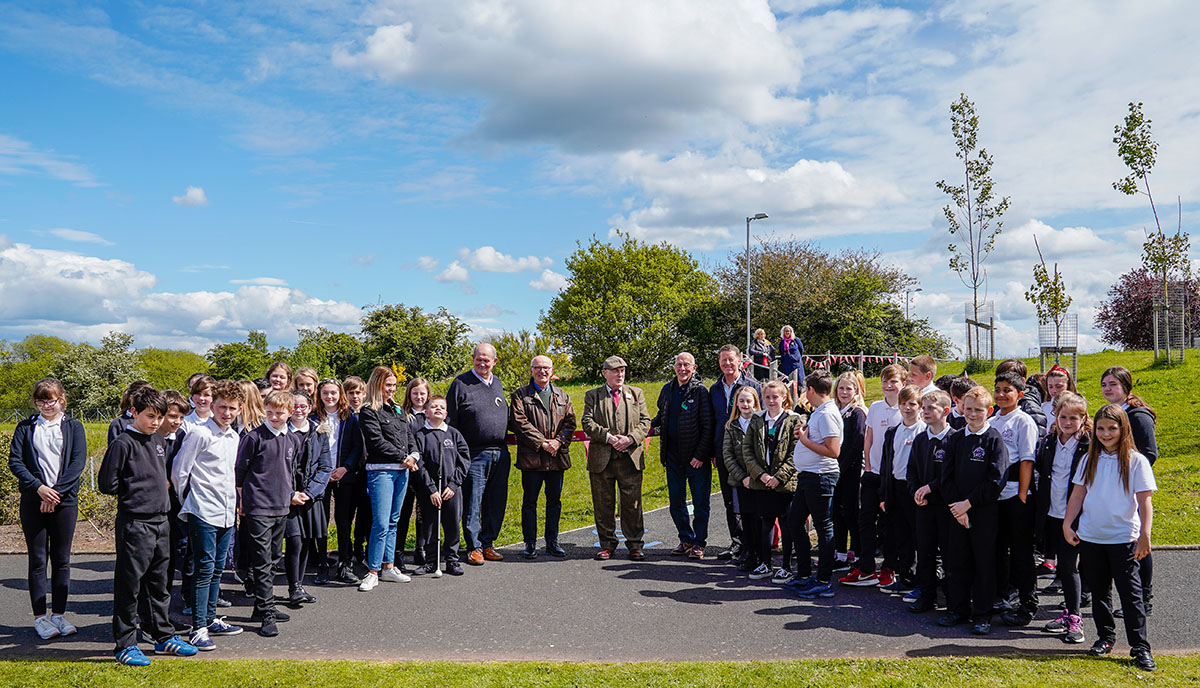
Ribbon cutting with local school children from NW Community Campus alongside (in centre, left to right) artist Kat Loudon, Councillor Andy Ferguson, Tony Fitzpatrick The Stove Network Board Chair, DGHP’s Chairman Bill Robertson, Councillor David McKie and Councillor Ronnie Nicholson
Dumfries and Galloway Housing Partnership and The Stove Network have unveiled the last in a series of four public artworks in a new housing development in Dumfries. The Lochside Public Art Project was commissioned by DGHP and created in partnership with McGowan Miller, who employed The Stove to co-ordinate and commission the works. Friday (May 10) saw the unveiling of the last of the works created by artists Kat Loudon, and Michelle Johnston working with with Chris Taylor and Tam Potts.
Ribbon cutting with local school children from NW Community Campus alongside (in centre, left to right) artist Kat Loudon, Councillor Andy Ferguson, Tony Fitzpatrick The Stove Network Board Chair, DGHP’s Chairman Bill Robertson, Councillor David McKie and Councillor Ronnie Nicholson
Based in and around the area of DGHP’s new properties at The Meadows, Lochside, the works have brought together the community, neighbourhoods, school children, the artists and DGHP.
DGHP’s Chairman, Bill Robertson, said at the final event: “This is an excellent series of artworks that really are a symbol of communities working together to achieve more.
“Having been here at the launch of the first works, Tattiefields, and now be here again at the completion has been excellent – the transformation in the area is just unbelievable and I’m sure the families living here will enjoy the art works for many years to come. Well done to all of the children, artists and contractors working on the project.”
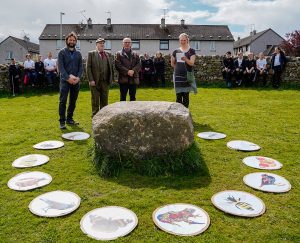
Artist Chris Taylor (far left), DGHP’s Chairman Bill Robertson, Tony Fitzpatrick – Chair of The Stove Network Board and Katie Anderson sharing more about the Wildlife project.
Lead artist on the project for the Stove, Katie Anderson, said: “We’ve had a series of 24 community events connected with the project in Lochside, including workshops in local schools, events and activities in local community centres and as part of other community events like the Lochside Gala and on-site art workshops – these have been attended by more than 300 people over the 18 months.”
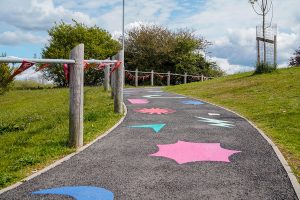
Design by Zag’s Signs and Symbols Pavement Artworks
The artworks were split into four projects to showcase artworks created by the local communities and schools in the area. The last two pieces of artwork unveiled on Friday were ‘Signs and Symbols’ and ‘Wildlife’. For ‘Signs and Symbols’, a colourful pathway was designed and created through workshops with local children led by Glasgow-based artist Kat Loudon, of Design by Zag, and officially opened during the launch. This came together following a children’s collage workshop.
The pathway leads to a seating area on the edge of Glentrool Park, creating a wildlife space for spending time exploring the natural environment The ‘Wildlife’ project was led by local resident, Michelle Johnston, with the stonework completed by local dyker Tam Potts and his team. The ceramics were created by Chris Taylor of Clayworks Studio based at the Crichton. The original concept was developed through workshops with local schoolchildren led by Michelle Johnston.
Eight years ago a group of artists in Dumfries started a conversation. Standing here in 2019’s ‘A Year of Conversation’, this initial spark has grown into 4 separate social enterprises, which between them provide regular employment for more than 40 people and a working partnership between the community, Council and Government towards a new future for our town.
And, what have we have learned? We’ve learned that keeping the conversation going is the single most important thing of all – for conversation is an open space of possibility, it is owned by no-one, rather it is stewarded, nurtured and protected by everyone who takes part. Inclusive Growth is the new mantra of Scottish Politics – it’s a vision of a society and an economy that does not simply value numbers, but rather supports economic activity that benefits communities, places and ALL the people who live there. For this idea to make any sense at all, it needs to be shaped and held in a conversation, one that is rooted at a profoundly local level, a conversation that is open and free to roam without limits imposed by those who wield ‘power’. Rather, the true power must be in the principle of conversation itself.
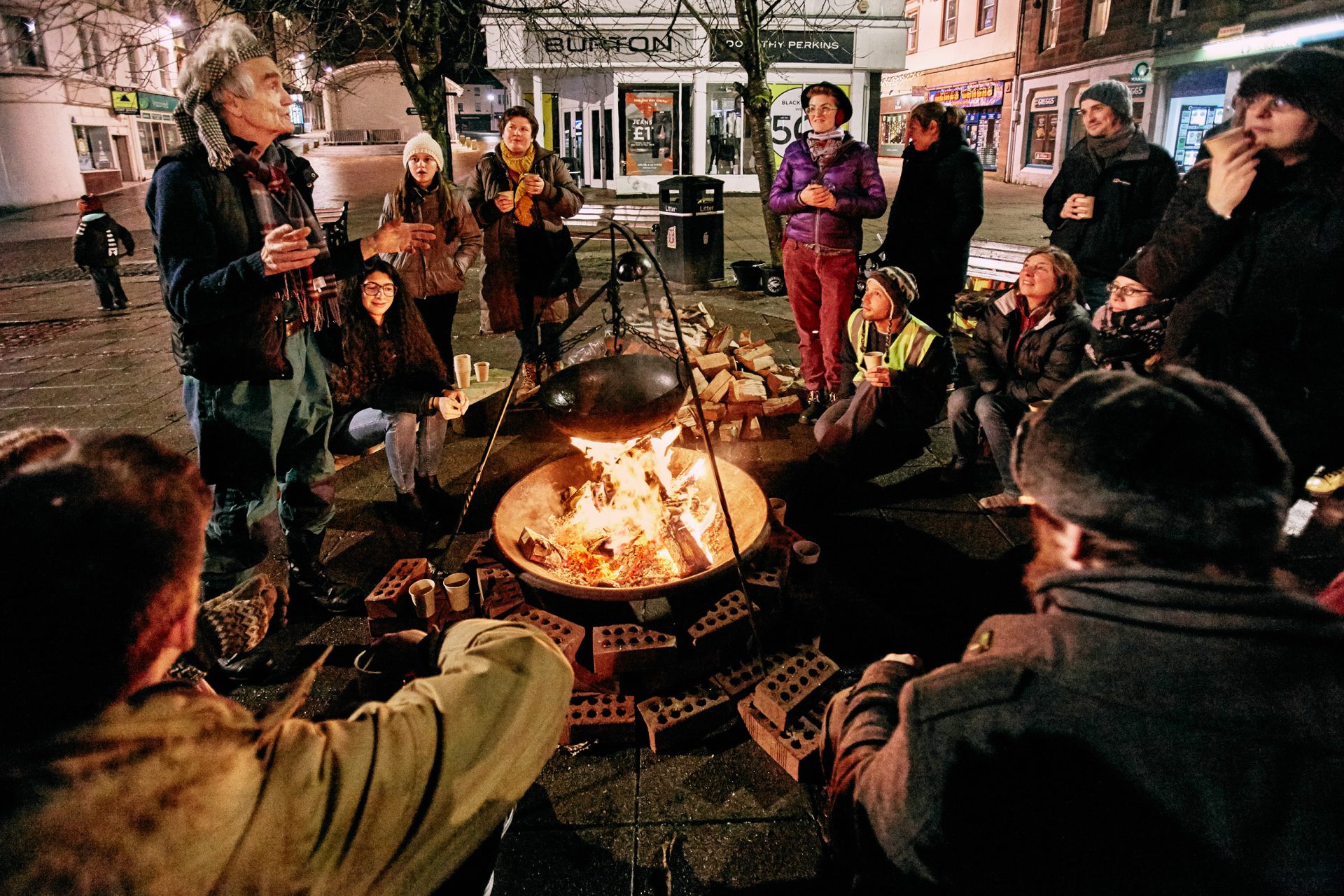
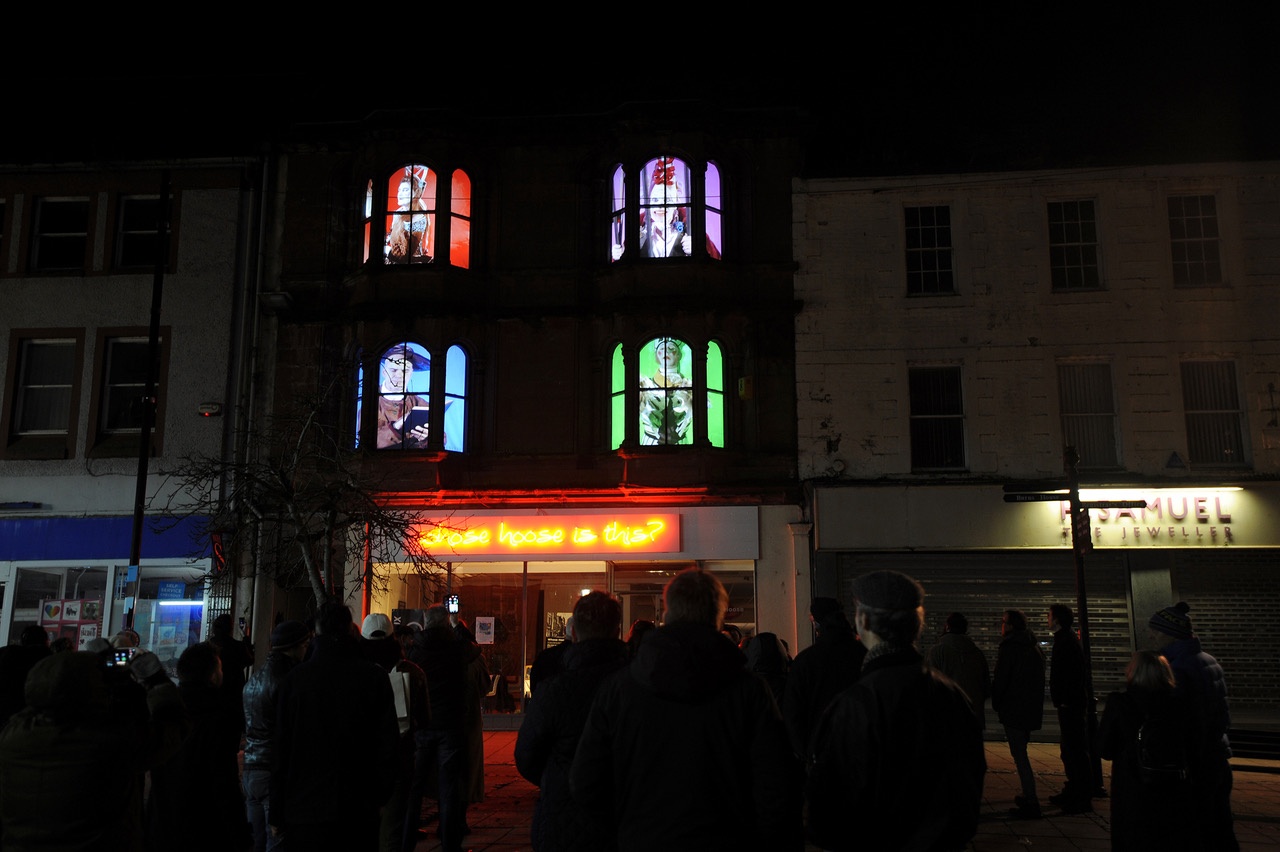
In 2001, our conversation in Dumfries began with a on open question: ‘What is the purpose of a small market town in 21st Century rural Scotland?’. Dumfries had fallen on hard times, there were in excess of 70 empty shops in the town centre. What is now popularly cried the ‘Death of the High Street’ (big retailers pulling out of High Streets because of online shopping and Out of Town retail parks) was already happening fast. We wondered what creativity and culture could do to help, it wasn’t that we had any answers to the problem that we wished to promote…on the contrary! But, we saw how important the health of the town centre was to the sense of identity within our community. We knew that town centres were places for people to gather to celebrate, to protest, to remember – but what are the mechanisms of interaction between people (commerce, leisure, services etc) that are necessary to maintain a town centre as a place for us all to gather in?? The withdrawal of big national and international concerns from our town centre created a vacuum, but it also presented an incredible opportunity for a new kind of town centre – one founded in an ‘inclusive localism’. We knew that this could only grow from a spirit of conversation which made a space for everyone’s voice to be heard. We have helped steward this conversation for eight years now – asking our question in myriad different ways..town dinner parties, a crowd-sourced Town Charter, a giant chalk drawing in the local square, an annual festival celebrating the role of the river in the town, a 2 year exploration of Dumfries’ relationship with Norway, a monthly open-mic evening for new writing – spoken or sung. We now operate two High Street buildings as ‘can-do places’ or ‘arty community centres’ or ‘alternative town halls’ depending on the flavour of the town conversation as you choose to see it.
This is what could be called ‘Conversational Practice’, but really, it is just a set of shared values about the way to treat people and to operate as a human being. Being in conversation is a useful metaphor that encompasses the three core values of our collective work in Dumfries..which could also be seen as necessary ingredients for a good conversation?:
To work through collaboration (not in isolation)
To take risks
To put people first and consider the emotional landscape of all actions
The Stove Network is taking part in A Year of Conversation in two ways: through the first two weeks of May we are staging an interactive exhibition and series of events to explore ‘Art in Public Space’ which centres around a series of conversations with artists working in public. Then, in June, we are shaping all of our regular programming activity into a ‘Month of Conversation’. Our conversation month will also mark a significant shift in our practice as we move onto a new topic of conversation – the new conversation space that we will help to hold for our town is ‘how we grow our own culture’ and how everyone can give themselves permission to be part of that endeavour.
Pop in for a chat!
Matt Baker is a public artist, since 2011 he has focused on long-term activist strategies for the social, economic and political structures of his home region in South West Scotland. He was one of the founders, and is based with, The Stove Network in the heart of Dumfries town centre. www.thestove.org
We use cookies to improve your experience on our website, analyse traffic, and personalise content. By using our site, you consent to the use of cookies. Please read our privacy policy for more information.
Cookie Preferences
Manage your cookie preferences below:
Essential cookies enable basic functions and are necessary for the proper function of the website.
Name
Description
Duration
Cookie Preferences
This cookie is used to store the user's cookie consent preferences.
30 days
Statistics cookies collect information anonymously. This information helps us understand how visitors use our website.
Google Analytics is a powerful tool that tracks and analyzes website traffic for informed marketing decisions.
Contains information related to marketing campaigns of the user. These are shared with Google AdWords / Google Ads when the Google Ads and Google Analytics accounts are linked together.
90 days
__utmx
Used to determine whether a user is included in an A / B or Multivariate test.
18 months
_gali
Used by Google Analytics to determine which links on a page are being clicked
30 seconds
_ga_
ID used to identify users
2 years
__utma
Used to distinguish users.
Persistent
__utmb
Used to determine new sessions/visits.
30 minutes
__utmc
Used to determine if the user is in a new session/visit.
Session
__utmt
Used to throttle request rate.
10 minutes
__utmv
Used to store visitor-level custom variable data.
2 years
__utmz
Stores the traffic source or campaign that explains how the user reached your site.
6 months
_ga
Used to distinguish users.
2 years
_gat
Used to throttle request rate.
1 minute
_gid
Used to distinguish users.
24 hours
Clarity is a web analytics service that tracks and reports website traffic.